
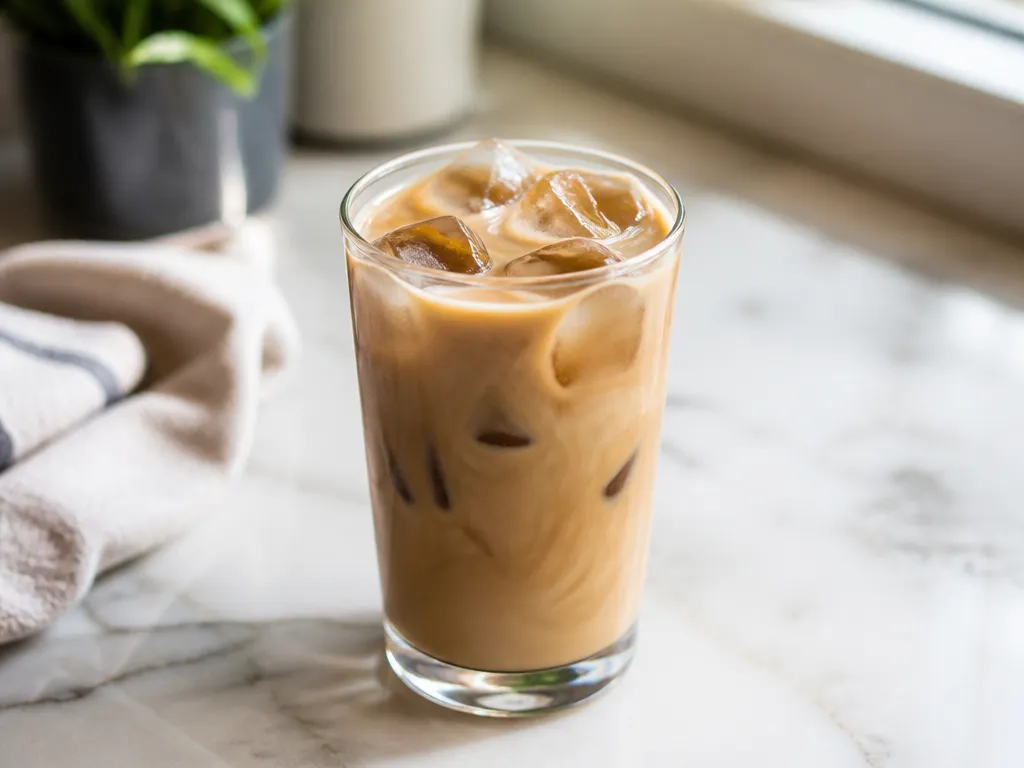
Healthy iced coffee starts with one rule: keep added sugar at 0 to 5 grams per serving. If you do that, you can get the same “coffee shop” taste using measured milk, cinnamon, or a no-sugar syrup, then fine-tune strength. Your next steps are picking the right method (cold brew or flash-chill) and adjusting dilution so it stays smooth, not watery.
To make healthy iced coffee at home, brew about 1/2 cup (120 ml) of coffee and cool it fast, then build over ice with 1/4 to 1/2 cup (60 to 120 ml) milk or unsweetened non-dairy milk. Aim for 0 to 5 g added sugar by using no-sugar sweetener or a measured flavor option such as vanilla. Total time is 10 to 15 minutes for flash-chill, or 12 to 18 hours for cold brew.
How To Make Healthy Iced Coffee?
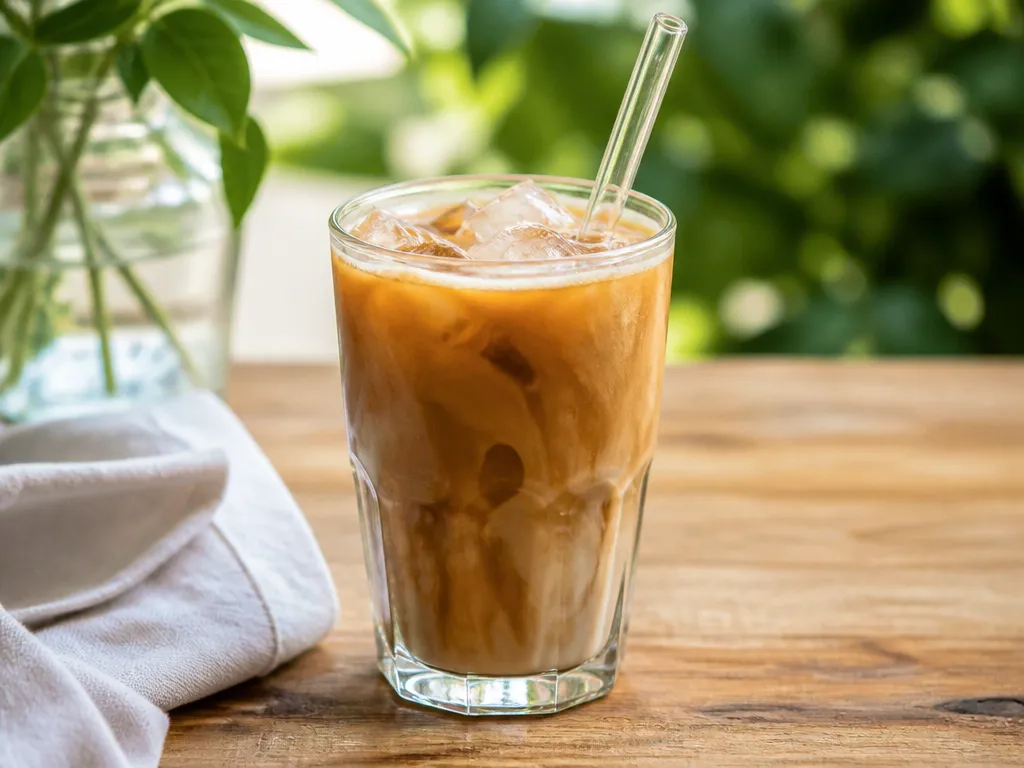
Use 1 cup (240 ml) cold coffee as your base and sweeten it lightly after brewing so the drink stays lower-calorie and easier to control. A fast, healthy one-serving target is unsweetened coffee plus 1 to 2 tablespoons of milk (or a no-sugar plant milk) and zero-to-small added sweetener.
Quick-start Recipe (Flash-chill Friendly)
Goal: a single 10 to 15 minute drink that is smooth, not bitter, and easy to keep “healthy” (meaning low sugar and moderate calories). This method uses hot extraction, then chills quickly with ice to reduce flavor drift from warming.
For example, if you want a café-style latte feel, use 3/4 cup milk plus 1/4 cup coffee and add sweetener conservatively after chilling. If you want a more coffee-forward drink, flip that ratio and keep sweetener near zero.
| Serving component | Single-serving range |
|---|---|
| Ground coffee | 1 to 2 tbsp |
| Hot water for brew | About 1/2 cup (120 ml) |
| Milk or dairy-free base | 1/4 to 1/2 cup (60 to 120 ml) |
| Sweetener | Zero to small, to taste (add last) |
Quick judgment call: if you are trying to keep calories and sugar down, choose less milk and more ice so you get dilution with less sweetness, then add only a measured amount of sweetener if you still want it.
Single-serving Scale And Serving Notes
Single-serving scale means you control the variables that drive “healthy” outcomes: sugar and total calories. Keep your glass size consistent (about 12 to 16 oz) so the same ratio produces predictable taste and nutrition.
Nutrition numbers for calories, sugar, fat, and caffeine depend heavily on your exact coffee dose, milk choice, and any sweetener. This guide will lock those values later once the sweetener and milk are specified, because guessing nutrition without those inputs is misleading.
Cold Brew Method
Cold brew concentrate is best made by steeping coarsely ground coffee in cold water for 12 to 18 hours, then straining and diluting to taste. For a lighter drink, use a higher water-to-concentrate ratio and add only the amount of sweetener and dairy you actually need.
Cold brew concentrate keeps in the refrigerator for a short window, but exact safe storage time depends on hygiene and temperature control, and the evidence pack available here did not provide a specific number. Treat the concentrate like a perishable drink, keep everything cold, and when in doubt, discard.
| Goal | Concentrate Dilution to Start With | What to Adjust Next Batch |
|---|---|---|
| Light and low-calorie | 1:2 (concentrate:water or milk) | Increase concentrate slightly if flavor feels weak |
| Balanced | 1:1.5 | Adjust sweetener amount last |
| Strong | 1:1 | Keep sweetener minimal to avoid “sweet coffee” |
My go-to “healthy” cold brew move is making the concentrate once, then serving it with extra water or unsweetened milk so you control calories without fighting the bitterness.
Flash-chill Method
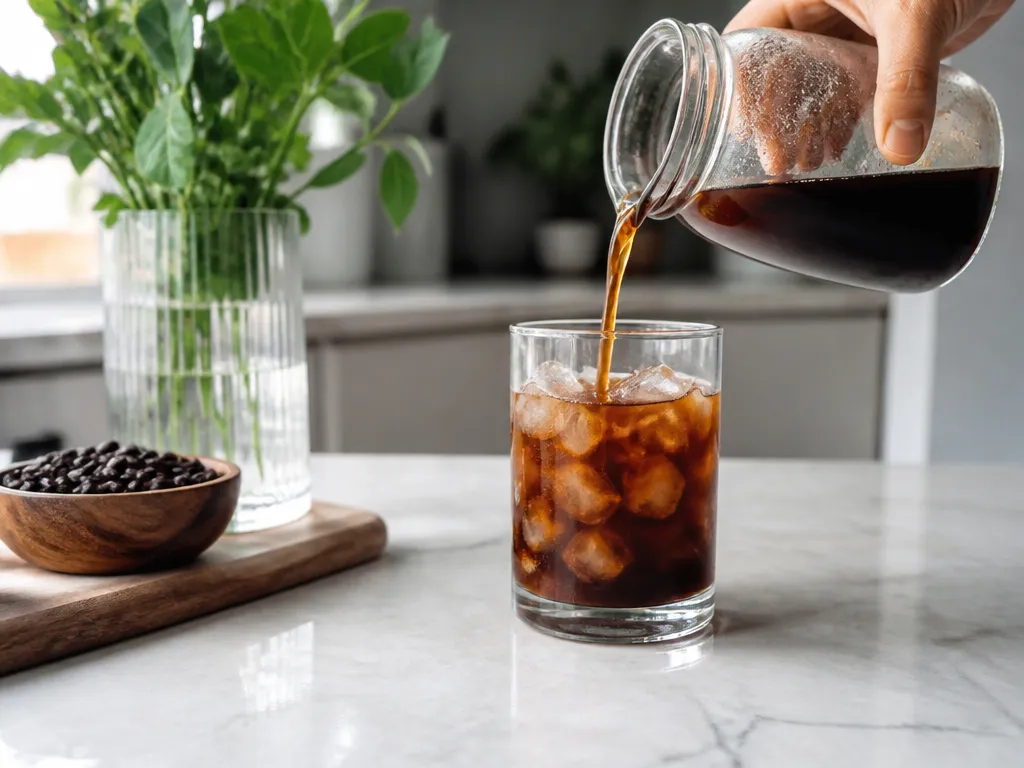
Flash-chilling makes iced coffee fast by cooling freshly brewed coffee in minutes, then serving over ice. The smoothest result comes from brewing a slightly stronger coffee, using a cold dilution (ice plus a small splash of water or milk alternative), and stirring before the drink melts.
Fast-prep Ingredients That Won’t Turn Watery
Start with one assumption: ice melts, so you must build the drink so it tastes right after dilution. A simple rule is to brew slightly stronger than your usual hot coffee, then cut with ice and a measured splash to control strength.
Choose add-ins that mix well cold and stay low-sugar. If you are using a sweetener, pick one that dissolves easily, because undissolved crystals stay gritty as the coffee cools.
Sweetener And Dairy-free Add-ins (Healthy Tweaks That Work)
For low-sugar drinks, prioritize sweeteners that dissolve cleanly in cold coffee. Liquid stevia, monk fruit sweetener, or erythritol-based sweeteners typically mix better than dry sweeteners, which can leave grit as the drink sits.
For dairy-free creaminess, choose unsweetened oat milk for body, unsweetened soy milk for protein, or unsweetened almond milk for a lighter profile. For flavor without extra sugar, add cinnamon, cocoa powder (unsweetened), or a tiny pinch of salt to mute bitterness.
Judgment call: If your coffee tastes harsh after chilling, the fix is not more sugar, it is brewing slightly less strong next time and measuring your ice volume so dilution is consistent.
Equipment is simple: a coffee maker or kettle, a strainer if needed, a spoon, and a tall glass with plenty of ice. Time is usually about 5 to 10 minutes from brew to finish, depending on your brewing method.
Nutrition Per Serving
A “healthy” iced coffee is mostly determined by how much sweetened dairy or syrup you add. With no added sugar and only plain milk, typical homemade servings land around 30 to 80 calories, 0 to 3 g fat, 3 to 10 g carbs, 0 to 6 g sugar, and 1 to 6 g protein, while caffeine is commonly in the 80 to 200 mg range depending on bean dose and brewing strength (the exact caffeine is product- and recipe-dependent).
Because your ingredients drive the numbers, use this budgeting method: treat coffee itself as negligible for calories, then add the nutrition from milk (or non-dairy) plus any sweetener. For nutrition labels, count “added sugars” when you can, because flavored creamers and sweetened syrups raise calories fast.
Quick Nutrition Ranges By Build
Below are practical ranges for a typical 12 to 16 oz glass, assuming brewed coffee plus ice. These are meant for quick health checks, and you should tighten them once you choose an exact milk and sweetener brand.
| Build (typical) | Calories | Fat (sat) | Carbs (sugar) | Protein | Caffeine |
|---|---|---|---|---|---|
| Black coffee + ice | 0 to 10 | 0 g (0 g) | 0 to 2 g (0 to 2 g) | 0 to 1 g | Varies (use your brew dose) |
| Black coffee + skim milk | 30 to 60 | 0 to 1 g (0 g) | 4 to 10 g (3 to 8 g) | 3 to 6 g | Varies |
| Black coffee + 2% milk | 50 to 90 | 2 to 4 g (1 to 2 g) | 5 to 12 g (4 to 9 g) | 3 to 6 g | Varies |
| Black coffee + oat milk (unsweetened) | 40 to 90 | 1 to 4 g (0.5 to 1.5 g) | 4 to 16 g (1 to 9 g) | 2 to 5 g | Varies |
| Any coffee + flavored syrup (1 to 2 tbsp) | 120 to 220+ | 0 to 5 g (0 to 1 g) | 25 to 45 g (20 to 40 g) | 1 to 5 g | Varies |
Portion Guidance And Label Notes That Change The Outcome
For consistent tracking, standardize two things: serving size (for example, 12 oz vs 16 oz) and the milk measurement (for example, 1 cup vs 2/3 cup). One “healthy” mistake is ending up with a larger drink because you add more ice and effectively dilute coffee, which can reduce perceived bitterness while keeping sugar and calories from add-ins.
Build rule for light nutrition: use unsweetened milk, keep syrup and sweetened creamers out, and sweeten with a measured amount of a low-calorie sweetener (then confirm sugar and calories on the package).
Label notes to act on: look for “added sugars” (or a sugars-by-sugar breakdown), check serving size so you do not double-count, and confirm whether your non-dairy option is “unsweetened” or “sweetened,” since the nutrition swing can be large. For caffeine, treat label caffeine numbers as approximations unless they match your exact coffee dose and brewing method.
Diet Substitutions

Three swaps decide whether a tall cold coffee stays light: the sweetener, the milk, and whatever goes in for flavor. Fix those and skim milk becomes irrelevant, because the syrup was the problem the whole time.
Liquid sweetener is the biggest single lever and the least honestly labeled. Flavored syrups and “skinny” sauces carry sugar the front of the bottle never mentions, so read the panel per pump, not per container. Granular sweeteners dissolve badly in cold liquid and end up as grit at the bottom of the glass.
| Base | Best for | Trade-off |
|---|---|---|
| Unsweetened almond | Everyday, lightest option | Splits in acidic coffee; thin body |
| Soy | Protein and body | Beany note; some brands add sugar |
| Barista oat | Texture and foam | Added oil and sweetener in most brands |
| Heavy cream | Keto, small volume | Calorie dense; coats the palate |
| Carton coconut | Dairy-free richness | Distinct coconut taste; canned is far heavier |
If you drink one iced coffee a day, spend all your effort on the syrup and leave the milk alone. If you drink three, the milk becomes the bigger number and the syrup argument stops mattering.
Flavor Variations
Six formulas cover most cravings. The added calories vary by ingredient, because the lift comes from extract, spice, or unsweetened cocoa rather than syrup. Measure the concentrated flavoring first, taste, then sweeten at the end. A half-teaspoon of vanilla or a pinch of cardamom replaces the two syrup pumps you gave up.
| Flavor | Formula (per 16 oz) | Notes |
|---|---|---|
| Vanilla cinnamon | 1/2 tsp pure vanilla extract + 1/4 tsp ground cinnamon | Stir the cinnamon into the cold brew concentrate first; it clumps in cold liquid otherwise. Use real extract, not imitation vanilla. |
| Mocha almond boost | 1 tbsp unsweetened cocoa powder + 1/4 tsp almond extract + 1 tsp almond butter | Whisk the cocoa with a splash of hot water into a paste before it hits the glass. The almond butter adds body and a little protein. |
| Coconut cardamom lift | 2 tbsp unsweetened coconut milk + 1/8 tsp ground cardamom + 2 drops coconut extract | Cardamom is potent; start at 1/8 tsp. Canned coconut milk gives creaminess, carton gives a lighter drink. |
| Peppermint cocoa finish | 2 to 3 drops peppermint extract + 1 tsp unsweetened cocoa powder | Peppermint overwhelms fast. Add drops one at a time and taste between each. |
| Spiced chai twist | 1/4 tsp cinnamon + pinch each of ground ginger, clove, and allspice | Or steep one chai tea bag in the hot espresso shot for 2 minutes, then chill and pour over ice. |
| Salted caramel light | 1/2 tsp caramel extract + 1 pinch flaky sea salt + 1 tbsp unsweetened almond milk | The salt amplifies perceived sweetness, so you need less sweetener. Skip if you are watching sodium. |
Two rules govern all six. First, add the least amount the recipe lists and build up, since extracts and ground spices cannot be removed once they are in the glass. Second, put the flavoring into the concentrate or the hot shot before the ice goes in, which blends it evenly instead of leaving it pooled at the bottom.
If you only ever make one, make the vanilla cinnamon. It is the hardest to ruin, it hides a mediocre brew, and the ingredients sit in every kitchen already.
Equipment, Costs, Shopping
Essential gear for a healthy iced coffee setup is minimal and budget-friendly. A burr grinder and a reliable brew device control grind size and extraction, while a pitcher and an insulated bottle keep the drink cold and portable. Most of the upfront cost is a one-time investment that pays off with better texture and lower sugar need over time.
| Item | Amount/Specification | Notes |
|---|---|---|
| Burr coffee grinder | 1 unit | Consistent grind; price roughly $25 – $120 depending on model |
| Brew device | 1 unit | Drip coffee maker or pour-over setup; price roughly $25 – $150; French press $15 – $40 |
| Kettle (gooseneck) | 1 | Precise pour; $25 – $60 |
| Pitcher or mason jar for cold brew | 1 – 2 | Wide mouth helps filtration; $5 – $15 each |
| Fine-mesh sieve or metal filter | 1 | For cold brew filtration; $3 – $12 |
| Insulated bottle or tumbler | 1 – 2 | Keeps drink cold; $8 – $30 |
| Airtight storage jars | 1 – 2 | Store coffee and concentrate; $6 – $18 |
| Whole bean or ground coffee | 1 bag (12 – 16 oz) | Price $7 – $15; buy fresh and rotate |
| Plant-based milk or dairy | 1 carton | Unsweetened preferred; $2 – $4 |
| Sugar-free sweeteners | 1 package | Stevia/monk fruit/erythritol; $3 – $6 |
| Flavorings optional | 1 bottle | Vanilla or cinnamon; $2 – $5 |
| Ice cube tray or block molds | 1 | Reusable; $2 – $6 |
Quick Summary
Choose flash-chill in 10 to 15 minutes or cold brew in 12 to 18 hours, then adjust the coffee-to-milk ratio until the drink tastes smooth rather than watery. A single serving can use about 1/2 cup hot water for brewing and 1/4 to 1/2 cup milk or unsweetened plant milk after chilling.
For flash chill, start with 1 to 2 tablespoons ground coffee and about 1/2 cup hot water to yield roughly 1 cup concentrate, then pour over ice and dilute with 1/4 to 1/2 cup milk or unsweetened plant milk. Sweeten last with zero or a tiny amount, and choose higher fat dairy for body. For cold brew, steep coarsely ground coffee in cold water for 12 to 18 hours at a 1:4 ratio, then strain and refrigerate. Choose your method and start brewing a single serving.
Frequently Asked Questions
How Much Does Healthy Iced Coffee Cost Compared With Ordering It?
Your cost is mostly driven by how you sweeten and how much specialty coffee you use. Without reliable scraped price data, the safest planning rule is to compare your total per-serving cost of beans or concentrate plus milk/alternatives and any sweetener against the café’s per-size price.
How Long Does It Take To Make Healthy Iced Coffee, And How Should I Plan Ahead?
Cold brew needs hours, but “flash” iced coffee takes about 10 to 15 minutes. If you want the easiest consistently less bitter option, use a cold-brew method you start ahead of time, then assemble with ice and milk when you are ready.
When Does My Health Situation Mean I Should Not Follow The “Healthy” Iced Coffee Version?
If you need to limit caffeine, added sugar, or dairy, you should customize the recipe before drinking it. If you are pregnant, have a caffeine-restricted condition, manage diabetes, or have a milk protein intolerance, treat “healthy” as “fits your limits,” not a fixed drink formula.
What Happens If I Do Nothing, Keep Drinking Regular Iced Coffee, And Just Try To “Be Mindful”?
“Doing nothing” usually keeps the biggest variables the same: caffeine amount and added sugar. If your regular drink is sweetened, your calories and blood-sugar impact can remain high even if you feel you are drinking it slowly.
When Should I Get Professional Help About Caffeine, Reflux, Or Anxiety Symptoms From Coffee?
Get medical advice if symptoms are persistent or worsening. If you have reflux, palpitations, significant anxiety, sleep disruption, or headaches that track with iced coffee use, talk with a clinician rather than only adjusting the recipe.
How Can I Verify A “Healthy Iced Coffee” Claim Yourself At Home?
Check the labels and measure, then calculate your inputs. Look for added sugar grams on the nutrition facts, confirm caffeine sources (beans, concentrate, or instant), and if the claim is about protein or calories, verify it by weighing your milk and using the nutrition panel for your exact milk brand.

- Espresso Bar Wedding: Ideas, Setup, Costs, and Tips for a Memorable Coffee Experience - November 11, 2026
- How Many Grams of Espresso Beans for a Double Shot? A Complete Brewing Guide - November 11, 2026
- Brasilia Espresso Machine: Features, Performance, Models, and Buying Guide - November 11, 2026