
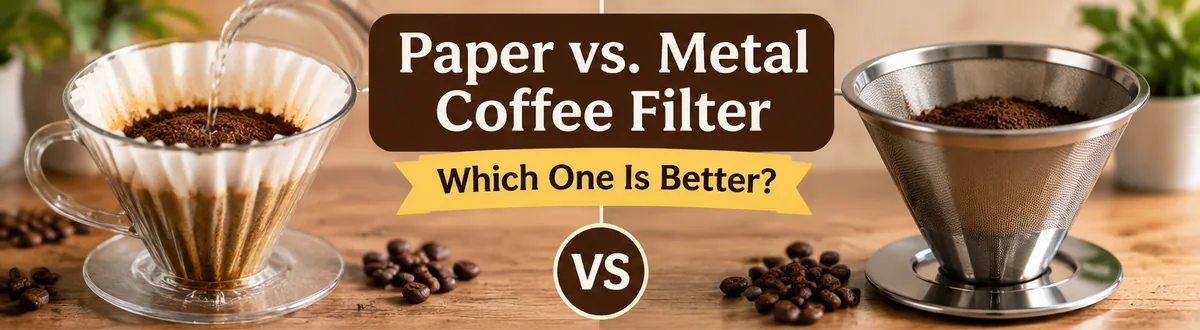
Choosing the right coffee filter can make a noticeable difference in your daily coffee experience. While coffee beans, grind size, and brewing methods receive most of the attention, the filter also plays an important role in determining how your coffee tastes, feels, and looks.
Paper and metal coffee filters are two popular options for home coffee brewing. Paper filters are known for producing a cleaner cup with fewer coffee oils and fine particles. Metal filters allow more natural oils to pass through, creating a fuller-bodied coffee with a richer texture. Both have advantages, but they serve different preferences and brewing needs.
The right choice depends on how you enjoy your coffee, how much maintenance you are comfortable with, and whether convenience, flavor, or long-term value matters most to you.
In this guide, we will compare paper vs. metal coffee filters based on taste, filtration, brewing performance, environmental impact, cleaning, and cost to help you make an informed decision.
What Is the Difference Between Paper and Metal Coffee Filters?
The main difference between paper and metal coffee filters is how they separate coffee grounds from brewed coffee. Both filters allow hot water to pass through ground coffee while keeping most of the larger particles out of your cup. However, their materials have different filtration properties.
Paper filters are disposable and usually made from specially processed paper fibers. Metal filters are reusable and commonly constructed from stainless steel mesh or perforated metal. These differences influence how much coffee oil and sediment reaches the final brew.
How Does a Paper Coffee Filter Work?
A paper coffee filter uses tightly woven or bonded cellulose fibers to trap coffee grounds during brewing. When hot water passes through the coffee bed, the paper catches most solid particles while allowing dissolved coffee compounds to flow into the carafe or cup.
The fine filtration also retains a significant amount of coffee oils, including diterpenes such as cafestol and kahweol. This produces a cleaner, lighter-bodied cup with less visible sediment.
Paper filters are available in different shapes, sizes, and thicknesses. Cone-shaped filters are commonly used with pour-over brewers, while flat-bottom filters are popular in many automatic drip coffee machines.
How Does a Metal Coffee Filter Work?
A metal coffee filter uses a reusable mesh or perforated surface to separate coffee grounds from brewed liquid. Its openings are generally larger than the microscopic spaces in paper filters, allowing more oils and some fine coffee particles to pass through.
- Stainless steel mesh: Uses small openings to filter coffee grounds while allowing oils to enter the cup.
- Perforated metal: Uses precisely formed holes to separate larger coffee particles from brewed coffee.
- Reusable construction: Can be rinsed and used repeatedly without purchasing replacement filters.
- Fuller extraction experience: Allows more natural coffee oils and fine particles to remain in the final brew.
- Different designs: Available in cone, flat-bottom, basket, and disc-style configurations depending on the brewing equipment.
Paper vs. Metal Coffee Filter: Key Differences

Although both filters perform the same basic function, their filtration methods create noticeable differences in coffee quality and everyday use. Paper filters focus on clarity and convenience, while metal filters emphasize fuller body and reusability.
Coffee Flavor and Overall Taste
Paper and metal filters can produce different flavor experiences even when you use the same coffee beans, grind size, and brewing method.
Paper filtration removes much of the suspended coffee oil and fine sediment. This often creates a cleaner-tasting cup where acidity, sweetness, and individual flavor notes are easier to distinguish.
Metal filtration allows more oils and microscopic particles to pass through. As a result, coffee can feel richer, heavier, and more textured. This difference is especially noticeable with darker roasts and immersion-style brewing.
Filtration Quality and Sediment
- Paper filters: Trap most fine coffee particles and produce a cleaner cup.
- Metal filters: Allow some fine particles to pass into the brewed coffee.
- Paper filters: Generally provide more consistent filtration when used correctly.
- Metal filters: Performance depends on mesh size, construction, and condition.
- Paper filters: Reduce the amount of suspended coffee sediment.
- Metal filters: Preserve more coffee oils and create a heavier mouthfeel.
Coffee Oils and Body
Coffee contains natural oils that contribute to its aroma, flavor, and mouthfeel. These compounds are released during brewing and can remain suspended in the coffee before filtration.
Paper filters absorb or retain a substantial portion of these oils, producing a lighter and cleaner cup. Metal filters allow more of them to pass through, giving coffee a fuller texture.
Neither result is automatically better. People who enjoy delicate flavor notes may prefer paper filtration, while those who like rich and heavy coffee may prefer metal.
Does a Paper or Metal Coffee Filter Make Better-Tasting Coffee?
There is no universal winner because coffee taste is subjective. However, the filter material can influence the balance of flavor, body, and clarity in your cup.
Paper filters are generally better for highlighting delicate flavor characteristics, while metal filters are often preferred for preserving more of coffee’s natural oils and producing a richer mouthfeel.
How Paper Filters Affect Coffee Flavor
Paper filters remove a large portion of suspended coffee oils and fine particles during brewing. This creates a cleaner cup with less sediment and a lighter mouthfeel.
For light and medium roasts, paper filtration can help make individual flavor characteristics easier to recognize. Floral, fruity, citrus, and delicate acidic notes may feel more distinct because fewer oils and particles remain in the finished coffee.
However, paper filters can also influence flavor if they are not rinsed before brewing. Some paper products may contribute a papery taste, particularly when used without pre-wetting.
How Metal Filters Affect Coffee Flavor
- Allow more natural coffee oils to enter the finished brew.
- Create a fuller-bodied and heavier mouthfeel.
- Preserve more suspended coffee particles.
- Can make darker roasts feel richer and more intense.
- May produce a slightly cloudy appearance compared with paper-filtered coffee.
- Can retain old coffee oils if not cleaned properly.
Which Filter Preserves More Coffee Aroma?
Coffee aroma comes from numerous volatile compounds released during grinding and brewing. Both filter types allow many of these compounds to enter the brewed coffee, but their filtration characteristics influence the final sensory experience.
Metal filters allow more coffee oils to pass through, which can contribute to a richer aroma and mouthfeel. Paper filters retain more oils and fine particles, creating a cleaner sensory profile.
However, aroma preservation also depends on bean freshness, roast level, water temperature, and brewing time. The filter alone cannot determine the overall aroma quality.
Paper vs. Metal Coffee Filter: Pros and Cons
Understanding the advantages and disadvantages of each filter can make your purchasing decision easier. Paper filters prioritize convenience and clean filtration, while metal filters offer long-term reusability and a fuller coffee experience.
Advantages of Paper Coffee Filters
- Produce a clean cup with minimal sediment.
- Remove a significant amount of coffee oils.
- Available in different shapes and sizes.
- Convenient for daily brewing.
- Do not require extensive cleaning after use.
- Help highlight delicate coffee flavor characteristics.
- Generally affordable to purchase initially.
Disadvantages of Paper Coffee Filters
Paper filters need to be replaced after every brewing session, which creates an ongoing expense. You also need to keep an adequate supply available, particularly if you prepare coffee regularly.
Some paper filters may affect flavor when they are not rinsed before brewing. Their performance can also vary depending on paper thickness and quality.
Additionally, disposable filters generate waste. Although many paper filters are compostable, their environmental impact depends on the materials used, manufacturing process, and disposal conditions.
Advantages of Metal Coffee Filters
- Reusable for hundreds of brewing sessions when properly maintained.
- Reduce the need for disposable filter purchases.
- Allow more coffee oils to pass into the cup.
- Produce a fuller-bodied coffee.
- Available in durable stainless steel designs.
- Suitable for people who prefer less disposable brewing waste.
- Can offer good long-term value with regular use.
Disadvantages of Metal Coffee Filters
Metal filters require regular cleaning because coffee oils and fine particles can become trapped in the mesh. Without proper maintenance, accumulated residue may create unpleasant odors and affect the taste of future brews.
They may also allow more sediment into the finished coffee, which some people dislike. Additionally, the initial purchase price can be higher than that of a basic pack of paper filters.
Which Coffee Filter Is Easier to Clean and Maintain?
Cleaning requirements are an important consideration when choosing between paper and metal coffee filters. Paper filters are designed for single use, while metal filters need regular cleaning to maintain their performance.
For people who prefer a quick brewing routine, paper filters are generally more convenient. Metal filters require a little more attention but can be reused repeatedly.
Cleaning a Paper Coffee Filter
Paper filters require very little maintenance. Once brewing is complete, you simply remove the used filter along with the trapped coffee grounds and dispose of it.
- Remove the paper filter after brewing.
- Allow excess liquid to drain.
- Dispose of the used filter and coffee grounds.
- Rinse the filter basket or brewing device if necessary.
- Clean the coffee maker according to the manufacturer’s instructions.
Some paper filters can be composted, depending on their material and the local composting system.
Cleaning a Metal Coffee Filter
Metal filters need more attention because coffee oils and small particles can accumulate inside their mesh openings.
After brewing, remove the used coffee grounds and rinse the filter under warm running water. Use mild dish soap when necessary to remove oily residue.
A soft cleaning brush can help remove particles trapped inside the mesh. Avoid harsh abrasive tools that may damage the filter surface or alter its structure.
Removing Coffee Oils and Fine Particles
Coffee oils can gradually build up on reusable metal filters, particularly when they are used every day.
Regular rinsing helps remove loose particles, but occasional deeper cleaning may be necessary. Follow the manufacturer’s cleaning instructions and use a suitable cleaning product.
Avoid leaving used coffee grounds inside the filter for extended periods. Proper drying and storage also help prevent unpleasant odors.
Paper vs. Metal Coffee Filter: Price and Long-Term Value

The initial price of a coffee filter does not always reflect its total cost over time. Paper filters are generally cheaper to purchase, but they require continuous replacement. Metal filters cost more initially but can be reused for a long period.
Your daily coffee consumption and expected filter lifespan should influence your decision.
Initial Purchase Cost
Paper coffee filters are usually inexpensive and commonly sold in packs containing multiple filters. This makes them an accessible option for beginners and occasional coffee drinkers.
Metal coffee filters generally have a higher upfront price because they use reusable materials and require a more durable construction.
However, prices vary depending on the brand, brewing compatibility, filter design, and material quality.
Ongoing Expenses and Replacement Costs
- Paper filters: Require regular purchases after the initial pack runs out.
- Metal filters: Usually need only one initial purchase, provided they remain in good condition.
- Paper filters: Create recurring expenses based on daily brewing frequency.
- Metal filters: May eventually require replacement if the mesh becomes damaged or clogged.
- Cleaning supplies: Reusable filters may require occasional additional cleaning products.
- Long-term value: Metal filters can become more economical for people who brew coffee frequently.
Which Filter Offers Better Long-Term Value?
For someone who prepares coffee every day, a quality metal filter can offer better long-term value because it eliminates the need for regular disposable filter purchases.
Paper filters may be more economical for occasional users who do not want to invest in reusable equipment.
The best option depends on the total number of brewing sessions, filter prices, maintenance requirements, and expected lifespan.
Which Coffee Filter Is Better for Different Brewing Methods?
Not every brewing method uses the same filter design. Pour-over, automatic drip coffee, French press, and AeroPress systems have different requirements, so compatibility should be considered before purchasing a filter.
The right filter should fit the brewer properly and support the type of coffee you want to prepare.
Best Filter for Pour-Over Coffee
Paper filters are particularly popular for pour-over brewing because they produce a clean cup and help highlight individual coffee flavor notes.
They also provide predictable filtration when the correct size and shape are used. Cone-shaped filters are common in pour-over systems, although flat-bottom options are available.
Metal pour-over filters are suitable for people who prefer a fuller-bodied cup and want to avoid disposable paper filters. However, their performance depends on mesh size and the design of the brewing device.
Best Filter for Automatic Drip Coffee Makers
- Paper filters: A good choice for people who prefer clean, low-sediment drip coffee.
- Permanent metal filters: Suitable for users who want to reduce disposable filter purchases.
- Basket filters: Common in many automatic coffee makers and available in both paper and reusable designs.
- Cone filters: Used in compatible drip machines that support cone-shaped filter baskets.
- Brewer compatibility: Always check the required filter size and shape before purchasing.
Best Filter for French Press and AeroPress
Traditional French press coffee makers generally use a built-in metal mesh filter rather than disposable paper filters. This allows more coffee oils and fine particles to remain in the finished brew.
Some coffee enthusiasts use an additional paper filter with compatible brewing equipment to reduce sediment and produce a cleaner cup.
AeroPress users can choose between standard paper micro-filters and compatible reusable metal filters. Paper filters generally create a cleaner cup, while metal filters allow more oils and fine particles through.
Always check whether a filter is designed for your specific brewing device.
Which Coffee Filter Is Better for the Environment?
Environmental impact is another factor worth considering when choosing between paper and metal coffee filters.
Paper filters are disposable, meaning they need to be replaced after each brewing session. Metal filters are reusable, which can reduce ongoing waste. However, the overall environmental impact depends on manufacturing, transportation, cleaning, and product lifespan.
Environmental Impact of Paper Coffee Filters
Paper filters are commonly manufactured from cellulose fibers, which are derived from wood pulp or other plant-based materials.
Many unbleached paper filters are compostable, particularly when used with ordinary coffee grounds. However, not every filter is suitable for every composting system.
Some filters are bleached during manufacturing, while others are unbleached. Both can be suitable for coffee brewing when produced for food contact, although their manufacturing processes differ.
Environmental Impact of Metal Coffee Filters
- Reusable metal filters reduce the need for disposable filter replacements.
- Stainless steel can remain functional for years with proper care.
- Metal manufacturing requires energy and raw materials.
- Reusable filters need water and occasional cleaning products.
- Damaged metal filters may be recyclable depending on their construction and local recycling facilities.
- Their environmental advantage increases when they replace many disposable filters over time.
Which Filter Produces Less Waste?
Metal filters generally produce less ongoing disposable waste because they can be reused repeatedly.
Paper filters create more frequent waste, although compostable options can reduce the amount sent to landfills.
For environmentally conscious coffee drinkers, a durable metal filter may be the better long-term choice. However, its overall environmental advantage depends on how long it is used and how it is manufactured and maintained.
How to Choose Between a Paper and Metal Coffee Filter
The best coffee filter depends on your taste preferences, brewing habits, budget, and willingness to clean reusable equipment.
Instead of choosing based on price or popularity alone, consider which features will make your daily coffee routine more enjoyable.
Consider Your Coffee Taste Preferences
If you prefer clean, light-bodied coffee with minimal sediment, paper filters are generally the better option. They remove more suspended oils and particles, allowing delicate flavor characteristics to stand out.
If you enjoy rich, full-bodied coffee with more natural oils, a metal filter may suit your preferences.
Think about the type of coffee you regularly drink and whether you prefer clarity or texture.
Consider Your Budget and Daily Usage
- Choose paper filters if you prefer a lower initial purchase cost.
- Choose metal filters if you brew coffee frequently and want a reusable option.
- Compare ongoing filter expenses with the initial price of a reusable model.
- Check the availability of compatible replacement filters.
- Consider cleaning time as part of your daily routine.
- Look for durable materials and reliable construction.
Check Filter Compatibility and Quality
Before purchasing a coffee filter, make sure it fits your brewing equipment.
Paper filters are available in different sizes and shapes, including cone, basket, and flat-bottom designs. Metal filters also vary in dimensions, mesh density, and construction.
Check the manufacturer’s specifications and choose a filter designed for your particular coffee maker.
For reusable metal filters, look for food-grade stainless steel, secure construction, and a mesh design that is easy to clean.
Final Verdict: Should You Choose a Paper or Metal Coffee Filter?
Paper and metal coffee filters serve the same basic purpose, but they produce different brewing experiences.
Paper filters are generally better for people who enjoy clean, light-bodied coffee with minimal sediment. They are convenient, affordable to purchase initially, and require very little cleaning.
Metal filters are better suited to coffee drinkers who prefer fuller-bodied coffee, want more natural oils in their cup, and value reusable brewing equipment.
When a Paper Coffee Filter Is the Better Choice
- You prefer clean and clear coffee.
- You want fewer fine particles in your cup.
- You enjoy delicate flavor notes and lighter mouthfeel.
- You prefer a disposable filter that requires minimal cleaning.
- You do not mind purchasing replacement filters regularly.
- You use pour-over or automatic drip coffee equipment.
When a Metal Coffee Filter Makes More Sense
A metal coffee filter is a practical choice if you enjoy rich coffee with a fuller mouthfeel and want to reduce your dependence on disposable products.
It is particularly useful for people who brew coffee regularly and are comfortable cleaning their equipment after each use.
A quality stainless steel filter can provide reliable long-term performance when maintained correctly.
Which Coffee Filter Is the Best Overall Choice?
There is no single best coffee filter for everyone. If your priority is flavor clarity, lower sediment, and convenience, paper filters are the stronger choice. If you prefer a richer coffee texture, reusable equipment, and lower recurring filter costs, metal filters make more sense.
For most coffee enthusiasts, the decision comes down to personal taste rather than brewing quality alone. Both filters can produce excellent coffee when paired with fresh beans, an appropriate grind size, and a consistent brewing technique.
Choose the filter that matches your preferred coffee experience, and you will get more value from every brewing session.

- Espresso Bar Wedding: Ideas, Setup, Costs, and Tips for a Memorable Coffee Experience - November 11, 2026
- How Many Grams of Espresso Beans for a Double Shot? A Complete Brewing Guide - November 11, 2026
- Brasilia Espresso Machine: Features, Performance, Models, and Buying Guide - November 11, 2026