
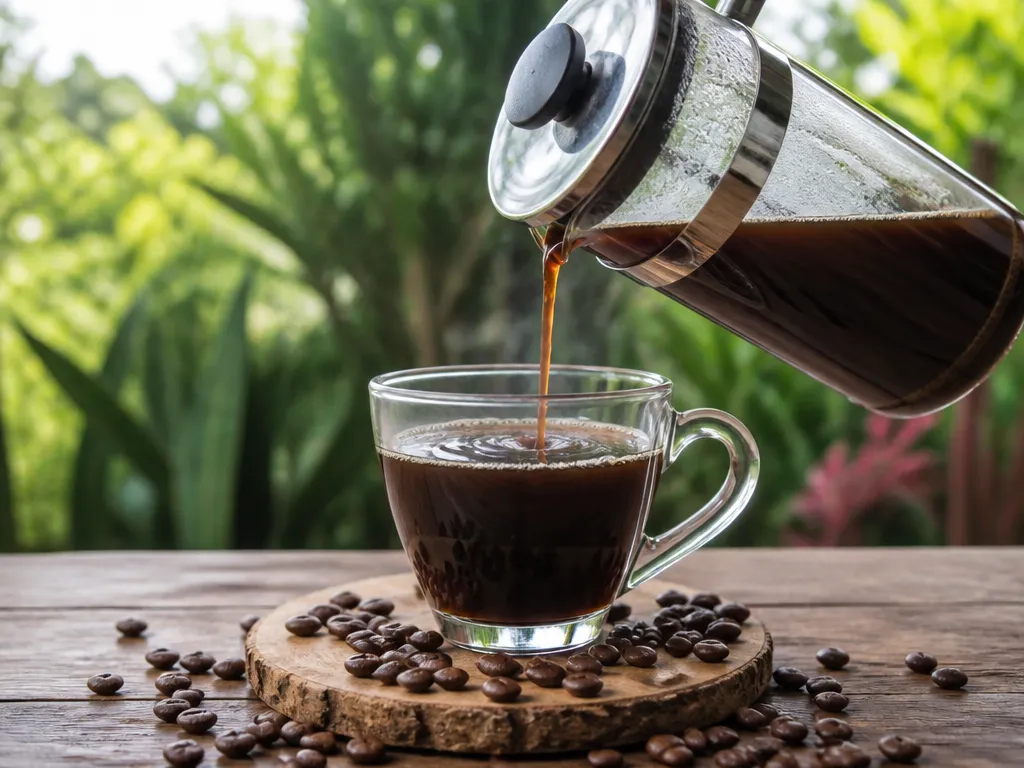
Coffee beans become great coffee when you grind them fresh and brew the grounds at the right ratio for your equipment. Grind whole beans within minutes of brewing to preserve their aroma and keep the flavor even. The basic process is simple: grind, measure, brew, and adjust.
Use a starting ratio of 1:16 by weight – 1 gram of coffee to 16 grams of water. If the coffee tastes weak, move toward 1:15. If it tastes harsh or bitter, move toward 1:17. Grind size matters too: espresso needs fine grounds, while immersion methods need coarser grounds.
Key Takeaways
- Start with fresh beans. Grind whole beans right before brewing for the best flavor.
- Use a scale if you can. It helps produce consistent results quickly.
- Match grind to brew method. Finer grounds extract faster; coarser grounds extract more slowly.
- Bloom the grounds. A short wetting step helps flavors develop evenly in pour-over and immersion brewing.
- Watch brew time. Many methods take about 2-4 minutes, depending on the grind and equipment.
- Store beans airtight. Keep them cool and away from light to slow staling.
How to Use Coffee Beans to Make Coffee
Whole beans become coffee when you grind them and brew the grounds with the right grind size, ratio, and contact time. When those three variables line up, the cup tastes sweet and balanced instead of thin or harsh.
Choose your brewing method first: drip machine, pour-over, French press, AeroPress, or espresso. The method determines the starting grind size and brew time. Adjust flavor mainly with the ratio and grind size rather than changing several variables at once.
The same beans can taste radically different when ground too fine for a French press. Fine particles over-extract during the longer soak, leaving the coffee muddy and bitter.
What You Need Before Grinding Coffee Beans
You need whole beans, a grinder, a way to measure, water, and brewing equipment. Consistent inputs make it easier to produce a consistent cup.
A kitchen scale is the most useful upgrade if you do not already have one. Scoops and tablespoons can work, but they are less reliable because bean density and grind size change how much coffee fits in a spoon.
Use clean, room-temperature water when possible. Extremely cold water slows extraction, while water with an unpleasant taste can overpower the coffee even when the brewing technique is sound.
- Whole coffee beans that still smell fresh
- Grinder – a blade grinder works in a pinch, but a burr grinder is much better
- Scale – 0.1 g resolution is ideal, though any kitchen scale helps
- Clean water, preferably filtered
- Brew method, such as a dripper, French press, AeroPress, or espresso machine
How to Choose a Coffee Bean Roast
Choose the roast according to the flavor you want and how much brewing adjustment you are willing to make. Light roasts usually taste brighter and more acidic, while medium and dark roasts tend to taste heavier and more roasty.
Light roasts can be trickier because they often need more extraction. An unsuitable grind can leave them tasting sour or under-developed. Medium roasts are usually the easiest place to start because they balance sweetness and clarity.
Dark roasts are relatively forgiving, but too much extraction can make them taste ashy or bitter. If you already dislike bitterness, do not grind dark-roast beans finer simply to make the coffee stronger.
- For fruity, floral, or bright flavors: try a light to light-medium roast
- For a classic coffee-shop flavor: try a medium roast
- For a smoky or bold cup: try a dark roast, then adjust the ratio carefully
How to Grind Coffee Beans for Brewing
Grind size controls extraction speed and the amount of fine material in the cup. Finer grounds extract faster and can taste bitter when the brew runs too long or uses too much water. Coarser grounds extract more slowly and can taste weak or sour when the brew does not extract enough flavor.
Use these settings as starting points:
- Espresso: very fine, like table salt or finer
- Pour-over, cone: medium-fine
- Drip machine: medium
- AeroPress: medium-fine to medium, depending on the recipe
- French press: coarse, like breadcrumbs
- Cold brew: very coarse, like coarse sand
A burr grinder produces more uniform grounds. Blade grinders create a mix of dust and chunks, which leads to uneven extraction. You can still make drinkable coffee with one, but you will spend more time adjusting the brew and filtering out fines.
To dial in the grind, keep the ratio, water, and brew method constant for two brews. Change the grind, taste the result, and then adjust the ratio or brew time once you know which direction improves the cup.
How to Brew Coffee From Ground Coffee Beans
Brewing turns the ground coffee into a drinkable cup. Wet the grounds evenly, extract enough flavor, and stop the brew at the right point.
Even saturation matters in pour-over and drip-style methods. A bloom or gentle stir wets dry pockets and helps prevent sour, under-extracted patches. In French press and AeroPress brewing, contact time and agitation determine much of the coffee’s strength and clarity.
Use these steps as a starting point:
- Weigh the coffee. Begin with a measured dose.
- Start the water pour. Wet all the grounds evenly.
- Bloom the coffee. For methods that use a bloom, let the grounds sit briefly so trapped gas can escape.
- Continue brewing. Pour steadily for pour-over, or add the water and start timing for immersion methods.
- Stop extraction. Let pour-over coffee finish draining, stop the espresso shot, press the French press, or complete the final AeroPress press.
How to Adjust Coffee Strength by Ratio
Coffee strength is controlled mainly by the ratio of coffee to water. To make a cup stronger without throwing off the flavor, change the coffee mass or water mass while keeping the grind and brew time close to the same.
- Weak or watery: use more coffee or less water
- Balanced but not quite strong enough: make a small ratio adjustment
- Bitter, harsh, or dry: use less coffee or more water
A stronger ratio can make bitterness more noticeable when the grind is already too fine. Change one variable at a time so you can tell what improved or hurt the result.
Coffee that tastes both weak and sour usually needs a grind adjustment before a ratio change. Try grinding slightly finer or extending contact time. Coffee that tastes bitter but still watery may be over-extracting from fine particles while lacking body; use a coarser grind and make a small ratio adjustment instead of grinding finer.
How to Store Coffee Beans for Fresh Flavor
Coffee beans release gases and oxidize after roasting, and both processes dull the flavor once the bag is opened.
Keep the beans in an airtight container in a cool, dark place. Light and heat speed up staling. Freezing can work when the beans are portioned and sealed properly, but airtight cabinet storage is the simplest option for most households.
Avoid these storage mistakes:
- Leaving beans exposed to air in a bag that only partly closes
- Storing beans near the oven, dishwasher, or a bright window
- Using a container that lets the coffee aroma escape and moisture enter
If you buy large bags, portion the beans. Keep the amount you expect to use in a few weeks in your airtight container and seal the rest for longer storage.
FAQ
How many grams of coffee beans do I need for 1 cup?
Start with a 1:16 ratio by weight. 15 grams of coffee paired with 240 grams of water is a typical starting point.
What grind size should I use for pour-over?
Start with a medium-fine grind, often close to a table-salt texture. Your dripper may need a slightly finer or coarser setting.
How long should I brew ground coffee?
Many common home-brewing methods take a few minutes. Pour-over and drip-style brewing often aim for about 2-4 minutes, while immersion methods such as French press usually take longer because the grounds remain in contact with the water.
Can I make coffee from coffee beans without a grinder?
You can, but the results will be inconsistent. Blade grinders produce a mixture of fine and coarse particles, which causes uneven extraction. A burr grinder gives you more consistent grounds. If you do not own one, have the beans ground at a store and use the grounds soon after.
What is the most common mistake when using coffee beans?
Skipping the ratio and grinding inconsistently cause the most trouble. Guessing the coffee and water amounts while producing a mixture of dust and chunks makes extraction difficult to control, so troubleshooting becomes guesswork. Measure both ingredients by weight at least a few times so your taste adjustments have a reliable starting point.
Use one brew method you already own and make a measured brew before changing anything else.

- Espresso Tastes Watery? 10 Common Causes and How to Fix It - October 23, 2026
- 10 Common Coffee Equipment Cleaning Mistakes and How to Avoid Them - October 23, 2026
- 17 Common Coffee Grinder Problems and How to Fix Them - October 23, 2026