

A portafilter that refuses to lock into place, leaks during espresso extraction, or feels unusually tight can make brewing coffee frustrating. However, the problem is not always caused by a damaged part. In many cases, the portafilter may be incompatible with the espresso machine, the group head gasket may be worn, or coffee residue may be preventing a proper seal.
The most important thing to understand is that portafilter sizes and locking mechanisms vary between espresso machine models. A portafilter that fits one machine may not fit another, even if both machines look similar. Before attempting a repair or purchasing replacement parts, check your machine’s exact model number and follow the manufacturer’s instructions.
This guide explains how to identify common portafilter problems, troubleshoot locking and leaking issues, choose compatible replacement parts, and determine when cleaning or professional repair is necessary.
Understanding Portafilter Size and Compatibility
Portafilter compatibility depends on more than the diameter of the filter basket. The portafilter must match the group head’s dimensions, locking ears, and overall design. Understanding these differences can help you avoid unnecessary repairs and prevent damage to your espresso machine.
Why Portafilter Sizes Matter
Espresso machines commonly use portafilters with nominal diameters such as 51 mm, 54 mm, and 58 mm. These measurements help identify the general size of a portafilter, but they do not guarantee that it will fit every machine with the same diameter.
For example, two 58 mm portafilters may have different locking-ear thicknesses, lug positions, or handle angles. One may lock into a particular group head correctly, while the other may stop rotating too early or fail to create a proper seal.
Before purchasing a replacement, check the manufacturer’s parts catalogue or confirm compatibility with the exact machine model. Choosing a portafilter based on diameter alone can lead to fitting problems.
How Portafilter Locking Mechanisms Work
Most traditional espresso machines use a bayonet-style locking mechanism. The portafilter’s metal ears, also called lugs, slide into openings in the group head and rotate to secure the assembly.
The number, shape, thickness, and position of these ears can vary between manufacturers and machine models. Some espresso machines also use proprietary group head designs, which means a portafilter designed for one model may not work with another.
If your portafilter feels unusually tight, rotates too far, or cannot reach its normal locking position, avoid forcing it. The problem could be incompatible dimensions, a worn gasket, trapped coffee grounds, or damaged locking components.
How to Find the Correct Portafilter for Your Machine
Before buying a new portafilter, follow these steps to verify compatibility:
- Identify the exact machine model: Check the product label, user manual, or manufacturer’s documentation.
- Confirm the portafilter specifications: Verify the diameter, locking-ear design, and other relevant dimensions.
- Check the group head design: Make sure the replacement is intended for your machine’s group head.
- Verify basket compatibility: Confirm that the filter basket fits the portafilter correctly.
- Use trusted replacement parts: Consult the manufacturer or an authorized supplier if the specifications are unclear.
These checks can save money and prevent damage caused by forcing an incompatible part into place.
Common Portafilter Problems and Their Causes
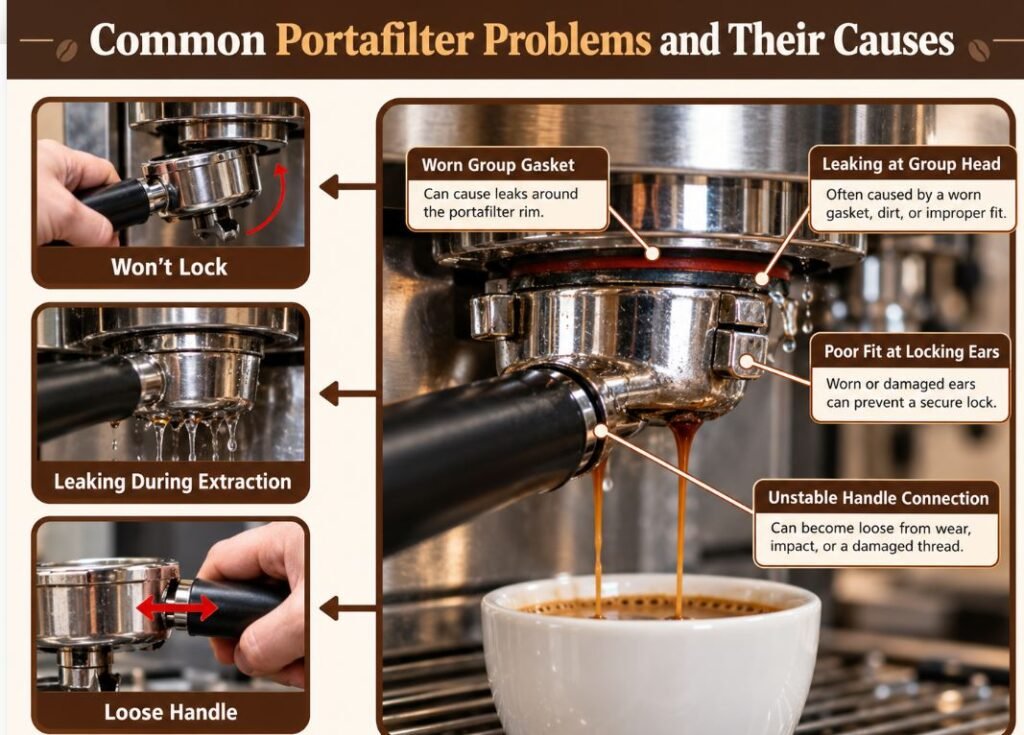
A portafilter problem can appear in several ways, from water leaking around the group head to a handle that feels loose. Identifying the symptoms first makes it easier to choose the correct solution.
Portafilter Won’t Lock Into the Group Head
If your portafilter will not lock into the group head, the cause may be an incompatible part, incorrect locking-ear dimensions, coffee residue, or a damaged gasket.
Remove the portafilter and clean the accessible contact surfaces. Check whether the portafilter is the original component or a verified compatible replacement. If it still cannot engage using the normal locking motion, consult the machine’s manual rather than applying additional force.
Portafilter Leaking During Espresso Extraction
Water leaking around the portafilter connection often indicates a poor seal. Common causes include a worn group head gasket, coffee grounds trapped around the rim, incorrect fitting, or an incompatible portafilter.
Clean the sealing surfaces and inspect the gasket according to the manufacturer’s instructions. If the leak continues, verify the portafilter’s compatibility and replace the gasket if necessary.
If water appears to be coming from internal plumbing rather than the portafilter seal, stop using the machine until the source has been identified.
Portafilter Handle Feels Loose
A loose portafilter handle may result from a damaged handle connection, a worn fastener, or a cracked component. Some handles screw into the portafilter body, while other designs use different attachment methods.
Check the manufacturer’s repair instructions before attempting to tighten the handle. Avoid overtightening, using unsuitable adhesives, or modifying the original components. If the handle or connection is damaged, replace it with a compatible part.
Portafilter Is Difficult to Remove
A portafilter that becomes difficult to remove may have been overtightened, incorrectly fitted, or affected by coffee residue or a deteriorated gasket.
Allow the machine to cool if necessary, then follow the normal removal procedure. Never use tools to force the handle. If the portafilter remains stuck, refer to the manufacturer’s troubleshooting instructions or seek professional assistance.
Quick Portafilter Troubleshooting Table
Use this table to identify possible causes before attempting a repair. These are common possibilities, not definitive diagnoses.
| Problem | Possible cause | Recommended action |
|---|---|---|
| Won’t lock | Incorrect size or lug design | Verify compatibility |
| Leaking around the rim | Worn gasket or coffee residue | Clean and inspect the seal |
| Handle feels loose | Damaged connection or fastener | Inspect the handle assembly |
| Difficult to remove | Excessive tightening or fitting issue | Follow the manual; never force it |
| Locks but still leaks | Poor seal or incompatible part | Check the gasket and portafilter fit |
How to Fix a Portafilter Step by Step
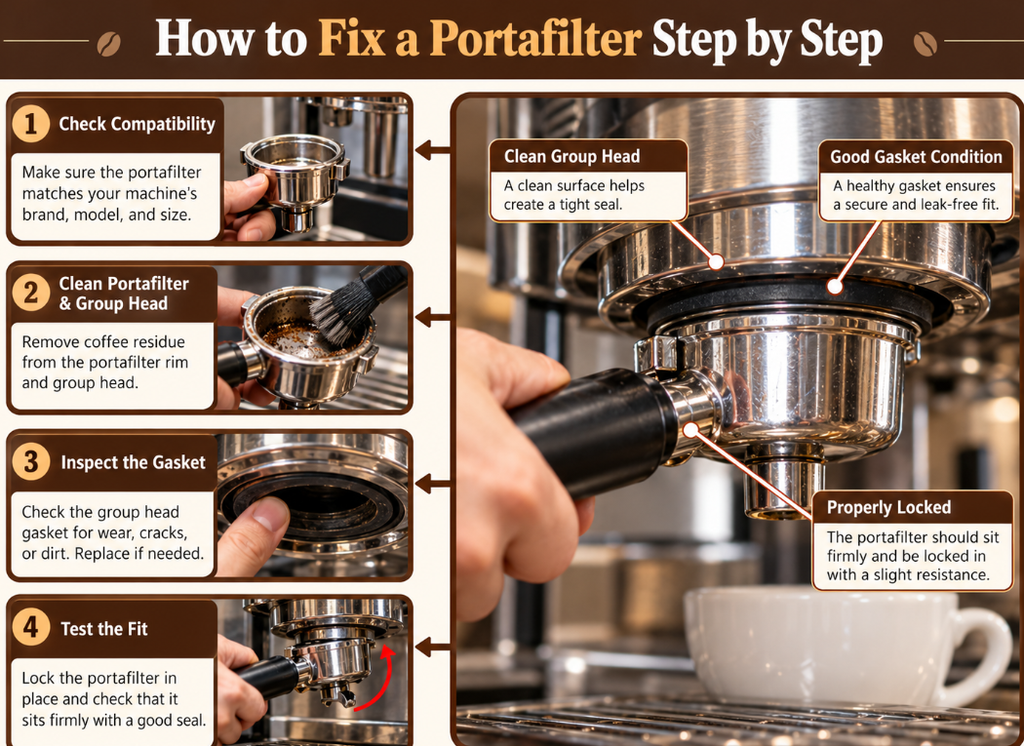
Once you understand the symptoms, follow a systematic troubleshooting process. Start with simple checks before considering replacement parts or professional servicing.
Step 1: Check the Machine Model and Portafilter Compatibility
Before disassembling anything, confirm that the portafilter is designed for your espresso machine. This is especially important if the original part has been replaced or the machine was purchased second-hand.
Check the manufacturer’s documentation for the correct diameter, locking-ear dimensions, and compatible part numbers. If the portafilter is incompatible, cleaning or replacing the gasket will not necessarily solve the problem.
Step 2: Clean the Portafilter and Group Head
Turn off the machine and allow hot components to cool before cleaning. Remove the portafilter and empty the filter basket.
Clean the basket, portafilter rim, and accessible group head surfaces with an appropriate brush and manufacturer-approved cleaning products. Remove trapped coffee grounds without scratching the sealing surfaces or damaging the gasket.
Regular cleaning helps the portafilter engage properly and reduces the chance of leaks caused by coffee residue.
Step 3: Inspect the Group Head Gasket
The group head gasket creates a seal between the portafilter and the group head. Repeated exposure to heat and pressure can cause the gasket to harden, wear, or deteriorate.
Look for visible damage or signs of leakage. If the gasket needs replacing, choose one specified for your exact machine model or group head configuration.
Gasket dimensions and designs are not universal. A replacement that looks similar may not provide the correct seal, so confirm compatibility before installation.
Step 4: Inspect the Locking Ears and Filter Basket
Examine the portafilter’s locking ears for visible wear, bending, cracks, or damage. Also, check that the filter basket is seated correctly and that no component obstructs the locking mechanism.
If the portafilter has damaged locking ears or does not match the machine’s specifications, replace it with a compatible part. Do not bend the ears or grind away material to force an incompatible portafilter to fit.
Step 5: Test the Portafilter Safely
After cleaning or completing an approved repair, reinstall the compatible portafilter according to the user manual.
The portafilter should engage smoothly and reach its intended locking position without excessive force. If it remains loose, leaks, or stops rotating abnormally, do not continue brewing under pressure until the cause has been resolved.
Why Manufacturer-Specific Instructions Matter
Espresso machines may look similar externally while using different internal dimensions and components. Portafilters, group head gaskets, filter baskets, and locking mechanisms may not be interchangeable.
Manufacturer-specific instructions help you identify compatible replacement parts and avoid repairs that could damage the group head or create an unreliable seal. They also explain which components are user-serviceable, which cleaning products are appropriate, and when professional servicing is recommended.
If you cannot find the original manual, search the manufacturer’s official website using the exact model number. Avoid relying exclusively on generic size charts, product photographs, or claims that a portafilter fits every espresso machine.
A useful rule: If a portafilter does not fit naturally, stop and verify compatibility before attempting further adjustments.
Tools and Replacement Parts You May Need
The tools required depend on the problem and the machine’s design. Basic cleaning may be enough for minor residue buildup, while a worn seal or damaged component may require a compatible replacement.
- Espresso cleaning brush: Removes loose coffee grounds from accessible areas.
- Manufacturer-approved cleaning solution: Helps remove coffee oils and residue when used according to the product instructions.
- Replacement group head gasket: Restores the seal when the existing gasket is worn or damaged.
- Compatible filter basket: Replaces a damaged or incorrectly sized basket.
- Manufacturer-approved tools: Allow servicing when the machine’s instructions permit it.
Always disconnect the machine from power before performing maintenance that requires access to internal components. Hot water, steam, electrical components, and pressurized systems can cause injury. Internal repairs are best handled by a qualified technician when the manufacturer does not recommend user servicing.
When Should You Replace a Portafilter?
Replacement may be necessary if the portafilter has cracked components, severely worn locking ears, persistent fitting problems, or damage that cannot be repaired according to the manufacturer’s instructions.
However, replacing the entire portafilter is not always the right solution. A worn gasket, dirty sealing surface, or incompatible replacement part may be responsible for the symptoms.
Before purchasing a new portafilter, consider these points:
- Inspect the existing part: Look for cracks, corrosion, and visible damage to the locking ears.
- Identify the actual cause: Determine whether the issue comes from the portafilter, gasket, or group head.
- Verify the replacement specifications: Confirm compatibility with the exact machine model.
- Compare repair and replacement costs: Replace the component that is actually faulty rather than buying parts unnecessarily.
A correctly matched portafilter should fit without modification and operate according to the manufacturer’s instructions.
How to Prevent Future Portafilter Problems
Regular maintenance can help prevent common portafilter problems and extend the life of compatible components.
- Clean the portafilter and filter basket after each use.
- Remove coffee residue from accessible group head surfaces.
- Inspect the group head gasket periodically and replace it when necessary.
- Avoid forcing the portafilter beyond its normal locking position.
- Use compatible portafilters, baskets, and replacement gaskets.
- Follow the machine’s recommended cleaning and maintenance schedule.
- Check the manual before adjusting or replacing components.
These simple habits reduce residue buildup, help maintain a reliable seal, and minimize unnecessary repair costs.
Frequently Asked Questions
Why Won’t My Portafilter Lock Into My Espresso Machine?
Possible causes include an incompatible portafilter, incorrect locking-ear dimensions, trapped coffee grounds, a damaged gasket, or a problem with the group head. Confirm the part’s compatibility with your exact machine model before attempting further repairs.
Are All 58 mm Portafilters Compatible?
No. A 58 mm diameter does not guarantee a universal fit. Locking-ear dimensions, lug positions, group head design, and other specifications can differ between machines.
Can I Use a 54 mm Portafilter on a 58 mm Espresso Machine?
Generally, no. The difference in diameter means the portafilter is not designed for the same group head. Use a replacement that the manufacturer confirms is compatible with your machine.
How Do I Know If My Portafilter Gasket Needs Replacing?
Persistent leakage around the portafilter seal, visible gasket deterioration, or fitting problems may indicate a worn gasket. However, an incompatible portafilter can cause similar symptoms, so verify compatibility before replacing the seal.
Should I Force a Portafilter That Won’t Lock?
No. Excessive force can damage the portafilter’s locking ears, the group head, or other components. Stop and check compatibility, cleanliness, and the manufacturer’s fitting instructions.
Where Can I Find the Correct Replacement Portafilter?
Start with your espresso machine’s exact model number and official parts documentation. Confirm the diameter, locking mechanism, and required specifications with the manufacturer or an authorized supplier before purchasing.
Final Thoughts
Fixing a portafilter starts with identifying the actual cause of the problem. Cleaning may resolve minor obstructions, while a worn gasket may require replacement. Persistent locking or fitting issues, however, can indicate that the portafilter is incompatible with the espresso machine.
Always verify the portafilter size, locking mechanism, and replacement-part specifications against your exact machine model. Following the manufacturer’s instructions is the most reliable way to avoid unnecessary repairs, protect the group head, and restore proper espresso preparation.

- How to Fix a Portafilter: Size, Locking Mechanism, and Troubleshooting Guide - October 22, 2026
- 35 Coffee Machine Parts and Functions: Complete Guide With Names and Uses - October 22, 2026
- 25 Espresso Machine Parts Names and Their Functions Explained - October 22, 2026