
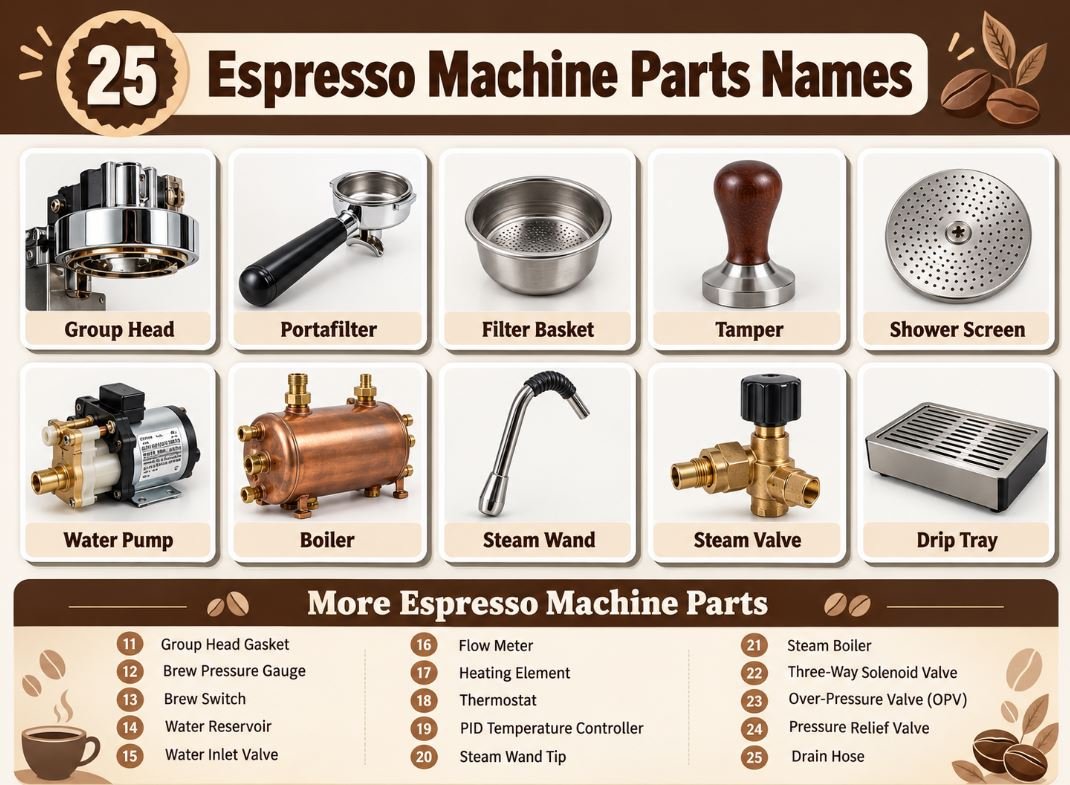
Understanding the 25 espresso machine parts names can help you make better coffee, maintain your machine, and identify problems before they become expensive repairs. Whether you are a beginner exploring home espresso brewing or an experienced coffee enthusiast, knowing how each component works makes the brewing process easier to understand.
From the group head and portafilter to the water pump, boiler, and steam wand, every part plays an important role in preparing a rich, flavorful espresso. Some components control water flow and pressure, while others manage temperature, extract coffee, or help create creamy milk foam.
In this guide, we will explore 25 essential espresso machine parts, their names, and their basic functions so you can confidently care for your equipment.
1. Group Head
The group head is one of the most important espresso machine parts because it delivers hot water to the ground coffee during extraction. It holds the portafilter securely and helps maintain consistent brewing conditions. Understanding how the group head works can help you improve coffee quality and identify common machine problems. Regular cleaning also prevents coffee residue from affecting water flow, flavor, and extraction performance.
Main Functions of the Group Head
- Distributes hot water toward the coffee grounds.
- Connects securely with the portafilter.
- Supports consistent pressure during extraction.
- Helps maintain stable brewing conditions.
Common Types of Group Heads
Espresso machines use different group head designs depending on their construction and intended use. The E61 group head is a traditional design found in many prosumer machines. Saturated group heads are closely integrated with the boiler to support temperature stability, while other designs use different heating arrangements to maintain suitable brewing temperatures. Each type has its own advantages in terms of heat management, maintenance, and machine design.
How to Clean and Maintain the Group Head
Clean the group head after brewing to remove loose coffee grounds and oils. Use a suitable cleaning brush around the gasket and shower screen, and follow the manufacturer’s instructions for backflushing if the machine supports it. Regular maintenance helps prevent blockages, reduces residue buildup, and keeps the group head working properly. Avoid using unsuitable cleaning products that could damage internal seals or other components.
Signs of Group Head Problems
Water leaking around the portafilter, uneven water distribution, and difficulty locking the portafilter into place may indicate a problem with the group head or its surrounding components. Coffee residue can also affect performance over time. If cleaning does not resolve these issues, inspect the gasket and shower screen for wear. Persistent leaks or mechanical damage may require professional servicing.
2. Portafilter
The portafilter is the handle-equipped component that holds the filter basket containing ground coffee. It locks into the group head, allowing pressurized hot water to pass through the coffee during extraction. Portafilters are available in different designs to suit various espresso machines and brewing preferences. Choosing the correct type and keeping it clean can help produce consistent espresso while preventing leaks, blockages, and unwanted coffee flavors.
Main Functions of the Portafilter
- Holds the filter basket securely.
- Keeps the coffee grounds in position during brewing.
- Connects the coffee basket to the group head.
- Directs extracted espresso toward the cup.
Common Types of Portafilters
A spouted portafilter directs espresso through one or two spouts, making it convenient for filling one or two cups. A bottomless portafilter exposes the underside of the basket, allowing users to observe extraction and identify uneven flow. Pressurized portafilters use a specially designed basket or outlet to help generate pressure and are common in some entry-level machines. The best choice depends on machine compatibility, brewing experience, and personal preference.
How to Clean and Maintain the Portafilter
Remove the filter basket and rinse both components with warm water after brewing. Clean the handle, basket, and spouts regularly to remove coffee oils and residue. For deeper cleaning, use a product approved for espresso equipment and follow the manufacturer’s directions. Avoid abrasive tools that could damage the portafilter’s finish, and make sure it is thoroughly rinsed before preparing another shot.
Signs of Portafilter Problems
A portafilter may need attention if water leaks around the group head, the handle becomes loose, or the spouts remain blocked after cleaning. Difficulty locking it into place may indicate a worn gasket or an incompatible component. Inspect the portafilter and its basket regularly, and replace damaged parts with compatible components designed for your espresso machine.
3. Filter Basket
The filter basket is a small metal container fitted inside the portafilter. It holds the ground coffee while allowing extracted espresso to pass through its holes. Basket size, hole design, and coffee dose can influence the brewing process. A clean, undamaged basket helps water flow more consistently through the coffee puck. Understanding the different basket types makes it easier to choose the right option for your espresso machine and preferred brewing style.
Main Functions of the Filter Basket
- Holds the measured dose of ground coffee.
- Allows espresso to pass through while retaining most coffee particles.
- Supports even water flow through the coffee puck.
- Helps determine the amount of coffee used for each shot.
Common Types of Filter Baskets
Single baskets are designed for smaller doses, while double baskets accommodate larger amounts of coffee and are widely used for double espresso shots. Precision baskets are manufactured to specific tolerances to support repeatable extraction. Pressurized baskets have a restricted outlet that helps build pressure, making them useful with some entry-level machines and pre-ground coffee. Always check the recommended basket size and compatibility before purchasing a replacement.
How to Clean and Maintain the Filter Basket
Remove the basket from the portafilter and rinse it after every brewing session. Check the holes for trapped coffee particles and clean them with an appropriate brush or cleaning solution when necessary. Coffee oils can accumulate over time, affecting espresso flavor and flow. Periodic deep cleaning helps prevent blockages, while careful handling reduces the risk of dents or damage to the basket.
Signs of Filter Basket Problems
Blocked holes, visible dents, and persistent coffee residue can interfere with extraction. You may notice unusually slow brewing, uneven flow, or inconsistent results despite using the same coffee and preparation method. Inspect the basket under good lighting and clean it thoroughly before deciding whether replacement is necessary. A damaged or unsuitable basket should be replaced with a model that fits the portafilter correctly.
4. Tamper
A tamper is a handheld coffee tool used to compress ground coffee evenly inside the filter basket before brewing. Proper tamping creates a level coffee bed, helping water pass through the grounds more evenly. Although tamping does not require excessive force, consistency matters. Using a correctly sized tamper and preparing the coffee carefully can reduce uneven extraction and make it easier to achieve repeatable espresso results at home or in a café.
Main Functions of a Tamper
- Compresses ground coffee into a stable puck.
- Creates a level surface for extraction.
- Helps reduce uneven water flow when used with good coffee distribution.
- Supports repeatable coffee preparation.
Common Types of Tampers
Traditional tampers have a flat base and a handle, allowing users to control the tamping process manually. Calibrated tampers are designed to provide a more consistent force, while spring-loaded models use a spring mechanism to guide pressure. Some tools combine coffee distribution and tamping functions. The correct option depends on the filter basket’s diameter, the user’s comfort, and the level of consistency desired during preparation.
How to Use and Maintain a Tamper
Choose a tamper that fits the basket without leaving excessive gaps around the edges. Distribute the ground coffee evenly before pressing down with a level motion. Keep the base clean and free from coffee residue, as buildup can affect contact with the coffee bed. Store the tamper in a dry, convenient location and avoid dropping it, which could damage the base or affect its alignment.
Signs of Tamping Problems
An uneven coffee surface, inconsistent shot times, and irregular extraction may suggest problems with coffee distribution or tamping technique. However, these symptoms can also result from an unsuitable grind size, an incorrect dose, or other brewing variables. Focus on preparing a level coffee bed and applying a consistent technique rather than simply increasing force. This approach helps make espresso preparation more predictable.
5. Shower Screen
The shower screen is a perforated metal component located inside the group head. It helps spread incoming brewing water across the surface of the coffee puck rather than allowing water to enter through a single concentrated point. Its condition can influence water distribution and extraction consistency. Because coffee oils and fine particles gradually collect on the screen, regular cleaning is important for maintaining good espresso flavor and reliable machine performance.
Main Functions of the Shower Screen
- Distributes brewing water across the coffee puck.
- Helps reduce concentrated water flow in one area.
- Separates the coffee puck from the internal water outlet.
- Supports consistent extraction when clean and correctly fitted.
Common Types of Shower Screens
Standard shower screens use a conventional pattern of small holes to distribute water. Precision screens are manufactured with particular hole patterns and specifications to support consistent water delivery. Some screens also feature specialized coatings intended to reduce residue buildup or simplify cleaning. The best choice depends on the espresso machine’s group head design, manufacturer recommendations, and compatibility requirements.
How to Clean and Maintain the Shower Screen
Wipe the shower screen and surrounding group head area after brewing to remove loose coffee grounds. Clean the screen more thoroughly according to the machine manufacturer’s instructions, removing it only when appropriate. Use approved espresso-machine cleaning products when needed, and rinse the component properly before brewing again. Regular cleaning helps prevent blocked holes and reduces the accumulation of coffee oils that can affect taste.
Signs of Shower Screen Problems
Uneven water distribution, visible residue, blocked holes, or abnormal water spraying may indicate that the shower screen needs cleaning or inspection. A damaged or incorrectly fitted screen can also affect brewing performance. Before replacing it, clean the screen and check that it is installed correctly. If the problem continues, consult the manufacturer’s guidance to determine whether the screen or another group head component needs attention.
6. Group Head Gasket
The group head gasket is a rubber or silicone seal fitted around the group head. When the portafilter locks into position, the gasket creates a watertight connection that prevents water from escaping during extraction. Because it is exposed to heat, pressure, and repeated use, the gasket can gradually become compressed or brittle. Inspecting it regularly helps maintain a secure fit, prevents leaks, and supports reliable espresso brewing.
Main Functions of the Group Head Gasket
- Seals the connection between the portafilter and group head.
- Prevents water from leaking around the portafilter.
- Helps maintain proper brewing conditions.
- Allows the portafilter to lock securely into place.
Common Types of Group Head Gaskets
Rubber gaskets are commonly used in espresso machines because they provide a flexible seal. Silicone gaskets are another option and are often selected for their flexibility and heat resistance. Some machines require specially shaped or sized gaskets designed for a particular group head. Always check the manufacturer’s specifications before purchasing a replacement, as an incorrectly sized gasket may cause leaks or prevent the portafilter from locking properly.
How to Maintain the Group Head Gasket
Clean coffee residue from the gasket and surrounding area regularly. Avoid leaving old coffee oils and grounds around the sealing surface, as buildup can interfere with a proper fit. Inspect the gasket periodically for cracks, hardening, or flattening. Replace it when necessary using a compatible component and the manufacturer’s recommended procedure. Routine cleaning and timely replacement can help prevent leaks and protect the surrounding parts.
Signs of a Worn Group Head Gasket
Water leaking around the portafilter during brewing is a common sign of a worn or poorly fitted gasket. Other symptoms include a portafilter that locks farther than usual, a hardened seal, or difficulty obtaining a secure connection. Coffee residue or an incorrectly installed gasket can produce similar symptoms. Clean and inspect the area first, then replace the gasket if it is damaged or no longer seals properly.
7. Brew Pressure Gauge
A brew pressure gauge displays the pressure generated during espresso extraction. It gives users a visual indication of brewing pressure, helping them understand how the machine behaves while water passes through the coffee puck. Some espresso machines include a dedicated brewing gauge, while others use digital displays or have no pressure gauge at all. Understanding this component can help with basic troubleshooting and consistent brewing, although a gauge reading alone cannot guarantee good espresso quality.
Main Functions of the Brew Pressure Gauge
- Displays brewing pressure during extraction.
- Helps users monitor pressure consistency.
- Supports troubleshooting when pressure appears abnormal.
- Provides feedback during machine testing and adjustment.
Common Types of Pressure Gauges
Analog pressure gauges display readings with a needle moving across a numbered dial. Digital pressure displays show measurements as numerical values and may be integrated into the machine’s electronic controls. Some machines use combined gauges to display more than one pressure measurement, such as brewing and steam pressure. The display format and measurement range depend on the machine’s design and specifications.
How to Maintain the Brew Pressure Gauge
Keep the gauge face clean and check whether its readings change normally during brewing. Avoid striking the gauge or applying force to its fittings. If the needle becomes stuck, readings fluctuate unexpectedly, or the gauge appears damaged, consult the manufacturer’s service instructions. Repairs involving pressurized water systems should be handled carefully, and qualified technicians should inspect faulty connections or components when necessary.
Signs of Pressure Gauge Problems
A needle that does not move during brewing, unusual fluctuations, or readings inconsistent with machine performance may indicate a faulty gauge or a problem elsewhere in the pressure system. Leaks around the gauge connection also require attention. Before assuming the gauge itself has failed, consider possible causes such as pump problems or restricted water flow. Professional diagnosis can help identify the actual source of the issue.
8. Brew Switch
The brew switch is a button, toggle, or electronic control that starts and stops espresso extraction. Depending on the machine, activating the switch may turn on the pump directly or send a signal to an electronic controller. Some models use simple manual controls, while others offer programmable buttons for specific shot volumes. A properly functioning brew switch makes daily coffee preparation easier and helps users control the extraction process more consistently.
Main Functions of the Brew Switch
- Starts the brewing process.
- Stops water delivery when extraction is complete.
- Activates the pump or brewing control system.
- Supports manual or programmed shot preparation.
Common Types of Brew Switches
Toggle switches use a small lever that moves between operating positions. Push-button switches start or stop brewing with a simple press, while programmable buttons can activate preset shot volumes on compatible machines. Some modern espresso machines use touchscreen controls instead of a separate physical switch. Each design provides a different user experience, but the correct operation depends on the machine’s specific controls and settings.
How to Maintain the Brew Switch
Keep the control area clean and dry, and avoid pressing the switch with excessive force. Follow the manufacturer’s instructions for cleaning the machine’s exterior. If the switch becomes loose, sticks, or stops responding correctly, arrange appropriate servicing. Electrical components should not be opened or repaired while the machine is connected to power, and internal electrical work should be performed by a qualified technician.
Signs of Brew Switch Problems
The machine may fail to start brewing, stop unexpectedly, or respond intermittently when the switch is activated. A loose button or a control that feels stuck may also indicate a problem. First, check the machine’s normal operating conditions and consult its manual. If the switch remains unresponsive, professional inspection may be necessary to determine whether the fault lies in the switch, wiring, pump, or control system.
9. Water Reservoir
The water reservoir is the tank that stores water for espresso preparation. It is common in many home espresso machines and can often be removed for filling and cleaning. The reservoir supplies water to the machine’s pump, making it an essential part of the brewing process. Keeping it clean and filled with suitable water helps prevent interruptions during brewing, reduces unwanted odors, and supports better long-term machine maintenance.
Main Functions of the Water Reservoir
- Stores water for brewing.
- Supplies water to the machine’s pump.
- Allows convenient refilling.
- Makes routine water replacement easier.
Common Types of Water Reservoirs
Removable reservoirs can be lifted out of the machine for convenient filling and cleaning. Fixed reservoirs remain attached to the machine but can usually be accessed through a lid or opening. Some machines also accommodate water filters that help manage mineral content or improve water quality. The reservoir design varies by model, so users should check the manufacturer’s recommendations for suitable water and compatible filters.
How to Clean and Maintain the Water Reservoir
Empty and rinse the reservoir regularly, following the manufacturer’s cleaning instructions. Refill it with water suitable for the machine, and avoid leaving stagnant water inside for extended periods. If the reservoir uses a filter, replace it according to the specified schedule. Inspect the tank and its connections for cracks, residue, or leaks, and make sure it is positioned correctly before operating the machine.
Signs of Water Reservoir Problems
Cracks, leaking connections, unusual odors, and visible deposits can indicate that the reservoir needs cleaning or replacement. A machine that fails to draw water may also have a supply issue, although the pump or inlet system could be responsible. Check that the reservoir contains enough water and is seated properly. If the problem continues after basic checks, consult the machine’s troubleshooting guide.
10. Water Pump
The water pump moves water through the espresso machine and supplies the pressure required for extraction. Depending on the machine design, it draws water from a reservoir or receives it from a direct plumbing connection. The pump works with other components to deliver water to the brewing system at suitable pressure. Understanding the pump’s role can help users recognize common performance issues and maintain their espresso machines more effectively.
Main Functions of the Water Pump
- Moves water toward the heating and brewing systems.
- Provides pressure for espresso extraction.
- Supports consistent water delivery.
- Works with pressure-control components to regulate brewing conditions.
Common Types of Water Pumps
Vibratory pumps are widely used in home espresso machines and generate pressure through a vibrating mechanism. Rotary pumps use a rotating mechanism and are common in many commercial and higher-end machines. Gear pumps are used in some specialized equipment where controlled water delivery is required. Each pump type has different operating characteristics, so replacement parts must match the machine’s specifications.
How to Maintain the Water Pump
Use suitable water and follow the manufacturer’s recommendations for cleaning, descaling, and general maintenance. Make sure the reservoir contains sufficient water before brewing, and avoid repeatedly running a machine without an adequate water supply. If the pump becomes unusually noisy or water flow decreases, check basic supply conditions first. Persistent problems should be inspected by a qualified technician to avoid damaging the pump or related components.
Signs of Water Pump Problems
Low brewing pressure, unusual pump noise, little or no water flow, and difficulty drawing water from the reservoir may indicate a pump-related problem. However, these symptoms can also result from blockages, air trapped in the water circuit, or other machine faults. Check the reservoir and follow the manufacturer’s troubleshooting instructions before arranging repairs. If the problem persists, professional diagnosis can help determine whether the pump needs servicing or replacement.
11. Water Inlet Valve
The water inlet valve controls the entry of water into an espresso machine’s internal water system. Depending on the machine design, it may regulate water supplied from a reservoir or a direct plumbing connection. This component helps ensure that water reaches the appropriate parts of the machine when needed. A properly functioning inlet valve supports reliable brewing and prevents unwanted water flow. Understanding its role can help users identify supply problems and maintain consistent espresso preparation.
Main Functions of the Water Inlet Valve
- Controls water entering the machine.
- Regulates water supply in compatible espresso systems.
- Helps direct water toward the appropriate internal components.
- Supports reliable operation of the water circuit.
Common Types of Water Inlet Valves
Water inlet valves come in different designs depending on how an espresso machine receives its water. Solenoid-operated valves use electrical signals to control water flow, while mechanically operated valves rely on a physical mechanism. Direct-plumbed machines may use inlet valves designed for connection to a water supply line. The correct valve depends on the machine’s model, water system, and operating requirements.
How to Clean and Maintain the Water Inlet Valve
Follow the manufacturer’s maintenance instructions to keep the water supply system working properly. Use suitable water to help reduce mineral deposits, and descale the machine when recommended. If the valve becomes blocked or fails to open correctly, water flow may decrease or stop. Because some valves involve electrical connections and pressurized water, internal inspection and repairs should be performed by a qualified technician when necessary.
Signs of Water Inlet Valve Problems
Water failing to enter the machine, unusually slow filling, or water continuing to flow when it should stop may indicate an inlet valve issue. Mineral buildup, a restricted water line, or another supply problem can produce similar symptoms. Check the water source and reservoir first, where applicable. If the issue continues, consult the machine’s troubleshooting guide or arrange professional servicing.
12. Flow Meter
A flow meter measures the amount of water moving through an espresso machine. It is commonly found in automatic and volumetric machines that use measured water delivery to control shot size. By tracking water flow, the component helps the machine stop extraction after a programmed volume has been reached. A properly functioning flow meter supports repeatable brewing, although grind size, coffee dose, and other variables still influence the final espresso.
Main Functions of the Flow Meter
- Measures water volume moving through the machine.
- Supports automatic shot-volume control.
- Sends flow information to the machine’s control system.
- Helps produce repeatable brewing volumes.
Common Types of Flow Meters
Many espresso machines use electronic flow meters that detect water movement and send signals to a controller. Some designs use a small rotating component that generates pulses as water passes through it. The controller interprets these signals to estimate the delivered volume. Flow meter design and accuracy vary by manufacturer, so a replacement must be compatible with the machine’s water circuit and electronic system.
How to Clean and Maintain the Flow Meter
Follow the manufacturer’s instructions for descaling and maintaining the water circuit. Mineral deposits or debris may interfere with the flow meter’s moving parts or sensor, affecting its readings. Avoid dismantling the component unless the service procedure permits it. If programmed shots repeatedly stop too early or continue too long, check the machine settings and water supply before arranging professional inspection of the flow meter.
Signs of Flow Meter Problems
A faulty flow meter may cause inconsistent shot volumes, automatic brewing cycles that stop unexpectedly, or extraction that continues beyond the programmed amount. The machine may also display an error if it cannot detect water flow. However, these symptoms can result from a blocked water path, incorrect settings, or another control issue. Consult the manual and seek professional diagnosis if basic troubleshooting does not resolve the problem.
13. Boiler
The boiler is a heating component that brings water to the required temperature for espresso brewing and, in some machine designs, steam production. Depending on the machine, it may serve brewing and steaming functions together or operate alongside a separate steam boiler. Stable water temperature is important because it influences extraction and coffee flavor. Understanding the boiler’s role helps users recognize the importance of suitable water quality, regular maintenance, and safe machine operation.
Main Functions of the Boiler
- Heats water for espresso extraction.
- Supplies hot water to the brewing system.
- Supports steam production in machines designed for combined operation.
- Helps maintain the temperature required for brewing.
Common Types of Boilers
Single-boiler machines use one boiler for brewing and steaming, typically requiring a temperature change between the two functions. Heat-exchanger machines use a boiler with a separate water path for brewing, allowing brewing and steaming functions to be managed differently. Dual-boiler machines have separate boilers for brewing and steam production. Each design offers different advantages in temperature control, workflow, and machine complexity.
How to Clean and Maintain the Boiler
Follow the manufacturer’s recommendations for water quality, descaling, and routine servicing. Mineral deposits can accumulate inside the boiler, particularly when unsuitable water is used. Descaling requirements vary by machine, and some models require professional service rather than user-performed descaling. Never open a hot or pressurized boiler. Allow the machine to cool and depressurize according to its instructions, and leave internal repairs to qualified technicians.
Signs of Boiler Problems
Inconsistent brewing temperature, insufficient steam, unusual heating behavior, and persistent heating errors may indicate a boiler-related issue. Leaks or visible signs of corrosion also require attention. These symptoms can arise from the heating element, thermostat, temperature sensor, or other components rather than the boiler itself. Consult the machine’s manual and arrange professional inspection when problems persist, especially if the machine shows signs of leakage or overheating.
14. Heating Element
The heating element converts electrical energy into heat to warm water inside an espresso machine’s boiler or heating system. It plays an essential role in preparing water for extraction and, in suitable machines, producing steam for milk frothing. The element works with temperature sensors and control components to maintain the required operating temperature. Keeping the machine properly maintained can help protect the heating system and support reliable performance over time.
Main Functions of the Heating Element
- Converts electrical energy into heat.
- Warms water inside the boiler or heating system.
- Supports brewing and steaming temperatures.
- Works with temperature controls to regulate heating.
Common Types of Heating Elements
Espresso machines may use immersion heating elements installed inside a boiler or heating elements integrated into other heating assemblies. Thermoblock systems heat water as it passes through a heated channel rather than storing a large volume of hot water. The design affects heating speed, temperature behavior, and maintenance requirements. Replacement elements must match the machine’s specifications, including electrical rating, physical dimensions, and fitting type.
How to Maintain the Heating Element
Use suitable water and follow the manufacturer’s recommendations for descaling and servicing. Mineral deposits can build up on heating surfaces and reduce heating efficiency. If the machine heats slowly or fails to reach the required temperature, do not immediately assume the element is faulty; sensors, wiring, and control components may also be involved. Electrical testing and replacement should be performed by a qualified technician with the machine safely disconnected from power.
Signs of Heating Element Problems
A machine that fails to heat water, takes unusually long to reach operating temperature, or repeatedly triggers a heating error may have a damaged heating element. Electrical faults can also cause a circuit breaker to trip. These symptoms require careful diagnosis because temperature sensors, wiring, and control boards can cause similar problems. Stop using the machine if you notice burning smells, electrical damage, or other signs of an electrical fault.
15. Thermostat
A thermostat monitors or controls temperature within an espresso machine’s heating system. Depending on its design, it may switch the heating element on or off when a specific temperature is reached. Some machines use thermostats for basic temperature regulation, while others rely on electronic sensors and advanced controllers. The thermostat helps prevent excessive temperature changes and supports reliable brewing and steaming when it operates correctly.
Main Functions of the Thermostat
- Monitors temperature within its operating range.
- Controls heating cycles in compatible machines.
- Helps prevent excessive heating.
- Supports stable operation of the heating system.
Common Types of Thermostats
Mechanical thermostats use temperature-sensitive mechanisms to switch heating circuits on or off. Thermal cutouts provide protective shutdown when temperatures exceed a specified limit. Some espresso machines use electronic temperature sensors connected to a control board instead of a conventional thermostat. These components perform related but different roles, so the correct replacement must match the machine’s design and temperature specifications.
How to Maintain the Thermostat
Thermostats generally require inspection as part of the machine’s heating-system servicing rather than routine user cleaning. Keep the machine maintained according to the manufacturer’s instructions, and address mineral buildup or other conditions that may affect heating performance. If the temperature becomes unstable, a technician can test the thermostat and related components. Never bypass a thermostat or thermal safety device to keep the machine operating, as doing so can create a serious hazard.
Signs of Thermostat Problems
Water that becomes too hot, inconsistent brewing temperatures, or a machine that stops heating unexpectedly may indicate a thermostat or temperature-control problem. In some cases, the heating element may remain active longer than expected or fail to activate. Similar symptoms can result from a faulty sensor or controller. Professional testing can help identify the cause and ensure that the machine’s safety features continue to operate correctly.
16. PID Temperature Controller
A PID temperature controller is an electronic control system that helps maintain a target temperature in compatible espresso machines. PID stands for proportional, integral, and derivative, describing how the controller responds to temperature differences over time. It adjusts heating behavior to reduce temperature fluctuations and improve stability. Although not every espresso machine includes a PID controller, it is a useful feature for users who want more precise control over brewing temperature.
Main Functions of the PID Temperature Controller
- Helps maintain a selected temperature.
- Adjusts heating output in response to temperature changes.
- Reduces temperature fluctuations in compatible systems.
- Supports repeatable brewing conditions.
Common Types of PID Temperature Controllers
Some espresso machines use built-in PID controllers with digital displays that allow users to adjust temperature settings. Other models integrate the controller into the machine’s main electronic system, with settings accessible through a menu or service interface. The controller works with a temperature sensor and heating element rather than operating independently. Available features vary by model, so users should consult the manufacturer’s specifications before changing settings.
How to Maintain the PID Temperature Controller
Keep the control panel clean and dry, and use the manufacturer’s recommended temperature settings as a starting point. Avoid changing service-level parameters unless you understand their purpose. If the displayed temperature becomes unstable or differs significantly from expected behavior, the problem may involve the sensor, wiring, heating element, or controller itself. Electronic diagnosis and repairs should be carried out by a qualified technician.
Signs of PID Controller Problems
Unexpected temperature changes, error messages, unresponsive controls, or heating behavior that does not match the selected setting may indicate a problem. However, the controller may be functioning correctly while another component provides inaccurate readings. Check the user settings and consult the machine manual before seeking service. If the issue continues, a technician can test the sensor, control system, and heating circuit to identify the fault.
17. Steam Wand
The steam wand is a metal tube that delivers steam for frothing and texturing milk. It is an important component for preparing cappuccinos, lattes, and other milk-based coffee drinks. Steam introduces heat and helps create the fine bubbles needed for smooth milk texture. A clean, properly functioning wand makes milk preparation easier and helps prevent old milk residue from affecting flavor, hygiene, or steam performance.
Main Functions of the Steam Wand
- Delivers steam into milk.
- Heats milk for espresso-based drinks.
- Helps create foam and a smooth milk texture.
- Allows users to control milk preparation manually.
Common Types of Steam Wands
Traditional steam wands require the user to control the wand’s position and steam flow while texturing milk. Some entry-level machines use panarello-style attachments that introduce air more easily to create foam. Commercial and higher-end machines may use multi-hole tips and articulated wand designs for greater control. The appropriate method depends on the machine, the milk being used, and the user’s preferred texture.
How to Clean and Maintain the Steam Wand
Purge the wand briefly before use if recommended by the manufacturer, and wipe it with a clean, damp cloth immediately after steaming milk. Purge it again afterward to clear residual milk from the tip. Never allow milk to dry on the wand, as it becomes harder to remove and can block the steam outlets. Follow the machine’s instructions for deeper cleaning and safe handling of hot steam.
Signs of Steam Wand Problems
Weak steam, blocked tip openings, irregular steam flow, and difficulty producing smooth milk foam may indicate that the wand needs cleaning or inspection. Milk residue is a common cause, but boiler or steam-valve problems can produce similar symptoms. Clean the wand and check the tip before arranging service. If steam output remains weak or the wand leaks unexpectedly, consult a qualified technician.
18. Steam Wand Tip
The steam wand tip is the small component fitted to the end of the steam wand. It contains one or more openings through which steam enters the milk. The number, size, and arrangement of these openings influence steam delivery and the user’s ability to create different milk textures. Keeping the tip clean is essential because dried milk can block its openings and reduce steam performance.
Main Functions of the Steam Wand Tip
- Directs steam into the milk.
- Controls how steam exits the wand.
- Supports milk heating and foam formation.
- Influences the control and speed of milk texturing.
Common Types of Steam Wand Tips
Steam wand tips vary in the number and arrangement of their openings. Single-hole tips can provide a slower, more controlled steam flow, while multi-hole tips may distribute steam more widely and heat milk more quickly. Some machines use specialized tips designed for a particular wand or steaming system. Tip selection should follow the manufacturer’s recommendations because an incompatible tip can affect steam performance and safe operation.
How to Clean and Maintain the Steam Wand Tip
Wipe the wand after every use and purge steam according to the manufacturer’s instructions. If the tip becomes blocked, allow the machine to cool and depressurize as directed before removing the tip, if removal is permitted. Use a suitable cleaning tool to clear the openings without enlarging or damaging them. Reinstall the tip securely and check for normal steam flow before preparing milk.
Signs of Steam Wand Tip Problems
Uneven steam output, visible milk residue, reduced steam flow, or steam emerging from fewer openings than expected may indicate a blockage. A loose or damaged tip can also affect performance. Clean the tip carefully and inspect it for visible damage. If steam flow remains abnormal after cleaning, the problem may lie in the wand, steam valve, or boiler rather than the tip itself.
19. Steam Valve
The steam valve controls the release of steam from the machine to the steam wand. Depending on the design, it may operate through a rotating knob, lever, or electronic control. Opening the valve allows steam to flow, while closing it stops the supply. A properly functioning steam valve helps users control milk preparation and prevents unwanted steam release when the machine is not in use.
Main Functions of the Steam Valve
- Controls steam flow to the wand.
- Allows users to start and stop steaming.
- Helps regulate steam delivery during milk preparation.
- Prevents continuous steam release when properly closed.
Common Types of Steam Valves
Manual steam valves often use a knob or lever to open and close the steam passage. Some designs use a rotary mechanism, while others rely on a lever-operated valve. Certain modern machines may use electronically controlled steam delivery. The internal construction varies, but all designs must be compatible with the machine’s pressure and temperature requirements.
How to Clean and Maintain the Steam Valve
Wipe the external valve control and surrounding area to remove moisture and milk residue. Avoid forcing a stiff knob or lever, as this may damage the mechanism. If steam continues to escape when the valve is closed, or the control becomes difficult to operate, the valve may need inspection. Internal servicing should be handled by a qualified technician because steam systems can retain high temperatures and pressure.
Signs of Steam Valve Problems
Steam leaking from the wand when the valve is closed, difficulty adjusting steam flow, or a control that feels unusually stiff may indicate a valve problem. Inconsistent steam delivery can also result from blockages or insufficient boiler performance. Check the wand tip for residue and consult the machine’s manual. If the problem persists, professional servicing can determine whether the valve needs cleaning, repair, or replacement.
20. Steam Boiler
A steam boiler is a dedicated heating vessel used in dual-boiler espresso machines to produce and store steam for milk preparation. Unlike a single-boiler system that switches between brewing and steaming temperatures, a dual-boiler machine can maintain separate temperature conditions for these functions. This arrangement allows users to prepare espresso and steam milk with less waiting between tasks. Not every espresso machine has a separate steam boiler, as the design depends on the machine’s heating system.
Main Functions of the Steam Boiler
- Heats water to produce steam.
- Supplies steam to the steam wand.
- Supports milk frothing and texturing.
- Allows separate steam and brewing temperature control in dual-boiler machines.
Common Steam Boiler Designs
Steam boilers vary in capacity, material, and construction according to the machine’s size and intended use. Stainless steel and copper are used in different machine designs, with each material offering distinct thermal and maintenance characteristics. In a dual-boiler system, the steam boiler operates separately from the brewing boiler. Some machines instead use a single boiler or heat exchanger to provide both brewing water and steam.
How to Clean and Maintain the Steam Boiler
Follow the manufacturer’s instructions for water quality, descaling, and scheduled servicing. Mineral deposits can accumulate inside the boiler and affect heating efficiency or steam production. Some machines require professional descaling or internal inspection, so do not assume that a home descaling procedure is suitable. Never open a hot or pressurized boiler. Allow the machine to cool and depressurize according to the manufacturer’s safety instructions before any approved maintenance.
Signs of Steam Boiler Problems
Insufficient steam, slow heating, unstable steam pressure, and persistent heating errors may indicate a problem with the steam boiler or its supporting components. Leaks and unusual noises also warrant attention. However, a faulty heating element, temperature sensor, pressure control, or steam valve can create similar symptoms. If the machine cannot produce adequate steam after basic checks, arrange professional servicing to identify the cause and ensure safe operation.
21. Drip Tray
The drip tray is the removable or fixed component located beneath the group head and cup area of an espresso machine. It collects water drips, small spills, and excess liquid produced during brewing and cleaning. Many drip trays include a removable grid that supports cups while allowing liquid to drain into the tray below. Keeping this component clean helps maintain a tidy coffee station, prevents unpleasant odors, and makes everyday espresso preparation more convenient.
Main Functions of the Drip Tray
- Collects spilled water and excess liquid.
- Catches drips from the group head and surrounding areas.
- Provides a stable surface for the drip grid.
- Helps keep the countertop clean and dry.
Common Types of Drip Trays
Drip trays come in different shapes and sizes depending on the espresso machine’s design. Removable plastic trays are common in home machines because they are lightweight and easy to clean. Stainless steel trays are often found in higher-end and commercial equipment. Some models include a float indicator that signals when the tray is full, while others connect to a drain hose for continuous wastewater removal.
How to Clean and Maintain the Drip Tray
Remove and empty the drip tray regularly, preferably after each day of use or whenever it becomes full. Wash the tray and grid with warm water and mild dish soap, then rinse and dry them thoroughly. Check for coffee residue and mineral deposits around the corners. If your machine has a float indicator, ensure it moves freely. Regular cleaning prevents odors, staining, and residue buildup.
Signs of Drip Tray Problems
A leaking tray, cracked plastic, damaged grid, or tray that no longer fits correctly may indicate that replacement is needed. Water overflowing onto the countertop can mean the tray is full, blocked, or incorrectly positioned. Some machines may also have a blocked drain connection. Empty the tray, check its alignment, and inspect the drainage area before deciding whether a component needs repair or replacement.
22. Three-Way Solenoid Valve
The three-way solenoid valve is an electrically operated component found in many pump-driven espresso machines. It controls water movement during brewing and helps release pressure from the group head when extraction stops. In machines equipped with this valve, pressure is relieved by directing remaining water away from the coffee puck and toward the drainage system. This helps reduce dripping and makes it easier to remove the portafilter after brewing.
Main Functions of the Three-Way Solenoid Valve
- Controls water flow during the brewing cycle.
- Helps release pressure after extraction.
- Directs excess water toward the drainage system.
- Supports safer and cleaner portafilter removal.
How the Three-Way Solenoid Valve Works
When brewing begins, the valve opens the appropriate water path to supply the group head. When brewing stops, the valve changes position and allows residual pressure to escape through a separate outlet. This operation helps the coffee puck become less saturated and reduces the chance of a sudden release of pressure when the portafilter is removed. The exact sequence depends on the machine’s design and control system.
How to Clean and Maintain the Three-Way Solenoid Valve
Follow the manufacturer’s cleaning and descaling recommendations to help prevent mineral deposits and coffee residue from interfering with valve operation. Backflushing with an approved cleaning product is appropriate only for machines designed to support it. If the valve becomes blocked or fails electrically, professional servicing may be necessary. Always disconnect the machine from power and ensure it is cool and depressurized before any approved internal maintenance.
Signs of Three-Way Solenoid Valve Problems
A machine may produce unusual dripping, fail to release group-head pressure properly, or discharge little water into the drip tray after brewing. A blocked valve can also cause poor water flow, while an electrical fault may prevent the valve from switching correctly. These symptoms can have other causes, so consult the machine’s troubleshooting instructions and arrange professional inspection if the problem continues.
23. Over-Pressure Valve (OPV)
The over-pressure valve, commonly called the OPV, helps limit excessive pump pressure in espresso machines that use this type of pressure-control system. When pressure rises above the valve’s set point, the valve allows some water to bypass the brewing circuit, depending on the machine’s design. This helps maintain more controlled brewing pressure. Not all espresso machines use an adjustable OPV, and the valve’s operation varies according to the pump and water-circuit arrangement.
Main Functions of the Over-Pressure Valve
- Helps limit excessive pump pressure.
- Supports controlled brewing pressure.
- May redirect excess water through a bypass circuit.
- Helps maintain consistent operation of the water system.
How the Over-Pressure Valve Works
During brewing, the pump supplies water to the coffee puck. If the pressure reaches the OPV’s set point, the valve opens to redirect some water away from the brewing path. This action helps prevent pressure from rising beyond the intended operating level. The valve setting should follow the machine manufacturer’s specifications, because changing it without proper testing may affect extraction and overall performance.
How to Maintain the Over-Pressure Valve
Use suitable water and follow the manufacturer’s maintenance schedule to reduce mineral buildup in the water circuit. Avoid adjusting the OPV simply to achieve a particular pressure reading without understanding the machine’s design and measurement conditions. If pressure becomes inconsistent, have the valve inspected along with the pump and other related components. Internal pressure-system repairs should be performed by a qualified technician.
Signs of Over-Pressure Valve Problems
Pressure that is consistently too high or too low, unexpected water bypass, and inconsistent extraction may indicate an OPV problem. However, similar symptoms can arise from pump wear, a blocked water path, or an inaccurate pressure gauge. Check the machine’s normal operating instructions before assuming the valve is faulty. If performance remains abnormal, professional diagnosis can determine whether the OPV requires cleaning, adjustment, or replacement.
24. Pressure Relief Valve
A pressure relief valve is a safety component designed to release excessive pressure when required by the machine’s system. Its precise role depends on the espresso machine’s construction, as it may protect a boiler or another pressurized part of the water circuit. It should not be confused with an OPV, which generally regulates pump pressure during brewing. Understanding the difference helps users recognize why pressure-control components are important for safe and reliable operation.
Main Functions of the Pressure Relief Valve
- Helps release excessive pressure when its set point is reached.
- Supports the safety of a pressurized system.
- Helps protect compatible components from abnormal pressure.
- Works as part of the machine’s pressure-management arrangement.
How the Pressure Relief Valve Works
Under normal operating conditions, the valve remains closed while system pressure stays within its intended range. If pressure exceeds the valve’s specified threshold, the mechanism opens to release pressure through its designed outlet. The valve then operates according to its particular design and operating conditions. Because relief valves serve a safety purpose, they must never be blocked, bypassed, or replaced with an incompatible component.
How to Maintain the Pressure Relief Valve
Follow the manufacturer’s inspection and servicing recommendations. Do not attempt to adjust, dismantle, or test the valve while the machine is hot or pressurized. If the valve repeatedly releases water or steam, stop using the machine if it is safe to do so and arrange professional inspection. A technician can check the valve and investigate other possible causes, including temperature-control faults or excessive pressure elsewhere in the system.
Signs of Pressure Relief Valve Problems
Repeated discharge of water or steam, visible leakage around the valve, or abnormal pressure behavior may indicate a problem. A valve that remains open can cause pressure loss, while a valve that fails to operate correctly may compromise system safety. These symptoms require prompt attention rather than continued use. Do not block the outlet or attempt an improvised repair; have the machine inspected by a qualified technician.
25. Drain Hose
The drain hose carries wastewater away from an espresso machine when the machine is designed for a drainage connection. It may connect to the drip tray or an internal drainage outlet and lead toward a suitable drain. Some home espresso machines do not include a drain hose because their drip trays must be emptied manually. In machines that use one, the hose helps manage excess water and keeps the coffee preparation area cleaner.
Main Functions of the Drain Hose
- Carries wastewater away from the machine.
- Connects compatible drainage outlets to a drain.
- Helps prevent excess water from accumulating in the drip tray.
- Supports convenient wastewater management in plumbed machines.
Common Types of Drain Hoses
Drain hoses vary in length, diameter, flexibility, and material according to the machine’s requirements. Flexible hoses are useful where the machine needs to be positioned near a drain, while some commercial installations use more rigid drainage arrangements. The hose must tolerate the expected water temperature and fit the designated outlet securely. Always select a compatible replacement rather than using a general-purpose hose with unsuitable dimensions or material properties.
How to Clean and Maintain the Drain Hose
Inspect the hose periodically for kinks, blockages, leaks, or visible deterioration. Follow the manufacturer’s instructions for cleaning the drainage system and ensure the hose has the correct routing so wastewater can flow away freely. Avoid sharp bends that restrict drainage. Before disconnecting any hose, turn off the machine and allow hot components to cool. If the hose is damaged or difficult to clear, replace it with an approved compatible part.
Signs of Drain Hose Problems
Water pooling beneath the machine, slow drainage, unpleasant odors, or leakage around hose connections may indicate a blockage or damaged hose. A kinked hose can also prevent wastewater from flowing properly. Check that the hose is positioned correctly and that the drain outlet is clear. If the hose is cracked, loose, or repeatedly blocked, replace it or seek professional servicing as appropriate.
Frequently Asked Questions About Espresso Machine Parts
1. What Are the Most Important Parts of an Espresso Machine?
The most important parts include the group head, portafilter, filter basket, water pump, and heating system. Together, these components deliver hot water, create the conditions needed for extraction, and allow espresso to flow into a cup. Other parts, such as the steam wand and pressure-control valves, support milk preparation and safe operation.
2. Which Espresso Machine Parts Need Regular Cleaning?
The portafilter, filter basket, shower screen, group head, steam wand, and drip tray need regular cleaning. Coffee oils, fine grounds, and dried milk can accumulate on these components and affect flavor or performance. Cleaning frequency depends on usage, so follow the manufacturer’s recommendations and clean milk-contact surfaces immediately after steaming.
3. How Often Should Espresso Machine Parts Be Replaced?
Replacement frequency depends on usage, water quality, maintenance, and the machine model. Gaskets and seals may wear out with repeated heat and pressure exposure, while other components can last much longer. Inspect parts regularly and replace them when they show damage, persistent leakage, or performance problems. Follow the manufacturer’s recommended service intervals.
4. Are Espresso Machine Parts Universal?
No. Many espresso machine parts are model-specific. Portafilters, filter baskets, group head gaskets, shower screens, valves, and heating components can differ in size, design, and specifications. Before ordering a replacement, check the machine’s brand, model number, component dimensions, and manufacturer compatibility guidance.
5. Why Is My Espresso Machine Losing Pressure?
Low pressure can result from a worn pump, a blocked shower screen, an unsuitable grind size, a leaking group head gasket, or a problem with a pressure-control valve. Begin by checking the coffee preparation and cleaning the accessible components according to the manufacturer’s instructions. If the pressure problem continues, professional servicing may be necessary to identify the cause.
6. Can I Replace Espresso Machine Parts at Home?
Some routine tasks, such as cleaning the portafilter, replacing an accessible drip tray, or changing a user-replaceable gasket, may be manageable if the manufacturer provides instructions. Repairs involving electrical components, boilers, pressure relief valves, or internal water systems can be hazardous. Disconnect power, allow the machine to cool, and follow the manufacturer’s safety guidance. Use a qualified technician for repairs beyond routine maintenance.

- How to Fix a Portafilter: Size, Locking Mechanism, and Troubleshooting Guide - October 22, 2026
- 35 Coffee Machine Parts and Functions: Complete Guide With Names and Uses - October 22, 2026
- 25 Espresso Machine Parts Names and Their Functions Explained - October 22, 2026
1 thought on “25 Espresso Machine Parts Names and Their Functions Explained”