
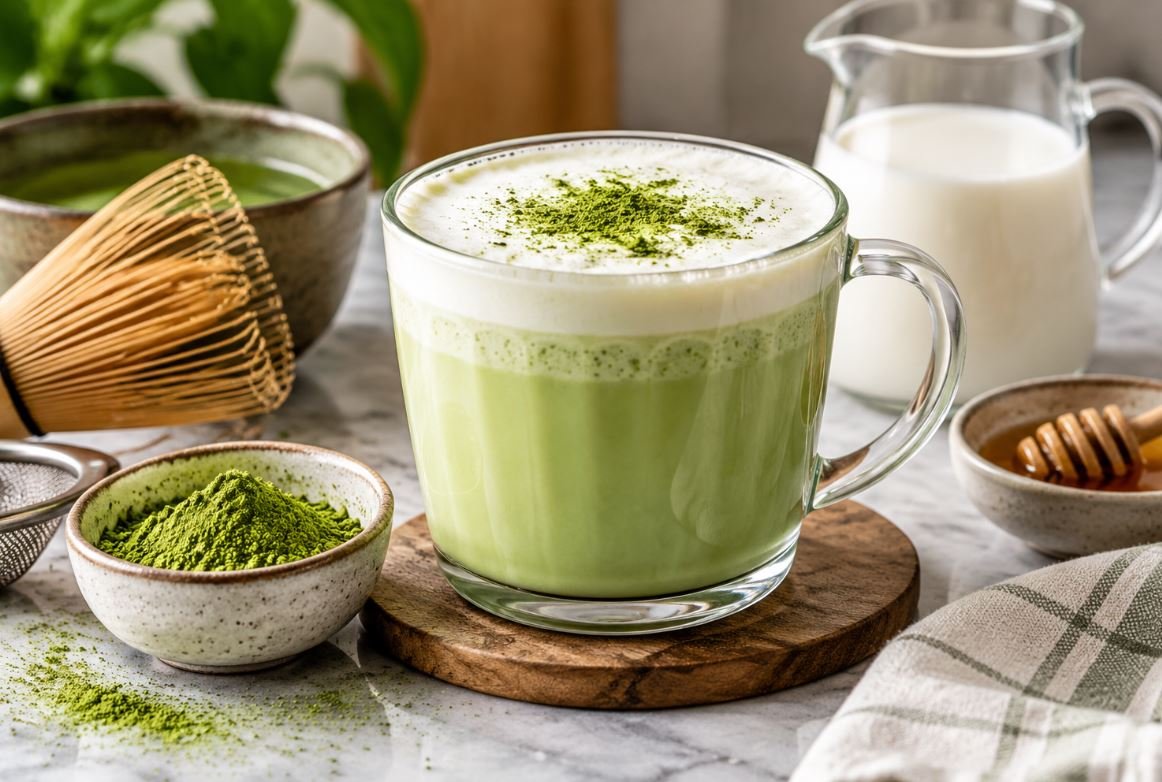
Making a matcha latte at home is easier than you might think. With a few simple ingredients, you can create a smooth, creamy drink that tastes just as satisfying as one from your favorite coffee shop. You don’t need an expensive espresso machine or professional barista skills—just good matcha powder, milk, hot water, and a way to whisk everything together.
The best part? You can customize your homemade matcha latte to suit your taste. Enjoy it hot on a chilly morning, pour it over ice on a warm afternoon, or add vanilla and honey for a little extra sweetness.
In this guide, you’ll learn how to make a matcha latte at home step by step, which ingredients work best, how to avoid bitter or lumpy matcha, and how to create delicious variations using ingredients you probably already have.
What Is a Matcha Latte?
What Does a Matcha Latte Taste Like?
A matcha latte combines finely ground green tea powder with milk and, optionally, a sweetener. Its flavor is earthy, slightly grassy, and gently sweet, with a creamy texture that makes it easy to enjoy.
The exact taste depends on the matcha you choose. Higher-quality matcha often has a smoother, more delicate flavor, while some less expensive powders can taste stronger or more bitter. Milk helps balance these flavors, creating a drink that is rich without being too heavy.
What Makes Matcha Different From Regular Green Tea?
Regular green tea is usually steeped in hot water before the leaves are removed. Matcha is different because the entire finely ground tea leaf is whisked into the liquid.
This gives matcha its distinctive green color and concentrated flavor. It also means that matcha preparation requires a little attention to the powder-to-water ratio and whisking technique.
Ingredients You Need to Make a Matcha Latte at Home
Best Matcha Powder for Homemade Lattes
For one homemade matcha latte, start with approximately 1 teaspoon of matcha powder, or about 2 grams. Choose a fresh, food-grade matcha from a reputable supplier.
Ceremonial-grade matcha is suitable if you prefer a delicate flavor, but you don’t necessarily need the most expensive powder for a milk-based drink. A good-quality everyday matcha can work very well, especially when combined with milk and a little sweetener.
Look for powder with a vibrant green color and a fresh aroma. Dull color or an unpleasant stale smell may indicate that the matcha has lost some of its freshness.
Choosing the Right Milk and Sweetener
You’ll need about 6–8 ounces (180–240 ml) of milk for a standard serving. Whole milk creates a creamy texture, while oat milk offers a naturally mellow flavor. Almond and soy milk are also good alternatives.
Sweetener is optional. Honey, maple syrup, regular sugar, or simple syrup can soften matcha’s natural bitterness. Start with a small amount and adjust after tasting.
Optional Ingredients for Extra Flavor
A few additional ingredients can make your latte feel more personalized. Vanilla extract adds warmth, cinnamon provides a gentle spice, and a little maple syrup creates a pleasant sweetness.
For an iced matcha latte, keep some ice cubes ready. If you’re making a hot version, you can froth your milk for a café-style finish.
What Equipment Do You Need to Make a Matcha Latte?
Using a Traditional Bamboo Matcha Whisk
A bamboo matcha whisk, traditionally called a chasen, is designed to mix matcha smoothly and create a light layer of foam. It’s a useful tool if you plan to make matcha regularly, but it isn’t essential.
A small bowl also makes whisking easier because it gives you enough room to move the whisk quickly.
Making Matcha With a Milk Frother or Regular Whisk
A handheld electric milk frother is a convenient alternative. It mixes the matcha with water quickly and can also help froth warm milk.
A small kitchen whisk works, too. You may need to whisk a little longer to achieve the same smooth consistency.
How to Make Matcha Without Special Equipment
No matcha whisk? No problem. Add the matcha and warm water to a clean jar with a secure lid, leaving enough space for the liquid to move. Close the lid tightly and shake until the mixture looks smooth.
Check that the lid is secure and the liquid isn’t hot enough to create pressure before shaking. Never shake boiling liquid in a sealed container.
How Much Matcha Powder Do You Need for One Latte?
The Ideal Matcha-to-Water Ratio
A good starting point is 1 teaspoon of matcha powder mixed with 2–3 tablespoons of hot water. This creates a concentrated matcha base that blends more easily with milk.
Use water at approximately 160–175°F (70–80°C), rather than freshly boiling water. Excessive heat can make the finished drink taste harsher.
How Much Milk Should You Add?
For a balanced homemade matcha latte, use approximately 6–8 ounces of milk. This amount allows the matcha flavor to come through while giving the drink a creamy texture.
If you prefer a stronger tea flavor, start with less milk. For a milder, creamier drink, use the larger amount.
Adjusting the Ratio for a Stronger or Milder Latte
Your ideal ratio depends on personal preference. If the matcha tastes too weak, increase the powder slightly the next time you make it. If the flavor is too intense, add more milk.
Making small adjustments is better than changing every ingredient at once. Once you find a combination you enjoy, you can repeat it whenever you want a reliable homemade latte.
How to Make a Matcha Latte at Home Step by Step

Step 1: Sift the Matcha Powder to Remove Lumps
Measure 1 teaspoon of matcha powder and sift it into a small bowl or mug using a fine-mesh sieve.
Matcha powder can form small clumps during storage. Sifting breaks them apart before you add water, making it easier to achieve a smooth drink.
Step 2: Add Hot Water at the Right Temperature
Pour 2–3 tablespoons of hot water over the sifted matcha. Aim for approximately 160–175°F (70–80°C).
If you don’t have a thermometer, let freshly boiled water cool for a few minutes before using it. Avoid pouring boiling water directly onto the powder.
Step 3: Whisk the Matcha Until Smooth and Frothy
Whisk briskly for around 15–30 seconds, using quick back-and-forth or zigzag movements. Continue until the powder is evenly distributed and the mixture has a light foam.
The goal isn’t to create a thick paste. You simply want a smooth matcha base without visible dry clumps.
Step 4: Heat and Froth the Milk
Warm 6–8 ounces of milk in a saucepan or microwave-safe container until hot but not boiling. Use a milk frother or whisk to create a little foam if you like.
For a cold matcha latte, skip the heating step and use chilled milk instead.
Step 5: Combine the Matcha and Milk and Serve
Pour the warm milk into your prepared matcha, stirring gently as you combine them. Add honey, sugar, or another sweetener if desired.
Taste your drink and make any final adjustments. That’s it—you’ve made a creamy matcha latte at home in about five minutes.
How to Make an Iced Matcha Latte at Home
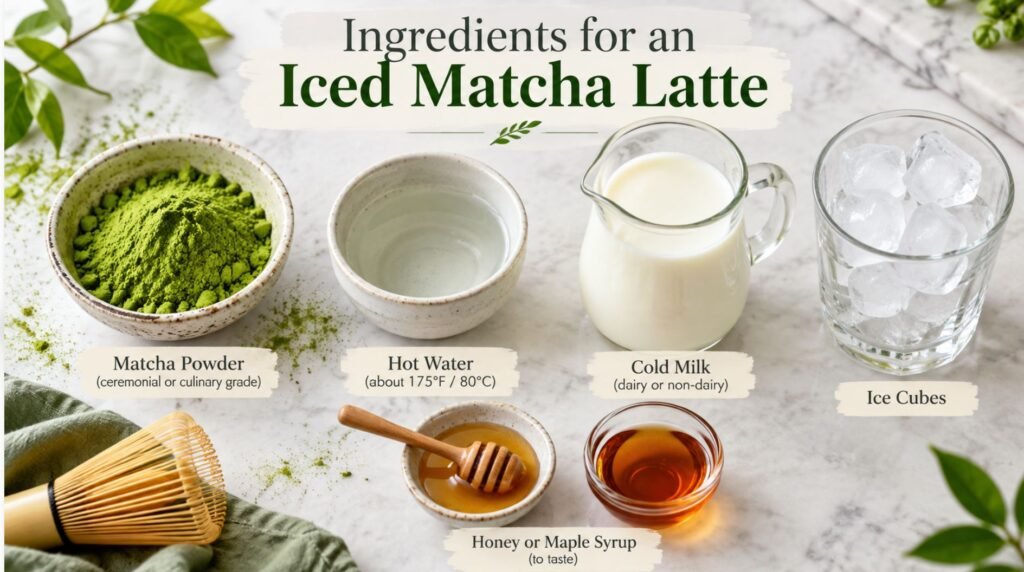
Ingredients for an Iced Matcha Latte
For one serving, gather the following ingredients:
- 1 teaspoon matcha powder (about 2 grams)
- 2–3 tablespoons hot water
- 6–8 ounces (180–240 ml) cold milk
- A handful of ice cubes
- Honey, maple syrup, or simple syrup to taste
Step-by-Step Instructions for an Iced Matcha Latte
First, sift the matcha into a small bowl and whisk it with hot water until smooth. If you’re adding honey or sugar, mix it into the warm matcha base so it blends more easily.
Fill a tall glass with ice and pour in the cold milk. Slowly add the matcha mixture over the milk for an attractive layered effect.
Stir before drinking so the matcha and milk combine evenly. Add more sweetener if needed.
How to Keep Iced Matcha From Tasting Watery
Use enough matcha to maintain its flavor, and avoid leaving the drink sitting for too long as the ice melts. You can also use larger ice cubes, which generally melt more slowly than smaller ones.
For an extra-creamy version, try oat milk or whole milk. Both pair well with matcha’s earthy flavor.
How to Make a Matcha Latte Without a Whisk
Using a Mason Jar or Shaker Bottle
Add the sifted matcha and warm water to a clean jar or shaker bottle. Close it securely and shake vigorously until the mixture looks evenly blended.
Make sure the liquid is warm rather than dangerously hot before sealing the container. Transfer the mixture to your cup and add milk.
Using a Handheld Milk Frother
Place the matcha and warm water in a deep cup. Submerge the frother head before switching it on to minimize splashing, then move it gently until the mixture is smooth.
This method is especially useful if you make matcha frequently and want a quick alternative to a bamboo whisk.
How to Get Smooth Matcha Without Clumps
Sifting is the easiest first step. Adding a small amount of water before the milk also helps the powder distribute evenly.
Don’t simply sprinkle dry matcha into a full glass of cold milk and expect it to mix perfectly. Preparing the matcha separately gives you much better control over the texture.
What Is the Best Milk for a Matcha Latte?
Whole Milk for a Creamy Matcha Latte
Whole milk creates a rich, smooth drink that balances matcha’s earthy notes. Its creamy texture makes it a great option if you want a latte that feels similar to one from a café.
Oat Milk for a Dairy-Free Matcha Latte
Oat milk is a popular plant-based choice because it often has a naturally mild sweetness and a creamy consistency. Barista-style oat milk can be particularly useful if you want a foamy hot latte.
Choose an unsweetened version if you want more control over the final sweetness.
Almond Milk, Soy Milk, and Other Alternatives
Almond milk usually creates a lighter drink with a subtle nutty flavor. Soy milk offers a fuller texture and works well if you want a dairy-free alternative with more body.
Different brands vary in sweetness and consistency, so try a few options to discover which one complements your preferred matcha powder.
How to Sweeten a Matcha Latte Naturally
Making Matcha Lattes With Honey or Maple Syrup
Honey adds a floral sweetness, while maple syrup creates a deeper, caramel-like flavor. Begin with about 1 teaspoon and adjust to taste.
Mix the sweetener into the warm matcha base before adding cold milk. This helps it blend more evenly.
Using Vanilla Syrup or Simple Syrup
Vanilla syrup gives your drink a familiar coffee-shop flavor. Simple syrup is another practical option because it mixes easily into both hot and cold beverages.
Start with a small amount. Too much syrup can overpower the matcha and make the latte unnecessarily sweet.
How to Make a Matcha Latte Without Added Sugar
If you prefer an unsweetened drink, choose a matcha powder with a smooth flavor and pair it with milk you already enjoy. Naturally sweet oat milk can soften the earthiness without requiring additional sugar.
You can also reduce the matcha slightly if you find its flavor too intense, then adjust the ratio as your taste develops.
Common Matcha Latte Mistakes and How to Fix Them

Why Does My Matcha Latte Taste Bitter?
Excessively hot water, a strongly flavored matcha powder, or too much matcha can make your latte taste bitter. Try cooler water and begin with a smaller amount of powder.
A little milk can soften the flavor, but avoid relying on large amounts of sugar to cover up poor preparation.
Why Is My Matcha Latte Lumpy or Grainy?
Lumps usually form when dry powder doesn’t mix evenly with liquid. Sift the matcha first, add a small amount of warm water, and whisk until smooth before adding milk.
Remember that matcha doesn’t dissolve like sugar. Its finely ground particles remain suspended in the liquid, so a little settling over time is normal.
Why Does My Matcha Latte Taste Too Weak?
You may be using too much milk or too little matcha. Increase the matcha gradually, whisk it thoroughly, and taste before making additional changes.
Freshness also matters. Matcha that has been exposed to air, moisture, heat, or light may lose some of its appealing flavor and aroma.
How to Get a Smooth, Creamy Texture Every Time
Use sifted matcha, water below boiling, and a consistent ratio. Froth the milk separately if you want a café-style texture, then combine the two mixtures while the milk is still warm.
These simple habits make a bigger difference than buying expensive equipment.
Easy Matcha Latte Variations to Try at Home
Vanilla Matcha Latte
Prepare your matcha latte as usual, then add a small splash of vanilla extract or a little vanilla syrup. The gentle vanilla flavor pairs beautifully with creamy milk.
Strawberry Matcha Latte
Pour strawberry puree or a small amount of strawberry syrup into the bottom of a glass. Add cold milk and ice, then slowly pour in your prepared matcha.
The strawberry adds fruity sweetness and creates attractive layers. Stir everything together before drinking.
Iced Honey Matcha Latte
Whisk honey into the warm matcha base until fully blended. Pour cold milk over ice and add the matcha mixture.
This variation is ideal if you enjoy a naturally sweetened drink without the stronger flavor of flavored syrups.
Chocolate Matcha Latte
Add a small amount of cocoa powder or chocolate syrup to your milk before combining it with matcha. Start with a modest quantity so the chocolate doesn’t overpower the tea.
The result is a rich, dessert-inspired drink that’s easy to customize at home.
Frequently Asked Questions About Homemade Matcha Lattes
Is It Easy to Make a Matcha Latte at Home?
Yes. You only need matcha powder, water, milk, and an optional sweetener. With a simple whisking method, you can prepare a homemade matcha latte in about five minutes.
Can You Make a Matcha Latte With Cold Milk?
Absolutely. Prepare the matcha with a small amount of warm water first, then pour it over cold milk and ice. This helps prevent clumps and gives you a smoother iced latte.
Is Matcha Better With Water or Milk?
It depends on your preference. Water allows matcha’s natural tea flavor to stand out, while milk creates a creamier, milder drink. For a latte, the combination of matcha concentrate and milk provides a pleasant balance.
Can You Prepare a Matcha Latte Ahead of Time?
You can prepare the matcha base in advance and refrigerate it in a clean, covered container. For the best flavor and texture, mix it with milk shortly before serving and stir well because matcha particles can settle.
How Do You Store Matcha Powder to Keep It Fresh?
Store matcha in an airtight container away from heat, moisture, and direct sunlight. Follow the manufacturer’s storage instructions, and refrigerate it if recommended, keeping the container sealed to prevent condensation when you take it out.
For the freshest flavor, avoid buying more matcha than you can reasonably use while it retains its quality.
Final Thoughts
Learning how to make a matcha latte at home comes down to a few simple habits: use good-quality matcha, sift the powder, whisk it with warm water, and choose milk that suits your taste.
Once you’ve mastered the basic recipe, you can experiment with iced versions, vanilla, strawberry, or your favorite sweetener. Start with the measurements in this guide, make a few small adjustments, and you’ll soon find your perfect homemade matcha latte.
You don’t need professional equipment or complicated techniques. A few minutes and a handful of ingredients are enough to make a drink you can enjoy whenever the craving strikes.

- How to Fix a Portafilter: Size, Locking Mechanism, and Troubleshooting Guide - October 22, 2026
- 35 Coffee Machine Parts and Functions: Complete Guide With Names and Uses - October 22, 2026
- 25 Espresso Machine Parts Names and Their Functions Explained - October 22, 2026