
Oat milk for matcha latte is a popular choice for anyone who wants a creamy, smooth, and naturally sweet plant-based drink at home. Its mild flavor complements matcha’s earthy taste without overpowering the delicate notes of green tea. However, not every oat milk delivers the same results. Some varieties create rich foam, while others produce a watery texture or separate when mixed with matcha. Choosing the right product, preparing matcha correctly, and balancing the milk-to-tea ratio can make a noticeable difference. This guide explains how to choose, froth, and use oat milk for a delicious hot or iced matcha latte.
Why Oat Milk Is a Great Choice for Matcha Latte
Oat milk works well in matcha lattes because it combines a mild flavor with a naturally creamy texture. It can soften matcha’s earthy bitterness while allowing its distinctive green tea flavor to remain noticeable. The best results depend on the oat milk formulation, matcha quality, and preparation method.
What Makes Oat Milk Pair Well With Matcha?
- Oat milk has a relatively mild flavor that complements matcha without completely masking its grassy, vegetal notes.
- Its carbohydrates and added fats, depending on the product, can contribute to a fuller mouthfeel.
- Barista-style varieties are often formulated to improve steaming, frothing, and texture in coffee and tea drinks.
How Oat Milk Affects Matcha’s Natural Flavor
- Oat milk can make matcha taste softer and less sharp, particularly when the tea is naturally bitter.
- Unsweetened varieties let you control the final sweetness without adding unnecessary sugar.
- Strong or heavily sweetened oat milk may overwhelm delicate ceremonial-style matcha, so adjust the combination to your preference.
Creaminess, Texture, and Natural Sweetness
- Oat milk often provides a smooth, rounded texture that works well in both hot and iced matcha lattes.
- Some products contain added oils or stabilizers that improve creaminess and help maintain a consistent texture.
- Although oat milk may taste naturally sweet, the actual sugar content varies by brand and processing method.
Who Should Choose Oat Milk for Matcha?
- People following a dairy-free or plant-based diet may enjoy oat milk as an alternative to cow’s milk.
- Anyone who prefers a mild, creamy latte may find oat milk more appealing than thinner plant-based alternatives.
- People with celiac disease or gluten sensitivity should choose oat milk specifically labeled gluten-free when necessary because oats can be contaminated with gluten during processing.
Best Oat Milk for Matcha Latte
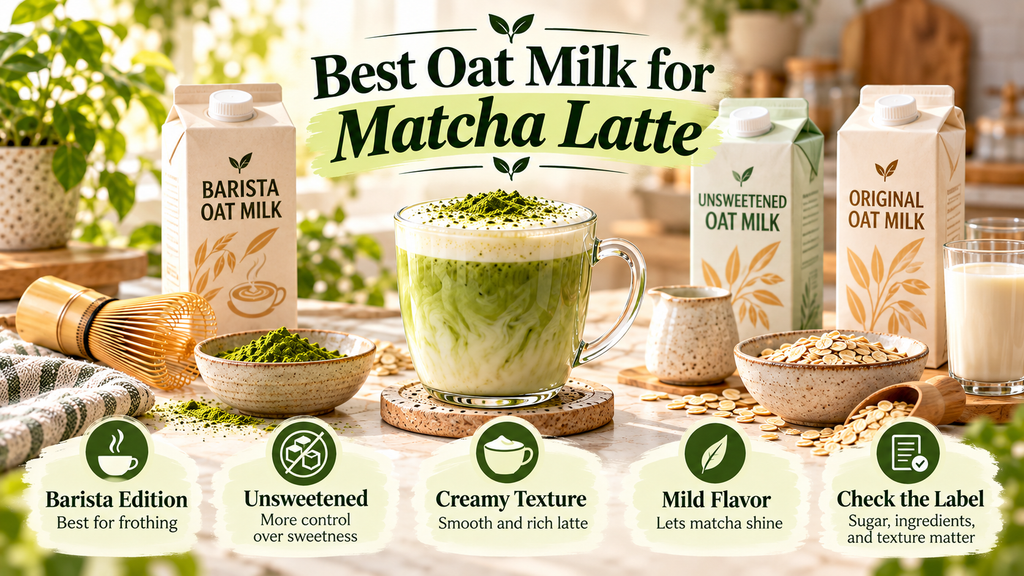
The best oat milk for matcha latte depends on whether you prefer a hot drink, an iced latte, or a thick, café-style beverage. Barista editions are often a practical starting point because they are designed to perform well in heated drinks. However, taste, sweetness, ingredients, and personal dietary needs should guide your final choice.
Barista-Edition Oat Milk vs. Regular Oat Milk
- Barista oat milk is formulated to improve foaming and create a smoother texture when heated.
- Regular oat milk may work perfectly well in iced matcha or simple homemade drinks.
- Compare ingredient lists and nutrition labels rather than assuming every barista product tastes better or contains less sugar.
Best Oat Milk for a Creamy Matcha Latte
- Choose a product with a fuller mouthfeel if you enjoy rich, café-style matcha.
- Barista formulations containing added oils may provide a creamier texture and more stable foam.
- Start with an unsweetened option if you want to control the sweetness yourself.
Best Oat Milk for Iced Matcha
- For iced matcha, prioritize a smooth texture and a flavor that remains pleasant when chilled.
- Regular oat milk can work well because cold drinks do not require steamed foam.
- Choose an unsweetened or lightly sweetened variety if you plan to add vanilla syrup, honey, or another sweetener.
What to Look for on an Oat Milk Label
- Check whether the product is sweetened or unsweetened, and compare the added sugar content.
- Look for a barista formulation if you want to steam the milk or create foam.
- Review allergen statements, fortification, and ingredient information to find a product that suits your preferences and dietary requirements.
Oat Milk vs. Other Milk Options for Matcha
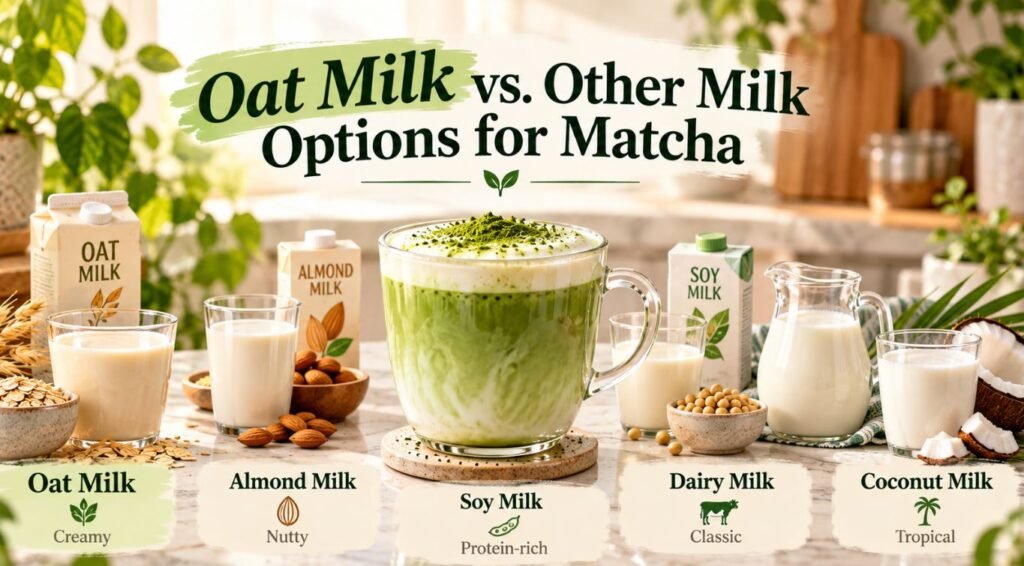
Oat milk is not the only way to make a matcha latte. Almond, soy, dairy, and coconut milk each create a different flavor and texture. The right option depends on your taste preferences, dietary needs, and desired consistency. Comparing these alternatives can help you choose a milk that complements your matcha.
Oat Milk vs. Almond Milk for Matcha
- Oat milk generally offers a fuller, cereal-like creaminess, while almond milk may taste lighter and nuttier.
- Almond milk can be a useful option for people who prefer a less creamy drink, although formulations vary.
- Anyone with a tree nut allergy should avoid almond milk and check product labels carefully.
Oat Milk vs. Soy Milk for Matcha
- Soy milk often contains more protein than oat milk, although exact amounts depend on the brand.
- Oat milk may have a softer, sweeter flavor, while soy milk can contribute a more noticeable bean-like taste.
- Both can work well in matcha lattes, especially when you choose a formulation designed for hot beverages.
Oat Milk vs. Dairy Milk for Matcha
- Dairy milk offers protein and a familiar creamy texture, while oat milk provides a plant-based alternative.
- Oat milk may contribute a mild sweetness, whereas dairy milk adds its own distinctive milky flavor.
- Choose according to your dietary needs, taste preferences, and tolerance rather than assuming one option is universally better.
Oat Milk vs. Coconut Milk for Matcha
- Oat milk usually offers a mild flavor, while coconut milk can introduce a noticeable tropical aroma.
- Carton coconut beverages are generally different from thick canned coconut milk, so check the product type before using it.
- If you want matcha to remain the main flavor, a mild oat milk may be the easier starting point.
How to Make a Matcha Latte With Oat Milk
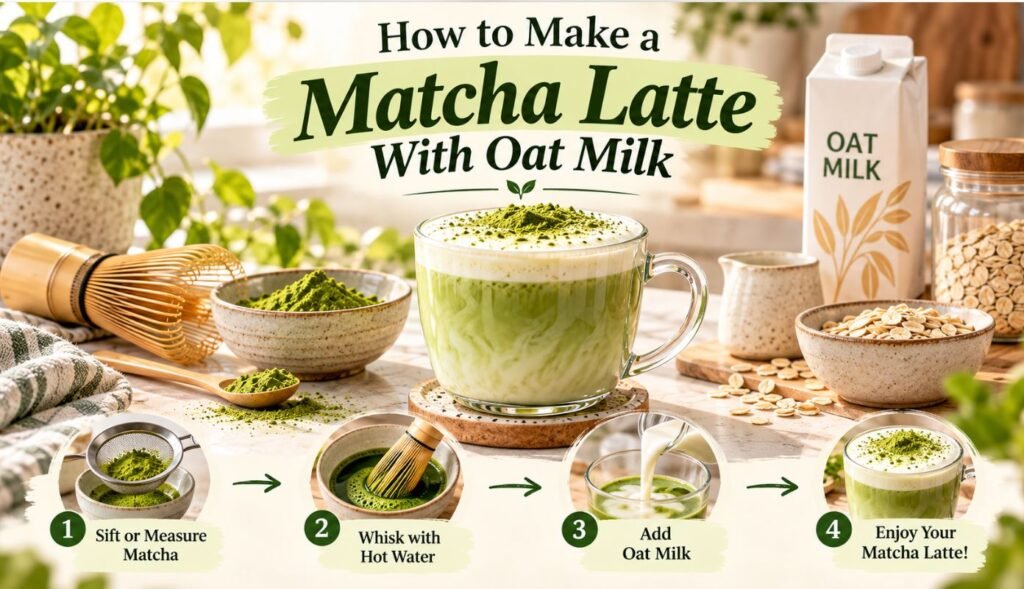
Making a matcha latte with oat milk at home is straightforward when you prepare the tea separately before adding the milk. Sifting the powder, using appropriately hot water, and whisking until smooth help prevent lumps. You can then combine the matcha with warmed or chilled oat milk and adjust the sweetness.
Ingredients for a Homemade Oat Milk Matcha Latte
- Use 1 teaspoon of matcha powder, 2 ounces of hot water, and ¾ to 1 cup of oat milk.
- Optional ingredients include maple syrup, vanilla extract, or another sweetener of your choice.
- For an iced version, prepare ice cubes and use chilled oat milk. Adjust the quantities to suit your preferred strength and serving size.
How to Prepare Matcha Powder Without Lumps
- Sift the matcha powder through a fine-mesh sieve into a small bowl.
- Add a little hot water and whisk it into a smooth paste before incorporating the remaining water.
- Use a bamboo whisk or small handheld whisk, moving quickly until the mixture looks uniform and lightly frothy.
How to Mix Matcha With Oat Milk
- Warm the oat milk gently for a hot latte, avoiding a prolonged boil that can affect its texture.
- Pour the prepared matcha into a mug, then slowly add the milk while stirring if needed.
- For iced matcha, pour the matcha over ice and add chilled oat milk. Stir or layer the ingredients according to your preference.
How to Adjust Sweetness and Consistency
- Add sweetener gradually and taste the drink before adding more.
- If the latte tastes too strong, increase the oat milk slightly; if it tastes weak, prepare a stronger matcha base.
- For a creamier drink, try a barista-style oat milk rather than adding large amounts of sweetener or extra ingredients.
How to Froth Oat Milk for Matcha Latte
Frothing oat milk adds a smooth, café-style finish to a hot matcha latte. The amount and stability of foam depend on the product, temperature, and equipment. Barista oat milk is often easier to work with, but ordinary oat milk can also produce a pleasant texture with the right technique.
How to Froth Oat Milk With a Milk Frother
- Pour the recommended amount of oat milk into your frother, leaving room for expansion.
- Use the heating or cold-frothing setting appropriate for your drink.
- Avoid overfilling the container, and pour the finished foam gently over the prepared matcha to preserve its texture.
How to Froth Oat Milk Without a Machine
- Warm the oat milk gently, then transfer it to a heat-safe container with enough empty space.
- Whisk vigorously by hand or use a handheld frother until small bubbles form.
- If using a tightly closed jar, shake only when the liquid is cool or safely warm, never hot, to prevent pressure-related burns.
How to Steam Oat Milk for a Hot Matcha Latte
- Start with cold oat milk and use a clean steam wand designed for milk steaming.
- Introduce a small amount of air before creating a gentle swirling motion to develop a smooth texture.
- Follow the milk manufacturer’s guidance and avoid overheating, which can damage texture and produce an unpleasant taste.
How to Create Smooth Foam for Latte Art
- Choose a barista oat milk that produces fine, stable bubbles rather than large, dry foam.
- Tap and gently swirl the milk container to help remove larger bubbles and even out the texture.
- Pour slowly into the matcha latte, adjusting the height and flow as the cup fills to create simple patterns.
Best Oat Milk for Iced Matcha Latte
Iced matcha latte is a refreshing way to enjoy oat milk without needing steamed foam. A good iced version should have a balanced tea flavor, a smooth milk texture, and enough strength to remain flavorful after the ice begins melting. Proper preparation also helps prevent clumps and uneven layers.
How to Make an Iced Oat Milk Matcha Latte
- Sift 1 teaspoon of matcha into a bowl and whisk it with approximately 2 ounces of hot water.
- Fill a glass with ice, pour in ¾ to 1 cup of chilled oat milk, and add the prepared matcha.
- Sweeten to taste, then stir thoroughly before drinking if you prefer a fully blended latte.
How to Prevent Watery Iced Matcha
- Use a concentrated matcha base so the tea flavor remains noticeable as the ice melts.
- Avoid making the drink too far in advance, especially when using small ice cubes that melt quickly.
- Use larger ice cubes when practical, and adjust the matcha quantity rather than simply reducing the milk excessively.
How to Create a Beautiful Layered Matcha Drink
- Pour chilled oat milk over ice first, leaving room at the top for the matcha.
- Slowly pour the prepared matcha over the back of a spoon or directly onto the milk to encourage temporary separation.
- Remember that layers naturally mix over time; stir the drink before enjoying a balanced flavor.
Best Ice and Matcha-to-Milk Ratios
- Start with 1 teaspoon of matcha, 2 ounces of water, and ¾ to 1 cup of oat milk.
- Fill the glass with enough ice to chill the drink without making it difficult to stir.
- Adjust the proportions based on glass size, desired strength, and sweetness instead of treating one ratio as universal.
How Oat Milk Changes the Taste of Matcha
Oat milk changes the overall flavor of matcha by adding creaminess and a mild grain-like sweetness. This can soften matcha’s more pronounced vegetal notes, but the result depends on the tea grade, milk formulation, and preparation technique. Finding the right balance allows the green tea to remain recognizable.
Does Oat Milk Make Matcha Sweeter?
- Oat milk may taste mildly sweet because of naturally occurring sugars and the way the oats are processed.
- Some products contain added sugar, so check the nutrition label before choosing one.
- If you prefer a less sweet latte, use unsweetened oat milk and add sweetener only if needed.
How to Balance Earthy and Grassy Matcha Notes
- Begin with a moderate amount of matcha and increase it gradually until the flavor suits your preference.
- Choose a mild oat milk if you want the green tea’s aroma to remain prominent.
- Whisk the matcha properly and avoid excessively hot water, which can contribute to harsh or bitter flavors.
Choosing Matcha Powder for Oat Milk
- Choose a fresh, vibrant green powder from a reputable seller, checking packaging and storage recommendations.
- Higher-quality matcha can have a more delicate flavor, while some culinary grades may taste stronger in milk-based drinks.
- Consider how you will use it: an everyday latte may not require the same matcha grade as a traditional tea preparation.
How to Reduce Bitterness Without Adding Too Much Sugar
- Check the water temperature and avoid using vigorously boiling water directly on the matcha.
- Start with a smaller amount of powder, then increase it until the drink reaches your preferred strength.
- Use creamy, unsweetened oat milk to soften the flavor before adding a small amount of sweetener if necessary.
Common Oat Milk Matcha Latte Mistakes and How to Fix Them
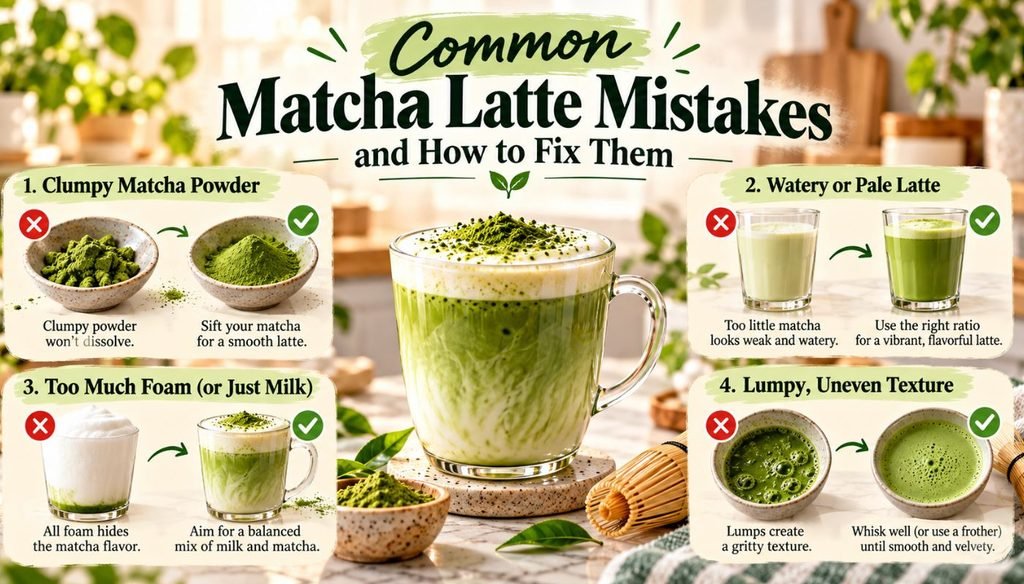
A homemade oat milk matcha latte can taste disappointing when the milk is too thin, the powder is clumpy, or the ingredients are poorly balanced. Fortunately, most problems are easy to correct. Understanding the cause helps you improve the texture and flavor without buying expensive equipment.
Why Your Oat Milk Matcha Tastes Watery
- Too much milk or water can dilute the matcha, leaving the drink weak and pale.
- Prepare a stronger matcha base or reduce the milk slightly to improve flavor intensity.
- Check whether your oat milk is naturally light in texture or whether melting ice is weakening the drink.
Why Oat Milk Does Not Froth Properly
- Some regular oat milks produce less stable foam than barista formulations.
- Overheating or using the wrong frothing technique can also affect texture.
- Try a barista-style product, begin with cold milk when steaming, and follow your equipment’s instructions.
How to Fix a Lumpy or Uneven Matcha Latte
- Sift the matcha powder before adding water to remove clumps.
- Whisk the powder with a small amount of water until smooth before combining it with oat milk.
- If lumps remain, whisk the matcha base again or strain it through a fine sieve before serving.
How to Prevent Separation and Poor Texture
- Mix the matcha thoroughly before adding the milk, and stir the finished drink if separation occurs.
- Check whether the milk is fresh and follow its storage instructions.
- Some separation is normal in plant-based drinks; gentle stirring usually restores a more uniform appearance.
Is Oat Milk Healthy for Matcha Latte?
The nutritional value of an oat milk matcha latte depends on the amount of milk, matcha, sweetener, and other ingredients used. Oat milk can be part of a balanced diet, but products differ considerably in calories, sugar, fat, protein, and fortification. Reading the label provides a more reliable picture than relying on general claims.
Oat Milk Matcha Latte Calories and Nutrition
- Calories vary by oat milk brand, serving size, and added sweeteners.
- Matcha contributes small amounts of nutrients, but the drink’s overall nutritional profile depends largely on the milk and additions.
- For an accurate estimate, add the nutrition information for the quantities of each ingredient used in your recipe.
Carbohydrates, Sugar, and Fiber in Oat Milk
- Oat milk contains carbohydrates, and some varieties contain more sugar than others because of processing or added sweeteners.
- Fiber content varies and is often modest in filtered oat milk beverages.
- Compare nutrition labels when carbohydrate, sugar, or fiber intake is important to your dietary goals.
Unsweetened vs. Sweetened Oat Milk
- Unsweetened oat milk allows you to control the amount of sugar added to your matcha.
- Sweetened varieties can be convenient when you prefer a dessert-like latte without adding syrup separately.
- Compare total sugar and serving sizes before deciding which product best suits your preferences.
How to Make a Lower-Sugar Oat Milk Matcha Latte
- Choose unsweetened oat milk and begin with no added sweetener.
- Use good-quality matcha and prepare it correctly to reduce the temptation to mask bitterness with sugar.
- If needed, add a small amount of maple syrup or another sweetener and adjust gradually to taste.
Homemade Oat Milk vs. Store-Bought Oat Milk for Matcha
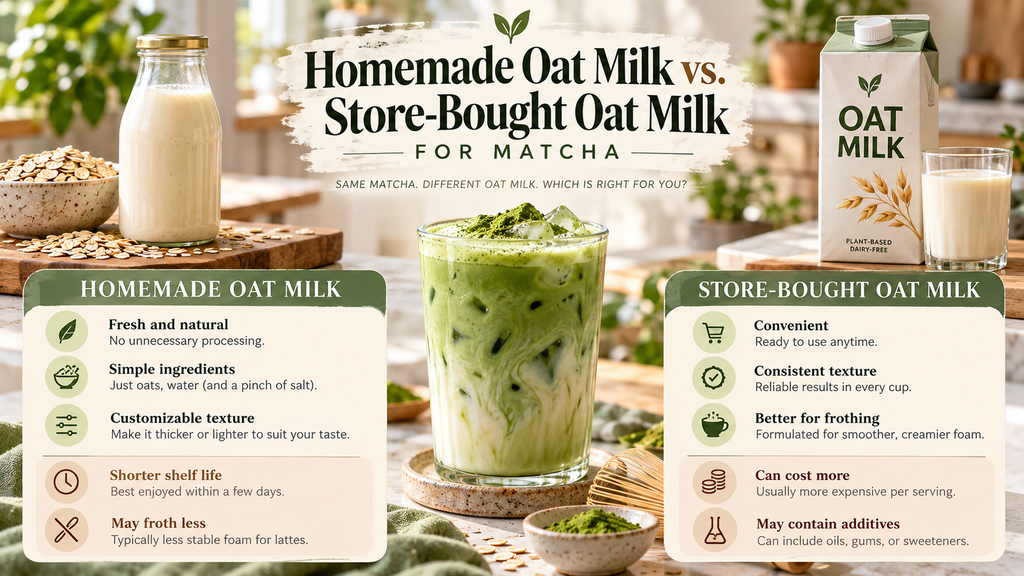
Homemade oat milk can be an economical option for everyday matcha, while store-bought varieties offer convenience and more predictable formulations. The main difference is consistency: homemade oat milk may vary in thickness and separation, whereas commercial products are often formulated to provide a stable texture and predictable taste.
How to Make Oat Milk at Home
- Blend rolled oats with cold water briefly, following a recipe that suits your preferred consistency.
- Strain through a suitable fine filter or nut-milk bag without squeezing excessively if you want to limit sliminess.
- Refrigerate promptly and follow food-safety guidance; homemade oat milk generally has a shorter storage life than commercial products.
Can Homemade Oat Milk Froth Well?
- Homemade oat milk can work in a matcha latte, but its foam may be less stable than commercial barista oat milk.
- Blending technique, filtration, and the oats-to-water ratio all affect the final texture.
- Experiment with small batches and use a handheld frother if you want a little foam without specialized equipment.
Benefits of Barista Oat Milk Formulations
- Barista formulations are designed to perform well in hot drinks and often create a smoother, more stable foam.
- Some contain added oils, minerals, or stabilizers to improve texture and steaming performance.
- They may cost more than regular oat milk, so compare the practical benefits with how often you make lattes.
How to Store Homemade and Store-Bought Oat Milk
- Refrigerate oat milk according to the package or recipe instructions and keep the container properly sealed.
- Follow the manufacturer’s guidance about refrigeration after opening and the recommended use-by period.
- Discard milk with unusual odors, visible spoilage, or other signs that it is no longer safe to consume.
Best Flavor Combinations for Oat Milk Matcha
Oat milk’s mild flavor makes it easy to combine with vanilla, maple syrup, brown sugar, and warming spices. These additions can create café-style drinks without complicated equipment. Start with small amounts, though, because strong flavorings and excessive sweetness can easily overpower the matcha’s delicate aroma.
Vanilla Oat Milk Matcha Latte
- Add a small amount of vanilla extract or vanilla syrup to your prepared matcha and oat milk.
- Vanilla provides a sweet-smelling, dessert-like aroma that complements the creamy texture.
- Use unsweetened oat milk if your vanilla product already contains sugar, and adjust the quantity to taste.
Honey and Maple Syrup Matcha Latte
- Stir a little maple syrup into the warm matcha base so it dissolves evenly.
- Honey can also add sweetness, although it is not vegan; maple syrup is a plant-based alternative.
- Begin with a small amount and taste before adding more to keep the matcha flavor balanced.
Brown Sugar Oat Milk Matcha Latte
- Dissolve brown sugar in a little warm water before mixing it into your latte.
- Its molasses-like flavor creates a richer, dessert-inspired drink that pairs well with creamy oat milk.
- Use it sparingly if you want the matcha to remain the main flavor rather than becoming a sweet beverage.
Cinnamon and Other Matcha Flavor Pairings
- Sprinkle a small pinch of cinnamon over the finished latte for a gentle warming note.
- Vanilla, ginger, and cardamom can also complement matcha when used in modest amounts.
- Experiment with one additional flavor at a time so you can identify which combinations work best for your taste.
Frequently Asked Questions About Oat Milk for Matcha Latte
Choosing oat milk for matcha often raises questions about the best brand type, whether barista milk is necessary, and how to prepare the drink correctly. The answers depend on your preferred texture, equipment, and dietary needs. These quick explanations cover the most common concerns for beginners making matcha at home.
What Is the Best Oat Milk for Matcha Latte?
- A good oat milk has a pleasant flavor, smooth texture, and sweetness level that suits your matcha.
- Barista varieties are useful for hot drinks and frothing, while regular oat milk can work well for iced lattes.
- Compare ingredients and nutrition labels because formulations vary across brands.
Is Barista Oat Milk Better for Matcha?
- Barista oat milk is often better for steaming and foam because it is designed for hot beverages.
- It is not essential if you simply want to mix matcha with cold or room-temperature milk.
- Choose it when texture and frothing matter more than price or simplicity.
Can You Use Oat Milk in Matcha Without Heating It?
- Yes. Cold oat milk works well in iced matcha lattes and can be mixed with a properly whisked matcha base.
- Prepare the matcha separately with warm water to help dissolve the powder, then combine it with chilled milk.
- Stir before drinking if the ingredients separate or form layers.
What Is the Best Ratio of Matcha to Oat Milk?
- A useful starting point is 1 teaspoon of matcha, 2 ounces of water, and ¾ to 1 cup of oat milk.
- Use more matcha for a stronger tea flavor or slightly more milk for a milder latte.
- Adjust the ratio to your cup size, matcha strength, and preferred consistency.
Conclusion
Oat milk for matcha latte is an easy way to create a smooth, creamy, dairy-free drink at home. The best results come from choosing milk that suits your taste, sifting and whisking the matcha properly, and adjusting the proportions to balance the tea and milk. Barista oat milk is especially useful for hot, frothy lattes, while regular oat milk works well for simple iced versions. Start with an unsweetened variety, experiment with the matcha-to-milk ratio, and add sweeteners only when needed. With a few small adjustments, you can make a matcha latte that suits your preferences without relying on expensive café equipment.

- How to Fix a Portafilter: Size, Locking Mechanism, and Troubleshooting Guide - October 22, 2026
- 35 Coffee Machine Parts and Functions: Complete Guide With Names and Uses - October 22, 2026
- 25 Espresso Machine Parts Names and Their Functions Explained - October 22, 2026