

For a standard 16 oz vanilla iced coffee, use about 1/2 cup (4 oz) strong coffee concentrate plus 1 to 2 tbsp vanilla syrup or 1 to 1.5 tsp vanilla extract, then fill the rest with chilled liquid (milk or half-and-half) and ice. If you skip “strong” coffee or measure vanilla tightly, the drink turns watery or the vanilla tastes muted.
Start with a strong base (hot-brewed double-strength, or cold brew concentrate), chill it fast, then add vanilla while it is still liquid (not after it is already diluted by ice). For 16 oz: 4 oz concentrate, 1 to 2 tbsp vanilla syrup (or 1 to 1.5 tsp extract), sweeten to taste, then top to 16 oz with milk and ice. Use less ice or more concentrate if it tastes thin.
What Is How To Make Iced Coffee Vanilla?

Vanilla iced coffee is regular coffee served cold with a vanilla flavor source, then balanced so the coffee does not get watery once ice melts. “How to make” means choosing a coffee base (hot-brewed and chilled, espresso-based, or cold brew), adding vanilla in the right form (syrup, extract, bean, or creamer), then controlling strength so the ice dilution still tastes like coffee and vanilla together.
How It Works
Vanilla iced coffee tastes “right” because you build two things in the right order, strong enough coffee flavor first, then vanilla flavor that survives chilling and ice dilution. The goal is a finished drink that is already close to your target strength when it hits the glass, so the ice can cool it without making the coffee taste thin.
Finally, balance dairy timing: for a vanilla iced coffee that uses milk or half-and-half, you want the mixture to stay smooth by mixing thoroughly off-heat and serving immediately once assembled. If the dairy gets separated or curdled, the texture and flavor both shift, and vanilla will taste “off” even when the amounts are correct.
Key Benefits
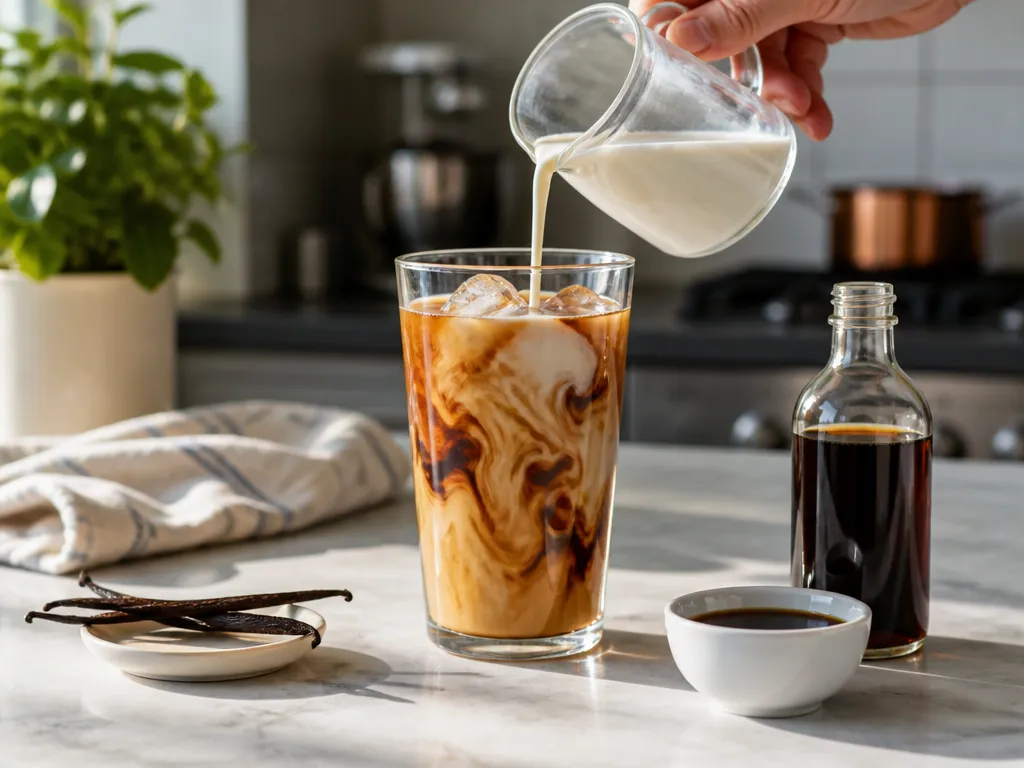
Vanilla iced coffee gets easier to get right when you build it with the right coffee strength first, then add vanilla in a way that survives chilling and ice dilution.
Choose this workflow when you care about the finished taste, not just “coffee with vanilla.” If you follow the steps and keep the base strong, your vanilla should stay present and your cup should taste intentional, not accidental.
Step-by-step Guide
Build the drink in the right order so the coffee flavor stays strong, and the vanilla flavor still comes through after chilling and ice dilution. Use the same base layout each time, then swap only the vanilla type and the coffee method.
Two Coffee Base Options (Pick Based On Time)
Hot-brewed then chilled is the fastest route: brew your coffee concentrate, cool it quickly, then proceed with the vanilla step (1 to 2 tbsp syrup or 1 to 1.5 tsp extract) and finish with milk and ice for the 16 oz total. Cold brew is the lower-dilution route because you start with a concentrate that is already cold, so the vanilla tends to taste fuller for longer once ice is added.
Common Mistakes To Avoid
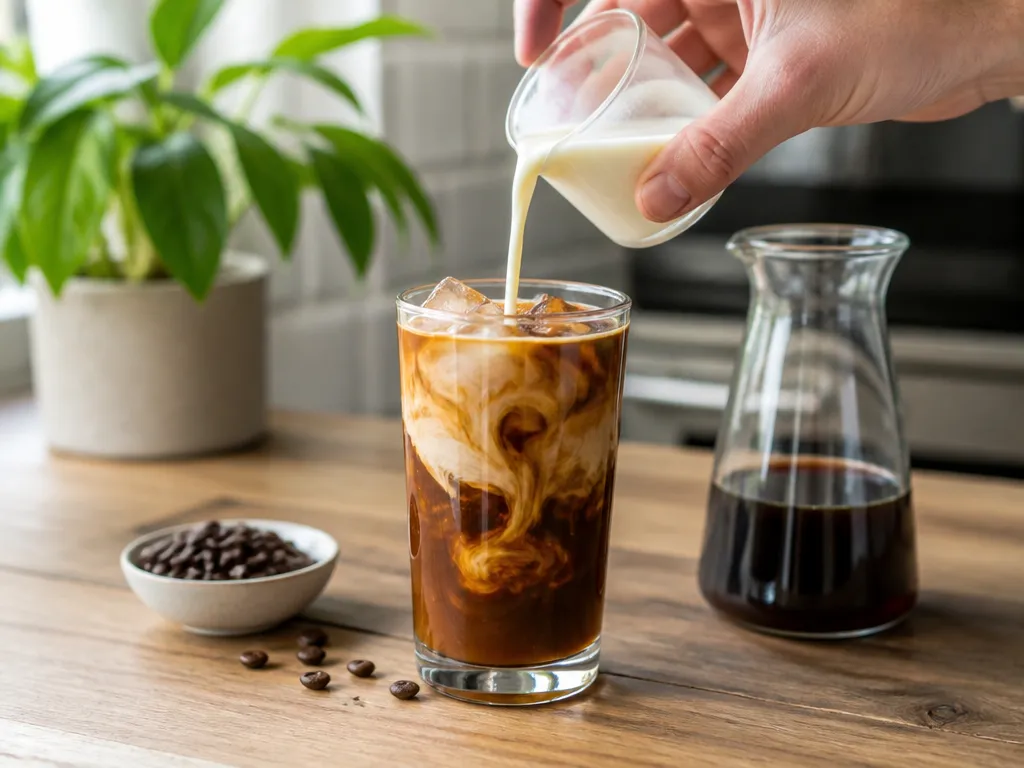
Most “vanilla iced coffee” failures come from dilution, wrong timing, or picking a vanilla source that gets muted. Fixes exist, but you have to stop the mistake first.
When you troubleshoot, change one variable at a time. Adjust vanilla amount or sweetener first, then only after that revisit strength or chilling.
Tips For Success
Dialing in vanilla iced coffee is mostly about timing and concentration, you want the coffee base strong enough that ice dilution does not flatten it, and you want vanilla added in a form that survives chilling. Treat the build as a workflow: make or measure your coffee concentrate first, chill it fast, add vanilla and sweetener to the coffee before final ice contact, then assemble the serving quickly.
Use the “mix-then-ice” rule so vanilla and sweetener dissolve evenly and do not sit as separate streaks. For the standard 16 oz serving, start from your 4 oz strong coffee concentrate, stir in your chosen vanilla type and sweetener until uniform, then pour over ice and top with chilled milk or half-and-half (the ice dilution happens after you’ve already set the flavor).
| Vanilla choice | How to add it | Success tip |
|---|---|---|
| Vanilla syrup | Stir into the 4 oz coffee concentrate | If it tastes “vanilla-first but weak coffee,” reduce syrup next time or go stronger on the coffee base |
| Vanilla extract | Mix into the 4 oz coffee concentrate | Use it consistently and measure, extract intensity varies a lot by brand |
| Vanilla bean | Infuse into your coffee base before chilling (then use the infused concentrate) | Give the bean enough infusion time before you commit to the serving |
Chill fast, warm coffee over ice pushes bitter flavors forward and weakens vanilla clarity. If you have time, pre-chill the container you’ll pour into, and avoid letting the concentrated coffee sit warm while you gather ingredients.
If your result is watery, the fix is concentration discipline: keep the coffee base at your 4 oz concentrate for a 16 oz drink, and do not let the ice melt water “decide” the strength. If your coffee tastes overly bitter, reduce brew strength next time (or shorten hot contact), then restore vanilla by adjusting the vanilla source amount within the amounts you plan to use.
When something tastes off, change only one variable at a time (coffee strength, then vanilla form, then sweetener). That is how you learn what actually moved the flavor in your kitchen.
Real Examples
Two worked builds show the same structure with different coffee bases and vanilla sources, so you can copy the workflow and only swap the ingredient that matters.
Example A (fast, hot-brew then chill): 16 oz vanilla iced coffee
Example B (more concentrated, less diluted): 16 oz vanilla iced coffee with cold brew
| What you want | Change | What to watch |
|---|---|---|
| Stronger coffee taste after ice | Increase “coffee strength” within the 4 oz concentrate approach, keep vanilla additions the same | Too much strength can read as harsh or bitter |
| More obvious vanilla | Move extract from 1 tsp to 1.5 tsp, or syrup from 1 tbsp to 2 tbsp | Sweet vanilla can mask coffee if you add too high |
Example C (how to adjust without changing everything): “too weak”
Stick with 4 oz coffee base, but add it colder (pre-chill it) so ice dilutes less than it would for warm coffee. If it’s still weak, push coffee strength rather than doubling vanilla, because vanilla can get sweet but not fix under-extracted coffee.
Quick Summary
To make a reliably vanilla-flavored iced coffee, build a strong coffee base first, then add vanilla in a form that survives chilling and ice dilution, targeting a 16 oz drink built on about 4 oz strong coffee plus 1 to 2 tbsp vanilla syrup (or 1 to 1.5 tsp vanilla extract), finished with chilled milk and ice.
Choose a different recipe path if:
Next action: Make one batch exactly at 16 oz using the 4 oz strong coffee base, then adjust only vanilla quantity (within 1 to 2 tbsp syrup or 1 to 1.5 tsp extract) on the next try.
Frequently Asked Questions
How Long Does It Take To Make A Vanilla Iced Coffee At Home (Including Chilling)?
Plan for two timelines: quick flavor building (minutes) and coffee cooling (variable). Your real bottleneck is getting the coffee base cool before it hits the ice, because warm coffee melts ice faster and can mute vanilla flavor. If you need it fast, chill the base more aggressively using pre-chilled liquid and rapid cooling methods rather than waiting at room temperature.
What Should I Do If The First Batch Tastes “Fine” But Not Clearly Vanilla?
Treat it like a sequencing and dosage problem, then adjust one variable at a time. If vanilla tastes muted, increase the vanilla input in the specific form you used (syrup, extract, or bean) for the next batch, while keeping the coffee strength and the 16 oz build structure the same. If the vanilla was added late or the base was weak, also re-check timing and coffee concentration in your workflow, then repeat.
Do I Need To Buy Vanilla Syrup, Or Can I Use Whatever Vanilla I Already Have?
You can use extract, syrup, or vanilla bean, but each behaves differently in a cold drink. If you use extract instead of syrup, expect it to taste more “coffee-forward” at the same amount and you may need to add more to get a clear vanilla note. If you use vanilla bean, flavor strength depends heavily on how you infuse it into the coffee or another component before mixing.
How Can I Tell If My Coffee Base Is Strong Enough, Without Guessing?
You can verify indirectly by tasting the base before it goes over ice, then tasting the finished drink after it cools and settles. If the base tastes only mildly coffee-like, the ice will flatten it and the vanilla will feel muted even if you used enough vanilla. If you want a practical test, keep the vanilla constant and change only the coffee base strength in small increments for the next attempt until both coffee and vanilla come through after chilling.
What Is A Realistic “Shelf Life” For A Batch I Make Ahead?
Make ahead is mainly limited by two things: coffee taste changes over time and the drink loses structure as ice melts if you store it as an iced drink. If you want the best flavor, store the coffee base (with vanilla added if that is your workflow) chilled, then assemble over fresh ice when you’re ready to drink. If you do store mixed liquid, plan to drink it sooner because dilution and flavor fade happen quickly.
When Should I Get Help (Or Stop Troubleshooting) If My Drink Tastes Wrong Every Time?
If you follow the same workflow and still get consistent off flavors, the issue is likely ingredient quality, measurement accuracy, or a problem with how you’re extracting or mixing the vanilla component. Stop and do a controlled check, then adjust only one factor at a time (coffee base method, vanilla type, or sweetness) so you can identify the real cause. If you suspect contamination or a spoiled dairy product, discard the batch and start over with fresh ingredients.

- Espresso Bar Wedding: Ideas, Setup, Costs, and Tips for a Memorable Coffee Experience - November 11, 2026
- How Many Grams of Espresso Beans for a Double Shot? A Complete Brewing Guide - November 11, 2026
- Brasilia Espresso Machine: Features, Performance, Models, and Buying Guide - November 11, 2026