
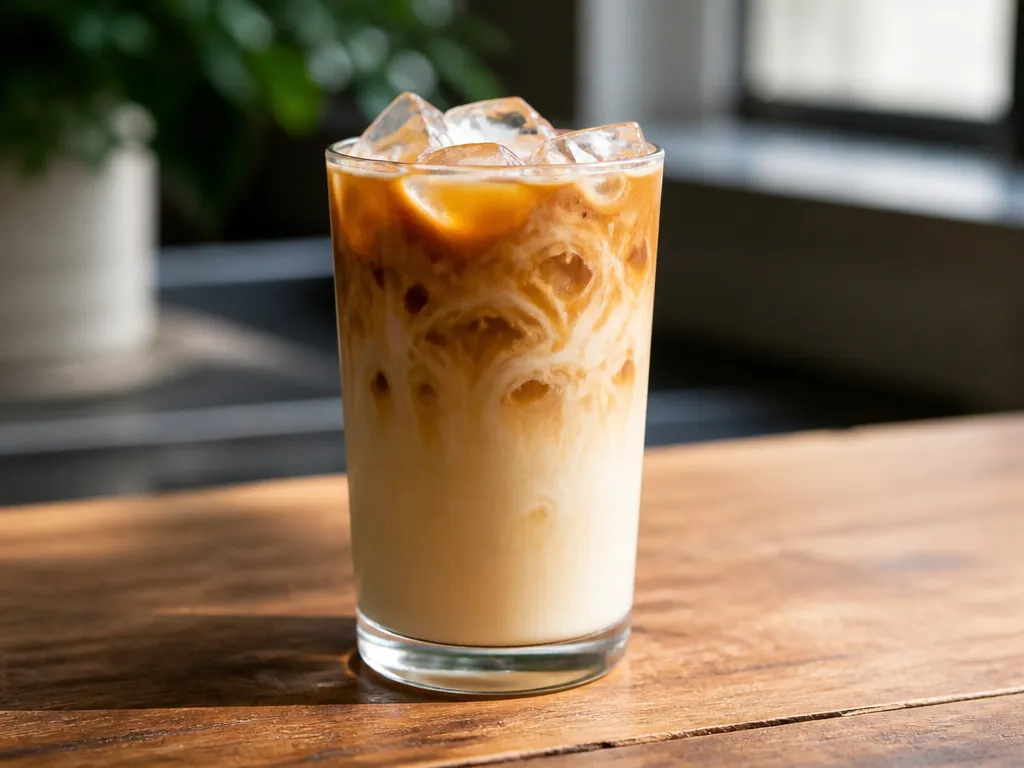
Use 1:1 ice to finished coffee by volume (for example, 1 cup ice to 1 cup coffee). That single ratio keeps your vanilla coffee cold and drinkable for the first few sips, without turning watery. If you dilute with extra water or over-ice before chilling, the vanilla tastes flat fast.
Iced vanilla coffee at home is easiest with two methods: either brew espresso (or strong coffee), sweeten it with vanilla (about 1 to 2 teaspoons syrup or 1 to 2 teaspoons sugar per serving), chill, then pour over ice; or make cold brew concentrate, dilute with milk, then add vanilla. Keep coffee strong (roughly 1:4 coffee to water for concentrate) so vanilla and milk still taste clear.
How To Make An Iced Vanilla Coffee?
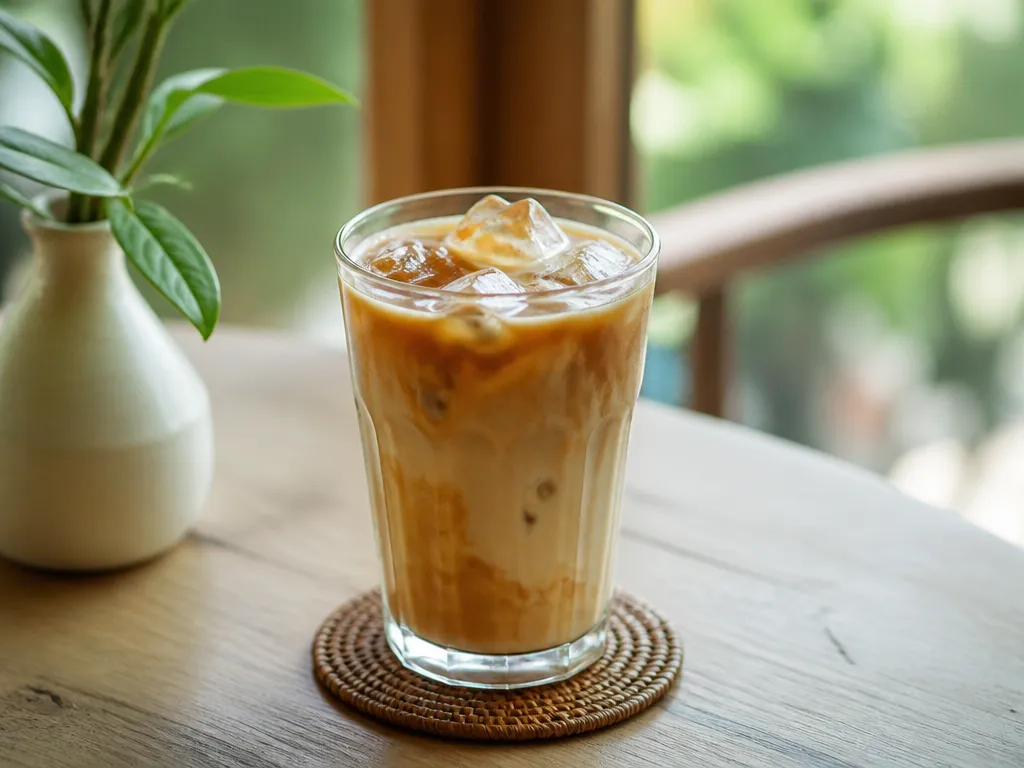
Use two base methods depending on your timeline: make a strong hot coffee (or espresso) and chill it quickly for an espresso-based iced drink, or make coffee cold and dilute it less for a cold-brew style drink. Add vanilla using syrup, extract, or warmed beans, then build the texture with milk and ice.
Recipe Decision: Espresso-based Vs Cold-brew-based
Choose espresso-based when you want the fastest path to a bold, crema-adjacent flavor that tastes “fresh” even after chilling. Choose cold-brew-based when you want a smoother profile and less bitterness, with a cleaner aftertaste.
In practice, the method changes how you handle strength and dilution. Espresso-based drinks tolerate heavier ice because the hot base starts concentrated, while cold-brew tends to be strong enough that you should control dilution with ice volume or additional water.
What You’ll Need Upfront (Equipment And Ingredients)
To get repeatable results, use the same measuring tools every time and pick vanilla products you can control. If you are unsure which vanilla to buy, go with a vanilla syrup for the most consistent dosing.
For milk and texture, the key is temperature and foam control. Cold foam depends on how you froth, while shaken or whisked milk gives a lighter, thinner layer that still tastes good.
Recipe 1: Espresso-based Iced Vanilla Coffee
Espresso-based iced vanilla coffee is the fastest build when you want a strong cup with clear vanilla character. Start with concentrated coffee, cool it, then assemble over ice.
Recipe 2: Cold-brew-based Iced Vanilla Coffee
Cold-brew based iced vanilla coffee tastes smoother because the extraction is gentler. Vanilla blends more evenly after you stir the base, so flavor it before you pour over ice.
Judgment call: If you are choosing between speed and smoothness, pick espresso-based for same-day sharp vanilla and pick cold-brew-based for a calmer, less bitter result.
Espresso-based Iced Vanilla Coffee
Two espresso shots, vanilla flavoring, and milk over ice create a balanced iced vanilla coffee. Use 1 – 2 shots of espresso, 1 – 2 teaspoons vanilla syrup or 1/4 – 1/2 teaspoon vanilla extract, and 6 – 8 ounces of milk; adjust for glass size and sweetness.
For best aroma and balance, pour the espresso over the ice, then add milk rather than the reverse to minimize premature dilution.
| Parameter | Approximate range |
|---|---|
| Caffeine | 60 – 180 mg per glass, depending on shots and coffee strength |
| Calories | 90 – 210 kcal depending on milk and vanilla sweetener |
Cold-brew-based Iced Vanilla Coffee

Cold brew concentrate is prepared by steeping 1 cup of coarsely ground coffee in 4 cups of cold water for 12 to 24 hours, then straining to yield a smooth concentrate. For vanilla, dilute the concentrate with milk or water and add vanilla before serving over ice to achieve a balanced, refreshing drink. This approach gives a clean, caffeine-forward base with room to tailor sweetness and creaminess.
Troubleshooting: If the drink tastes flat, increase concentrate by a small amount or switch to a stronger vanilla option for more aroma. If it comes out too strong, add more milk or water in small steps and remix. For a richer texture, use a splash of half-and-half or a ready-made creamer, then re-balance sweetness.
Serving notes: Chill the components before mixing to minimize ice melt, and consider a light foam on top by whirring a small amount of milk or creamer briefly, then spooning onto the drink. This version scales easily for batch service by multiplying ingredients while preserving the 1:3 concentrate-to-matching-milk ratio.
| Serving scenario | Caffeine (approx, mg) | Calories (approx) |
|---|---|---|
| 8 oz drink (2 oz concentrate + 6 oz milk) | 60 – 100 | 90 – 150 |
| 12 oz drink (3 oz concentrate + 9 oz milk) | 90 – 150 | 120 – 210 |
Vanilla Flavoring Options
Three flavoring methods define aroma and sweetness in iced vanilla coffee: vanilla extract, vanilla syrup, and vanilla bean infusion. For an 8 oz serving, begin with 1/2 teaspoon vanilla extract or 1 tablespoon vanilla syrup, and reserve infusion as a separate option for a more natural vanilla note.
Vanilla extract and vanilla syrup offer the most predictable control over both aroma and sweetness. Use the amounts below per 8 oz of coffee or concentrate, then taste and adjust before serving.
| Option | Typical per-8 oz dose | Aroma / sweetness impact | Best timing |
|---|---|---|---|
| Vanilla extract | 1/2 – 1 tsp | Bright vanilla note with clean aftertaste | Add with the chilled base, stir, then adjust |
| Vanilla syrup | 1 – 1.5 tbsp | Balanced sweetness plus vanilla presence | Stir into the coffee before ice, taste, adjust |
| Vanilla bean infusion | 1/2 bean per 8 oz liquid | Subtle, natural vanilla depth | Infuse in milk or water for 8 – 15 minutes hot, or 4 – 6 hours cold |
Vanilla Bean Infusion Guidance
Vanilla bean delivers a natural vanilla character with depth that is harder to achieve with extract or syrup. Start with 1/2 bean per 8 oz of the dairy or non-dairy base you plan to use. Split the bean lengthwise, scrape seeds, and add both seeds and pod to your base for maximum surface area.
Hot milk or dairy-free milk method yields faster aroma. Heat the milk to just under a simmer, add the bean pieces, and let them steep for 8 – 12 minutes. Remove the pod and seeds, then cool the milk before combining with espresso or cold brew. Cold infusion preserves delicate notes; place the seeds and pod in 8 oz of base and refrigerate 4 – 6 hours, then strain before use.
My preferred approach is to bolt a milk infusion with 1/2 bean per cup, then add 1/2 teaspoon extract for a quick aroma lift without masking the bean character.
Milk And Foam Guidance

Best texture comes from foaming dairy milk; it yields a stable, glossy head that lasts over ice. If dairy is not an option, opt for a barista edition oat or soy milk, which foam more reliably than almond or coconut versions. Non-dairy creamers can also mimic foam and add body without separate layering.
Ice, Assembly, And Variants
Ice-to-coffee ratio decides whether your drink tastes like vanilla coffee or like watered-down milk. For iced vanilla coffee, use the same amount of ice (by volume) as finished coffee, then stop dilution by chilling the coffee fast before you assemble.
Ice choice and pre-chill change the outcome more than people think. Use large cubes if you want slower melting and a stronger coffee taste, or use fluffy crushed ice if you want faster cold down and a smoother sipping texture.
Order Of Assembly To Minimize Dilution
Assemble in this order to keep flavor concentrated: ice in the glass, coffee poured slowly over ice, vanilla and milk added last. If you mix vanilla into coffee earlier, do it while the coffee is still hot only long enough to dissolve or bloom the flavor, then cool it before adding ice.
In practice, pour in two passes for control. For example, add half the coffee, wait 10 to 20 seconds, then top up with the rest, so the strongest coffee hits first and milk is not forced to dilute the full strength at once.
Variants, Batch Scaling, And Make-ahead
Use the same base assembly, then swap the ingredients. Vanilla latte style is most consistent when you keep the coffee strong and add milk after the coffee lands on the ice, while cold-brew based versions tolerate more milk because the concentrate is less sharp.
Batch scaling is easy if you scale coffee concentrate and ice separately. Make a single batch of cooled coffee (or cold-brew concentrate) first, then portion it into pre-filled glasses so each drink lands at the same strength.
Make-ahead rule: prepare components, not finished drinks. Store cooled coffee in the fridge and assemble with ice right before serving; once milk and ice are combined, dilution and texture drift quickly.
Troubleshooting And Café-quality Tips
Weak flavor usually comes from under-dosing coffee (or over-diluting it with ice), while bitterness is mostly a brew-strength or extraction problem. Foam breaks down when syrup or milk hits the espresso while it is too hot, or when you add vanilla too aggressively.
Vanilla, Milk, And Foam Problems You Can Spot Fast
In practice, vanilla flavor gets muted when you add it too late or in a form that does not dissolve well (especially if you stir and pour immediately over ice). Make vanilla a syrup that blends into the hot base first, then cool, so you get even sweetness and aroma in every sip.
Foam instability is usually a temperature and mix problem. Foam tends to hold better when the milk is aerated and then cooled slightly, and when the drink is assembled gently so you do not collapse bubbles.
Edge-case Adjustments And Café-quality Serving
For stronger “coffee shop” impact, use a smaller ice load and build in layers (coffee, then milk, then foam or drizzle). Layering reduces mixing turbulence, which keeps foam and vanilla flavors distinct.
For a clean vanilla aroma, add vanilla flavor in the syrup stage, then garnish lightly. Heavy-handed topping can turn aromatic sweetness into cloying sweetness and increase the chance of separation.
Best quick judgment: if the drink tastes watery, fix dilution first. If it tastes harsh, fix extraction or strength first. If it smells right but tastes weak, you have a vanilla dilution problem, not a coffee problem.
Quick Summary
Keep the base strong so your vanilla does not taste flat. For the vanilla itself, it recommends 1 to 2 teaspoons vanilla syrup per serving, or 1 to 2 teaspoons sugar.
Choose your method based on speed versus smoothness, because strength and dilution change with each. For espresso-based iced vanilla coffee, pull 2 shots (or a strong equivalent), stir in 1 to 2 teaspoons vanilla syrup or 1/4 to 1/2 teaspoon vanilla extract, cool for 5 to 10 minutes, then pour over ice with 1/2 to 3/4 cup milk. For cold-brew, steep 12 to 18 hours, strain, add 1 to 2 teaspoons syrup or 1/4 to 1/2 teaspoon extract, then serve over ice with 1/2 to 3/4 cup milk. Next, decide espresso-based for fastest bold flavor or cold-brew-based for a smoother profile.
Frequently Asked Questions
How Much Does It Cost To Make Iced Vanilla Coffee At Home?
Your cost mainly depends on coffee beans or grounds, vanilla (extract vs syrup), and milk. Without specific brand pricing from your area, a safe way to estimate is to calculate the cost per ounce (or per gram) for each ingredient and multiply by your recipe amounts, then add energy and ice, which are usually minor.
How Long Does Iced Vanilla Coffee Take From Start To Finish?
If you use cold-brew or brewed coffee that is already cooled, you can typically finish assembly in 5 to 10 minutes. If you brew hot coffee first and need it to chill, plan an extra 15 to 30 minutes (or longer) depending on your cooling method and how warm your kitchen is.
What Should I Do If My Iced Vanilla Coffee Tastes Weak Or Bland?
Don’t keep adding vanilla right away, since vanilla can mask the coffee without fixing extraction. Instead, try one adjustment: use a slightly stronger coffee-to-water ratio, or let the brewed coffee cool fully so dilution from ice does not overwhelm the flavor.
When Do I Need Professional Help For Issues Caused By Making Drinks At Home?
Get help if you have food or drink safety symptoms after consuming it, like persistent vomiting, severe abdominal pain, or signs of an allergic reaction. Also consider professional guidance if you suspect you may be using unsafe water sources or repeatedly encountering contamination (for example, unusual odors, visible mold, or consistently off flavors).
How Can I Verify That My Homemade Iced Vanilla Coffee Is Actually “Vanilla” And Not Just Sweet?
Taste in two steps, first for vanilla aroma (smell before the first sip) and then for sweetness. If the aroma is faint but sweetness is strong, you likely used a sweet vanilla syrup with low vanilla flavor, and you should switch to vanilla extract or vanilla bean-based syrup and measure consistently.

- Espresso Bar Wedding: Ideas, Setup, Costs, and Tips for a Memorable Coffee Experience - November 11, 2026
- How Many Grams of Espresso Beans for a Double Shot? A Complete Brewing Guide - November 11, 2026
- Brasilia Espresso Machine: Features, Performance, Models, and Buying Guide - November 11, 2026