
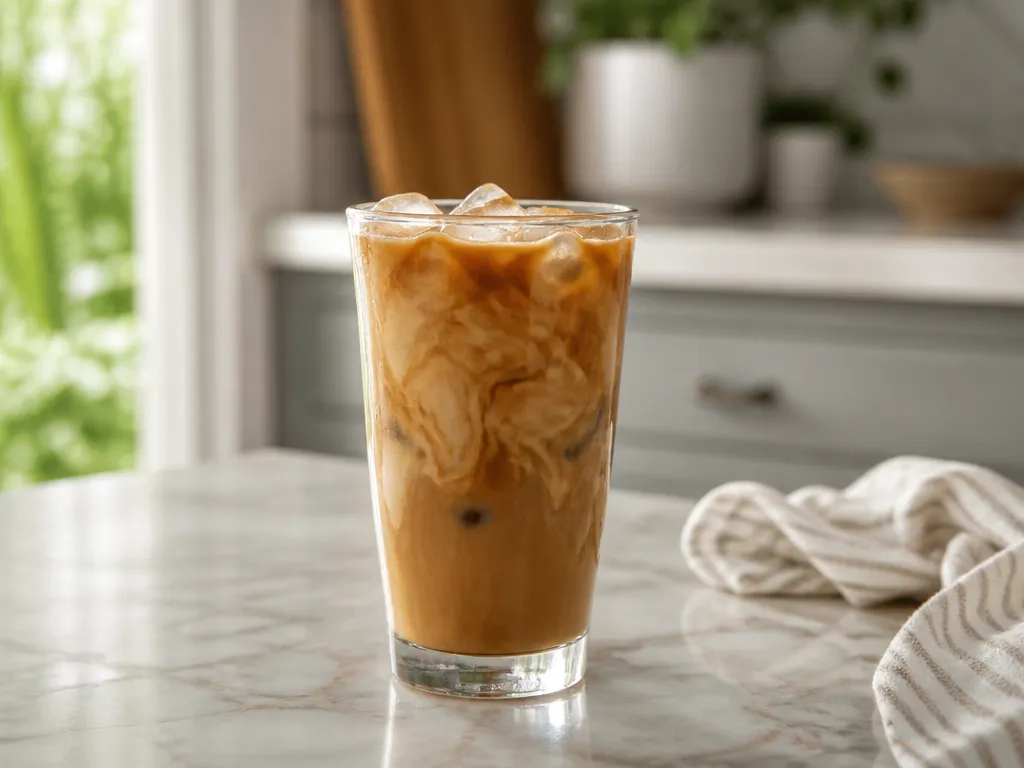
If you want vanilla iced coffee that tastes strong and not watery, brew your coffee at about twice the normal strength for the final drink. Use 180 ml strong coffee (or 180 ml cold brew concentrate), then pour it over ice with 60 ml milk plus vanilla. Keep the total liquid close to 240 ml before you add ice for the best balance.
How to make a vanilla iced coffee at home: combine 180 ml strong brewed coffee (or 180 ml cold brew concentrate) with 60 ml milk, 1/2 tsp vanilla extract (or 15 ml vanilla syrup), and optional 1 to 2 tsp sweetener. Fill a glass with ice, stir, and taste after 30 seconds, adjusting sweetness or vanilla.
How To Make A Vanilla Iced Coffee At Home?
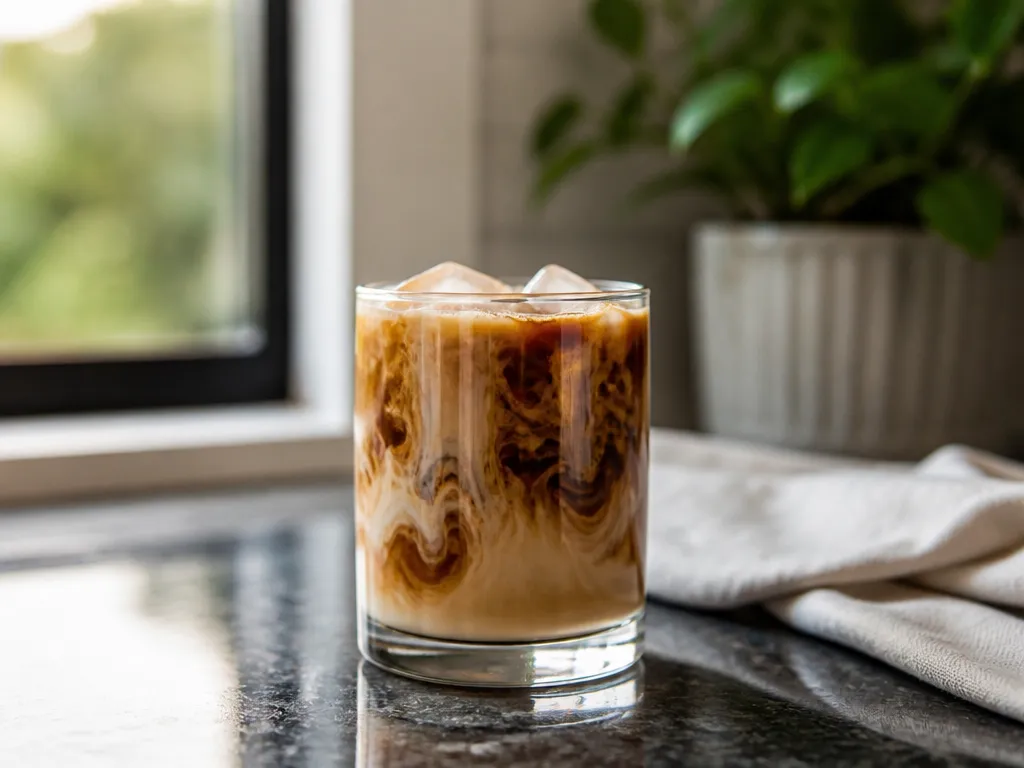
For one serving, mix 180 ml strong brewed coffee with 60 ml milk, 15 ml vanilla syrup (or 1/2 teaspoon vanilla extract), and optional sweetener, then pour over 1 to 1.5 cups ice. This ratio keeps the drink sweet and aromatic even after the ice melts, without turning it watery.
Serving Base Formula (Pick One Vanilla Option)
Choose your vanilla ingredient first, because it changes how much liquid sweetness you add and how thick the finish feels. Use the amounts below as your starting point, then adjust sweetness in small steps.
| Component | Base amount (1 serving) | Why it matters |
|---|---|---|
| Strong brewed coffee | 1 cup (240 ml) | Provides body so dilution from ice does not flatten flavor |
| Vanilla syrup | 2 to 3 tbsp (30 to 45 ml) | Controls sweetness and gives a steady vanilla profile |
| Ice | 1 to 1.5 cups | Chills quickly while limiting how much melt-thin water you add |
Why This Ratio Works (The Practical Logic)
This recipe targets two outcomes: vanilla stays noticeable and coffee still tastes like coffee after dilution. Strong coffee plus enough ice prevents the “tastes like iced sweet milk” problem, while the syrup amount offsets how cold reduces perceived sweetness and flavor intensity.
Trade-off: more ice makes the drink colder faster, but it also dilutes more. If you prefer thicker, syrup-forward sweetness, use slightly less ice or start with even stronger coffee.
Vanilla syrup gives the smoothest texture because it already includes sugar, so the drink stays balanced as the ice melts. Vanilla extract tastes more “vanilla-forward” and can be less sweet, so you must decide whether to add sugar later based on your preference.
Brewing For This Drink
For the cleanest vanilla iced coffee flavor with the least bitterness, brew your coffee stronger than “drink hot” strength, then chill quickly and dilute in the cup. Use either an 180 ml strong-brew base or an 180 ml cold-brew concentrate base, then add vanilla and ice so the final drink hits a smooth, even balance.
Pick your base method based on time and bitterness control. Strong brew is faster but easier to over-extract, while cold brew is more forgiving and tends to taste sweeter even when you use the same vanilla.
Choose Coffee Strength (180 Ml Base)
Use one of these 180 ml starting points, then build the cup with ice and vanilla.
| Base choice | Best for | Key risk |
|---|---|---|
| 180 ml strong-brew base | Same-day drinks | Over-extraction causing harsh bitterness |
| 180 ml cold-brew concentrate | Lowest bitterness, easiest flavor control | Under-extraction leading to thin flavor |
Extraction Tips To Avoid Bitter Notes
Bitter iced coffee usually comes from extracting too much from the grounds or letting freshly brewed coffee keep sitting warm. Keep the brew time consistent, avoid very fine grind for hot brewing, and stop the extraction as soon as the target strength is reached.
My rule: if it tastes sharp or “ashy,” you extracted too hard or brewed too long. Fix it by shortening brew contact time (strong brew) or increasing dilution and chilling rate (both), before changing vanilla.
For speed, make a “base batch” once and assemble each cup fast. Brew 180 ml strong base or a small amount of cold-brew concentrate, chill thoroughly, store tightly covered in the fridge, and build with ice and vanilla per serving.
Exact Ingredients &Amp;amp;amp; Gear
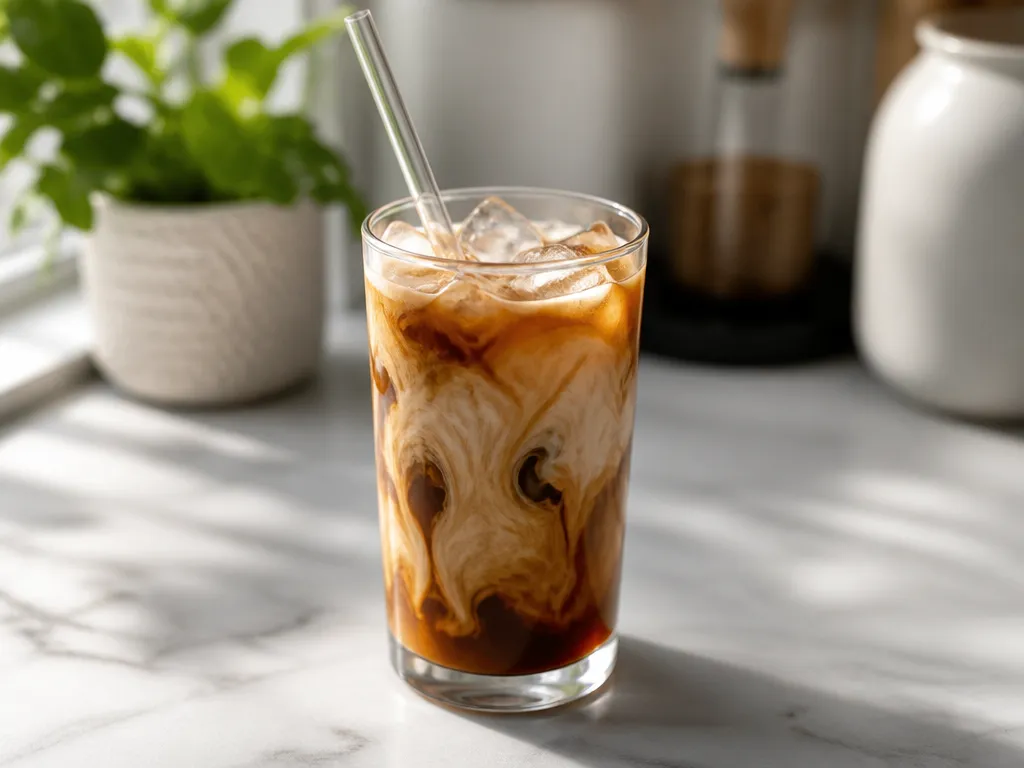
For 1 serving of vanilla iced coffee, you need 180 ml strong brewed coffee or cold-brew concentrate, plus 15 ml vanilla syrup (or 1/2 tsp vanilla extract), 60 ml milk of your choice, and ice. Add optional sweetener if using extract or bean, and build the drink in a 12-16 oz glass.
| Item | Amount/Specification | Notes |
|---|---|---|
| Coffee (ground) | Use enough to yield 1.0-1.5 fl oz (30-45 ml) strong concentrate | Pick a dark roast for a heavier vanilla flavor or medium roast for a cleaner taste. |
| Water (brewing) | 8 fl oz (240 ml) total, adjust until your concentrate is 1.0-1.5 fl oz (30-45 ml) | Exact grind and dose can shift how strong your concentrate ends up. |
| Vanilla flavor | Vanilla syrup: 2-3 tbsp; or vanilla extract: 1 tsp; or vanilla bean: 1/2 bean | Syrup mixes fastest and gives the most consistent sweetness. |
| Milk | 2-4 fl oz (60-120 ml) | Dairy gives richer texture, while oat, almond, or soy change thickness and sweetness perception. |
| Ice | Enough to fill a 12-16 oz glass (leave room at the top) | More ice cools faster but dilutes faster, so keep your base concentrate strong. |
| Optional sweetener | To taste if using extract or vanilla bean instead of syrup | Extract and bean add aroma more than sugar, so you may need a separate sweetener. |
Practical trade-off: if you use vanilla extract, the drink can taste great but may need extra sweetness because extract is mostly flavor, not sugar. If you use vanilla syrup, sweetness and vanilla intensity are easier to control in one step, with less guesswork.
Minimum gear checklist for one serving: brewer (to make strong coffee), measuring spoons (or a scale for grounds), a glass, and a stir utensil. Recommended add-ons for consistency are a thermometer (optional) and a scale, since small dose changes make a noticeable difference in iced coffee.
Vanilla Options And Effects
Vanilla form determines how quickly flavor hits, how sweet the drink tastes, and how smooth it feels. Extract gives a clean vanilla aroma, beans give deeper speckled flavor, and syrups add sweetness and body, which can thicken your iced coffee even if your ratio stays the same.
Vanilla Extract Vs Syrup Vs Bean
Vanilla extract is the most predictable option for home iced coffee because you control dose with a measuring spoon. Extract is typically alcohol-based, so a small amount usually flavors the drink without adding much texture.
Vanilla syrup is usually extract blended with sugar, so it shifts the flavor job from “aroma” to “aroma plus sweetness” (and sometimes a slightly syrupy mouthfeel). Vanilla bean is the slowest way to get a rounded flavor, because the seeds need time to steep or dissolve, but it delivers the most complex aroma and the most vanilla-forward taste.
| Vanilla choice | Aroma impact | Sweetness impact | Texture impact | Best for |
|---|---|---|---|---|
| Vanilla extract | Clean, fast vanilla note | None unless you add sugar | Little to none | Balanced coffee flavor |
| Vanilla syrup | Vanilla reads with caramel-like sweetness | High, because syrup is sweet | Slight thickness | Sweet iced coffee |
| Vanilla bean | Deep, rounded aroma with “real bean” complexity | Low unless you pair it with sugar | Can add slight graininess from seeds | Premium vanilla flavor |
Dairy And Non-dairy Options, And How They Change Mouthfeel
Dairy milk smooths coffee acidity and makes vanilla taste fuller, especially because fat rounds off sharp notes. Heavy cream and half-and-half also thicken the drink, so vanilla flavors feel more “sticky” and dessert-like.
Non-dairy milks change texture in a more predictable way: soy is usually closest to dairy body, oat is often the creamiest, and almond is lighter with less smoothing power. If you switch to a thin non-dairy option, you may need either more vanilla for aroma presence or a more concentrated coffee base to avoid a watery feel.
My default choice for “vanilla iced coffee at home” is vanilla extract with dairy (or soy/oat if dairy-free), then I adjust sweetness with the smallest amount of syrup, because that keeps coffee character from disappearing.
Evidence note: This section relies on general sensory and formulation behavior of extract, syrup, and vanilla bean. The provided guidance is practical, but exact flavor strength varies by brand, bean quality, and the sugar content of syrups, so treat the effects as directions and adjust by taste.
Make-ahead Concentrate Method
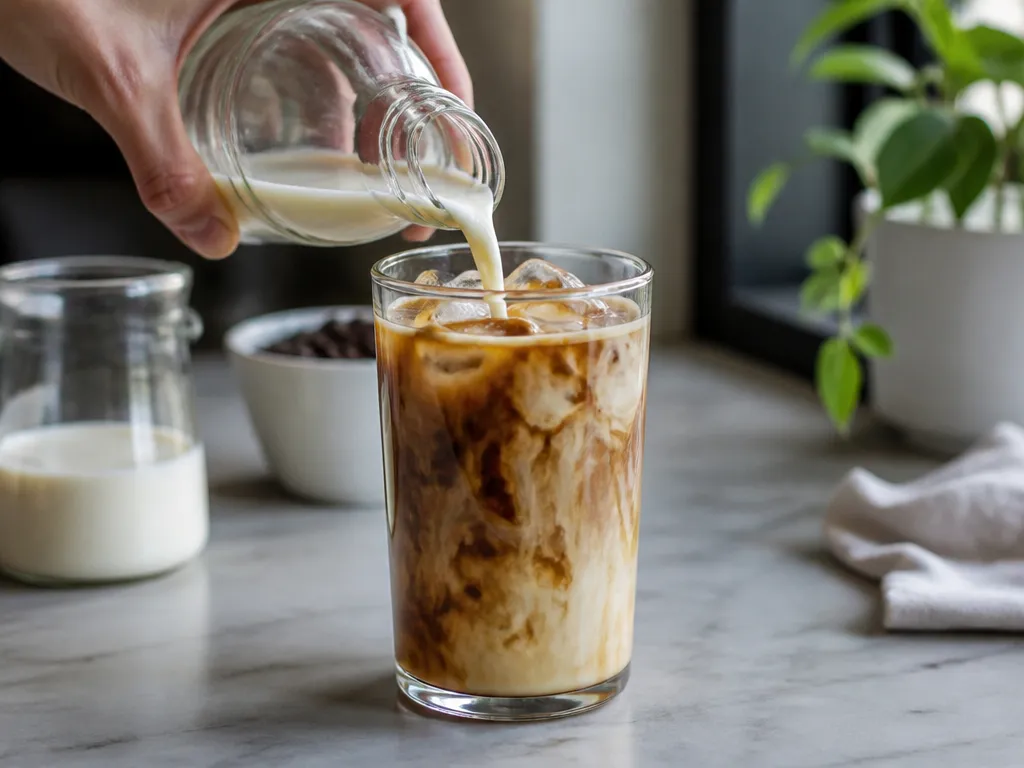
Vanilla iced coffee gets faster when you brew a small, strong vanilla coffee concentrate and dilute it at serving time. A reliable home ratio is 1 part concentrate to 2 parts cold water or milk, adjusted for strength and sweetness.
Vanilla-infused Concentrate (Batchable Base)
Make the concentrate with hot coffee so it extracts more evenly, then cool it quickly so the vanilla tastes clean instead of dull. Use one batch size and scale it up or down, because dilution happens later.
Base concentrate recipe (makes enough for about 3 drinks at typical strength): 450 ml (about 1.9 cups) brewed coffee plus 15 to 20 ml (1 to 1 1/3 tbsp) vanilla syrup or 2 tsp vanilla extract. Stir well, then cool to room temperature before refrigerating.
| Serving target | Concentrate ratio | What to change |
|---|---|---|
| Light | 1 : 3 | Add more water or milk |
| Standard | 1 : 2 | Use this as your default |
| Strong | 1 : 1.5 | Use less dilution or less ice |
For storage, keep the concentrate covered in the refrigerator. Use it within 3 to 4 days for best vanilla character, and within up to 5 days if it smells and tastes fresh; beyond that, the risk is flavor drift, not just taste.
Storage timelines change mainly with vanilla form: syrup tends to hold flavor a bit more consistently across a few days, while extract can mellow more quickly. For strict consistency, batch using syrup and adjust at serving time with a touch of extract if you want extra aroma.
For a “quick build” every morning, refrigerate only the concentrate and assemble with ice plus cold water or milk at the last second.
Troubleshooting And Adjustments
Weak flavor usually comes from under-extracted coffee or too much ice, and strong, harsh flavor usually comes from over-extraction or using too concentrated a base. Sweetness balance mainly fails when you add sugar before chilling (it can taste flatter) or when you change vanilla type (extract vs syrup vs bean) without adjusting the sugar level.
Brew Is Too Weak Or Too Strong
Weak iced coffee tastes watery or thin even though the vanilla is present. Cause is most often extraction time that is too short, grind that is too coarse, or a base brewed concentrate that gets diluted during cooling and over-iced serving. Fix by tightening one variable at a time, grinding slightly finer or extending contact time, and reducing the ice load.
Strong iced coffee tastes bitter, smoky, or “dry” on the tongue. Cause is most often extraction time that is too long, grind that is too fine, or using a base that is too concentrated for your cup size. Fix by backing off extraction and switching to a coarser grind, then dilute the base with more milk or more cold water before adding ice.
For example, if your vanilla flavor is clear but coffee is weak, treat it as an extraction issue rather than a vanilla issue. Increase extraction slightly first, then adjust vanilla amount if you still want more rounded sweetness.
Dilution And Sweetness Balance
Dilution is predictable: ice keeps melting, and any “sweetness” you liked warm can taste different once chilled. Cause is usually adding sugar to the coffee base and then letting it chill with a high ice-to-liquid ratio, which can mute perceived sweetness or sharpen vanilla aromatics. Fix by adding sweetener to the warm base so it dissolves fully, then adjust sweetness after chilling by adding a small measured amount of syrup or sugar to taste.
Vanilla form changes how sweet the drink feels. Vanilla extract brings aromatic vanilla flavor with little added sweetness, vanilla syrup adds sweetness and a heavier body, and vanilla bean adds aroma but can read slightly dry or earthy if you steep too aggressively. Fix by choosing one “sweetness lever” only: if you use syrup, reduce added sugar; if you use extract or bean, keep sugar level consistent and let vanilla carry the aroma.
| Vanilla choice | Likely taste effect | Adjustment |
|---|---|---|
| Vanilla extract | More aroma, little sweetness change | Adjust sugar separately |
| Vanilla syrup | More sweetness and slightly heavier feel | Lower added sugar to match your target sweetness |
| Vanilla bean | Deep aroma, can read drier if over-steeped | Reduce steep strength if it tastes astringent |
Judgment call: If the drink is too sweet but still tastes weak, dilute first (more milk or cold coffee) and then reduce sugar next time. If it tastes bitter, fix extraction first rather than masking with extra vanilla or sugar.
Serving, Garnish, And Presentation
A vanilla iced coffee should be served cold, visually clean, and strongly scented at the moment you drink it. Use clear glassware, add ice last, and keep the vanilla on the surface (through syrup drizzles or fresh vanilla aroma) so it hits your nose first.
Glassware, Temperature, And Ice
Use a clear tumbler or a glass with straight sides so you can see the crema-like color contrast of coffee and vanilla. Cold glass improves aroma retention because the drink warms slower; warm glass speeds up aroma loss and makes vanilla smell flatter.
Ice is the biggest presentation lever because it controls dilution. Over-iced drinks look “watery” quickly, under-iced drinks lose chill and start tasting dull as heat carries off volatile aromas. Aim for enough ice that the drink feels cold immediately when you hold the glass, then fill to the same level for repeatable looks.
Garnish Ideas And Aroma Tips
Garnish should do two jobs: look good and guide aroma. Cinnamon, vanilla sugar, or a micro-planed strip of vanilla bean can sit on top without dissolving your drink into sweet water.
For the best nose-first experience, add vanilla in a way that stays near the surface. A swirl of vanilla syrup, a thin drizzle of vanilla extract mixed with a teaspoon of warm water, or a quick foam cap gives you visible vanilla cues and a stronger first sniff.
My rule: decorate after pouring, not before. Anything you stir in too early loses definition and tends to dilute the vanilla signal.
For serving timing, plan to pour when you are ready to drink. Iced coffee is at its most aromatic right away; after that, temperature rise and melting ice change both taste and the way the vanilla presents.
Quick Summary
Use 180 ml of coffee brewed at roughly twice normal strength, 60 ml milk, vanilla, and ice for a balanced one-serving vanilla iced coffee. If you want a compact, less watery drink, keep the liquid near 240 ml before adding ice. Choose 1/2 teaspoon vanilla extract for a cleaner, less sweet result, or 15 ml vanilla syrup for sweetness; add 1 to 2 teaspoons sweetener only if needed. Taste after 30 seconds, then adjust vanilla or sweetness in 1-teaspoon steps.
For a larger formula, use 180 ml strong coffee, 60 ml milk, 15 ml vanilla syrup, and 1 to 1.5 cups ice. Stir the vanilla into hot coffee so it dissolves evenly, then pour over ice and taste again after 30 to 60 seconds. Cold-brew concentrate offers easier bitterness control, while hot strong brewing is faster but can turn harsh if over-extracted. If the coffee tastes sharp or ashy, shorten contact time.
Frequently Asked Questions
Is It Actually Cheaper To Make Vanilla Iced Coffee At Home?
A single batch of 1:1 vanilla syrup (1 cup sugar, 1 cup water, simmered) makes about 16 oz, which is roughly 32 drinks at the standard 1/2 oz per glass. Current grocery and cafe price data was not available for this guide, so do not trust a fixed dollar figure from anywhere, including here. Compare your own receipts: the sugar, vanilla, coffee, and milk typically cost a fraction of a cafe iced coffee per serving, and the gap widens the more cups you drink per week.
How Far Ahead Do I Need To Start If I Want Iced Coffee Tomorrow Morning?
Cold brew needs 12 to 18 hours of steeping at a 1:8 coffee-to-water ratio, so start it the night before. If you want it today, brew hot using about half your normal water (roughly 1:8) and chill it in an ice bath for 10 minutes or the fridge for 45. Pouring hot coffee straight onto ice works, but you lose strength to meltwater before the drink even reaches you.
Can I Just Use Vanilla Extract Instead Of Making Syrup?
Yes, but vanilla extract is alcohol based, so it adds flavor without sweetness and can taste sharp in cold liquid; use about 1/4 to 1/2 tsp per 8 oz and sweeten separately. Syrup is the better default because the sugar is already dissolved and carries the vanilla evenly through the drink. Add extract to the warm coffee before chilling so it disperses evenly.
Why Does My Homemade Iced Coffee Taste Watery By The Last Few Sips?
Ice melt is almost always the cause: a 16 oz glass packed with ice can contribute 4 to 6 oz of water by the time you finish. Brew a stronger base and freeze some of your leftover coffee into cubes so the dilution adds coffee instead of water. This helps prevent weak iced coffee without changing the vanilla.
How Do I Check Whether My Brew Ratio Is Right Without Guessing?
Taste the drink at the halfway point, before the ice has melted, then taste the last sip; if the second half is noticeably thinner, your starting brew was too weak. For a hard number, a refractometer reading of about 1.15% to 1.35% TDS is the common target for iced coffee, measured after the drink is assembled and cold. Verify it yourself with a cheap refractometer and the same beans twice, since your ice, glass size, and milk volume all shift the reading.

- Espresso Bar Wedding: Ideas, Setup, Costs, and Tips for a Memorable Coffee Experience - November 11, 2026
- How Many Grams of Espresso Beans for a Double Shot? A Complete Brewing Guide - November 11, 2026
- Brasilia Espresso Machine: Features, Performance, Models, and Buying Guide - November 11, 2026