
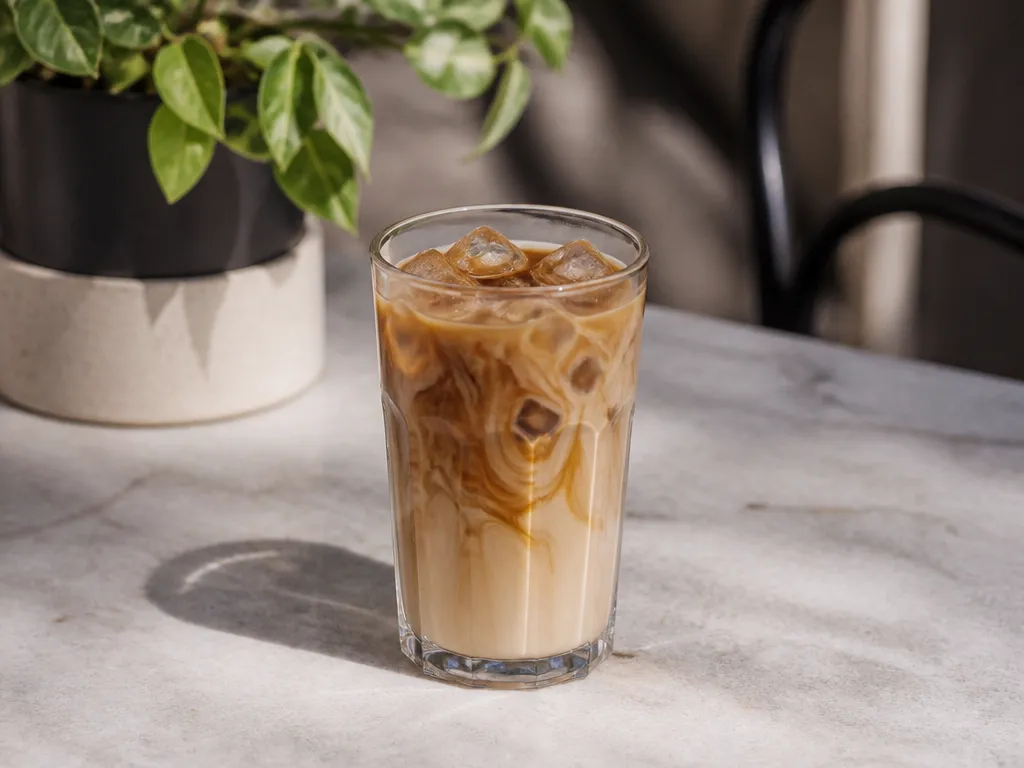
Use a 1-to-2 rule: brew coffee that’s about twice as strong as you want to drink, then pour it over ice. If your coffee is weak, the ice melts faster than the flavor can recover, and “vanilla” tastes watery. The fix is in the ratio and how you add vanilla.
To make vanilla iced coffee, brew coffee at roughly 2x strength, cool it briefly, then pour over a full glass of ice. Mix in vanilla extract (or vanilla syrup), starting with about 1 to 2 teaspoons per 8 ounces, and adjust after tasting. Stir, taste, and add more vanilla only if the base coffee tastes right.
How Do You Make Vanilla Iced Coffee?

Vanilla iced coffee for one 12 oz glass: brew 1/2 cup (4 oz) strong coffee, stir in 1 to 2 tsp vanilla syrup (or 1/2 tsp vanilla extract), then chill completely and pour over a full glass of ice. If you use vanilla extract, add it after brewing while the coffee is warm enough to mix, then cool.
Use this exact base recipe if you want consistent strength and less watery ice dilution. Brew coffee about twice as strong as “drink hot” coffee, because ice and chilling mute flavor.
Scale the same proportions linearly. For batch drinks, chill the whole coffee first so every glass gets the same temperature, then pour over ice right before serving.
| Servings | Brewed coffee | Vanilla syrup | Vanilla extract |
|---|---|---|---|
| 2 | 1 cup (8 oz) | 2 to 4 tsp | 1 tsp |
| 4 | 2 cups (16 oz) | 4 to 8 tsp | 2 tsp |
If your iced coffee tastes weak, increase brewed strength (more coffee grounds for the same water) before increasing vanilla or sugar. Vanilla sweetness can mask weak coffee, so you end up over-sweet and still under-flavored.
Why Iced Coffee Goes Weak
Dilution from ice melt reduces the coffee-to-liquid ratio, thinning the body and washing away aroma. Melting ice adds water, dropping temperature and muting perceived sweetness, so the drink tastes flatter than hot coffee. The net effect is a weak, under-aromatised beverage unless you compensate.
Cold brew and hot-brewed-then-chilled produce different flavor outcomes. Cold brew emphasizes smoothness and low acidity, but can taste flatter when diluted, while hot-brewed-then-chilled retains more brightness but loses some volatile aromatics during chill. The path you choose changes how you balance vanilla and sweetness with the coffee base.
Chill haze and sweetness perception matter in practice. Cold liquids reduce the perception of sugar because aroma compounds become less volatile at low temperatures, and the perception of body drops as ice takes up more volume. The result is a noticeable gap between the intended vanilla sweetness and what you actually taste.
| Variable | Effect on dilution | Practical tweak |
|---|---|---|
| Ice size | Smaller cubes melt faster, increasing dilution | Switch to large cubes or spheres |
| Brewing path | Concentrates resist dilution better | Use concentrate or adjust grind and time for hot brew |
| Serving time | Longer exposure increases dilution | Serve in portions or pre-chill glasses |
In my view, the simplest way to keep vanilla aroma intact is to treat the coffee as a concentrate that you dilute at the table, not in the pitcher.
These levers explain why line-by-line the recipe for vanilla iced coffee needs to push up strength, control dilution, and choose a chill method that preserves aroma rather than relying on temperature alone.
Coffee-to-ice Ratios That Hold
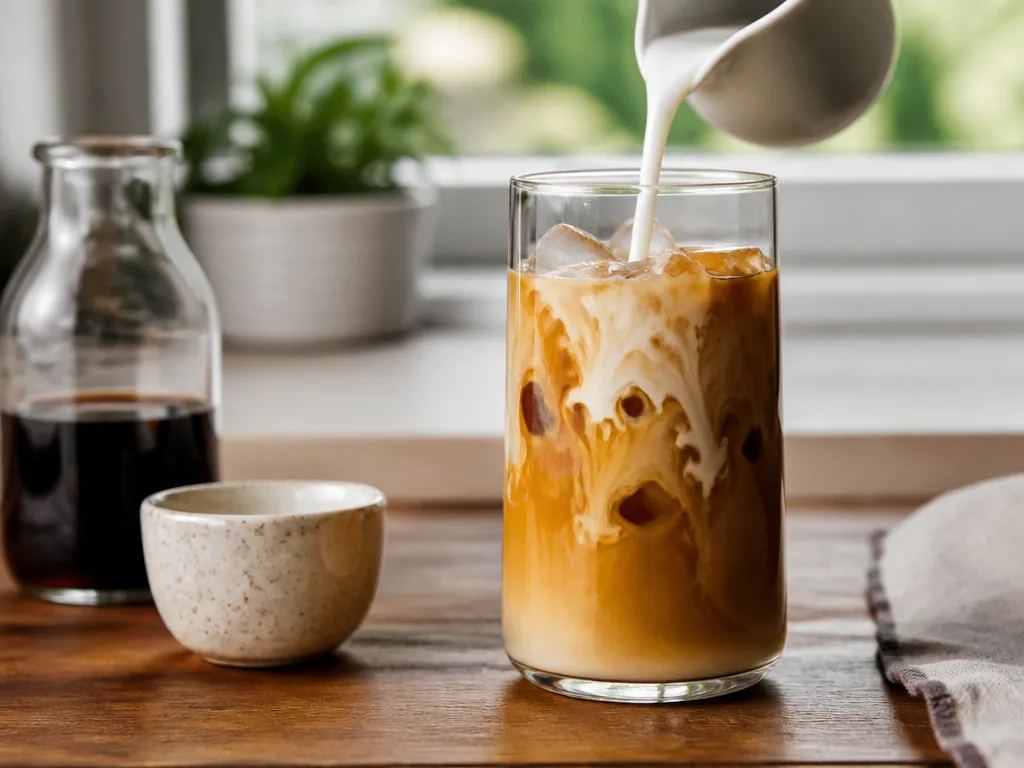
Strength and dilution are the two levers that actually decide vanilla iced coffee quality. Use weight-based targets: hot methods for drip or pour-over 1:7.5 – 1:9, cold brew concentrate 1:4 – 1:8, and adjust with milk to reach your preferred creaminess. Ice should occupy roughly 40 – 60% of the cup before it melts to keep flavor from washing out.
| Style | Brewing Method | Coffee:Water (by weight) | Milk/Cream (ratio to coffee) | Ice (by volume, pre-melt) | Notes |
|---|---|---|---|---|---|
| Hot Brew over Ice | Drip or Pour-over | 1:7.5 – 1:9 | 0.5 – 1:1 (optional) | 40 – 60% | Vanilla aroma holds when using syrup or bean infusion; avoid over-extracting |
| Cold Brew Concentrate over Ice | Cold Brew | 1:4 – 1:8 | 1:1 – 1:2 | 30 – 50% | Concentrate is strong; dilute with milk or water to taste |
| Iced Coffee with Cold Foam | Hot brew then foam | 1:14 – 1:17 | 0.5 – 1:1 | 40 – 60% | Foam adds perception of strength; keep foam cold |
Vanilla Extract Vs Bean Vs Syrup
All three routes deliver vanilla aroma to the coffee, but they trade off intensity, texture, and prep time. Extract is the quickest and most predictable way to scent an iced coffee with minimal impact on body. Vanilla bean infusion offers richer notes and a silky mouthfeel but requires extra steps and time.
Make-ahead Concentrate And Batch Prep

Make-ahead iced coffee gets fast on weekdays when you keep two components ready: coffee concentrate (brewed strong) and a separate vanilla sweetener (syrup or extract-based mixture). Store both chilled, assemble over ice with minimal stirring, and discard any batch that smells sour or tastes “stale” rather than clean coffee-and-vanilla.
Coffee Concentrate Batch: How To Store It
Coffee concentrate storage is about keeping it cold enough to slow flavor loss and preventing off-notes from lingering. Aim for a strong brew meant for dilution, then keep it sealed and cold so you can pour and taste without re-brewing every day.
Vanilla Syrup Batch: Ratios And Jar Life
Vanilla syrup is the workhorse for consistency because it dissolves instantly in cold coffee. A simple syrup style base plus vanilla creates a repeatable sweetness level, and it keeps longer than vanilla extract blends that lack a sugar matrix.
Minute Weekday Assembly Workflow
Weekday speed comes from pre-measuring your “build,” so you only do the final pour and stir. A practical workflow is to keep your glassware, ice, concentrate, and vanilla syrup on the same side of the fridge, so you do not hunt for supplies while the ice melts.
| Component | Storage | Quality rule |
| Coffee concentrate | Fridge (short term), freezer (longer) | Use for best flavor within a few days in the fridge, and thaw portions for repeat use |
| Vanilla syrup | Sealed fridge storage | Use within about a week for bright vanilla, discard if smell or taste turns off |
My setup for repeatability: brew concentrate once or twice a week, portion it for quick thawing if you freeze, and keep one sealed vanilla syrup jar in the fridge so every glass gets the same sweetness and vanilla intensity.
Dairy-free And Sugar-free Swaps
Oat and soy milks are the most reliable for creamy iced vanilla coffee, while almond often tastes thinner and coconut can turn icy or separate if you use full-fat. Sweetness control works best by swapping sugar for vanilla extract or vanilla powder, then using a sugar-free syrup only if you need the “body” sweetness that extract alone cannot replace.
Plant milk behavior in cold coffee is mostly about fat and proteins. Oat and soy have more structure and tend to hold up better over melting ice, which keeps mouthfeel smoother. Almond and coconut have less protein-based stability, so separation is more likely, especially with stronger coffee (darker brews) or when the milk is chilled and then hit with very hot concentrate.
Plant Milk Behavior In Cold Coffee
Oat milk is the safest swap if you want the closest “creamy iced coffee” result. Soy milk often tastes a bit more beany unless you choose an unflavored barista-style version, but it usually stays cohesive. Almond milk is the easiest to find and the lightest on texture, so you often need slightly more vanilla or a small amount of thickener (like a barista milk) to avoid a watery finish.
Coconut milk (carton, not shaken cream) can taste great with vanilla, but it can split when the blend is too cold, too watery, or too hot when combined. If you use coconut, chill the coffee concentrate and the milk first, and avoid high ratios of coconut to coffee if you see graininess or oily streaks.
Sweetness without sugar is where most sugar-free vanilla recipes go wrong. Vanilla extract and vanilla powder add vanilla aroma, but they do not add sweetness, so your iced coffee will taste more “coffee-forward.” Sugar-free syrups add sweetness plus flavor, which can make the drink feel more like classic vanilla coffee, but many brands have a stronger aftertaste, so start with less than you think you need.
| Swap | Cold coffee result | Best adjustment |
|---|---|---|
| Oat (unsweetened) | More stable, creamier mouthfeel | Use vanilla extract for aroma, add syrup only if you want sweetness |
| Soy (unsweetened, barista style if possible) | Usually cohesive, “latte-like” texture | Use vanilla powder or extract to reduce any bean edge |
| Almond (unsweetened) | More likely to feel thin | Add a bit more vanilla aroma or use slightly more concentrate per cup |
| Coconut (carton) | More separation risk | Chill components first and reduce coconut ratio if grainy |
Optional nutrition per serving is hard to estimate without your exact brand and quantities. Use the nutrition label for your specific plant milk and sugar-free syrup, then calculate per serving based on how many tablespoons or ounces you actually pour.
Rule of thumb for consistency: cool your coffee concentrate to fridge temperature before mixing with plant milk, then taste once the ice has melted so you dial vanilla and sweetness in the same way every time.
Fix Weak, Bitter, Or Cloying Cups
Bitter or harsh cups come from grind size, brew temperature, and over-steeping, so fix it by adjusting those three levers before you change vanilla.
Weak Or Watery (Fix In Order Of Effort)
Start with the easiest change that improves flavor concentration without making the drink syrupy.
Bitter Or Harsh (Grind, Temperature, Over-steep)
Bitter iced coffee usually means you extracted too much or extracted the wrong compounds. The fix is to reduce extraction intensity and steep time, then confirm grind size.
For vanilla specifically, add vanilla to taste after the bitterness is fixed. If you add vanilla first, it can hide the problem while the underlying coffee stays harsh.
Too Sweet Or Too Vanilla-forward (Walk It Back)
Sweetness problems usually come from syrup dose and also from dilution. Reduce the vanilla input before you reduce the coffee, because coffee needs strength to carry vanilla.
For serving, use tall glasses with a lid or a stir stick, and pour a hot concentrate over fresh ice. Slow-melt tactics that help are coffee ice cubes and slightly fewer ice cubes per serving, because both reduce the “last-sip wateriness” that kills vanilla aroma.
Judgment call: if your cup is harsh, fix grind and steep time before you touch vanilla, because sweetening or adding more vanilla will preserve bitterness and make it linger.
Quick Summary
For a practical single serving, the article gives a 12 ounce glass method: brew 4 ounces of strong coffee (using about a half cup), stir in 1 to 2 teaspoons vanilla syrup or 1/2 teaspoon vanilla extract, chill completely, then fill the glass with enough ice, about 2/3 to full, and pour the cold coffee over it.
Frequently Asked Questions
How Much Does It Typically Cost To Make Vanilla Iced Coffee At Home Versus Buying It?
I couldn’t find reliable, current price data in the provided research, so I can’t give an exact cost comparison.
In practice, your biggest swing factors are how much coffee concentrate you make per batch and how you price vanilla syrup or vanilla extract, since those determine most of the per-cup cost.
How Long Does Making Vanilla Iced Coffee Usually Take From Start To Finish?
Plan for about 5 to 10 minutes of active prep, plus any waiting time to cool or chill your coffee. If your method uses fast chilling, you can often reduce downtime, but if you want it fully cold, you may need up to a couple hours depending on your refrigeration or ice strategy.
Can I Still Make Vanilla Iced Coffee If I Only Have Vanilla Extract Instead Of Vanilla Syrup?
Yes, but treat it differently because vanilla extract is not a ready-made sweetener. Use a small amount for flavor and add sugar or a sweetener you already have to reach the sweetness you want.
What Happens If I Do Nothing To Chill It, Like Skipping Cooling Or Using Warm Coffee Over Ice?
If you pour warm coffee over ice, the drink will likely taste weaker and more watery because the ice melts quickly. Your best outcome comes from using coffee that is already cold or from using a method that chills it fast before serving.
When Should I Get Help If My Vanilla Iced Coffee Keeps Turning Out Wrong?
Get help (or at least switch methods) if you repeatedly get bitterness, sourness, or inconsistent strength after adjusting just one variable at a time, like grind size, brew time, or water ratio. If you’re using a machine or a premix you do not fully understand, troubleshooting with the manufacturer’s guidance can prevent wasting ingredients.

- Espresso Bar Wedding: Ideas, Setup, Costs, and Tips for a Memorable Coffee Experience - November 11, 2026
- How Many Grams of Espresso Beans for a Double Shot? A Complete Brewing Guide - November 11, 2026
- Brasilia Espresso Machine: Features, Performance, Models, and Buying Guide - November 11, 2026