
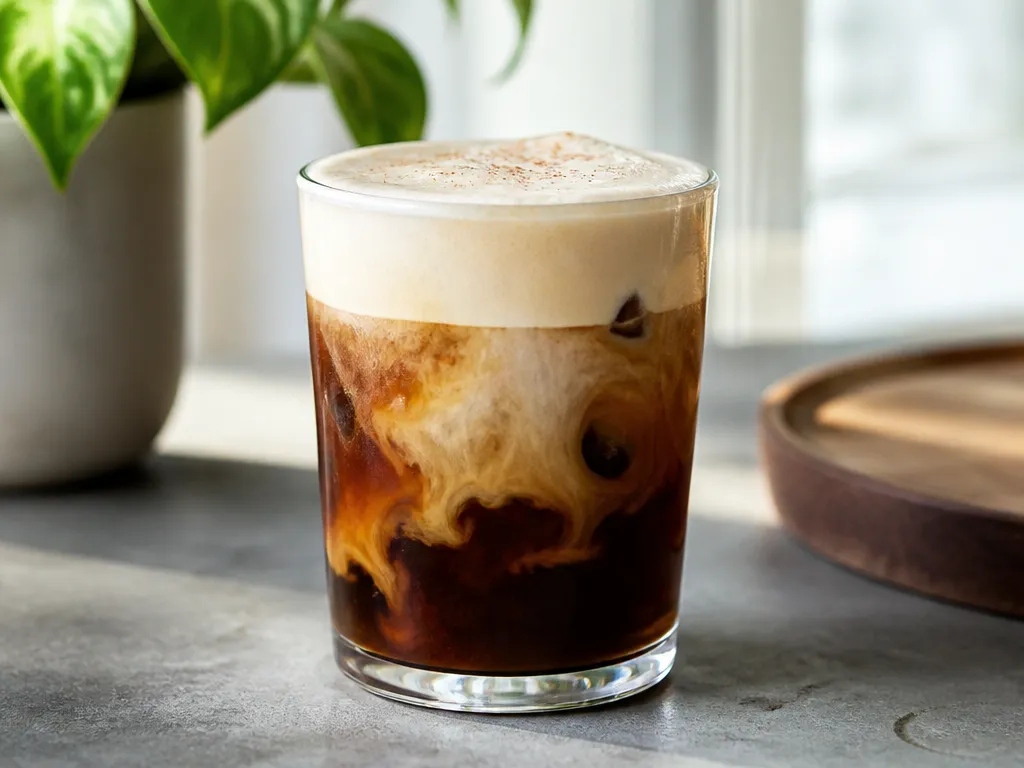
For a “creamy cold foam” that holds its look, the key threshold is temperature: keep the foam cold and assemble within 1 to 2 minutes after frothing. If it sits longer, it usually collapses or turns glossy. This drink is a 12 oz cold brew base plus French vanilla flavoring, topped with foam made from milk (or a non-dairy barista milk) plus sweetener.
French vanilla creamy cold foam cold brew is cold brew coffee flavored with French vanilla syrup (or vanilla bean/extract), then topped with cold foam. Target a 12 oz coffee base with 10 oz chilled cold brew and 2 oz vanilla milk, then add about 1 to 1.5 oz foam; scale proportionally for 16 oz.
French Vanilla Creamy Cold Foam Cold Brew Recipe

Cold brew plus a dense vanilla cold foam needs two separate builds: a smooth, concentrated steep and a foamed topping made with heavy cream or a thick dairy-free milk. Follow the measurements below to hit a balanced sweetness without diluting the vanilla foam.
Recipe Card (12 Oz): Build Ratios You Can Repeat
Target: 12 oz coffee base with creamy vanilla foam added on top. Use this for one mug, then scale linearly for more.
Cold brew base (concentrated): 8.5 oz cold brew concentrate + 3.5 oz water (or milk) = 12 oz.
French vanilla syrup option: Add 3/4 oz (1.5 tbsp) French vanilla syrup to the cup, stir, then top with foam. Foam amount: 1.25 oz.
Recipe Card (16 Oz): Same Flavor Balance, Bigger Cup
Target: 16 oz coffee base with the same “creamy French” intensity per ounce, then add the foam. Use the 12 oz plan as your baseline, then scale up.
Cold brew base (concentrated): 11.3 oz cold brew concentrate + 4.7 oz water (or milk) = 16 oz.
French vanilla syrup option: Add 1 oz (2 tbsp) French vanilla syrup to the cup, stir, then top with foam. Foam amount: 1.5 oz.
| Serving | Cold brew concentrate | Water (or milk) | French vanilla syrup (drink) | French vanilla syrup (foam) |
|---|---|---|---|---|
| 12 oz | 8.5 oz | 3.5 oz | 1.5 tbsp (0.75 oz) | 1/4 oz |
| 16 oz | 11.3 oz | 4.7 oz | 2 tbsp (1 oz) | 1/4 oz |
Flavoring Method Choice: Syrup Vs Extract Vs Bean
For cafe-style consistency, choose syrup when you want predictable sweetness and foam that thickens well. Vanilla extract is fine in the drink, but it can taste sharper and may not dissolve as evenly into foam unless you warm and mix thoroughly (then cool).
Vanilla bean is the most “rounded” flavor, but it is slower. Use beans to steep into the cold brew concentrate first, then keep the foam lightly sweet so the topping does not overwhelm the base.
Make-ahead Notes: What You Can Prep Safely
Cold brew concentrate can be brewed ahead and stored cold until you build drinks. Vanilla foam is best fresh, because bubbles relax over time and the texture shifts from creamy to foamy.
For faster mornings, pre-measure your syrup or extract, keep cream chilled, and pre-label cups or jars by serving size. If you need a shortcut, you can pre-mix the drink base (concentrate plus water) and add vanilla at assembly, then foam immediately.
Best workflow: prepare concentrate ahead, portion your sweetener into labeled containers, foam only when the drink is ready.
French Vanilla Flavor Rules For Cold Brew
French vanilla flavor should taste like smooth vanilla custard with a sweet, rounded aroma, not like sharp “vanilla extract” or plain sugar syrup. For cold brew topped with creamy foam, you need enough vanilla to read through the coffee, but not so much that it turns bitter or alcoholy.
French vanilla on menus usually means a vanilla base that is creamy and rounded, sometimes built with “vanilla bean” style flavor plus a touch of flavor sweetness, and often more aromatic than regular baking vanilla. At home, the biggest taste swing comes from whether you use syrup, vanilla extract, or vanilla bean, because each has a different flavor profile and intensity.
Pick Your Vanilla: Syrup Vs Extract Vs Bean
Syrup gives the most consistent “French vanilla” result because it is pre-mixed for sweetness and aroma, and it dissolves into cold brew evenly. Vanilla extract can taste great, but it can also read as boozy or sharp if you overdo it, and it can mute into “generic vanilla” if the base is under-sweet. Vanilla bean adds real aroma, but it is slower to infuse and can taste faint in a cold brew unless you steep long enough and use a strong amount.
French vanilla should taste sweet and creamy, but the coffee should still be identifiable. Your cold brew recipe should therefore set sweetness first, then add vanilla flavor so it amplifies coffee and cream rather than covering them.
| Serving | Vanilla start target (syrup) | Vanilla start target (extract) | Vanilla start target (bean) |
|---|---|---|---|
| 12 oz | 1 to 1.5 tsp | 1/2 to 3/4 tsp | 1/3 to 1/2 bean, split and scraped |
| 16 oz | 1.5 to 2 tsp | 3/4 to 1 tsp | 1/2 to 2/3 bean, split and scraped |
French vanilla overdose makes cold brew taste flat or harsh, because vanilla compounds can amplify bitterness and the extract’s alcohol edge can show up. French vanilla underdose tastes like nothing but “vanilla-adjacent sweetness,” so the drink loses that custard impression.
My rule of thumb for this drink is simple: build sweetness to make vanilla read “creamy,” then add vanilla in small steps until the custard note appears while the coffee still shows up.
Creamy Cold Foam Vs Whipped Cream
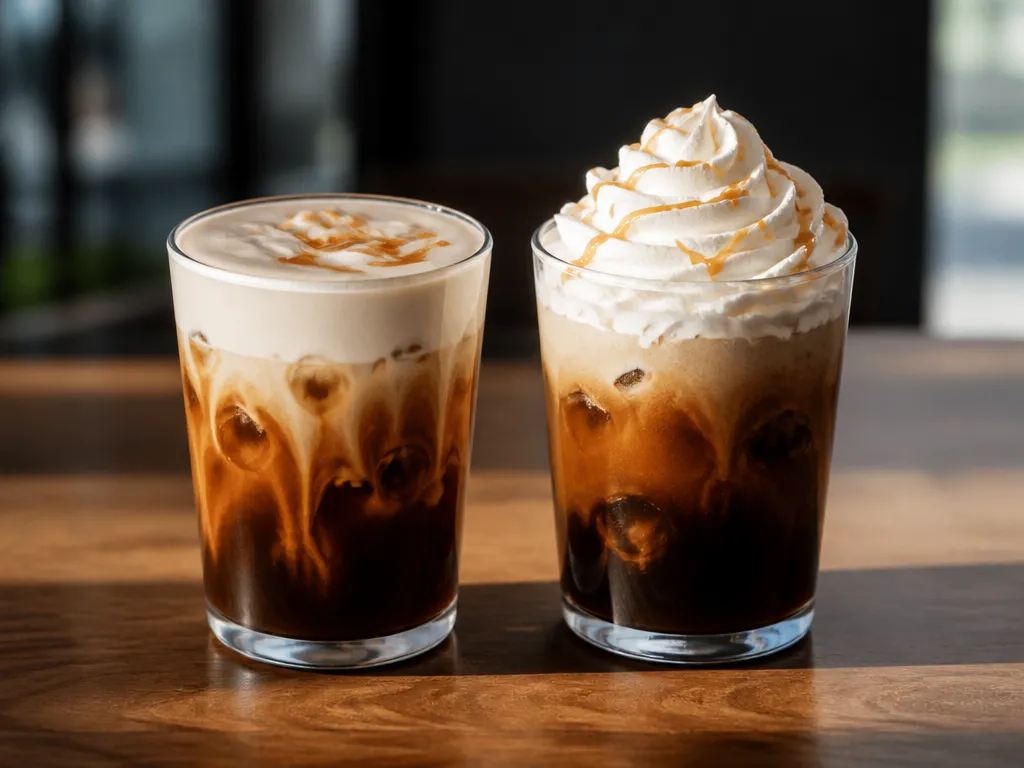
Creamy cold foam is a thin, stable foam that stays mostly suspended and drinks well, while whipped cream is a thicker aerated fat cream that melts and collapses faster in cold beverages. Cold foam gets its stability from protein and fat in a small, controlled liquid base plus tight foam structure, whereas whipped cream is built to hold shape on top of desserts.
What Makes It “Cold Foam” (Not Just Foam Floating)?
Cold foam is “drinkable” because the foam bubbles are small and evenly dispersed, so it spreads and stays creamy instead of forming big airy chunks. Cold brew pairing changes the physics because cold brew is dense, aromatic, and slightly acidic, so large-bubble foams tend to break and thin quickly.
Whipped cream is more vulnerable because it starts with a higher fat concentration and larger aeration, so it holds form until it meets liquid heat transfer, then it collapses and separates. If your foam looks like it sits like a cloud and then goes watery at the edges within minutes, you are making whipped-cream behavior in a cold drink environment.
What Makes It “Creamy” (Fat/protein Targets + Aeration Limits)?
Creamy cold foam needs enough protein and fat to stabilize air cells during aeration, but not so much that it becomes a dessert topping. The practical win is to aim for a foam base you can still pour, then aerate only until it thickens slightly, because over-aeration makes big bubbles that drain.
French vanilla foam often includes sweetener and vanilla flavoring, and those ingredients change viscosity. Higher sugar raises thickness, but too much sugar can also slow foam structure formation, making the texture feel slick instead of creamy.
| Goal | How to get it | Failure mode |
|---|---|---|
| Stable creamy texture | Use a foam base with both protein and fat, then aerate until it thickens just enough to pour | Too-thin base separates into liquid and foam |
| Drinkable micro-bubbles | Stop aeration once the foam looks uniform and glossy | Overaeration creates larger bubbles that collapse |
| French vanilla taste without graininess | Blend flavoring fully into the base before aerating | Undissolved sweetness leads to a sandy mouthfeel |
Judgment call: treat “creaminess” as a balance of pourable thickness and micro-bubble stability, not peak-holding height.
Timing is the other half of the mechanism. Cold foam texture tightens as it sits, but only for a short window, so you want assembly close to aeration, then pour onto cold brew right away to prevent thinning and edge collapse.
Foam Technique With Frother Steps
French vanilla foam stays creamy when you control three variables: liquid temperature, frother type, and mixing order. The workflow below makes a stable cold-foam cap that holds texture long enough to pour onto a cold brew base.
For example, a 12 oz serving typically gets a 1.25 oz foam cap, and a 16 oz serving typically gets a 1.5 oz cap.
In practice, aim for a cap thickness that covers most of the drink surface, since very thin caps can vanish into the cold brew and very thick caps can slide off.
Judgment call: when foam looks glossy and fine-bubbled but still slightly pourable, stop immediately and transfer, since continued frothing often creates a dry foam that collapses faster.
Cold Brew Base Build Method
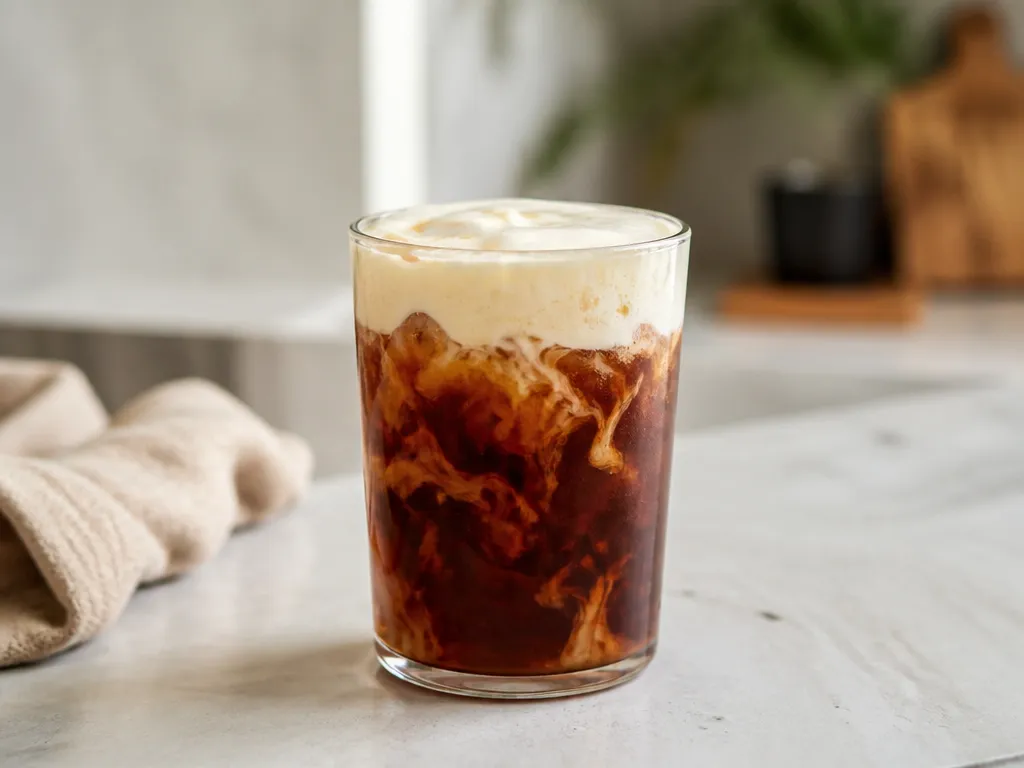
A cold brew base for a French vanilla foam drink needs two things the foam cannot repair afterward: low bitterness and enough concentration to hold up when the foam melts in. Build it at roughly 1 part coffee to 5 parts water by weight, ground coarse like sea salt, and steep 16 to 18 hours at room temperature. That makes a concentrate you dilute at serving time. Exact yields shift with bean, roast, and grind, so treat the ratio as a starting point rather than a fixed law.
Concentrate Versus Ready-to-drink
Go with a concentrate. A ready-to-drink batch brewed near 1:12 is convenient, but it leaves no dial to turn once sweetened vanilla foam lands on top, and the sugar and fat in that foam push a thin base toward flat and watery. A concentrate keeps the adjustment in your hands: thin it more if the vanilla reads too loud, thin it less if you want the coffee to push back.
Single-serve brewing runs the same math scaled down. Use about 20 g of coarse coffee to 100 ml of water for one 12 oz drink, or 100 g to 500 ml for a week of servings. The batch approach wins on effort per cup, but a single-serve steep lets you test a new bean without committing a liter of it.
Dilution And Perceived Strength Under Foam
Sugar and dairy mute the perception of bitterness and acidity, so a base that tastes sharp by itself often lands balanced once the foam goes on. Brew your concentrate to taste slightly too intense on its own, then let dilution and foam bring it back.
| Serving | Concentrate | Water or milk | Leaves room for |
|---|---|---|---|
| 12 oz | 3 oz | 6 oz | ~3 oz foam and ice |
| 16 oz | 4 oz | 8 oz | ~4 oz foam and ice |
Taste the base diluted but unsweetened. If it tastes good black, it will taste weak under vanilla foam.
Ingredient Swaps And Sugar Options
Foam holds because of fat and protein, so every swap has to replace one or the other or the texture falls flat. Heavy cream sets the ceiling at roughly 36 percent fat: it whips in seconds and holds for ten minutes or longer. Thinner bases need help, and the help differs for dairy-free, sugar-free, and extra-vanilla builds.
Base Swap: Dairy And Non-dairy
Heavy cream alone gives the densest, longest-lasting foam, but it drinks heavy over cold brew. Half-and-half is the better everyday base. It foams fine, it just relaxes faster, so pour it within a minute or two of whipping. Whole milk by itself barely builds structure at 12 ounces; it needs a tablespoon of cream or a spoon of nonfat dry milk powder to give the protein something to grab.
Non-dairy is where most attempts fail. Barista-style oat milk is the reliable pick, because manufacturers add oil and stabilizers for exactly this job. Soy milk is a close second on protein. Almond milk is the weakest common option, thin and slow to set, and canned coconut milk foams well but shouts over the vanilla.
Sweetener And Flavor Scaling
Sugar does structural work, not just sweetening. Strip it out and foam thins, so sugar-free builds usually need more fat or a pinch of stabilizer to compensate. Allulose matches sugar most closely in body and aftertaste. Erythritol leaves a cooling sensation that reads oddly in a cold drink, and stevia or monk fruit blends turn bitter once you push past a light dose.
| Sweetener | Foam impact | Note |
|---|---|---|
| Vanilla syrup | Best body and hold | Easiest to scale |
| Allulose syrup | Near-sugar hold | Least aftertaste |
| Erythritol | Slightly thin | Cooling sensation |
| Stevia or monk fruit | Thin, can deflate | Bitter above a light dose |
For a louder vanilla without bitterness, build the flavor in stages rather than dumping in extract.
If you change only one thing, go half-and-half plus barista oat at a 50/50 ratio. It holds nearly as long as heavy cream and tastes much lighter.
Troubleshooting Creamy Cold Foam
Collapsing foam is the failure you will hit most often, and it almost always traces to one of three things: warm milk, too little fat or protein to hold the air, or over-whipping past the point of peak structure. Blame the technique before you blame the carton.
Diagnose in order: temperature first, then fat and protein, then sweetener balance, then extraction. Most complaints resolve at the first two steps.
If you fix only one thing, chill the milk and stop whipping at soft peaks. That single change prevents the two failures that ruin most home attempts.
Serving Tips And Storage Limits
Cold foam peaks within the first five to ten minutes and then slowly collapses, so this is a build-at-the-last-second drink, not a pitcher you assemble and carry to the table. Chill everything before you start: the cold brew, the foam base, and the glass itself. Temperature is the biggest single lever on how long that creamy head survives, and a warm glass defeats the best foam technique.
Serving Temperature And Glassware
Serve the coffee at refrigerator temperature, roughly 36 to 40F, and pour it over large cubes rather than crushed ice. Big cubes melt slower, so the drink stays cold and the foam does not get diluted from underneath. Crushed ice gives you a prettier glass and a watery drink in four minutes.
Glassware matters less than pre-chilling, but a straight-sided, clear tumbler around 12 to 16 ounces shows off the layer you worked for. A chilled double-walled glass holds the temperature longest. If you have no time to freeze glasses, fill them with ice water for a minute and dump it before building.
Storage Rules By Component
Treat each component separately, because they fail at very different rates. The figures below are practical home-kitchen benchmarks rather than tested shelf-life data, so use them as a rough guide and trust your nose and eyes over the calendar.
| Component | Fridge life (approximate) | What goes wrong |
|---|---|---|
| Cold brew concentrate | 7 to 14 days | Flat, papery, oxidized flavor |
| Diluted, ready-to-drink cold brew | 3 to 4 days | Goes stale fastest of the batch |
| Vanilla simple syrup | 2 to 4 weeks | Cloudiness or surface film means discard |
| Vanilla extract | Years | Almost nothing; alcohol preserves it |
| Whipped cold foam | Best fresh, up to 24 hours | Deflates and separates into liquid and fluff |
| Unwhipped foam base (dairy or oat) | Use by the milk’s own date | Spoils with the milk it came from |
Store foam in the smallest airtight jar it fits in, filled to the top, because headspace is what lets it dry out and collapse. Never freeze whipped foam; ice crystals shred the bubble structure and it never comes back.
Re-foam Or Remix
A quick second whip is worth it for foam that has separated within a few hours in the fridge. Twenty to thirty seconds on low with a frother or whisk brings most of it back, and the flavor is untouched.
Skip the rescue once the foam has turned soupy or grainy, or once it has been sitting out at room temperature past about two hours. The texture is already gone, and dairy-based foam left warm is a food-safety gamble not worth a garnish.
If you are making drinks for guests, foam the batch at the moment of serving and keep the cold brew and glasses cold until then. Re-foaming works in a pinch, but freshly whipped foam is the difference between a cafe drink and a decent imitation.
Quick Summary
To make French vanilla creamy cold foam cold brew reliably, control the chilled ingredients and assemble within 1 to 2 minutes after frothing. The drink is cold brew flavored with French vanilla syrup (or vanilla bean or extract), then topped with cold foam made from milk or a non-dairy barista milk plus sweetener. For a 12 oz coffee base, use 8.5 oz cold brew concentrate with 3.5 oz water or milk, then add the flavoring and approximately 1.25 oz foam.
Your result depends on how you split the build between base flavor and foam sweetness. For 12 oz, mix 8.5 oz cold brew concentrate with 3.5 oz water (or milk), add 3/4 oz, which is 1.5 tbsp, French vanilla syrup, then top with 1.25 oz foam made from 1 oz heavy cream and 1/4 oz French vanilla syrup. Add foam last so it stays airy.
Frequently Asked Questions
How Much More Expensive Is A French Vanilla Creamy Cold Foam Cold Brew Than A Regular Cold Brew?
It usually costs more because you are adding cold foam plus a flavoring like french vanilla, but I could not find specific, source-backed price differences in the material available to me. A practical way to estimate is to compare your shop’s upcharge for “cold foam” and “vanilla syrup” to the price of the same base cold brew.
How Long Does It Take To Make And Serve French Vanilla Creamy Cold Foam Cold Brew, And How Soon Should I Drink It?
Cold brew itself takes the longest, typically hours to brew before you can combine it with vanilla and foam, while the foam part usually takes only a few minutes. For best texture, build the drink close to when you plan to drink, because foam and cold temperature can change quickly after assembly.
Does The “Creamy” Cold Foam Request Have Any Exceptions If I Cannot Use Dairy Or Want Less Sugar?
Yes, you can usually customize, but what’s possible depends on your shop’s ingredients, like whether they offer dairy-free milks or sugar-free vanilla. If you need a specific limitation (for example, no dairy or reduced sugar), ask for the exact substitute and confirm it is used in both the base and the foam.
What Happens If I Do Nothing After I Order, Like Skipping Asking For Sweetness Level Or Foam Texture?
You will get the default build most of the time, which typically means standard vanilla sweetness and the shop’s default foam thickness. If you care about sweetness or foam firmness, you should specify it at the order because you cannot reliably “fix” texture after it is already poured.
When Should I Get Help Instead Of Troubleshooting At Home Or Repeatedly Reordering?
Get help if you have a health-related reaction you cannot confidently attribute to something else, especially after trying a particular vanilla syrup, milk, or foam base. If you are managing a condition related to caffeine or sugar, talk to a clinician or a qualified nutrition professional rather than guessing from taste or routine.
How Can I Verify A Claim Like “French Vanilla Creamy Cold Foam” Is Made The Way I Expect?
Ask for the ingredient components and verify by details: whether vanilla is syrup or extract, what milk goes into the foam, and what “creamy” means operationally (for example, thickness or added sweetener). If the barista cannot describe what is in it, treat the claim as marketing and order with explicit instructions instead.

- Espresso Bar Wedding: Ideas, Setup, Costs, and Tips for a Memorable Coffee Experience - November 11, 2026
- How Many Grams of Espresso Beans for a Double Shot? A Complete Brewing Guide - November 11, 2026
- Brasilia Espresso Machine: Features, Performance, Models, and Buying Guide - November 11, 2026