
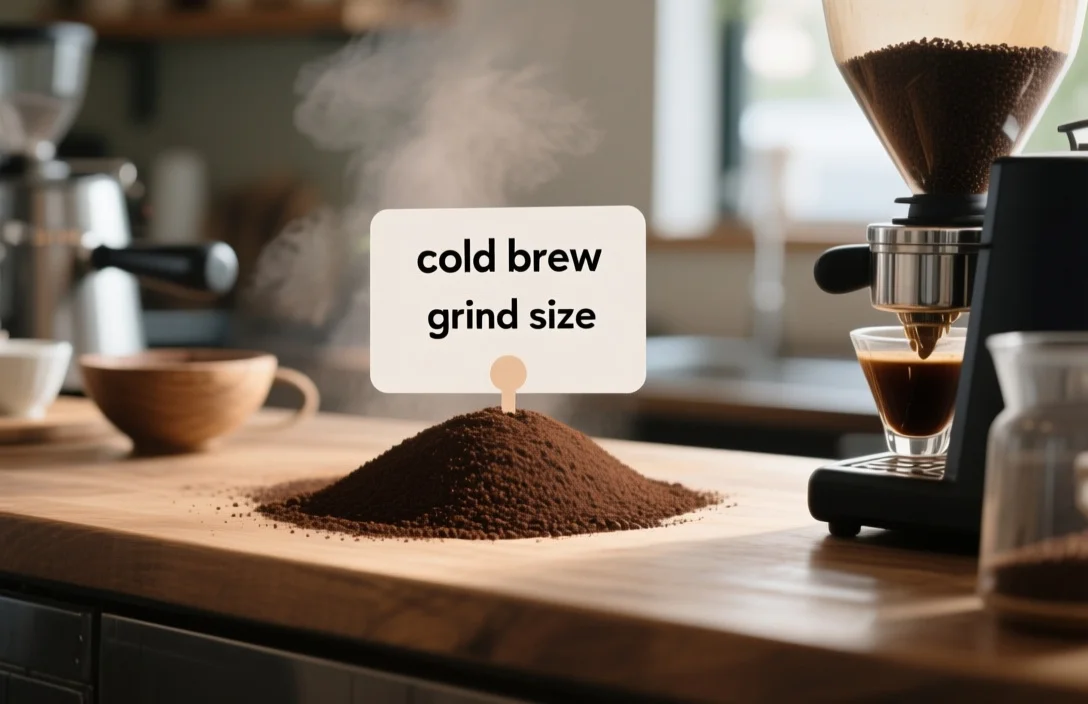
Use a coarse to medium-coarse grind for most immersion-style cold brew; adjust coarseness to control extraction, clarity, and mouthfeel. I compared coarse, medium-coarse, and medium grinds side by side using the same beans, water, and steep time to evaluate clarity, strength, sediment, and bitterness.
Why grind size matters for cold brew
Extraction speed depends on particle surface area. Coarse particles expose less surface area to water, which slows extraction and emphasizes sweetness and low acidity. Finer particles increase surface area and extract soluble compounds faster; that creates a stronger cup but raises risk of over-extraction and bitterness when left in contact with cold water for long periods.
Contact time and agitation interact with particle size to shape flavor. Immersion cold brew uses long contact between grounds and water, so most of the extraction happens slowly; that makes coarse grinds ideal because they avoid pulling harsh bitter compounds that dissolve later in extraction. Sediment and clarity are also particle-size related; fines (very small particles) pass through many filters and create turbidity and a gritty mouthfeel. Filtration efficiency and the presence of fines determine whether a grind will yield a clean, bright cold brew or a heavy, sludgy concentrate.
Particle uniformity matters as much as nominal size. Burr grinders give a narrow particle distribution that produces predictable extraction. Wide distributions – common with blade grinders – mix fines and coarse chunks, producing both under-extracted sour notes and over-extracted bitterness in the same brew. Taste balance depends on minimizing that spread.
Choosing a cold brew grind size
Choosing a cold brew grind size begins with the gear you use and the texture you prefer. French press and Toddy-style brewers tolerate larger particles well and favor a coarse setting that resembles coarse sea salt or roughly broken peppercorns. Mason-jar immersion and cloth-bag methods often work better with a slightly finer, medium-coarse texture because they rely on pour-through filtration or cloth which traps some fines but not all.
Filter type governs how fine you can grind without creating sediment problems. Metal filters and mesh allow fines through, producing a heavier mouthfeel; paper and tight cloth filter out more fines and yield clearer liquid. Convenience matters too: if you plan to pour the steeped brew through a paper filter after steeping, you can afford a slightly coarser grind because the paper will trap remaining fines and clarify the brew.
After comparing the main options side by side, the trade-offs are clear: coarser grinds give clarity and gentle extraction, while finer grinds increase perceived strength at the cost of more sediment and a higher chance of bitterness. Personal taste determines which compromise you accept.
Table: grind comparison and best uses
| Name | Key Spec (feel/appearance) | Best For |
|---|---|---|
| Coarse | Large, chunky particles; low fines | French press, Toddy, long-steep concentrates where clarity is less critical |
| Medium-coarse | Gritty, like raw sugar crystals | Mason-jar immersion, cloth-bag methods, brews filtered after steep |
| Medium | Sand-like but not powdery | Shorter cold steeps or when filtered through paper to remove fines |
| Fine | Close to table salt or finer | Quick cold-brew methods requiring short steep times; not recommended for unfiltered immersion |
How steep time and coffee-to-water ratio change the ideal grind
Grind size never stands alone because steep time and coffee concentration directly alter extraction. Shorter steep times demand more surface area to reach a target strength, which means using a finer grind. Longer steeps reduce pressure on particle size and allow a coarser grind to deliver comparable strength while keeping a cleaner flavor profile.
Concentration affects how you perceive extraction flaws. Concentrated cold-brew concentrates amplify both sweetness and bitterness, so a coarser grind helps prevent an overly bitter concentrate when you plan to dilute later. Diluted or lightly concentrated brews tolerate slightly finer grind settings because the final cup will be smoother after dilution.
Water temperature plays a supporting role even in cold brew. Cooler water slows extraction further, increasing the tolerance for slightly finer particles when you need to shorten steep time. Warmer water speeds extraction somewhat and can make otherwise acceptable grinds produce bitter notes; keep that interaction in mind if you occasionally use warm-cold hybrid methods.
Be mindful that altering one variable should prompt adjustments to the others. Tweak grind size conservatively and then adjust steep time or concentration if the results are consistently sour, weak, or bitter.
How to dial in your grind
Measure your control variables carefully to isolate the effect of grind size. Follow this repeatable protocol each time you want to dial in a new grind setting.
- Prepare a consistent baseline. Weigh or keep ratio consistent and use the same water and beans across tests.
- Grind a sample batch at your starting setting. Use a burr grinder whenever possible for uniform particles.
- Steep the sample under identical conditions. Keep time, temperature, and agitation the same across trials.
- Filter and taste the finished brew without additives. Record clarity, perceived strength, acidity, sweetness, and bitterness.
- Adjust grind coarseness one step and repeat. Move only one variable per trial; this isolates cause and effect.
- Note how long it takes to filter after steeping. Sluggish drainage suggests too-fine a grind or excessive fines.
- Compare successive brews and pick the setting that balances strength and clarity for your preference.
Taste markers and corresponding adjustments help make decisions faster. If a cup tastes weak but bright, either coarsen grind or extend steep time. If a cup is bitter or astringent, coarsen the grind or shorten contact time. If sediment bothers you, coarsen the grind or change to a finer filter.
Keeping a simple log speeds up repeatable improvements. Write down bean roast level, grinder setting description, steep time, filter type, and tasting notes for each trial. That record will save time on future dial-ins and when you switch beans.
Equipment and filter considerations
Grinders change the game more than most home brewers expect. Burr grinders deliver a consistent particle distribution across settings and are strongly preferable to blade grinders for cold brew. Blade grinders create an uneven mix of fines and chunks, which makes predictable extraction nearly impossible.
Filter choice determines acceptable particle distributions. Metal filters and meshes let more fines pass, producing a heavier, fuller mouthfeel but increasing sediment. Paper filters remove many fines and provide a cleaner cup; that cleaning effect lets you tolerate slightly finer grinds. Cloth filters trap a moderate amount of fines and often impart a soft texture to the brew, which some drinkers prefer.
Brewing vessels also affect filtration and sediment. French presses use a coarse screen that allows more fines through; expect more body and more sediment when using this method. Vessel geometry and pour-through behavior influence how quickly a paper filter clogs when filtering a steeped concentrate. Wider mouths and short pours accelerate filtration, while narrow necks and slow pours can magnify clogging if the grind is too fine.
Maintenance matters. Regular cleaning of grinder burrs and filters prevents old grounds and oils from tainting new brews. Filters that are rinsed and replaced when clogged reduce variability from trial to trial. Keep equipment consistent across tests to ensure grind changes are the only variable you evaluate.
Common mistakes and what they cause
Grinding too fine for immersion cold brew creates two frequent problems: over-extraction and excessive sediment. Over-extracted brews present as harsh, bitter, or astringent, and those same fine particles can pass through many filters to leave a sandy texture in the cup. Grinding too coarsely produces the opposite fault: under-extraction. Under-extracted cold brew will taste weak, flat, and overly acidic or sour.
Mixing grind-and-filter styles without accounting for their interaction causes predictable failure. Using a fine grind with a metal mesh filter results in a heavy concentrate that may be difficult to clarify later. Using a coarse grind with a paper filter can produce an excessively thin cup because the paper removes what little soluble material the coarse grinds released.
Inconsistent grind distribution sabotages repeatability. Using a blade grinder or a low-quality burr will produce wider particle spread and inconsistent outcomes when you try to reproduce a favorite setup. Bean freshness also impacts perceived extraction: old, stale beans can taste flat regardless of grind, which may tempt you to overcompensate with finer grinds and accidentally encourage bitterness.
Simple corrections solve most mistakes. Match your grind to your filter, favor burr grinders for repeatability, and change only one variable at a time during dialing. Those practices reduce wasted batches and make reliable results possible.
Practical examples by setup (real-world guidance without exact numbers)
Mason-jar immersion for casual home use performs well with a medium-coarse grind that balances body and filtration. Use a rinseable cloth or a secondary paper filter after pouring if clarity matters to you. That combo produces a versatile concentrate that dilutes cleanly into iced coffee or milk drinks.
French press cold brew rewards a coarser grind and yields a fuller mouthfeel. Expect some sediment if you pour directly from the press without a secondary filter. Serving in a carafe after a gentle decant can reduce the amount of suspended fines you transfer to cups.
Toddy-style concentrated brews tolerate coarser grinds and benefit from a longer steep; the concentrate can be stored and diluted, so clarity matters less than stable flavor. Commercial toddy setups often employ coarse grounds to minimize clogging and speed filtration when making large batches.
Quick cold-brew methods that shorten steep time require a finer grind to extract enough soluble solids in less contact time. Use a paper filter after steeping with these faster methods to catch fines and reduce muddiness, since finer grinds increase the load of small particles.
Cold-brew for espresso-style drinks or concentrated cold-extraction should consider both grind and post-steep filtration. A tighter grind can approximate a strong concentrate, but relying on filtration (paper or fine mesh) to remove fines will maintain shelf stability and clarity.
Troubleshooting tasting and clarity
Start by tasting without milk or sugar to isolate extraction problems. If the brew tastes sharp or excessively bitter, adjust grind coarseness toward larger particles before trimming steep time. Sourness or thinness suggests under-extraction, which you can fix by slight grind finer or increasing contact time.
Clarity issues often point to fines. Evaluate your filtration chain: move from metal to paper or add a secondary paper filter to reduce suspended solids. If the brew filters very slowly or clogs filters, that indicates a grind that is too fine for your filter; coarsen it.
Cloudy appearance does not always equal poor flavor. Some drinkers prefer the texture and mouthfeel from a brew with suspended oils and micro-fines. If you prefer a bright, clean cup, emphasize coarser grinds, cleaner filters, and minimal agitation during steeping and pouring.
Record specific sensory observations to speed corrections. Note descriptors such as “sharp metallic bite,” “sour citrus,” “flat,” “chalky,” “syrupy,” or “gritty” and map those to this short adjustment guide:
- Sharp or bitter: coarsen grind or shorten steep time.
- Sour or weak: fine the grind or lengthen steep time.
- Gritty or muddy: coarsen grind and/or use finer filtration.
- Slow filtration: coarsen grind or pre-filter before paper filtration.
Storage and bean selection effects on grind choice
Roast level alters how a grind will behave in cold extraction. Darker roasts often release solubles more readily and can taste heavier with the same grind as lighter roasts. Lighter roasts produce brighter acids that may need slightly coarser settings to avoid an overly sharp edge in long steeps.
Bean freshness changes perceived extraction without any mechanical change. Freshly roasted beans release gases and soluble oils; those affect both flavor and how particles settle. Stale beans mute flavor and may lead you to grind finer to chase strength, which usually causes bitterness.
Store whole beans in a cool, dark place and grind immediately before brewing to preserve predictable extraction. If you need to keep ground coffee for several days, expect a decline in clarity and a faster shift from bright to flat flavor. Adjust grind and steep practices when using pre-ground coffee to account for the loss of volatile aromatics.
Packaging and storage after brewing matter too. Keep concentrate refrigerated in sealed containers and consume within a short, practical timeframe to avoid off-flavors from oxidation or microbial growth.
FAQ
What grind size should I start with for cold brew?
Start with a coarse to medium-coarse grind and adjust from there based on taste and clarity. A coarse starting point prioritizes clarity and low bitterness; move slightly finer if the brew tastes weak.
Can I use pre-ground coffee for cold brew?
Pre-ground coffee will work but expect reduced clarity and freshness compared with grinding whole beans immediately before brewing. Compensate by coarsening the grind further if sediment becomes a problem.
Why does my cold brew taste bitter even at a coarse grind?
Bitter results can come from overly long contact time, very fine particles or a wide particle distribution, or beans roasted dark and extracted too long. Coarsen the grind, reduce steep time, or try a lighter roast.
Will a blade grinder ever produce good cold brew?
Blade grinders can make drinkable cold brew but rarely produce consistent results because they create a wide particle distribution with many fines. Burr grinders are preferable for repeatable outcomes.
How do filters affect grind choice?
Metal and mesh filters let fines through, so they pair best with coarser grinds. Paper and tight cloth filters remove fines and permit slightly finer grinds for increased extraction without as much sediment.
Is there a universal cold brew grind for all beans and methods?
No single grind suits every bean or method. Bean roast, freshness, filter type, and desired mouthfeel all influence the ideal grind; use a methodical testing approach to find the balance you prefer.
A short verification tip: if you cannot get a clean cup after several tries, change only one variable at a time and document results to identify which adjustment produces the improvement you want.
Final verdict and next ste
Coarse to medium-coarse grind is the correct place to begin for most immersion cold-brew methods; refine that starting point by testing one variable at a time against your filter and gear. Start a three-brew test this week: pick one grinder setting, one steep time, and one filter, then make two more brews adjusting only grind or time to find the balance you prefer.

- Espresso Tastes Watery? 10 Common Causes and How to Fix It - October 23, 2026
- 10 Common Coffee Equipment Cleaning Mistakes and How to Avoid Them - October 23, 2026
- 17 Common Coffee Grinder Problems and How to Fix Them - October 23, 2026