
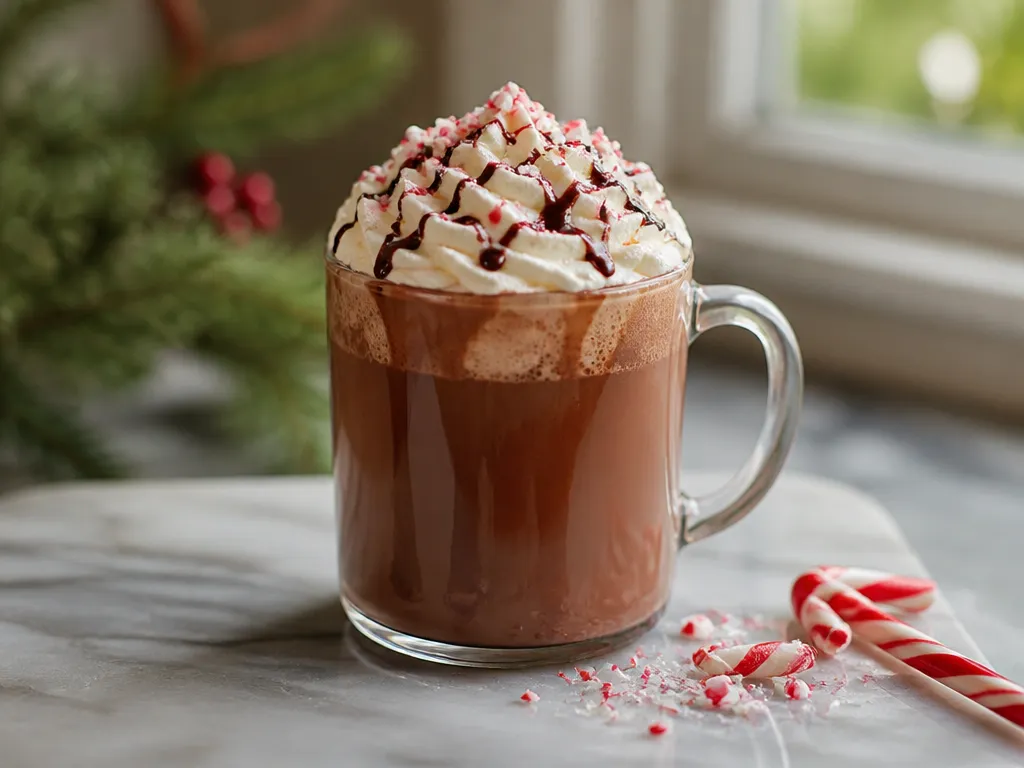
This is a practical starting formula for a Starbucks-style peppermint mocha at home, not a verified copy of the company’s current recipe. For one drink, use 30 ml (1 oz) espresso or 80 ml strong brewed coffee, 2 tablespoons cocoa powder, 2 teaspoons peppermint syrup, and 120 ml milk. Adjust the syrup and cocoa to suit your ingredients and taste.
For a hot or iced drink, dissolve the cocoa in the coffee before adding milk. For a frappé-style drink, blend the same base with ice. Whipped cream is optional.
Peppermint Mocha At Home: The Exact 1-serving Copycat

The quantities below are a repeatable kitchen starting point. They are designed to produce a coffee-forward mocha rather than hot chocolate. Because cocoa, coffee, syrup, and milk vary by brand, taste the drink before adding toppings and adjust as needed.
Make The Peppermint Syrup From Scratch (For Mocha + Foam)
This syrup is a kitchen formula for several drinks. Its final strength depends on the peppermint extract, so start with less and adjust the next batch rather than adding a large amount at once.
Peppermint syrup (batch for about 4 servings)
Ingredients: 1/2 cup sugar, 1/2 cup water, 1 teaspoon peppermint extract to start, a pinch of salt, and optional 1/2 teaspoon vanilla extract. Add more peppermint extract only if the cooled syrup needs it.
Sweetener dissolving and peppermint timing Sugar dissolves more easily in warm liquid. Add peppermint extract after heating so you can taste the finished syrup without exposing the extract to prolonged heat. If the syrup is not sweet or minty enough, adjust the next batch or add a small amount to the drink after tasting.
| Ingredient choice | What it tastes like | How to use it |
|---|---|---|
| Peppermint extract | Clean, candy-like peppermint | Start with 1 teaspoon per batch. Increase cautiously only if the cooled syrup tastes weak. |
| Peppermint oil | Very intense and potentially sharp | Use only if it is specifically labeled for food use, and follow its label directions rather than treating it like extract. |
| Candy cane flavor or peppermint flavoring | May be sweeter or less direct than extract | Follow the product label, then adjust the drink’s sweetness separately. |
How much syrup per serving Use 2 teaspoons as the starting amount for one mocha. A blended drink may need a little more after tasting because ice and cold temperatures can change the perceived sweetness and mint intensity.
Practical tip Taste the syrup in a small spoonful of the finished coffee and cocoa base before adding more to the whole drink. This prevents an overly minty batch.
Coffee Base Options: Espresso Or Strong Brewed Coffee

Espresso gives the most concentrated coffee flavor, while strong brewed coffee is an accessible substitute. Neither option has a fixed caffeine value here because brewing method, product, dose, and yield vary.
Use a coffee base that tastes good on its own. Cocoa, milk, and peppermint will change its balance, but they will not hide every defect in weak or over-extracted coffee.
Chocolate Component: Cocoa Vs Melted Chocolate Vs Drinking Cocoa
The chocolate choice controls sweetness, body, and mixing. Cocoa powder is the most adjustable starting point; melted chocolate and chocolate syrup create a heavier, sweeter drink.
If you want one reliable default, whisk cocoa powder into the 30 ml espresso or 80 ml coffee base before adding milk. Adjust thickness with coffee or milk rather than continually adding chocolate.
Milk And Dairy-free Options With Exact Pour Amounts
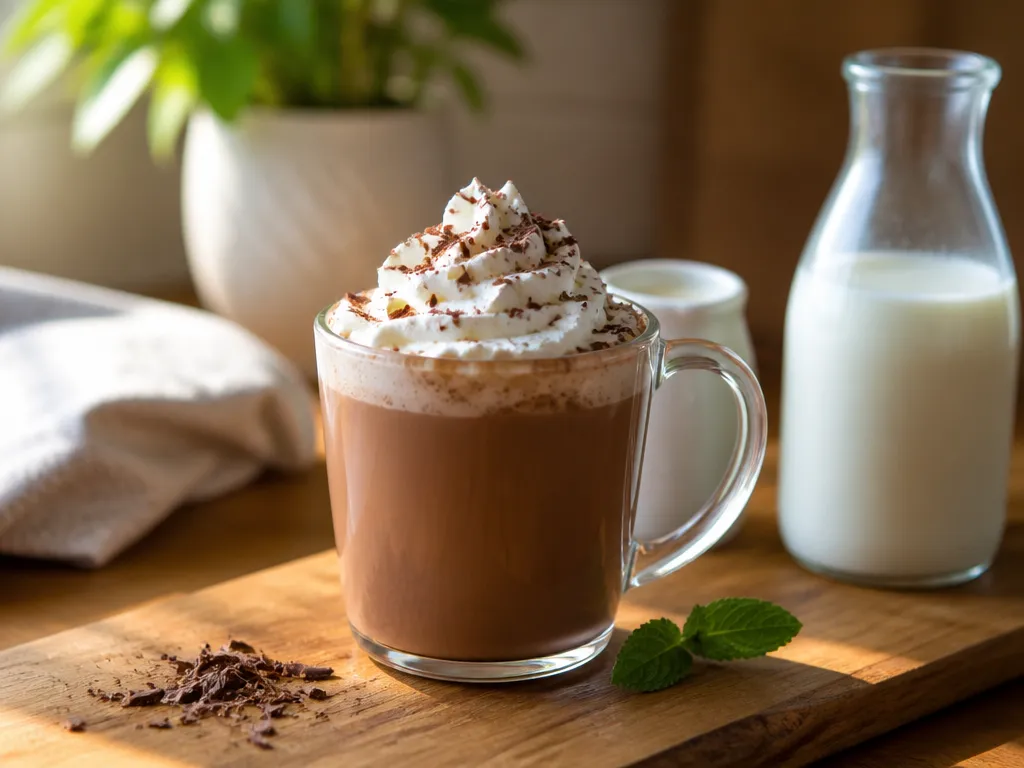
Use 120 ml milk per serving as a starting point. The result will depend on the milk’s fat, protein, ingredients, and ability to foam.
If a dairy-free mocha tastes flat, change the milk or coffee base before adding more peppermint. Peppermint can mask the problem without fixing the drink’s body.
Hot, Iced, And Frappé Instructions Step By Step
Prepare the cocoa and coffee base first, then use the method that matches the drink you want.
Quick texture checkpoints. Graininess usually means the cocoa was not mixed thoroughly before chilling or blending. An overly thin drink needs less dilution next time. A heavy drink needs a small amount of coffee or milk, added gradually.
Time, Caffeine, Nutrition, And Cost Per Serving Estimates
Exact preparation time, caffeine, nutrition, and cost cannot be established from the recipe alone. They depend on the equipment, brands, quantities, local prices, and coffee strength you use. Treat the figures below as planning descriptions, not verified Starbucks values.
| Drink type | Total time (est.) | Active time (est.) | Approx caffeine basis | What changes the number most |
|---|---|---|---|---|
| Hot peppermint mocha | Varies with brewing and frothing | Varies with equipment | One 30 ml espresso base or 80 ml strong coffee base | Coffee product, dose, extraction, and yield |
| Iced peppermint mocha | Varies with cooling time | Varies with brewing and assembly | The same coffee base as the hot version | Coffee strength and dilution from ice |
| Frappé-style peppermint mocha | Varies with cooling and blending | Varies with equipment | The same coffee base, blended with ice | Coffee product, serving size, and dilution |
For a caffeine estimate, check the information for the exact espresso, beans, grounds, or ready-made coffee you use. A measured volume alone does not establish caffeine content. Decaf coffee may still contain some caffeine, and cocoa can contribute a small amount as well.
Nutrition And Cost: How To Calculate From What You Actually Pour
For nutrition, use the labels for the milk, cocoa or chocolate, syrup, sweetener, and toppings. Convert each label serving to the amount used, then add the results. If you change the syrup, milk, or chocolate, recalculate instead of relying on the previous total.
For cost, record the price and usable quantity of each ingredient. Divide the ingredient cost by the number of servings it provides, then add the coffee, milk, chocolate, syrup, and topping portions. Local prices and pantry ownership make a single universal cost impossible to state accurately.
Customize Safely: Sugar-free, Decaf, Dairy-free, And Peppermint Strength
Change one part of the drink at a time. Start with sweetness, then adjust coffee strength, milk, and peppermint. This makes it easier to tell which substitution changed the result.
Sugar-free Swaps That Keep It Balanced
Use a sugar-free peppermint syrup or a sweetener suitable for hot drinks. Check the product label rather than assuming that “sugar-free” means calorie-free or that it will taste like sugar. Unsweetened cocoa may need additional sweetener to avoid a sharp flavor.
Decaf Choices That Preserve The Mocha Taste
Use decaf espresso or strong decaf brewed coffee at the same starting volume. If the drink tastes thin, strengthen the coffee base rather than adding more peppermint. If complete caffeine avoidance matters, check the coffee and chocolate product information instead of assuming decaf means caffeine-free.
Peppermint Intensity Tuning
Adjust the syrup after the cocoa and coffee are mixed. Add a small amount, taste, and repeat only if necessary. If using peppermint extract directly, follow the product label and use substantially less than the syrup amount because extract is concentrated.
Dairy-free Tuning For Texture And Separation
Choose a plant milk that fits your preferred body and foam. If the drink tastes thin, try a different product or reduce dilution before adding more chocolate. For blended drinks, add ice gradually and stop blending when the mixture is smooth.
Storage, Leftovers, Troubleshooting, And Starbucks-style Presentation
Keep the syrup, coffee base, and milk separate whenever possible. This makes the drink easier to adjust and preserves more texture than storing a finished drink.
Quick Summary
Use the following as a repeatable starting point: 30 ml espresso or 80 ml strong coffee, 2 tablespoons cocoa, 2 teaspoons peppermint syrup, and 120 ml milk. Make the cocoa and coffee base first, then choose hot, iced, or blended.
Prepare the peppermint syrup or measure a purchased one, make either 30 ml of espresso or 80 ml of strong coffee, and build one serving before scaling up.
Frequently Asked Questions
How Can I Verify The Nutrition And Caffeine For My Exact Drink?
Use the labels for the milk, chocolate, syrup, sweetener, and toppings you actually use. Calculate each ingredient at its measured amount, then check the coffee or espresso product for caffeine information. Coffee strength and brand can change the result.
Is A Sugar-free Syrup Automatically A Lower-calorie Choice?
Not necessarily. Check the syrup label and include the milk, chocolate, whipped cream, and drizzle in the calculation. Those ingredients may provide most of the drink’s sugar or calories.
Can I Serve This To Someone With A Milk, Soy, Nut, Or Cocoa Allergy?
Read every ingredient and allergen statement, including those for plant milk, chocolate, syrup, and toppings. Prevent contact with shared pitchers, steam wands, blenders, and utensils. Anyone with a diagnosed allergy should follow their clinician’s guidance.
Is Decaf Suitable For Someone Who Must Avoid Caffeine Completely?
Do not assume that decaf contains no caffeine. Check the coffee producer’s information, and remember that chocolate may also contribute caffeine. Someone who must avoid caffeine should confirm the ingredients and quantities used.
What Should I Do If The Drink Causes An Unexpected Reaction?
Stop drinking it and identify every ingredient, including syrups and toppings. Seek medical advice for a concerning reaction. Breathing difficulty, facial or throat swelling, faintness, or rapidly worsening symptoms require emergency help rather than recipe troubleshooting.
How Do I Confirm That A Peppermint Flavoring Is Safe To Add?
Use a product labeled for food use and follow its package directions. Do not substitute an unlabeled essential oil, fragrance oil, or craft product, and do not measure a highly concentrated product like ordinary peppermint extract.

- Espresso Bar Wedding: Ideas, Setup, Costs, and Tips for a Memorable Coffee Experience - November 11, 2026
- How Many Grams of Espresso Beans for a Double Shot? A Complete Brewing Guide - November 11, 2026
- Brasilia Espresso Machine: Features, Performance, Models, and Buying Guide - November 11, 2026