
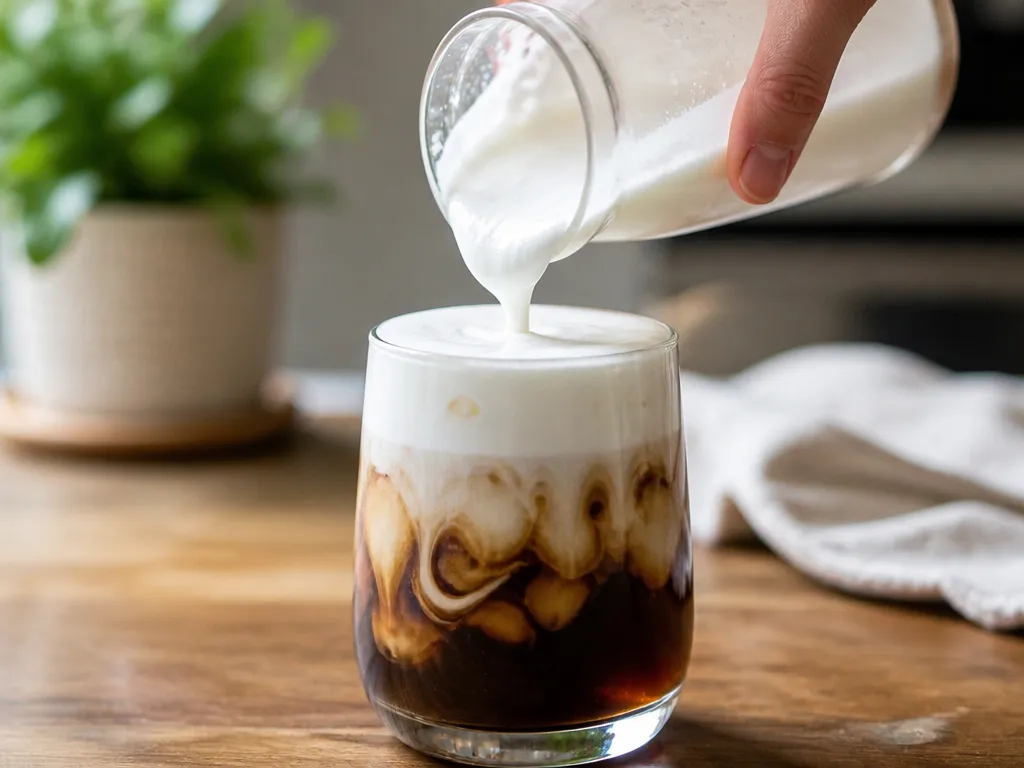
For cold foam at home, use well-chilled milk and aerate only until it looks glossy and thick. Spoon or pour it onto an iced drink immediately, while the foam still holds its shape.
A lidded jar is the simplest no-machine option. A handheld frother, small whisk, or blender gives you more control over bubble size and texture. Start with a small batch, then adjust the amount of milk and mixing time to suit your drink and tool.
What Is Cold Foam And How Can You Tell It’s Ready?
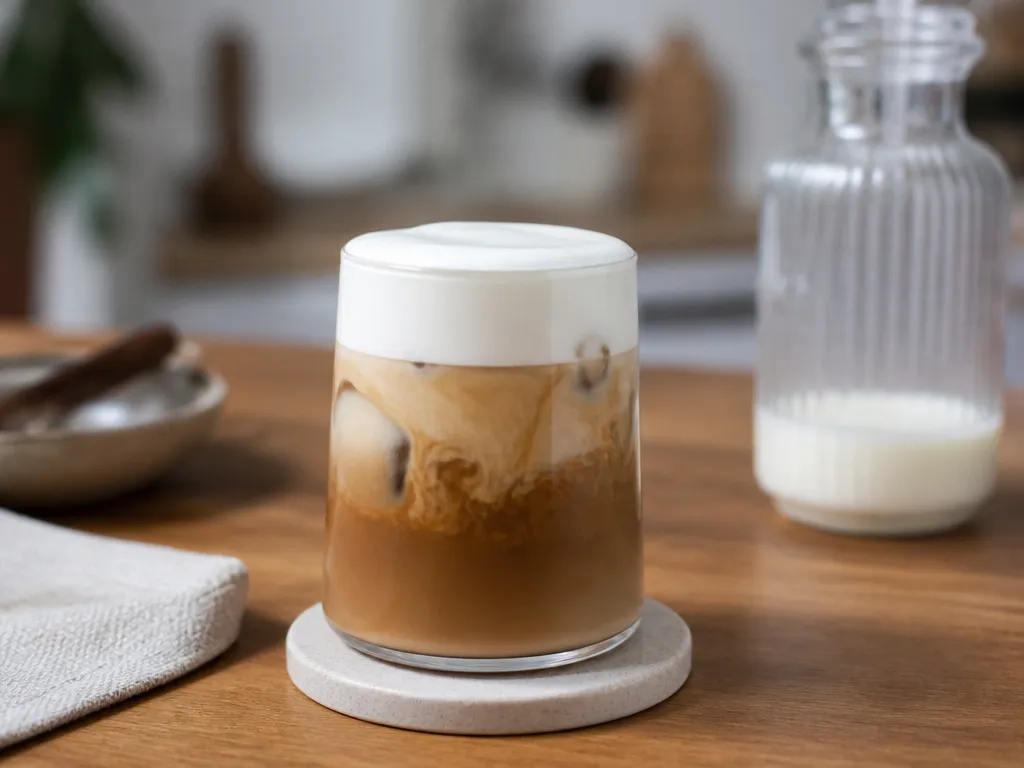
Cold foam is milk that has been aerated until it becomes thick enough to sit on an iced drink. It should feel creamy and substantial rather than watery, with bubbles small enough to create a smooth surface.
Use these tests at the moment you plan to serve. Foam loses structure while it sits, so make the drink first and prepare the topping last.
Practical rule: stop mixing when the foam is glossy, thick, and able to hold a soft mound. If it has large bubbles or begins separating, serve it promptly or start again with colder milk.
Which Ingredients And Milks Best Support Stable Cold Foam?
The milk, its formulation, and the amount of air you incorporate all affect the result. Different products behave differently, so treat the following choices as starting points rather than guarantees.
Dairy: Pick By Fat, Then Match Your Drink
Whole milk is a useful starting point for a creamy foam. Lower-fat milk can also aerate, but may produce a lighter topping that needs to be served promptly. Cream creates a richer, heavier foam and can overpower a delicate coffee, so dilute it with milk if the result tastes too rich.
| Milk base | What you get | Best use |
|---|---|---|
| Whole milk | A balanced, creamy foam | Most iced coffee and cold brew |
| Lower-fat milk | A lighter foam that may need faster serving | When you want less richness |
| Cream or a higher-fat dairy blend | A richer, denser topping | Drinks that can support a heavier flavor |
Non-dairy: Choose Barista Blends, Then Fine-tune Sweetness
Oat, soy, and almond beverages vary widely. A barista-style blend is a sensible first choice because it is made for foaming, but the label does not guarantee a particular result. Try a small amount before preparing a full drink.
What Are The Two At‑home Foam Methods And How Do You Perform Them?
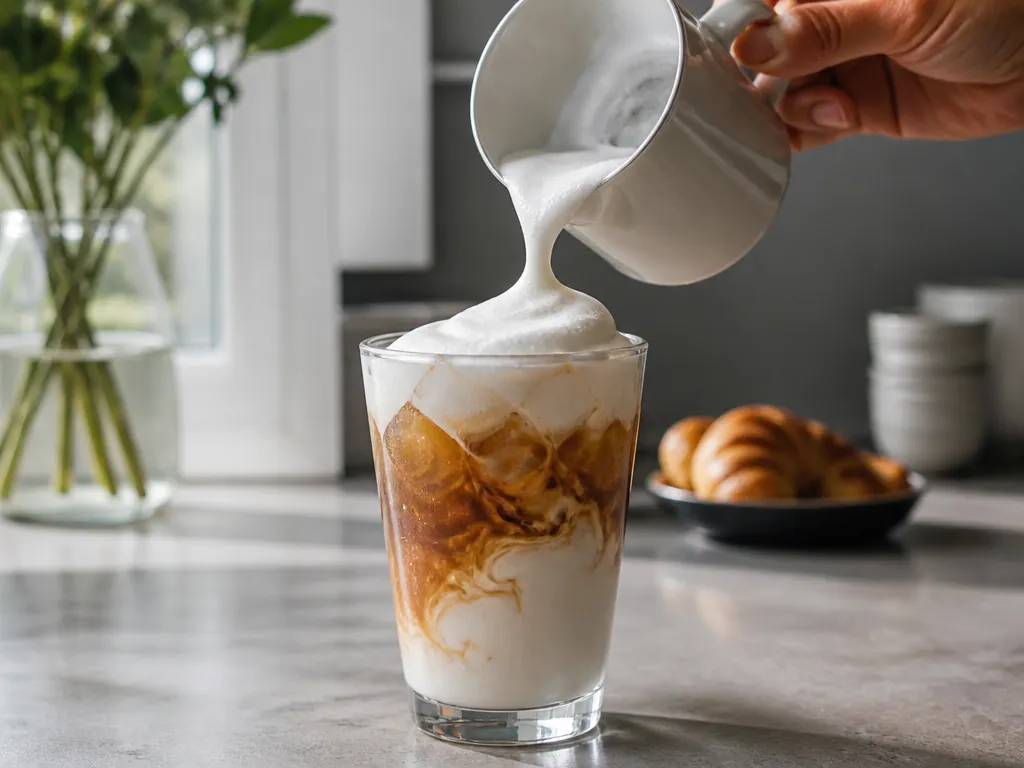
Use a jar or whisk when you want a no-machine method. Choose a handheld frother, hand mixer, or blender when you want more even aeration. With every method, stop as soon as the foam becomes glossy and dense.
Powered Method (Frother, Hand Mixer, Or Blender)
Quick rule for both methods: large bubbles usually mean the agitation is too uneven or the foam has been left sitting. Next time, use colder milk, a narrower container, or shorter bursts of mixing.
How Does Temperature Affect Foam, And How Cold Should The Milk Be?
Begin with milk that is properly chilled. Cold milk gives you more time to work before the mixture warms, but the best temperature can vary with the milk, container, and tool.
If slightly warmed milk still produces glossy foam, use it promptly. If the mixture looks thin or begins pooling, chill a fresh portion and try again.
What Are The Common Failure Modes And How Can I Troubleshoot Them?
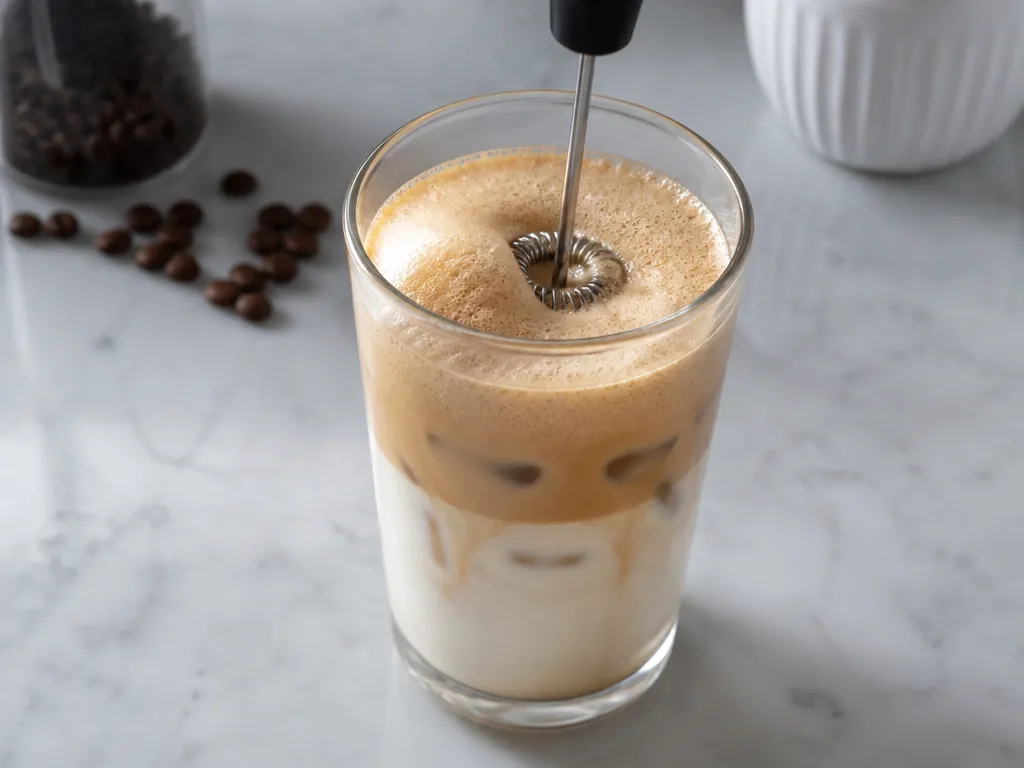
Most problems come from the milk warming, the tool incorporating air unevenly, the milk amount being unsuitable for the drink, or the foam sitting too long. Change one factor per attempt.
How Can You Flavor Foam Without Breaking It, And When Should You Add Sweeteners?
Vanilla, caramel, and mocha can all work, but added liquid may change the texture. For the most reliable foam, make the topping first and put most of the flavor in the drink underneath.
For the most consistent result, keep the foam lightly flavored or plain and let the iced coffee, cold brew, or other drink carry the main flavor.
Which Tool Yields The Most Stable Foam, And How Should You Serve Or Store Leftovers?
A handheld frother is a practical choice for a single serving, while a jar works when you want to avoid special equipment. A hand mixer or blender can handle more liquid, but it is easier to over-aerate the foam.
What Edge Cases Might Challenge Cold Foam And How Can You Handle Them?
Substitutions, unfamiliar milk products, and warm or acidic drinks can all change the result. Test a small amount before committing to a full serving.
Unusual options such as aquafaba or heavily shaken oat beverages may work, but their texture varies considerably. Test a small batch before using one for a finished drink.
Quick Summary
The reliable starting point is simple: use refrigerator-cold milk, choose a base you enjoy drinking, aerate it with a jar or frother until glossy and thick, and spoon it onto an iced drink immediately.
| Drink size | Milk to start with |
|---|---|
| 4 oz | A small serving, adjusted to the desired topping |
| 6 oz | A little more than you would use for a smaller drink |
| 8 oz | Enough to cover the drink without leaving a large excess |
Four choices control the result: the milk base, the amount you aerate, the tool you use, and how quickly you serve the foam. If the topping is thin, use colder milk or a more effective tool. If it is bubbly, mix more gently and stop sooner. If it is not sweet enough, flavor the drink underneath rather than thinning the foam with extra syrup.
Start with a small batch of chilled milk and test it on one glass of cold brew. Once the texture works, scale the amount to suit the drink you plan to make.
Frequently Asked Questions
How Long Does The Whole Process Take, From Opening The Fridge To A Finished Drink?
The preparation time depends on whether the milk is already cold, how much you are making, and which tool you use. A powered frother is usually quicker to control than a jar or hand whisk. Instead of relying on a fixed time, stop when the foam looks glossy and holds its shape.
If the milk has been sitting out, chill it before foaming. Adding ice directly to the milk can dilute it and change the texture.
What Is The Minimum Equipment I Need To Buy, And What Does Spending More Actually Get Me?
You need no special equipment if you have a lidded jar and a fork or small whisk. This is a good way to test the method before buying anything.
A powered frother mainly gives you faster, more even agitation. A hand mixer or blender can handle a larger amount, but both require more attention to avoid coarse bubbles. Equipment does not replace cold milk or a suitable base.
Can I Foam One Big Batch To Serve Several Drinks Instead Of Doing It Per Cup?
You can, but foam generally becomes less uniform as it sits and as you pour from the container. The first drink may receive a different texture from the last.
If you need several servings, prepare smaller rounds when possible and add each one to the drink soon after mixing. Made-to-order foam is easier to control.
Does A Whipped-cream Siphon Or Canned Whipped Cream Give The Same Result?
Not exactly. A siphon or can produces a denser, sweeter topping that is closer to whipped cream than to aerated cold milk.
Use whipped cream when you want a dessert-style topping. Use cold foam when you want a lighter milk layer that blends into iced coffee or cold brew.
How Do I Test A New Milk Or Barista-style Carton Before Committing To The Whole Thing?
Use a small amount of well-chilled milk in a jar or frother. Aerate it until it looks glossy, then observe whether it stays thick long enough to spoon onto a drink. Check both the texture and the flavor.
Test each product separately. The word “barista” is a useful clue, but different brands and formulations can behave differently.
Is There A Point Where I Should Stop Making It And Buy A Pre-made Cold Foam Instead?
Pre-made foam may be convenient when you need multiple identical servings or want a topping that can wait before serving. It can also save time if you do not want to clean a jar or frother.
The tradeoff is less control over sweetness, flavor, and ingredients. Check the label, then compare the result and cost with chilled milk and the equipment you already have.

- Espresso Bar Wedding: Ideas, Setup, Costs, and Tips for a Memorable Coffee Experience - November 11, 2026
- How Many Grams of Espresso Beans for a Double Shot? A Complete Brewing Guide - November 11, 2026
- Brasilia Espresso Machine: Features, Performance, Models, and Buying Guide - November 11, 2026