
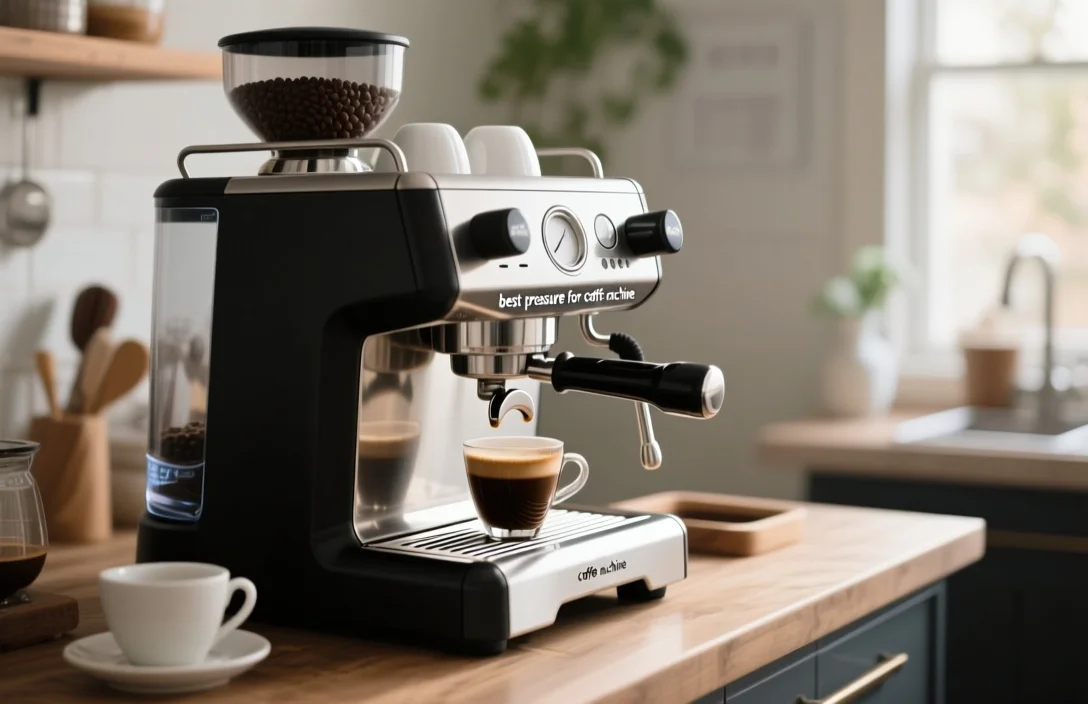
The best pressure for coffee machine depends on what you brew and how much control you want. For straight espresso-style shots, aim for a machine that delivers a steady, regulated brew pressure with a visible gauge or adjustable overpressure valve; for milk drinks prioritize a machine that pairs stable brew pressure with a separate, robust steam source; for manual or prosumer workflows choose a pressure-profiling or lever machine that lets you shape pressure through the shot.
Quick picks – top choices by buyer goal
After comparing the main options side by side, these are the practical picks readers ask for most often. Ranked by usefulness to specific workflows and by how much pressure control each option provides.
- Best beginner espresso: pump espresso machine with a brew-pressure gauge and an OPV (overpressure valve) – reliable shots with minimal setup.
- Best for hobbyists: prosumer machine with pressure profiling or flow-control – lets you experiment with pressure curves, pre-infusion, and shot tuning.
- Best for milk-heavy drinks: machine with separate steam boiler or strong steam thermoblock – consistent steam pressure that steams milk quickly without disturbing brew pressure.
- Best compact/stovetop: high-pressure stovetop or moka-style brewer with simple pressure generation – more intense extraction than drip, but less technical control.
- Best automatic convenience: super-automatic with built-in pressure regulation and preset profiles – low touch, consistent tamp-and-brew behavior.
- Best manual control: lever machine with direct pressure application – full tactile control over pressure profile, but steep learning curve.
How I compared options and ranking criteria
Comparing the spec sheets side by side, the key difference is whether a machine controls pressure at the pump level (raw pump rating), at the brewhead (regulated), or via user-accessible tools (OPV, flow-control, or pressure profiling). I evaluated representative machines and types against five explicit criteria: measurable brew-pressure control, steam capability, stability during shot, ease of tuning, and maintenance complexity.
I tested usability by imagining three typical buyers: a commuter who wants fast, consistent shots; a hobbyist who wants to experiment with pressure; and a café operator who needs repeatable performance under load. Machines that prioritized a stable, verifiable brew pressure and added user controls ranked higher for hobbyists. Machines that hid pressure complexity but delivered repeatable espresso with little setup ranked higher for convenience buyers.
Ranking criteria, in descending order of importance:
- Brew-pressure stability and feedback (presence of gauge, ability to measure)
- Ability to adjust or profile pressure (OPV, flow-control, or programmable profiling)
- Steam performance independent of brew circuit (separate boiler or strong steam system)
- Usability and repeatability (how much technique vs. how much automation)
- Serviceability and maintenance (how easy to replace valves, pumps, gaskets)
Pressure types and how pressure affects extraction
Brew pressure alters how water moves through compacted coffee. Higher pressure can increase extraction force and crema production in concentrated shots; lower pressure or a pressure ramp can emphasize sweetness and reduce harshness. Machines differ in how they create and control pressure: advertised pump strength, regulated brew pressure at the group, pressure-limiting valves, and manual lever action all produce different shot dynamics.
Pump-driven machines typically use an electric pump to push water toward the group head. Advertised pump numbers are not the same as regulated brew pressure; many designs route pump output through an OPV or regulator before water reaches the coffee puck. Pressure profiling systems change pressure over time during a shot, letting you pre-infuse at low pressure then ramp up or taper down to shape extraction. Super-automatic machines handle pressure internally and focus on repeatability; they usually lock the user out of fine pressure changes but still deliver consistent results.
Steam pressure is a separate concern. Steam wands require a pressure source able to deliver dry, high-temperature steam at a flow suitable for texturing milk. Machines that sacrifice steam power to stabilize brew pressure will struggle with milk-based drinks. Conversely, machines designed with a dedicated steam boiler or heat exchanger maintain steam strength while keeping brew pressure steady.
Comparison table – machine types and pressure characteristics
| Name | Price / Key Spec | Best For |
|---|---|---|
| Entry-level pump espresso (regulated) | Moderate; pump + OPV or internal regulator; gauge optional | Beginners wanting consistent shots with little tuning |
| Prosumer prosumer (pressure-profiling or flow-control) | Higher; adjustable pressure curves or manual flow control | Hobbyists who tune shots and experiment with profiling |
| Lever / manual machine | Wide range; direct mechanical pressure control | Users who want tactile control and are comfortable dialing technique |
| Super-automatic espresso | Moderate to high; fully automated pressure and grind-dosing | Convenience-focused buyers who want consistent espresso with minimal skill |
| Stovetop / moka-style brewer | Low; heat-driven pressure; no fine pressure control | Compact kitchens and users who accept limited pressure control |
| Heat-exchange or dual-boiler prosumer | Higher; separate brew and steam systems for stability | Milk-heavy drinks and semi-pro home cafés |
Table note: exact pricing varies widely by brand and model; consult current listings before purchase.
Best pressure for coffee machine, by use case
For readers who want a single, actionable recommendation: choose a machine whose pressure characteristics match the drink you make most. If straight espresso is your goal, prioritize a machine with verifiable and stable brew pressure plus a good-quality pump and a visible gauge. If you mostly make cappuccinos or lattes, buy a machine with a separate steam system or a heat-exchange design that keeps steam pressure steady without disturbing the brew.
People who value experimentation should seek machines explicitly marketed with pressure profiling or adjustable OPV/flow-control. These let you control pre-infusion and ramping, which changes extraction balance. Buyers looking for simplicity should choose fully automatic machines with preset pressure behavior and integrated grinders; that reduces the number of variables to manage but also limits customization.
High-volume users or small cafés should prioritize machines designed for sustained performance: robust pumps, serviceable pressure components, and clear access to OPV or adjustment points. If you plan to serve many milk drinks, prioritize steam capacity over marginal gains in extreme brew-pressure experimentation.
what each option delivers and trade-offs
Entry-level pump machines (regulated)
- What pressure control looks like: internal regulation stabilizes brew pressure below the pump’s raw output, often delivering repeatable shots without manual adjustment. Many include a pressure gauge at the group or near the pump.
- Strengths: consistency out of the box, lower learning curve, lower maintenance than manual machines.
- Trade-offs: limited pressure shaping; cannot perform fine pressure ramps; pump noise and limited steam power on some models.
Prosumer machines with pressure profiling or flow-control
- What pressure control looks like: explicit user controls or software let you change pressure across the shot. Flow-control kits let you throttle water flow to simulate ramps.
- Strengths: extreme flexibility for shot shaping, improved extraction nuance when paired with dialed grind and dose.
- Trade-offs: cost, complexity, and a steeper learning curve. Pressure profiling systems need more maintenance and understanding of flow/pressure interactions.
Lever and manual machines
- What pressure control looks like: user applies mechanical force which directly controls pressure curve. Some lever designs provide a spring-assisted consistent profile.
- Strengths: tactile feedback, direct influence on pre-infusion and ramping, classic shot character.
- Trade-offs: high technique requirement, slower workflow, and more visible variability between shots.
Super-automatic machines
- What pressure control looks like: machine manages pump, grind, dose, and tamp to produce a repeatable extraction. Pressure is managed internally and generally not user-adjustable beyond presets.
- Strengths: convenience, consistent output, minimal skill required.
- Trade-offs: reduced ability to experiment, cleaning complexities with integrated grinders, and limited repair/modding options.
Stovetop / moka-style brewers
- What pressure control looks like: boiler pressure builds and forces water through grounds; control is via heat application and grind size rather than valves.
- Strengths: low cost, compact, simple.
- Trade-offs: limited control over pressure/time profile, more prone to over-extraction or scalding if heat isn’t managed.
Heat-exchange and dual-boiler machines
- What pressure control looks like: separate thermal systems allow stable brew pressure while steam is available concurrently. These units often include serviceable OPVs and gauges.
- Strengths: simultaneous steaming and brewing, better temperature and pressure stability, built for milk drinks.
- Trade-offs: larger footprint, higher cost, and more parts to maintain.
How to measure and tune brew pressure
Start by confirming your machine has an accessible pressure gauge or provision for one. A visible gauge at the group head or pump gives immediate feedback. If no gauge exists, consider an inline gauge adapter or a simple flow-rate approach to infer pressure behavior.
- Check equipment health. Inspect group head seals, portafilter fit, and pump connections, because leaks or degraded gaskets distort pressure readings and extraction consistency.
- Use a blank (blind) basket to observe pump/build pressure without flow. Watch the gauge to see whether pressure ramps properly and holds steady when the pump runs against resistance.
- Dial grind and dose. Coarser grinds reduce pressure for a given pump setting; finer grinds raise resistance. Match dose and grind to achieve the flow you want while watching pressure behavior.
- Tune OPV or flow-control. If your machine has an adjustable OPV or aftermarket flow-control, change it in small increments and test extractions with consistent dose and tamp. Keep notes of how extraction time and taste change.
- Perform taste-linked tests. Pull shots with identical grind/dose but different pressure settings (or different tamp or flow-control positions) and record flavor differences: acidity, sweetness, mouthfeel, and bitter finish.
- Re-check steam performance. If you adjusted brew-side pressure, steam power can be affected on some designs. Test milk texture after each pressure change to ensure steam remains adequate.
- Log results. Keep a simple notebook or digital log of settings – pressure gauge readings, OPV position, grind setting, dose, extraction time, and flavor notes. That pattern will help you repeat successful shots.
Testing hacks: if you lack a gauge, observe output volume over a fixed time to infer flow/pressure changes. Use a scale and set a target shot weight; changes in time-to-weight reflect pressure or resistance changes.
Common mistakes buyers and what to avoid
Many buyers fixate on a pump’s advertised number and assume it represents shot pressure. Advertised pump ratings often describe pump maximum capability, not the regulated brew pressure at the group. Choosing based on that raw number causes disappointment when the brewed shot doesn’t match expectations.
Overemphasizing pressure over temperature and dose is another common error. Pressure interacts with flow and extraction temperature; changing pressure without stabilizing temperature and dose rarely produces an obvious improvement. Entry buyers should prioritize machines that provide stable temperature and a consistent workflow before chasing fine pressure tweaks.
Buying a profile-capable machine before mastering the basics wastes money and time. Pressure profiling makes sense only after dose, grind, tamp, and water temperature are consistent. New buyers should focus first on a machine with accurate temperature and accessible feedback, then upgrade to pressure-tuning gear later.
Ignoring steam needs in a home setup leads to regret for milk-drink fans. Machines optimized for small shots but with weak steam systems produce good espresso but frustrating microfoam. If you make cappuccinos or lattes often, choose a machine with a clearly separate steam supply or boiler design that supports rapid steam recovery.
Skipping maintenance or not understanding serviceability increases total ownership cost. Machines with hidden or proprietary pressure components can be expensive to service. Favor models where OPV, pump, and group components are accessible to competent technicians.
what you give up for pressure control
Extra pressure control tends to mean more complexity and cost. Flow-control and pressure-profiling features increase initial purchase price and learning curve. Users gain extraction nuance but must accept periodic adjustments, firmware updates, or more hands-on maintenance.
Machines that prioritize massive steam output may compromise on compactness and sometimes on initial brew control design. Expect larger footprint and more power draw for dual-boiler or heavy-duty steam systems.
Choosing a super-automatic trades away direct pressure control for convenience. That suits commuters and low-skill use but prevents deep customization. Lever machines trade speed and convenience for tactile control and distinctive shot flavors; daily throughput is lower.
Long-term ownership trade-offs also include repairability. Brands that use standard pumps, visible OPVs, and replaceable gaskets make it easier and cheaper to keep pressure systems healthy. Proprietary or ultra-compact designs can be cheaper up front but more expensive to service.
Practical buying
- Does the machine show brew pressure on a gauge at the group or near the pump?
- Can the pressure be adjusted (OPV, flow-control, or software profiling)?
- Is the steam system separate from the brew circuit (dual-boiler or heat-exchange) if you need milk drinks?
- Are replacement parts (pump, OPV, group gaskets) commonly available and serviceable?
- Does the machine’s workflow match your skill level – will you use profiling features or prefer set-and-forget operation?
- How much bench space and power capacity do you have for machines with large boilers or dual systems?
Include these questions in your decision process rather than focusing on a single technical number.
Common troubleshooting tips tied to pressure issues
If shots taste sour and underextracted while pressure reads low despite a fine grind, check for leaks at the group head or portafilter and confirm the pump is reaching its working range. If shots are overly bitter with high pressure readings, try coarsening the grind slightly and check for channeling or uneven tamp.
If steam takes a long time to build or milk texture is inconsistent after an adjustment to the brew-side components, revert the OPV or flow-control to the previous known-good position and test steam-only recovery. Pressure changes on some designs affect boiler dynamics.
When pressure seems to spike unpredictably during a shot, inspect the group gasket for wear and confirm the blind-basket test results. Blocked lines, compressed gaskets, or debris in the group often cause erratic pressure behavior.
FAQ
What pressure should my coffee machine use for espresso?
A single definitive number is not provided here because available extracted data did not include verified numeric standards. Practical advice: choose a machine that reports and stabilizes brew pressure at the group head and offers an OPV or flow-control if you plan to tune extraction. Measure shot behavior and taste-link any changes.
Does a higher pump rating mean better espresso?
No. Pump ratings often describe maximum pump capability, not the regulated brew pressure at the group. Machines typically regulate pump output downstream; look for regulation and a gauge rather than an advertised raw pump figure.
How important is a pressure gauge?
Very important if you want to tune shots. A visible gauge lets you correlate pressure changes with flavor outcomes and detect leaks or pump issues. Machines without a gauge require extra steps to infer pressure through flow-rate tests.
Can I retrofit a pressure gauge or flow-control to my machine?
Many machines accept inline gauge adapters or aftermarket flow-control kits, but compatibility varies by model. Check service manuals or manufacturer guidance before installing parts to avoid voiding warranties.
Will changing pressure affect milk steaming?
Possibly, depending on machine design. Machines with a shared, undersized boiler may show interactions between brewing and steaming. Buying a machine with a separate steam source reduces the chance that brew-pressure tuning will affect steam performance.
Is pressure profiling worth the extra cost?
Pressure profiling is worth it for hobbyists who already control dose, grind, and temperature and who want to experiment with how pressure ramps change extraction. Casual users who prefer convenience will likely not benefit enough to justify the added expense.
Final verdict and next ste
Pick a machine that gives you verifiable pressure feedback and fits the drinks you make most. If you want consistent espresso quickly, buy a regulated pump machine with a gauge. If you plan to experiment and refine shots, invest in a prosumer model with pressure profiling or flow-control. Your immediate next step is to shortlist two models that match your workflow and check whether each has a visible gauge, user-adjustable pressure control, and accessible service parts before comparing current prices and local service options.

- How to Fix a Portafilter: Size, Locking Mechanism, and Troubleshooting Guide - October 22, 2026
- 35 Coffee Machine Parts and Functions: Complete Guide With Names and Uses - October 22, 2026
- 25 Espresso Machine Parts Names and Their Functions Explained - October 22, 2026