
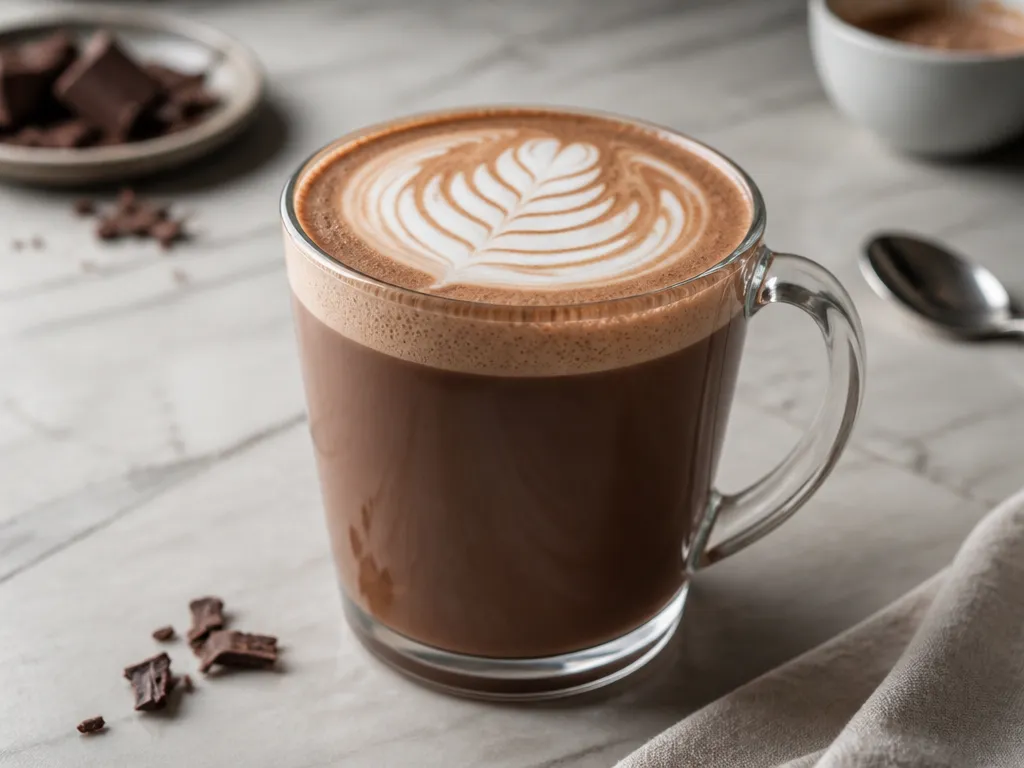
For a 12 – 16 oz mocha latte at home, start with 2 shots (about 2 oz / 60 ml) of strong espresso, then dissolve 2 tablespoons (about 14 g) of chocolate syrup or sauce into the hot espresso before adding milk.
Build it hot: pour chocolate into the espresso, stir until smooth, then add 10 – 12 oz (300 – 355 ml) steamed milk. Aim for a creamy foam dome, not boiling. If you want iced, put chocolate at the bottom, add cold milk over ice, then add the espresso last so it does not melt out and go watery.
What Is Recipe For A Mocha Latte?
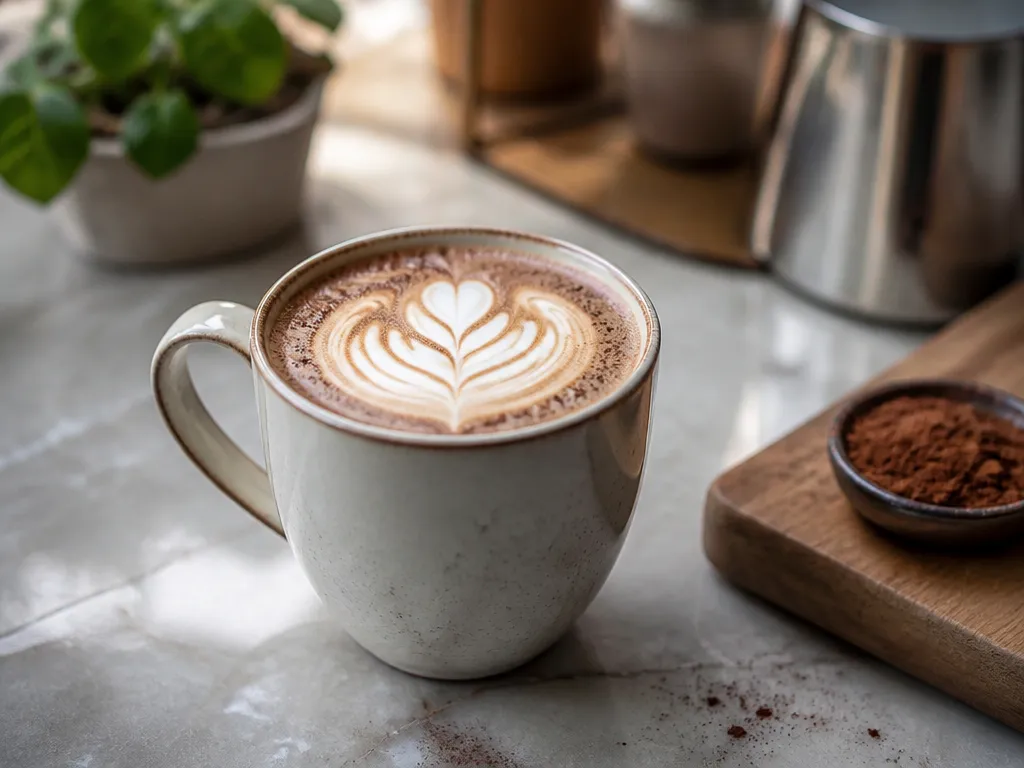
A mocha latte is a coffee drink built from three parts, espresso (or strong coffee), chocolate, and milk, combined in a way that keeps the chocolate from settling or tasting dusty. The practical “recipe” is really the ratio and the order you mix those parts, because that determines whether the drink tastes like a café mocha or like sweetened coffee with cocoa floating at the bottom. For a home 12 – 16 oz serving, the backbone is 2 shots (about 2 oz / 60 ml) of strong espresso, a fixed chocolate amount, and enough milk to create a balanced coffee-and-chocolate drink without thinning the flavor.
Chocolate is where most home mochas go wrong. Chocolate sauce or chocolate syrup dissolves quickly and tastes closest to what you get in many cafés, because it brings both cocoa flavor and sugar in a form that blends smoothly. Unsweetened cocoa powder can work, but you have to convert it into a paste (cocoa plus sugar and hot liquid) so it dissolves, and you need to account for that added sugar or your finished drink will land too bitter and too “powdery.” Chopped dark chocolate also melts well, but it changes texture if it is not fully dissolved in hot coffee.
| Chocolate option | Best when you want… | Key risk |
|---|---|---|
| Chocolate sauce or mocha syrup | Fast blending and classic sweet mocha flavor | Can be overly sweet if you add extra sugar |
| Unsweetened cocoa powder | Less sweetness, deeper cocoa taste | Grainy results if you skip making a hot cocoa-sugar slurry |
| Chopped dark chocolate | Thicker, more intense chocolate character | Graininess if it does not fully melt |
Milk matters too, because the mocha is meant to be creamy, not just hot. Whole milk or barista-style milk gives the best body and foam, while oat and other plant milks can taste great but behave differently during steaming and frothing, so you will need specific foam methods and temperature targets later.
Key Benefits
A good mocha latte recipe gives you a repeatable, café-style flavor and texture because it controls the three variables that most home attempts mess up, chocolate dissolution, coffee strength, and milk foam.
Step-by-step Guide
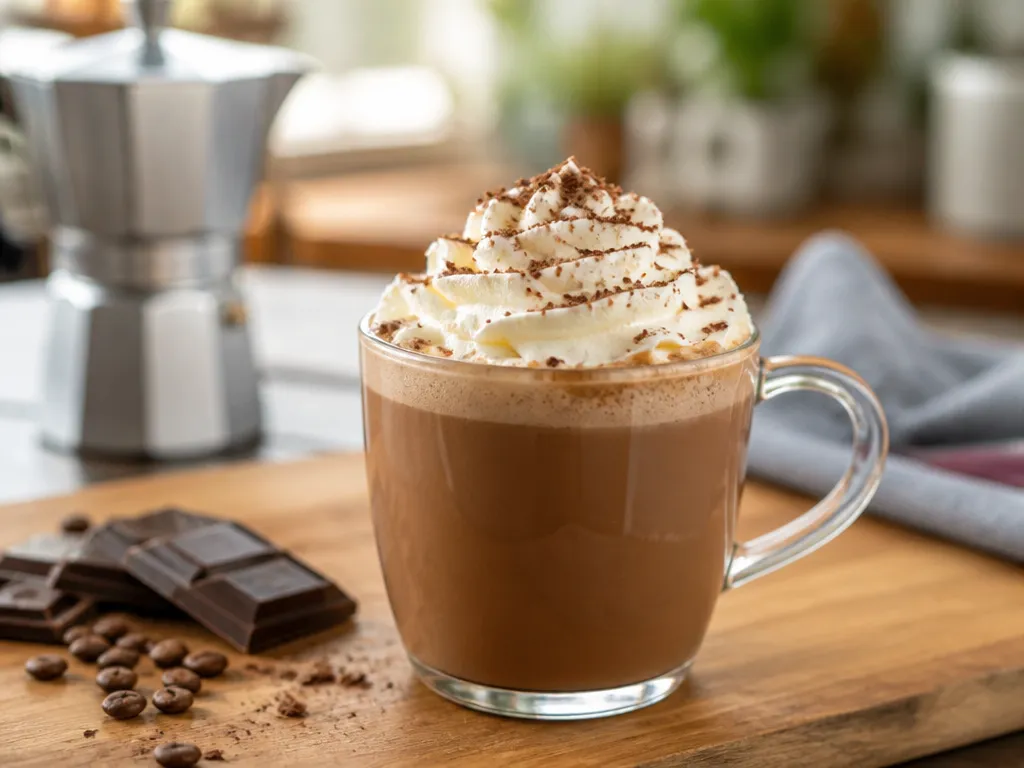
Follow this build order and you will get a mocha that tastes like chocolate and espresso, not like cocoa powder or watery coffee. Use the same process for hot or iced, only changing the final assembly step.
Quality check (30 seconds): the drink should be evenly brown, with a light foam cap for hot (or a creamy surface for iced), and it should taste balanced between chocolate and coffee, not harsh or thin.
Common Mistakes To Avoid
These are the failure points that turn a café-style mocha into something watery, grainy, burnt, or cloyingly sweet. Avoid them and you will get a smoother chocolate flavor, a stronger coffee backbone, and the right foam and mouthfeel.
Tips For Success
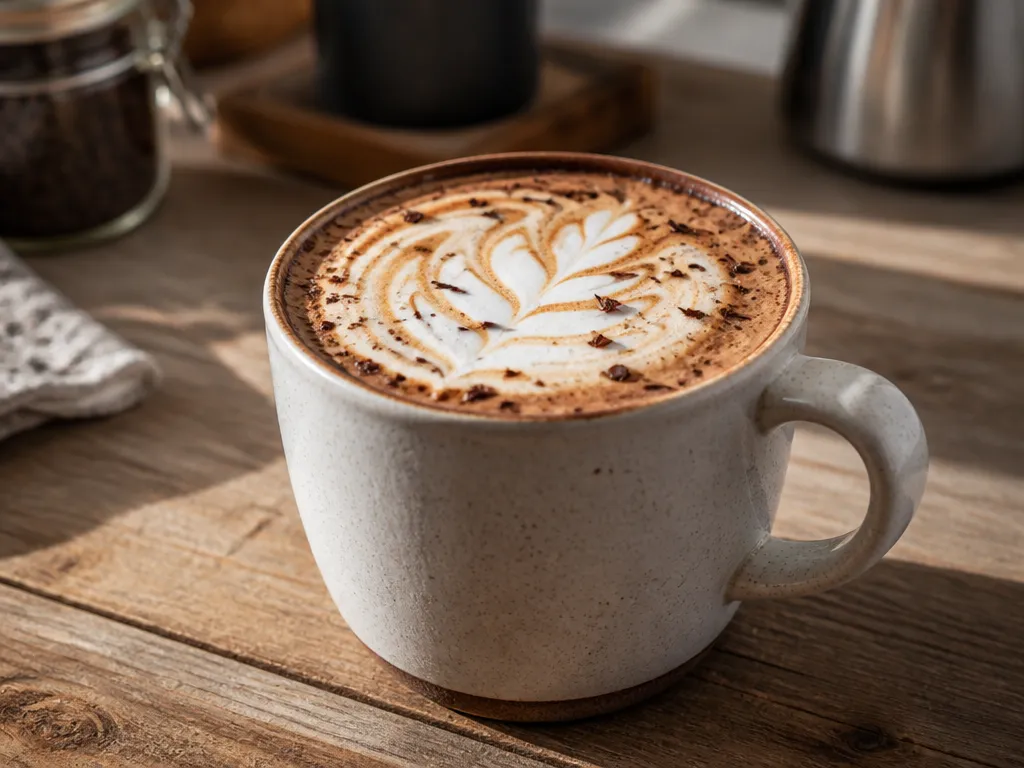
Heat management and tasting mid-build do more for the final cup than any equipment upgrade. A mocha is temperature-sensitive: chocolate thickens as it cools, milk foam collapses within a couple of minutes, and once either happens no amount of stirring brings the texture back. Work quickly and keep every vessel warm.
Rinse your mug or glass with hot water and empty it right before you pour. A cold mug pulls heat out of the espresso the moment it lands, and the chocolate you just dissolved starts setting against the walls. This single step buys you more than a thicker-walled cup does.
Reserve the first ounce of your espresso to whisk into the chocolate on its own, then thin it with the rest. Dumping all the coffee in at once floods the chocolate and leaves small lumps you only notice while drinking. A spoonful at a time, stirred to a paste first, gives you a glossy base with no grit.
Add a pinch of salt and two or three drops of vanilla to that chocolate base. Salt takes the flat, chalky edge off cocoa solids, and vanilla rounds the top note so the drink lands closer to what a café serves.
| Lever | Reach for it when | Change it by |
|---|---|---|
| Chocolate | The flavor reads thin or dusty | One more teaspoon, fully dissolved |
| Coffee strength | The mocha tastes milky and the coffee vanishes | Keep the same 2 oz volume, brew it double strength |
| Milk | The texture feels watery or the foam won’t hold | Move up one fat level, or switch to a barista-style oat |
| Sweetener | The drink is balanced but not quite sweet enough | One teaspoon at a time, taste between each |
Taste the iced version after it is cold, not while the mix is still warm. Cold dulls sweetness, so a base that tastes right hot can land flat over ice. If it does, add sweetener to the chocolate layer rather than stirring sugar into a finished cold drink, where it will not dissolve.
Building two mochas at once works, with one limit: scale the chocolate and coffee together, but steam or froth the milk in two separate batches. Foam made ahead and left sitting deflates into warm milk, and you cannot rescue it by re-frothing.
Change one variable per attempt and note what you changed. Grind, dose, chocolate brand, and milk type each move the flavor, and adjusting two at once leaves you guessing which one helped.
Real Examples
These two build examples show what “correct” looks like in real kitchens, plus exactly how you swap equipment without weakening the coffee or mis-dissolving the chocolate. Use them as templates, then taste and adjust only the sweetener if your chocolate already runs sweet.
Example 1, Hot 16 oz (home espresso machine or steam-wand): Pull 2 shots, about 2 oz / 60 ml espresso into a warm mug. Stir in 2 tablespoons (about 14 g) chocolate syrup or sauce until smooth, then steam and pour about 12 oz / 355 ml milk. The cup should look evenly brown (no pale cocoa streaks), and foam should form a thin dome that stays intact for a minute or two while you drink.
Example 2, Iced 16 oz (no steam wand, still strong): Add 2 tablespoons (about 14 g) chocolate syrup or sauce to the bottom of a glass. Pour in cold milk to reach about 12 oz / 355 ml total milk before the coffee step, then fill with ice. Brew strong coffee or espresso-equivalent as 2 shots, about 2 oz / 60 ml of concentrated coffee (or chilled espresso), and pour it last so the ice does the cooling. A correct iced mocha tastes layered, you get chocolate sweetness up front, then coffee shows through without going watery.
| Goal | Use | What to keep equal | Why it matters |
|---|---|---|---|
| Chocolate tastes smooth, not dusty | Hot base dissolving step | 2 oz / 60 ml hot coffee base + 14 g chocolate | Chocolate thickens as it cools, so mix it while hot |
| Café-style strength | Any brew method, strong extraction | 2 oz / 60 ml concentrated coffee | Weak coffee makes the mocha taste thin |
| No steam wand foam | French press or jar-froth | Don’t change the ratio | Foam is texture, ratios control flavor balance |
Variation check, before you change anything: If the mocha is too sweet, reduce only the extra sweetener you add on top, since the chocolate component already brings sugar. If it is bitter or harsh, reduce the coffee strength (or shorten extraction) while keeping 2 oz / 60 ml as the base volume so the chocolate still dissolves.
Quick Summary
For a 12 – 16 oz mocha latte at home, use 2 shots (about 2 oz / 60 ml) strong espresso and dissolve 2 tablespoons (about 14 g) chocolate syrup or sauce into the hot espresso before adding milk.
Change these conditions if you need a different outcome:
Next action: measure your 2 oz / 60 ml hot coffee and 2 tablespoons / 14 g chocolate, dissolve, then build with milk using the hot or iced order you’re making.
Frequently Asked Questions
How Long Should A Mocha Latte Take If I Already Have Espresso And Chocolate Syrup Ready?
Plan on a short workflow because the drink is a quick build at the end. The main time sink is getting coffee hot (and, if you foam milk, getting it to the right texture before it collapses). If you start from scratch with grinding and brewing, the time grows mainly on the coffee side.
If timing is tight, make the coffee first, then do the milk. You get better results when you assemble while the hot base is still hot enough to dissolve chocolate smoothly.
What Is The Most Likely Reason The Flavor Tastes “Off” Even When The Ratio Seems Right?
The most common culprit is chocolate form and how it behaves when heated. Chocolate syrup or sauce dissolves differently than unsweetened cocoa powder, and cocoa that is not sweetened to match the rest of the drink can taste harsher or drier.
Fix the variable you can control fastest next time: switch to a chocolate sauce style you know dissolves well, and keep the chocolate fully mixed into the hot base before any milk goes in.
What Does A Café-style Mocha Latte Cost At Home Versus Buying One, And What Should I Expect To Pay For Ingredients?
Because you likely have some ingredients already (milk, espresso, sweeteners), the real cost depends on what you need to buy. From the research available here, there are no supported ingredient price points, so I cannot give you a reliable dollar estimate.
Check your pantry for coffee, milk, and whether you already have chocolate syrup or sauce. Then price only what you are missing, and divide the cost of each by how many drinks you can make from that item.
What Happens If I Do Everything Wrong By Accident, Then I Just Drink It Anyway?
You will usually get one of three failures: watery taste (too little coffee strength or diluted base), harsh bitterness (over-extracted or too strong coffee interacting with cocoa), or grainy/undissolved chocolate (chocolate not dissolved in the hot base first).
Even if it is drinkable, the texture and balance may never hit café-like smoothness. The easiest “rescue” is to rebuild next time with the correct build order so the chocolate disperses before milk.
Can I Make A Mocha Latte If I Do Not Have Espresso Equipment At All?
You can, as long as you replace the role of espresso with a strong-brewed coffee method so the chocolate is not overwhelmed or diluted. The key is using a concentrated coffee base and then dissolving the chocolate into it before milk.
If your substitute method gives a weak cup, the mocha will taste thin even if you use the right chocolate amount.
When Should I Stop Troubleshooting And Get Help, Like Contacting A Barista-equipment Tech Or Rethinking My Setup?
Get help if you are consistently getting the same failure that points to equipment issues, like unreliable milk texture from a wand that is not steaming correctly or coffee extraction that is always bitter or sour regardless of grind and timing adjustments.
If your results vary widely from cup to cup even when you follow the same steps, focus on reproducibility (same coffee dose, grind, and chocolate type). If that fails, hardware or ingredient freshness may be the reason.
How Can I Verify My Mocha Is “Correct” Without Relying On Taste Alone?
Use visible and sensory checks: the drink should look evenly colored and smooth, and you should see a cohesive foam layer if you steam milk. Grainy chocolate often shows up as visible specks or a sandy mouthfeel.
For balance, your first sip should read as chocolate-forward but still clearly coffee-backed, not syrupy-sweet and not bitter-cocoa. If it misses, change only one variable next time, usually the coffee strength or chocolate form.

- Espresso Bar Wedding: Ideas, Setup, Costs, and Tips for a Memorable Coffee Experience - November 11, 2026
- How Many Grams of Espresso Beans for a Double Shot? A Complete Brewing Guide - November 11, 2026
- Brasilia Espresso Machine: Features, Performance, Models, and Buying Guide - November 11, 2026