

Yes. You can make vanilla cold foam without heavy cream by chilling a non-dairy milk, flavoring it, and incorporating air with a hand frother or blender. Oat and soy milk are useful starting points because they often produce more body than thinner plant milks, while almond and coconut-based drinks can vary considerably by brand.
For one drink, start with roughly one cup of chilled milk, about one to two teaspoons of vanilla extract, and optional sweetener to taste. Froth until the mixture looks thick and pourable, then serve it immediately. If the foam collapses quickly, test a small amount of xanthan gum in a later batch rather than adding it automatically.
What Is The Vanilla Cold Foam Recipe Without Heavy Cream?

This recipe uses chilled non-dairy milk, vanilla, and optional sweetener. It makes enough topping for one drink, although the final volume depends on the milk, container, and frother.
Begin with refrigerator-cold milk. Add the flavorings, froth until the mixture becomes thick and pourable, and use it immediately over espresso or cold brew.
| Ingredient | Amount (per batch) | Notes |
|---|---|---|
| Non-dairy milk (choose one) | About 1 cup | Use it cold. Oat or soy are useful first tests. |
| Vanilla extract | About 1 to 2 tsp | Start lower for a subtle flavor and add more in the next batch if needed. |
| Optional sweetener | To taste | Simple syrup or another sweetener that dissolves in cold liquid is easiest to mix. |
| Optional stabilizer | A very small amount | Test xanthan gum only if the foam repeatedly collapses. Add it sparingly. |
Equipment can be simple. A hand frother is the most direct option. A small blender can also work, and a whisk is possible but usually requires more effort. Use a narrow, tall container that gives the frother room to move without splashing.
Allow time to chill the milk and prepare the coffee, then froth immediately before serving. The active frothing time will vary with the tool and milk. If using xanthan gum, disperse it thoroughly before frothing so it does not form lumps or create a stringy texture.
What Variables Affect Foam Stability And Results?
Foam stability depends mainly on the milk, the amount of air introduced, the temperature, and the time between frothing and serving. The aim is a dense, fine-bubbled topping rather than a loose layer of large bubbles.
Milk Type, Stabilizers, And Sweeteners
Oat and soy are sensible starting points when you want more body. Almond and coconut milk can work, but their results vary more from one product to another. A thinner milk may produce a lighter foam that breaks down sooner.
A small amount of xanthan gum may help a fragile foam, but it is easy to overuse. Sweeteners can improve flavor and slightly change the liquid’s body, yet heavy additions can make the mixture harder to aerate. Add both gradually and assess the next batch rather than trying to rescue a badly overloaded one.
| Variable | What to try | What it tends to do |
|---|---|---|
| Non-dairy milk | Start with oat or soy; test almond or coconut if preferred | Controls body and how readily the foam holds |
| Xanthan gum | Use only a very small amount if the foam repeatedly collapses | May improve hold, but excess can feel gummy |
| Vanilla | Extract or paste, added to taste | Adds flavor with little structural effect in a modest amount |
| Sweetener | Add gradually and taste before frothing | Changes sweetness and may alter thickness |
Frother Type, Timing, And Temperature
Different tools introduce air at different speeds. A hand frother is easy to control, while a blender can aerate quickly but may create a looser texture if run too aggressively. A whisk can work, though it may produce less volume.
Start with cold milk and froth in a short, repeatable session. A half-minute is a useful first test; continue in brief increments if the mixture remains thin. Stop once it looks dense and glossy. More frothing is not always better.
How Do I Make The Foam Step By Step?
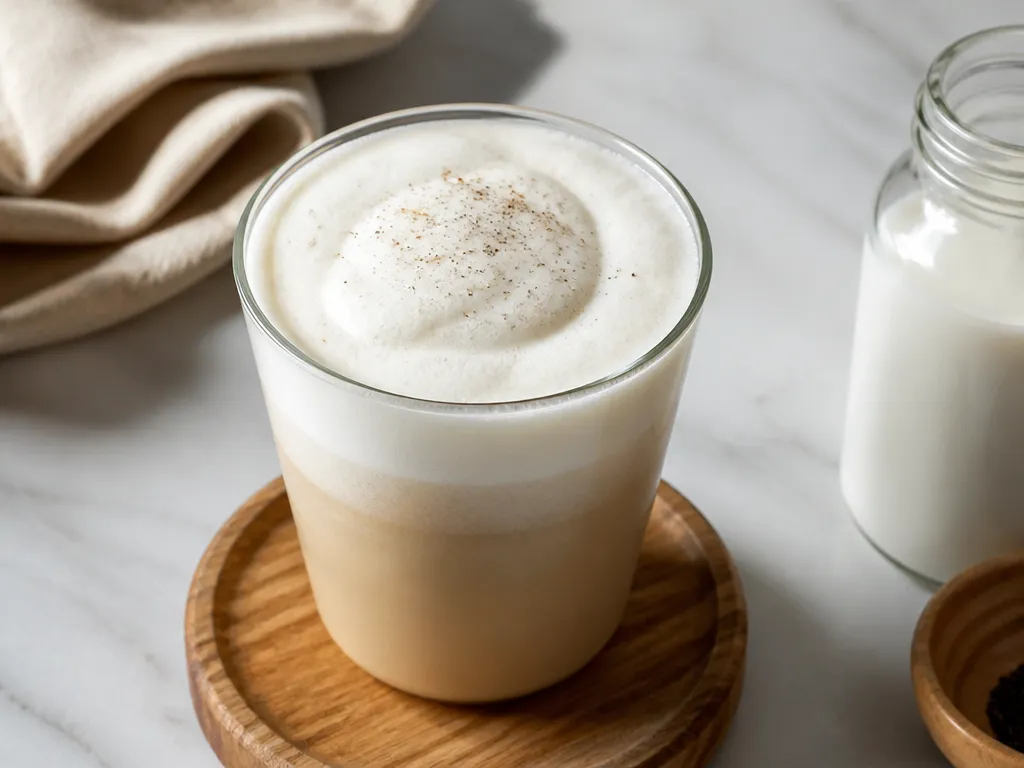
Use this method for one drink. Chill the milk, mix in the flavorings, froth until thick, and assemble the coffee before the foam has time to relax.
Quick decision: If the foam lacks volume, continue in short bursts rather than running the frother indefinitely. If the vanilla tastes uneven, mix the liquid more thoroughly before frothing. Aeration will not correct uneven flavor.
What Goes Wrong And How Can I Fix It?
Most problems come from the milk, the frothing technique, or the delay before serving. Change one variable at a time so you can identify what helped.
For the easiest troubleshooting, identify whether the problem is thinness, collapse, large bubbles, separation, or flavor. Change only the related variable on the next attempt.
How Can I Vary Flavors And Textures?
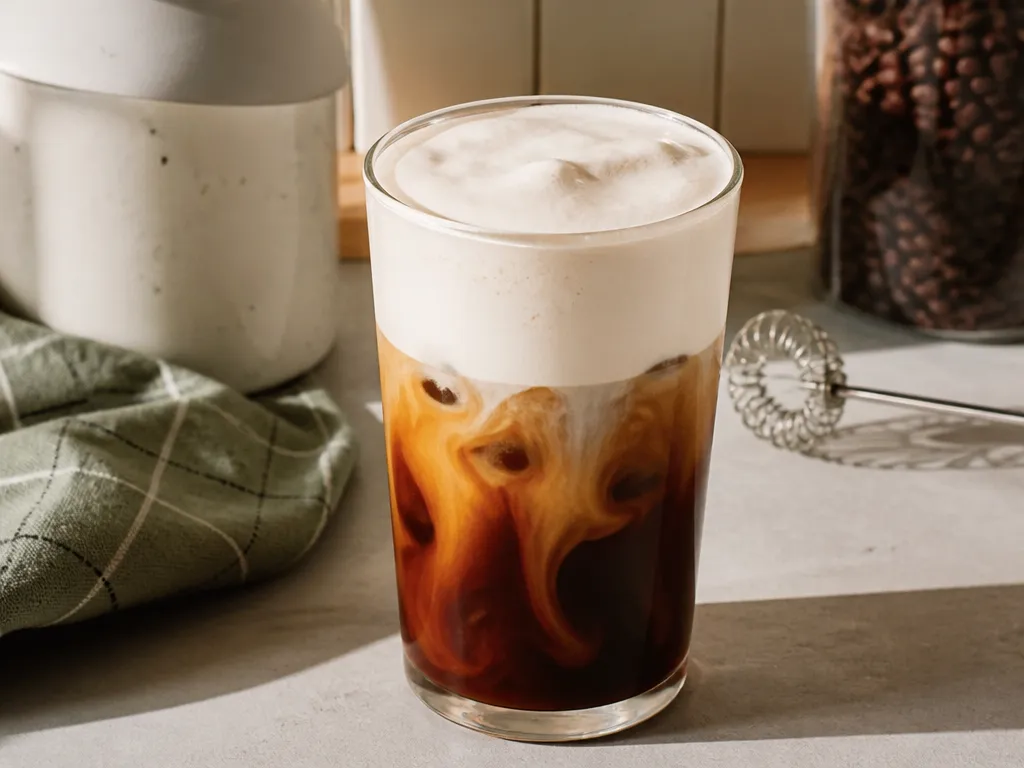
For consistent testing, keep the milk and frother the same while changing only one element, such as the vanilla, sweetener, added flavor, or stabilizer.
How Should I Serve And Assemble With Coffee?
Prepare the coffee first and add the foam last. Cold brew can go directly into the glass. Espresso should be cooled before adding cold foam if you want to preserve the topping’s texture.
Best presentation goal: a distinct foam layer with a smooth, slightly domed surface. Serving order and timing matter more than elaborate toppings.
How Long Is The Foam Fresh And How Should I Store It?
Cold foam is best treated as a fresh topping. Its bubbles gradually weaken, and the texture becomes less uniform as it sits.
What “Good” Looks Like After Storage
If the stored foam still pours in a slow, thick stream, it may work as a topping. If it looks watery or has large gaps between bubbles, use it as a liquid flavoring instead.
When in doubt, froth, assemble, and serve. Cold foam is a texture-first preparation, not an ideal make-ahead component.
Can I Print A Recipe Card And Quick Cheat Sheet?
You can print the recipe card below as a compact reference. Because milk and equipment vary, treat the quantities and timing as starting points and adjust the next batch according to the texture you get.
Use the recipe card while preparing the milk, then make the foam as close to serving time as practical.
| Printed item | What it should include | Best use |
|---|---|---|
| Recipe card | Ingredient list, equipment, numbered steps, timing guidance, and yield | Reference while preparing the foam |
| Quick cheat sheet | Cold base, froth until thick, and assemble immediately | Last-minute preparation before serving |
Printable Recipe Card Layout (Pdf)
Copy the template below into a document editor, then print or export it as a PDF. Keep it to one page if possible.
Printable Recipe Card (copy/paste)
Title: Vanilla Cold Foam (Non-Dairy, No Heavy Cream)
Yield: Enough to top one drink
Time: Chill and prepare in advance; froth immediately before serving
Base: About 1 cup cold non-dairy milk
Ingredients
– About 1 cup cold non-dairy milk
– About 1 to 2 tsp vanilla extract, adjusted to taste
– Optional sweetener, adjusted to taste
– Optional tiny amount of xanthan gum if the foam repeatedly collapses
Equipment
Hand frother, small blender, or whisk
Steps
1) Chill the milk and container.
2) Stir in vanilla and optional sweetener.
3) Froth until thick and pourable, starting with roughly half a minute.
4) Check the texture and adjust in short bursts if needed.
5) Pour immediately over cold brew or cooled espresso.
Quick-reference Cheat Sheet Values (Print Beside Your Coffee)
Use this short guide while assembling the drink.
Download and printing guidance
For a downloadable file, paste the card into a document editor and export it as a PDF. Check the preview before printing to ensure the card fits on one page.
Quick Summary
Make vanilla cold foam without heavy cream by starting with cold non-dairy milk, adding vanilla and optional sweetener, and frothing until the mixture becomes thick and pourable. Oat and soy are useful first choices, while almond and coconut drinks may require more adjustment.
Next action: Chill your milk, stir in vanilla, froth until thick and pourable, and spoon it over cold brew or cooled espresso.
Frequently Asked Questions
Why Does My Foam Taste “Flat” Or Bland Even When I Used Vanilla?
Cold temperature and foam texture can make vanilla seem less pronounced. Taste the liquid before frothing and adjust the vanilla gradually. Mix it thoroughly so the flavor is evenly distributed.
If you use vanilla syrup, remember that it adds sweetness as well as flavor. If the foam is thin or collapsing, reduce the syrup in the next batch and test the texture again.
What Should I Do If I Cannot Get Any Foam At All (No Bubbles, No Thickening)?
Check the milk temperature and equipment first. Use cold milk and a tool that actively pulls air into the liquid, such as a hand frother or small blender. If the result is still flat, test another non-dairy milk, beginning with oat or soy.
Can I Use Sweetened Vanilla Coffee Creamers, Or Do I Need A “Milk + Flavor” Base?
You can test a sweetened vanilla creamer, but its ingredients may produce a different texture from plain non-dairy milk. Some creamers become thick, thin, or unstable when aerated cold.
For more control, use plain non-dairy milk and add vanilla and sweetener separately. That makes it easier to change one ingredient at a time.
How Long Can I Wait Between Frothing And Pouring Before The Foam Quality Drops Too Much?
Use the foam as soon as it reaches the texture you want. The longer it sits, the more likely it is to flatten or separate. If you must wait briefly, keep it cold and re-froth lightly only if it remains cold.
What If I Want To Scale Up For Multiple Drinks, Can I Batch It?
You can mix and chill a larger liquid base, but frothing the entire batch at once may produce uneven results and leave later servings thinner. For the most consistent texture, froth smaller portions shortly before each drink is assembled.
How Can I Verify Whether A “Non-dairy Milk” Will Foam Well Before I Commit To A Full Drink?
Test a small amount of the exact milk you plan to use. Chill it, add a little vanilla if desired, and froth it with your intended tool. Check whether it becomes thick and pourable and how long that texture lasts.
Packaging descriptions are not a guarantee of cold-foam performance. Keep a note of the milks and methods that work in your kitchen, then use those combinations for repeatable results.

- Espresso Bar Wedding: Ideas, Setup, Costs, and Tips for a Memorable Coffee Experience - November 11, 2026
- How Many Grams of Espresso Beans for a Double Shot? A Complete Brewing Guide - November 11, 2026
- Brasilia Espresso Machine: Features, Performance, Models, and Buying Guide - November 11, 2026