

For a Starbucks-style hot peppermint mocha at home, use about 45 ml (1.5 oz) milk, about 2 tablespoons mocha or chocolate sauce, espresso, and a small amount of peppermint syrup. Treat these as a home starting point, not Starbucks specifications. Add the peppermint last and adjust it gradually.
A practical one-drink method takes roughly 5 to 10 minutes, depending on your equipment. Warm and texture the milk, combine it with the chocolate sauce, add espresso, then stir in peppermint syrup. Finish with optional whipped cream and chocolate drizzle. If you use peppermint extract instead of syrup, begin with only a very small amount, such as about 1/8 teaspoon, because extract is much more concentrated than syrup.
The Base Peppermint Mocha And What Goes In It

A Starbucks-style hot peppermint mocha has four basic parts: espresso, chocolate sauce, peppermint syrup, and milk. Espresso supplies the coffee flavor, chocolate sauce provides sweetness and body, peppermint syrup adds mint, and milk softens and carries the mixture.
For one home serving, begin with about 45 ml (1.5 oz) whole milk and about 2 tablespoons mocha or chocolate sauce. Add a normal single serving of espresso from your machine, then stir in about 1/2 tablespoon peppermint syrup at the end. These are practical starting amounts for testing at home, not a verified Starbucks formula.
| Component | Baseline role | What to measure at home |
|---|---|---|
| Espresso | Coffee backbone | One normal serving from your espresso setup |
| Mocha/chocolate sauce | Sweet chocolate flavor and body | About 2 tablespoons per serving as a starting point |
| Peppermint syrup | Mint sweetness and aroma | Start near 1/2 tablespoon and add it last |
| Milk | Texture and dilution | About 45 ml (1.5 oz) whole milk as a starting point |
For the closest repeatable result, measure the sauce and milk instead of adding them by eye. The exact Starbucks portions, syrup brand, pump volume, and drink size were not available to verify here, so adjust this home version to your taste and check the product labels when substituting ingredients.
Why Espresso, Chocolate, And Mint Must Go In That Order
The order below gives you a smooth starting point and makes it easier to correct the drink before one flavor takes over.
If you only have cocoa powder: mix it with a little hot milk or hot water until smooth, sweeten it to taste, then add the rest of the milk and espresso. Add peppermint cautiously because the sweetness of cocoa powder and the strength of the extract or syrup will vary.
Exact Measurements For 1, 2, And 4 Servings
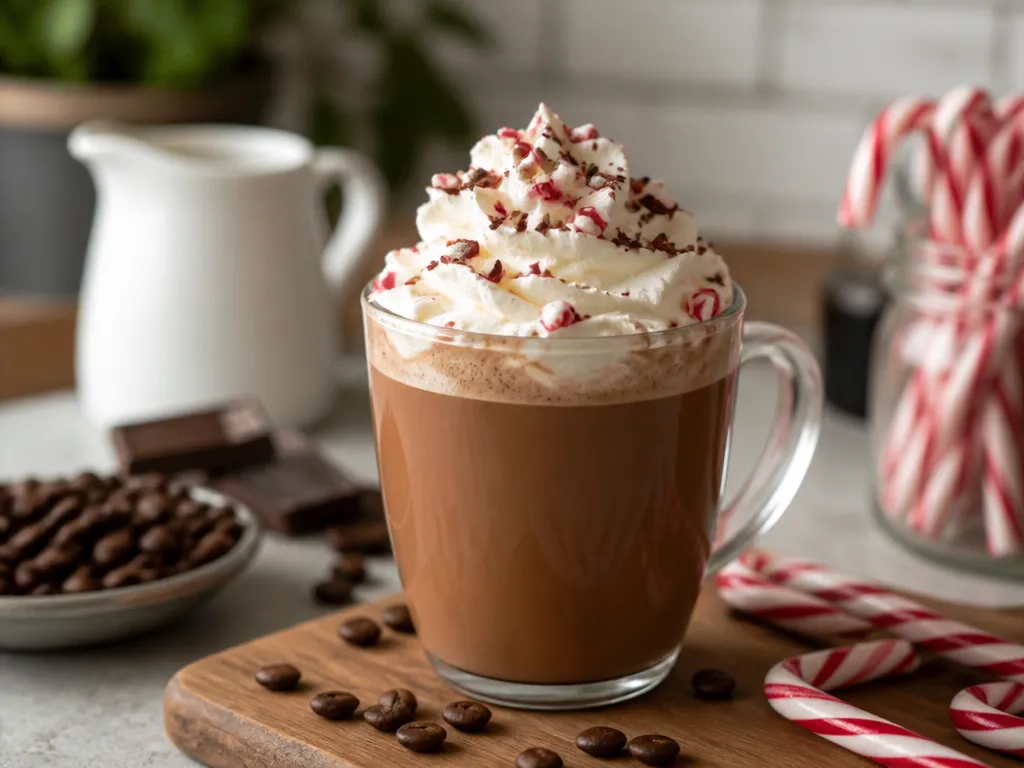
The table below is a convenient home scaling guide based on the illustrative one-serving starting point above. It is not a verified Starbucks recipe. Keep peppermint adjustable rather than scaling it automatically if you are testing a new syrup or extract.
| Serving size | Milk volume | Mocha/chocolate sauce | Peppermint syrup | Espresso |
|---|---|---|---|---|
| 1 | About 45 ml (1.5 oz) | About 2 tablespoons | Start near 1/2 tablespoon | One normal serving |
| 2 | About 90 ml (3 oz) | About 4 tablespoons | Start near 1 tablespoon, then taste | Two normal servings |
| 4 | About 180 ml (6 oz) | About 8 tablespoons | Start near 2 tablespoons, then taste | Four normal servings |
These quantities scale the home starting formula. Flavor will not necessarily scale perfectly because espresso strength, sauce sweetness, milk type, and peppermint concentration differ between products. Mix the chocolate and milk first, then add peppermint in small increments.
For a batch, combine the chocolate sauce and part of the milk first. Add the remaining milk and espresso, then portion the peppermint carefully. Tasting one portion before adding all the mint helps prevent an overly strong batch.
Minute Quick Build Vs 12-minute Layered Build
Use the quick method when you want a drink promptly. Use the layered method when you want more control over mixing and temperature. The times below are approximate kitchen workflows, not fixed requirements.
Which Equipment Actually Changes The Result
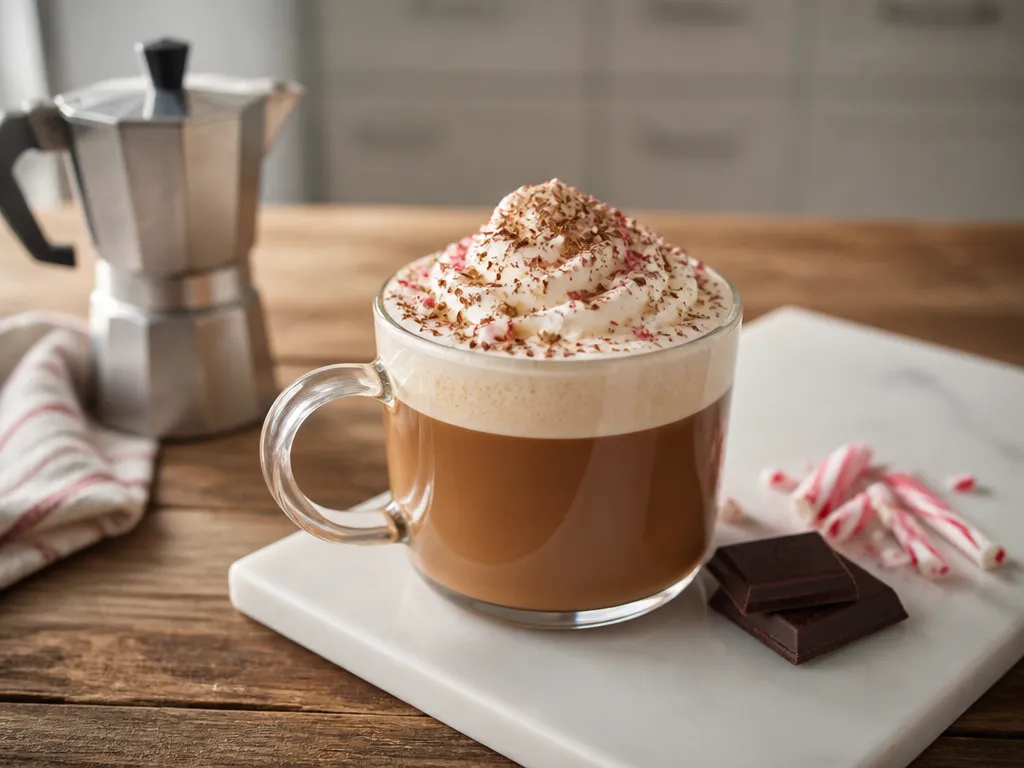
The most influential tools are the ones that control coffee concentration and milk texture. You can make the drink without specialized equipment, but each substitute changes the result.
What Each Tool Actually Affects In The Cup
An espresso machine gives you a concentrated coffee base. Strong brewed coffee can substitute, but the finished drink may taste less intense unless you reduce the milk or use a concentrated brew.
A steam wand creates textured milk and foam. Without one, warm the milk gently in a saucepan or microwave and whisk it briefly. Avoid boiling it, since overheated milk can taste cooked and lose its smooth texture.
A grinder helps you make more consistent espresso, but it is not essential if you use a reliable pre-ground coffee or pod. If the coffee tastes sour or bitter, adjust the brewing method before adding more chocolate or peppermint.
A thermometer makes milk temperature easier to repeat. If you do not have one, warm the milk until it is hot and steamy but not simmering.
| Equipment | Concrete change in the finished peppermint mocha | What it helps fix |
|---|---|---|
| Espresso machine | Concentrated coffee flavor | A weak or watery coffee base |
| Steam wand | Smoother milk and foam | Thin texture or poorly mixed sauce |
| Grinder | More repeatable coffee extraction | Large swings between sour and bitter coffee |
| Thermometer | More consistent milk temperature | Milk that is too cool or overheated |
If you can already make balanced espresso, improve milk texture first. If the coffee itself varies from drink to drink, address the grinder, dose, or brewing method before changing the flavorings.
Matching Starbucks Pumps With Substitutes
Pump sizes vary by product and dispenser, so pump counts cannot be converted reliably without checking the specific syrup or sauce. Use measuring spoons for a repeatable home method.
Peppermint syrup: begin with about 1/2 tablespoon per serving, then increase in small steps, such as 1/4 tablespoon, until the mint is noticeable but not medicinal.
Mocha sauce: begin with about 2 tablespoons per serving. Add or subtract about 1/2 tablespoon at a time if the chocolate flavor is too weak or too sweet.
| Component | Start-at-home amount | Swap goal | What changes |
|---|---|---|---|
| Peppermint syrup | About 1/2 tablespoon per serving | Mint brightness | More syrup gives stronger mint and more sweetness. |
| Mocha/chocolate sauce | About 2 tablespoons per serving | Chocolate body | Less sauce gives a lighter, less chocolate-forward drink. |
When you have no peppermint syrup: use peppermint extract carefully. Start with about 1/8 teaspoon per serving, mix it in at the end, and taste before adding more. If you lack mocha sauce, chocolate syrup is an option, but the drink may have a thinner texture. Check the product label before adjusting the amount.
Dairy-free swaps: use almond, oat, or soy milk at the same approximate volume as the dairy milk. Oat milk often produces a fuller texture, while almond milk may taste lighter. The result depends on the product, so adjust the milk and sauce after tasting.
Sugar-free syrups: use the label’s suggested serving as your starting point. A sugar-free syrup may taste sharper or less rounded than a full-sugar product. If that happens, adjust the chocolate sauce rather than adding more peppermint.
Fixing Weak Mint, Bitter Shots, And Thin Texture
Change one variable at a time. That makes it easier to identify whether the problem comes from the coffee, milk, chocolate, or mint.
| Failure mode | What it tastes or smells like | Likely cause | What to change next |
|---|---|---|---|
| Mint disappears behind the chocolate | Chocolate dominates | Too little peppermint or a very mild syrup | Add a small amount of syrup at the end and taste again. |
| Espresso tastes bitter | Harsh or burnt | Over-extraction or overly dark coffee | Adjust grind, dose, or brewing time one step at a time. |
| Espresso tastes sour | Sharp or underdeveloped | Under-extraction or unsuitable brewing settings | Adjust grind, dose, or brewing time one step at a time. |
| Drink tastes watery or thin | Weak body or quick separation | Too much milk, weak coffee, or poorly textured milk | Use less milk, stronger coffee, or better-textured milk in the next serving. |
| Too sweet or flavors clash | Sweetness overwhelms coffee | Too much syrup or sauce | Reduce peppermint first, then reduce chocolate sauce if necessary. |
| Mint tastes like toothpaste | Sharp, cooling, or medicinal | Too much extract or syrup | Reduce the mint substantially and use syrup instead of extract if possible. |
Use coffee flavor to guide brewing changes, thinness to guide milk and chocolate changes, and mint intensity to guide peppermint changes. Do not correct every problem by adding more syrup.
Calculating Your Cost And Calories Per Drink
No verified current ingredient prices or calorie totals are available here. Use the package labels and your local prices for the exact result.
Iced, Blended, And Make-ahead Versions
Cold drinks need more attention to mixing because ice can dilute the coffee and sauces may not dissolve as readily in a cold cup.
For an iced version, mix the peppermint syrup and chocolate sauce with the espresso while it is hot. Add cold milk, stir, and pour over ice. Mixing the flavorings before adding ice helps prevent syrup or sauce from collecting at the bottom.
For a blended version, blend espresso or strong coffee, milk, chocolate sauce, peppermint syrup, and ice. Add a small splash of milk only if the mixture is too thick. Adjust ice and milk gradually because the exact balance depends on the blender, ice, and ingredients.
| Style | What to pour first | What to add last | Texture risk if mistimed |
|---|---|---|---|
| Iced | Peppermint syrup, chocolate sauce, and hot espresso | Cold milk and ice | Undissolved sauce or dilution |
| Blended | Milk, espresso, chocolate sauce, and peppermint syrup | Ice, with milk adjustments after blending | Watery or overly icy texture |
For make-ahead preparation, portion the chocolate sauce and peppermint syrup separately. Store ingredients according to their package directions. Add freshly prepared coffee and milk close to serving, since foam and flavor balance can change during storage and reheating.
Preparing the entire drink in advance is less reliable. Coffee can lose freshness, ice can dilute the mixture, and milk texture can change. If you need to save time, prepare the flavoring portions and assemble the drink just before serving.
Quick Summary
For a home Starbucks-style hot peppermint mocha, begin with about 45 ml (1.5 oz) milk, about 2 tablespoons chocolate sauce, one normal serving of espresso, and about 1/2 tablespoon peppermint syrup. Mix the chocolate with the warm milk, add espresso, and add peppermint last. Top with whipped cream if desired.
For two servings, start with about 90 ml (3 oz) milk and about 4 tablespoons chocolate sauce. For four, start with about 180 ml (6 oz) milk and about 8 tablespoons chocolate sauce. Scale peppermint cautiously and taste before adding the full amount.
| Decision point | What to change | Home starting point |
|---|---|---|
| Serving size | Milk and sauce volume | 45 ml milk and 2 tablespoons sauce per serving |
| Mint level | Peppermint syrup amount | Start near 1/2 tablespoon per serving |
| Milk temperature | Warmth and texture | Warm, non-boiling milk; about 150 to 160°F (65 to 71°C) if measured |
Next action: Make one test serving with the home starting amounts, add the peppermint last, and adjust the next drink according to the flavor you want. The exact Starbucks formula, pump volume, current price, and calorie total should be checked against the specific product or menu information you are using.
Frequently Asked Questions
How Do I Estimate The Cost Per Drink If Prices Change?
Record the current price and package size for every ingredient. Divide the price by the number of servings in the package, then multiply by the amount used in one drink.
Add the costs for espresso, milk, chocolate sauce, peppermint syrup, and toppings. This gives you a local, up-to-date estimate without relying on a fixed price.
What’s The Quickest “Time To First Sip” Plan If I Do Nothing Fancy?
Warm the milk, mix it with chocolate sauce, prepare the espresso, and combine them. Add peppermint syrup at the end and stir. With ingredients ready and a working espresso setup, this is usually a short kitchen process, but the exact time depends on your equipment.
Can I Make It Ahead And Reheat, Or Does It Break?
You can prepare the flavoring portions ahead, but the finished drink is better assembled close to serving. Coffee freshness, milk texture, and peppermint aroma can change during storage and reheating.
If reheating is necessary, warm the milk and coffee gently, avoid boiling, and add peppermint near the end. Follow the storage instructions on any dairy or syrup product you use.
What If I Want It Less Sweet But Still “Starbucks-style”?
Reduce the peppermint syrup first because it contributes both mint and sweetness. If the drink remains too sweet, reduce the chocolate sauce slightly.
If the result tastes flat after reducing the sweeteners, use a stronger coffee base or a more chocolate-forward sauce rather than adding more peppermint.
How Do I Know Whether My Results Are “Off” Due To Grind, Timing, Or Milk?
Taste the espresso before mixing it. If it is already bitter or sour, adjust the brewing method. If the espresso tastes balanced but the finished drink is thin, examine the milk amount and texture. If the drink becomes unpleasant only after adding peppermint, reduce the syrup or extract.
Make one change per test drink. That gives you a clearer answer than changing the grind, milk, sauce, and syrup at the same time.
When Should I Stop Troubleshooting And Get Help?
Ask an experienced barista or technician for help if your espresso machine repeatedly leaks, loses steam, makes unusual noises, or produces inconsistent results despite a consistent workflow.
For flavor problems without equipment faults, taste the espresso, milk, chocolate, and peppermint separately. That component-by-component check usually identifies which ingredient needs adjustment.

- Espresso Bar Wedding: Ideas, Setup, Costs, and Tips for a Memorable Coffee Experience - November 11, 2026
- How Many Grams of Espresso Beans for a Double Shot? A Complete Brewing Guide - November 11, 2026
- Brasilia Espresso Machine: Features, Performance, Models, and Buying Guide - November 11, 2026