
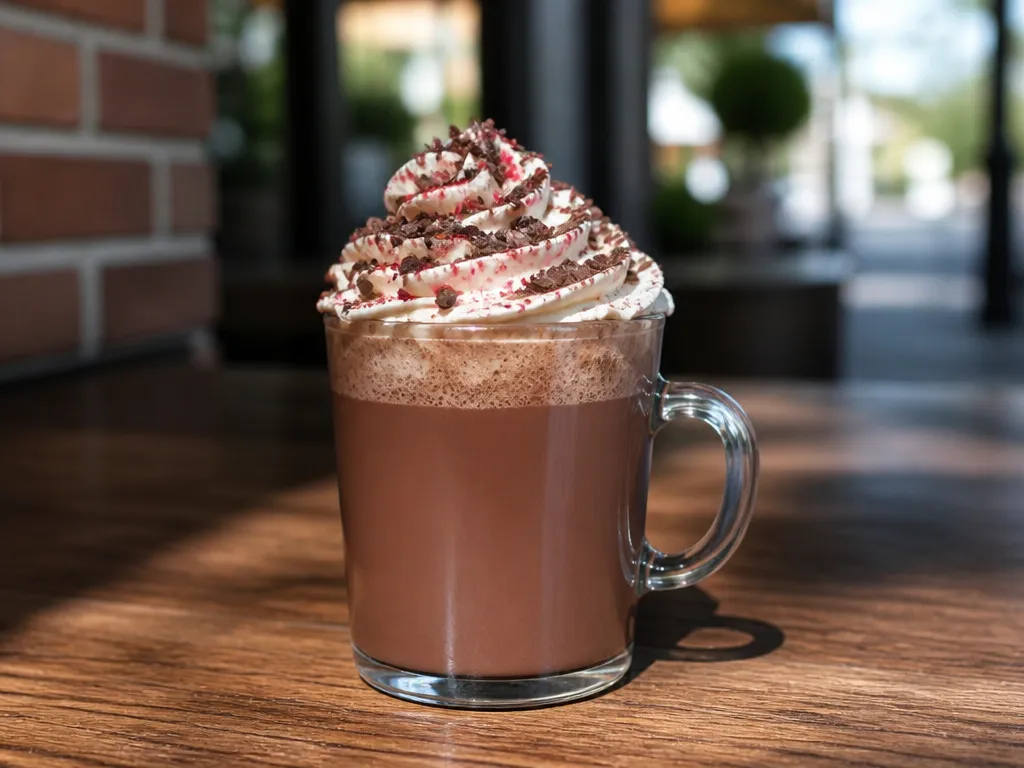
For a 2-serving copycat, use 1/8 teaspoon peppermint extract plus 1 oz (30 g) chopped bittersweet chocolate stirred into your coffee and milk. This exact peppermint amount matters, because peppermint is easy to overpower in hot chocolate-style drinks.
To make Starbucks-style peppermint mocha at home, warm 1 cup (8 oz / 225 g) coffee and 1/2 cup (4 oz / 115 g) milk, stir in the chopped bittersweet chocolate (1 oz / 30 g) until melted, then add 1/8 teaspoon peppermint extract. Keep the peppermint step controlled so the flavor stays bright instead of medicinal.
What Is The Exact Peppermint Mocha Recipe For 2 Servings?
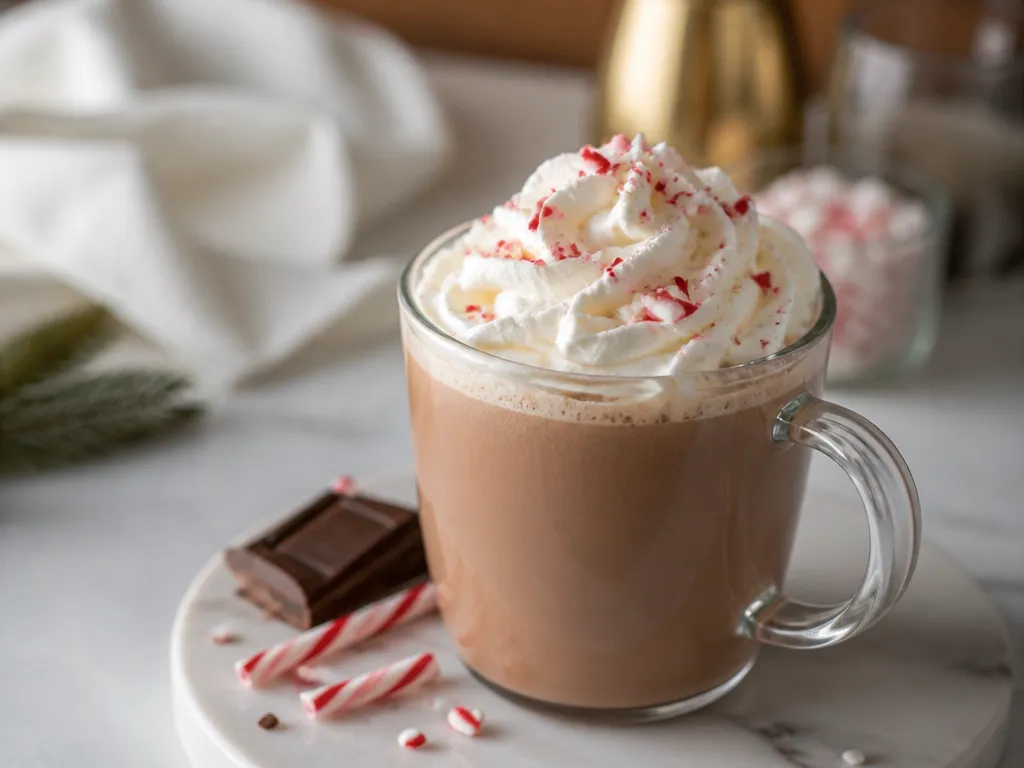
Measure out the ingredients precisely, then assemble the drink in the right order: coffee plus milk first, chocolate melted into the hot liquid, and peppermint extract added once the heat is low enough to keep the flavor clean.
Ingredient Quantities For 2 Servings
Milk: 1/2 cup (4 oz / 115 g).
Coffee: 1 cup (8 oz / 225 g).
Chocolate: 1 oz (30 g) bittersweet chocolate, chopped.
Peppermint: 1/8 teaspoon peppermint extract (use this exact amount).
If you want the drink to taste closer to a peppermint mocha you would buy, do not “eyeball” the peppermint extract. This recipe is built around that 1/8 teaspoon amount, and it is the main knob that can swing flavor from balanced to sharp.
Why Do These Ingredients Reproduce Starbucks Flavor?
Starbucks-style peppermint mocha comes from a tight balance between a dark chocolate base, a small, controlled peppermint dose, and milk that brings the blend together with a smooth texture. The recipe uses chopped bittersweet chocolate (1 oz, 30 g) because bittersweet chocolate gives a concentrated cocoa flavor that can stand up to peppermint without tasting flat. Adding it to warm coffee and milk lets the chocolate melt and distribute evenly, so each sip has the same chocolate intensity, not separate “pockets” of cocoa.
Peppermint is the dominant risk in this drink, because it reads as “wintergreen candy” fast when you overshoot. The recipe’s peppermint extract amount is deliberately small, 1/8 teaspoon, which is enough to make peppermint unmistakable while staying clean. Extract also dissolves well into hot liquids, which helps it spread through the drink instead of lingering at the bottom.
Room for “copycat control” is mainly in how you handle peppermint flavor. Peppermint extract is precise, so you can dial the character without changing sweetness. Peppermint syrup would push the drink toward a sweeter, more candied profile and adds more liquid sugars, which can make the chocolate taste sweeter and the peppermint feel louder. If you switch to syrup, you will need to reduce the amount to avoid overpowering, because syrup changes both flavor intensity and the overall sweetness balance.
That balance is why this combination works as a mocha rather than hot chocolate with mint. The chocolate establishes the background bitterness and aroma, the milk smooths it, and the small extract dose lands peppermint on top without dominating the coffee.
How Should The Recipe Scale To 4 Or 6 Servings?
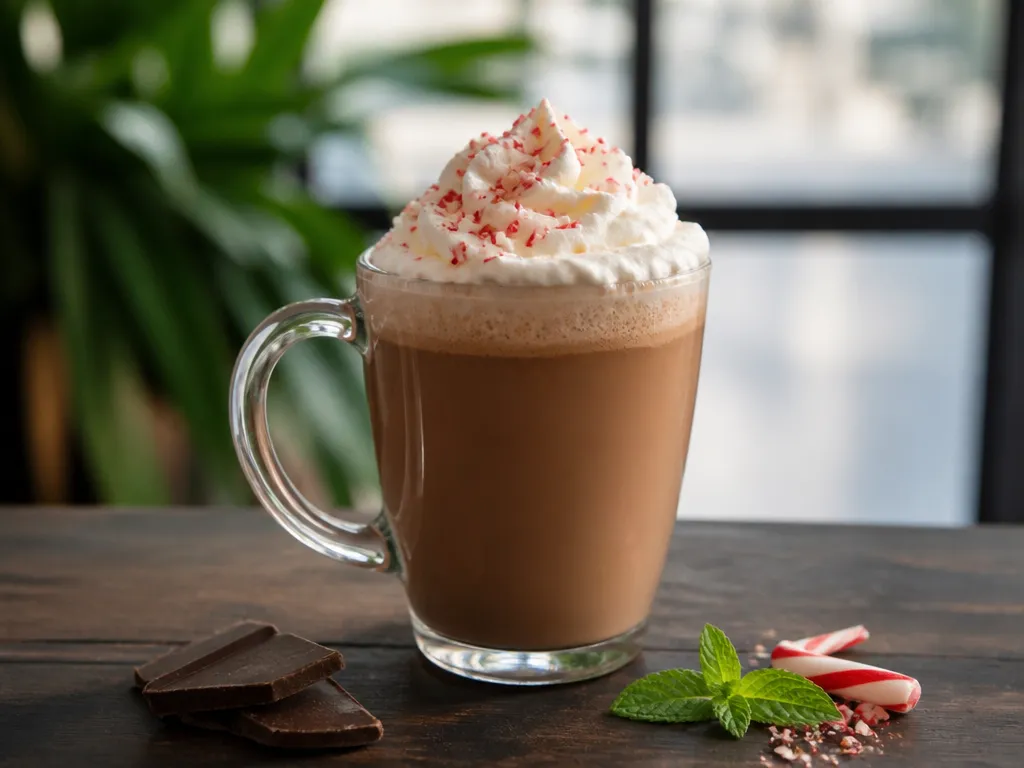
Scale the peppermint mocha by keeping the per-serving ratios identical, then only adjust the batch size based on what your pot, mug size, and stirring space can handle without overheating or wasting chocolate.
Hot Or Iced: Which Path And What Changes?
Hot and iced peppermint mocha taste like the same drink only if you change the build logic, not the core ingredients. The hot version needs chocolate and peppermint to bloom into the coffee’s warmth, while the iced version needs fast chilling and careful dilution control so the chocolate does not taste flat or the peppermint does not taste sharp.
Choose hot when you want a deeper, cocoa-forward finish with a clean peppermint lift. The heat rounds out the bittersweet chocolate (chopped chocolate melted into the hot liquid) and keeps the peppermint extract tasting crisp rather than harsh. Choose iced when you want a brighter, more refreshing peppermint note, with the caveat that cold can make chocolate taste thicker and less integrated unless you manage temperature from the start.
Keep ratios consistent, then adjust only timing and temperature. The recipe’s anchor amounts (milk 4 oz / 115 g for the 2-serving base, and peppermint extract 1/8 teaspoon) are meant to be precise, so do not “guess” your way around iced by adding extra peppermint. Instead, build hot enough to dissolve and melt the chopped bittersweet chocolate cleanly, then cool quickly before serving.
| Factor | Hot peppermint mocha | Iced peppermint mocha |
|---|---|---|
| Chocolate behavior | Melted into the hot coffee/milk base for full integration | Melt first, then chill quickly to preserve chocolate texture |
| Peppermint timing (high level) | Add when heat is reduced to keep flavor clean | Add at the same “lower heat” moment, then cool immediately |
| Temperature effect on taste | Rounds chocolate, softens peppermint edge | Brightens peppermint, can dull chocolate if diluted too much |
If your goal is closest-to-cafe taste, default to hot for the most balanced chocolate-permint integration, and switch to iced only when you can chill and serve promptly to prevent dilution from changing the balance.
What Are Measurements And Steps For Brewing And Frothing?

Use the drink’s heat and order to keep chocolate smooth and peppermint clean, then steam milk until it’s glossy enough to disappear into the mocha instead of separating.
For espresso-style intensity, brew your coffee strongly for the 1 cup coffee portion, then proceed with the same chocolate-melt, then low-heat peppermint order. Keep peppermint as the last step once heat is moderated, because your flavor control comes from the temperature window around when the chocolate is fully melted.
What Are Common Mistakes And How To Troubleshoot?
Most peppermint mocha problems come from timing, heat, and overcorrecting peppermint, so fix the process first and the flavor second.
Quick judgment call: if peppermint is the issue, fix extract timing and keep 1/8 teaspoon exact; if texture is the issue, fix chocolate melting and milk steaming before changing ingredients.
What Dairy-free And Sugar-free Substitutions Work?
You can keep the peppermint-mocha flavor while swapping dairy and sugar, but the substitutions matter because chocolate needs fat for smoothness and peppermint needs a clean, controlled dose (that 1/8 teaspoon peppermint extract quantity stays the same for a 2-serving build).
Dairy-free Swaps That Keep Texture Close To Starbucks
Use a dairy-free milk that steams smoothly and tastes neutral enough that chocolate and peppermint can lead. The safest approach is to choose an unsweetened option designed for coffee (it froths more consistently), then heat and steam it the same way you would dairy milk.
For the chocolate piece, the recipe calls for 1 oz (30 g) bittersweet chocolate, chopped.
In practice, you can swap to a dairy-free dark chocolate bar/chips (check the label for “dairy-free” and whether they include cocoa butter or added fats). If your dairy-free chocolate tastes waxy or separates when melted, use a different dairy-free chocolate brand because the fat chemistry is what drives the mocha texture.
Sugar-free Options, With Realistic Texture Expectations
Since the recipe in your earlier steps relies on chocolate and milk plus a measured peppermint extract amount, you can go sugar-free mainly by replacing any added sweetening you might otherwise use. If your dairy-free chocolate is sweetened, choose sugar-free or less-sweet dark chocolate to keep the profile closer to the “mocha” baseline without extra sugar.
For sweetening without sugar, use a sugar-free sweetener you can dissolve fully in warm liquid. Keep the taste balanced, because sugar-free sweeteners often taste “cooler” or more intense than sugar, which can make peppermint feel stronger even at the same 1/8 teaspoon.
| Goal | What to swap | Texture impact |
|---|---|---|
| Sugar-free | Use sugar-free or less-sweet chocolate | Can thicken or thin depending on cocoa butter content |
| Clean sweetness | Dissolvable sugar-free sweetener | May slightly change body compared with regular sugar |
If you want a reliably “barista” mouthfeel, test one change at a time (first milk, then chocolate, then sweetener). The order prevents you from guessing which swap caused the texture to break.
What Equipment And Technique Ensure Barista Quality?
Barista-quality results depend more on controlled heat, thorough mixing, and fine milk texture than on owning a costly espresso machine. A saucepan is enough for the chocolate-and-milk base in the documented home method, while a whisk and a reliable way to brew strong coffee prevent the drink from becoming thin or grainy.
Warm the milk gently rather than allowing it to boil. High heat can make the mixture harder to smooth and can flatten the fresh peppermint aroma. Stir continuously as the chocolate softens, scraping the bottom and corners of the pan so no melted chocolate remains concentrated in one place.
For steamed milk, keep the wand tip near the surface only long enough to draw in air, then lower it slightly and continue until the milk looks glossy and moves as one fluid. Large bubbles mean the wand stayed too high; a thin, flat drink means too little air entered. Tap the pitcher lightly on the counter and swirl it before pouring to fold coarse foam back into the liquid.
A handheld frother needs a similar finish. Froth in a separate container, then wait briefly for large bubbles to settle before pouring. Do not rely on foam to disguise poor mixing: combine the coffee, chocolate, and milk fully first, then add the aerated milk. Pour slowly for a smooth surface, reserving the thickest foam for the final layer.
Use the same heat level and stirring pattern each time. If the drink is too hot to taste comfortably, let it stand briefly before judging the peppermint or chocolate balance; heat can make both flavors seem sharper at first.
What Are Total Make-time, Calories, And Caffeine Vs Starbucks?
The documented homemade batch takes about 10 minutes total, while calories, caffeine, and a fair Starbucks price comparison cannot be stated precisely from the available recipe information. The drink contains coffee, milk, and bittersweet chocolate, but the quantities alone do not identify the coffee’s caffeine level or the brands’ nutrition values.
| Measure | Homemade peppermint mocha | Starbucks comparison | What changes the result |
|---|---|---|---|
| Total preparation time | About 10 minutes for the batch | Not established by the recipe evidence | Prep and stovetop heating time |
| Calories per serving | Cannot be calculated reliably from the available data | Not established | Milk type, chocolate brand, and serving size |
| Caffeine per serving | Cannot be calculated reliably from the available data | Not established | Coffee variety, strength, and serving size |
| Homemade cost per drink | Requires your ingredient prices | Requires the current menu price for the selected size and location | Milk, chocolate, coffee, packaging, and local pricing |
The 10-minute figure comes from five minutes of preparation and five minutes of cooking. It applies to the full batch, so treating it as a per-cup time would overstate the work involved. The recipe does not provide a separate brewing duration, cooling period, or cleanup estimate.
Calories need label data for the particular milk and bittersweet chocolate used. Caffeine needs the coffee’s serving size and product information. A coffee volume alone is not enough to produce a defensible caffeine number, so avoid copying a precise figure from an unrelated coffee recipe.
For cost, price the amount actually used in the batch rather than charging the full purchase price of every package. Divide that ingredient total by the number of drinks made, then compare it with the current Starbucks price for the same size and hot or iced format. Without those local prices, claiming a dollar saving would be guesswork.
Quick Summary
To make a Starbucks-style peppermint mocha at home for 2 servings, use 1/8 teaspoon peppermint extract plus 1 oz (30 g) chopped bittersweet chocolate stirred into 1 cup (8 oz/225 g) coffee and 1/2 cup (4 oz/115 g) milk.
Three conditions change how close you get to the target flavor: peppermint amount (keep it at 1/8 teaspoon, since it’s easy to overpower), chocolate form and quantity (use 1 oz (30 g) chopped bittersweet chocolate so it melts smoothly), and temperature handling (add peppermint extract only when the mixture is cool enough to keep the flavor clean, and keep heat low when incorporating it). A fourth practical limiter is batch size and vessel capacity (start with a 2-serving pot/mug setup, then scale only if you have enough stirring room to fully dissolve the chocolate).
| Decision | Rule |
|---|---|
| Peppermint strength | Use 1/8 tsp extract |
| Chocolate base | Use 1 oz (30 g) chopped bittersweet |
Next action: measure the ingredients exactly as listed for 2 servings, then follow the on-stove order and add the peppermint extract last.
Frequently Asked Questions
How Much Does Making This At Home Cost Compared With Ordering It?
The recipe guidance you have supports exact ingredient quantities and a short total make-time, but it does not include ingredient prices or a Starbucks price, so a precise cost comparison is not possible from the available information. To get a real number for your kitchen, price your peppermint extract, bittersweet chocolate, coffee, and milk (or substitutions) per unit, then multiply by the recipe’s quantities for 2 servings.
If you want the fastest method, start with the two ingredients that drive the most variability, bittersweet chocolate and peppermint extract, because other parts scale from your pantry basics like milk and coffee.
If I Mess Up The Peppermint Amount, Can I Fix It Mid-recipe?
The documented recipe uses a controlled dose of peppermint extract (the peppermint amount has been adjusted to 1/8 teaspoon). If you already added peppermint and realize it is too strong, the evidence you have does not describe a specific rescue formula, so the safe approach is to correct on the next batch.
For the batch you are currently making, your best lever is temperature and mixing, then taste carefully as you proceed. Overcorrecting by adding more chocolate or more milk can move the drink away from the intended flavor balance.
What Should I Do If My Drink Tastes “Flat” Even Though I Followed The Steps?
The recipe information you have is focused on proportions and order-of-addition rather than flavor-diagnosis rules. “Flat” usually means the chocolate flavor or coffee strength is not coming through, which you can address by checking that you used the full 1 cup (8 oz/225 g) coffee portion and mixed the chopped bittersweet chocolate thoroughly into the hot liquid before peppermint is added.
If everything was measured and mixed correctly, the next lever is your coffee taste before it becomes part of the drink. A coffee that tastes weak on its own will also taste weak inside the mocha.
Will This Peppermint Mocha Freeze Or Reheat Well?
The available recipe notes and ingredients do not provide guidance for freezing or reheating, so any answer here would be guesswork. Chocolate drinks are sensitive to temperature swings and mixing changes, so if you try it, do so in a small portion first.
Reheating can also affect perceived peppermint sharpness, so after reheating you may need to taste before serving, but do not assume you can “undo” separation perfectly.
When Should I Contact A Professional (Instead Of Troubleshooting Myself)?
Contact a professional if you have a medical concern triggered by your beverage (for example, an ingredient allergy or intolerance) or if you are dealing with an unsafe situation in the kitchen. The recipe information does not include safety guidance beyond making the drink, so it is not a replacement for medical advice.
If your issue is equipment-related, like a steamer or grinder malfunction, use the manufacturer’s instructions and professional service rather than improvising.
How Can I Verify That My Copycat Matches The Intended Flavor Claims?
You can verify by controlling the two key “anchor” inputs the recipe provides: the peppermint extract dose of 1/8 teaspoon and the chocolate base of 1 oz (30 g) chopped bittersweet chocolate. Make sure you measure by weight for the chocolate (30 g) and measure the peppermint extract precisely, since small changes in peppermint can swing the drink fast.
After mixing, taste for two things in order, chocolate richness first, then peppermint clarity. If either is off, adjust next time using the same ratios rather than changing random steps within the same batch.

- Espresso Bar Wedding: Ideas, Setup, Costs, and Tips for a Memorable Coffee Experience - November 11, 2026
- How Many Grams of Espresso Beans for a Double Shot? A Complete Brewing Guide - November 11, 2026
- Brasilia Espresso Machine: Features, Performance, Models, and Buying Guide - November 11, 2026