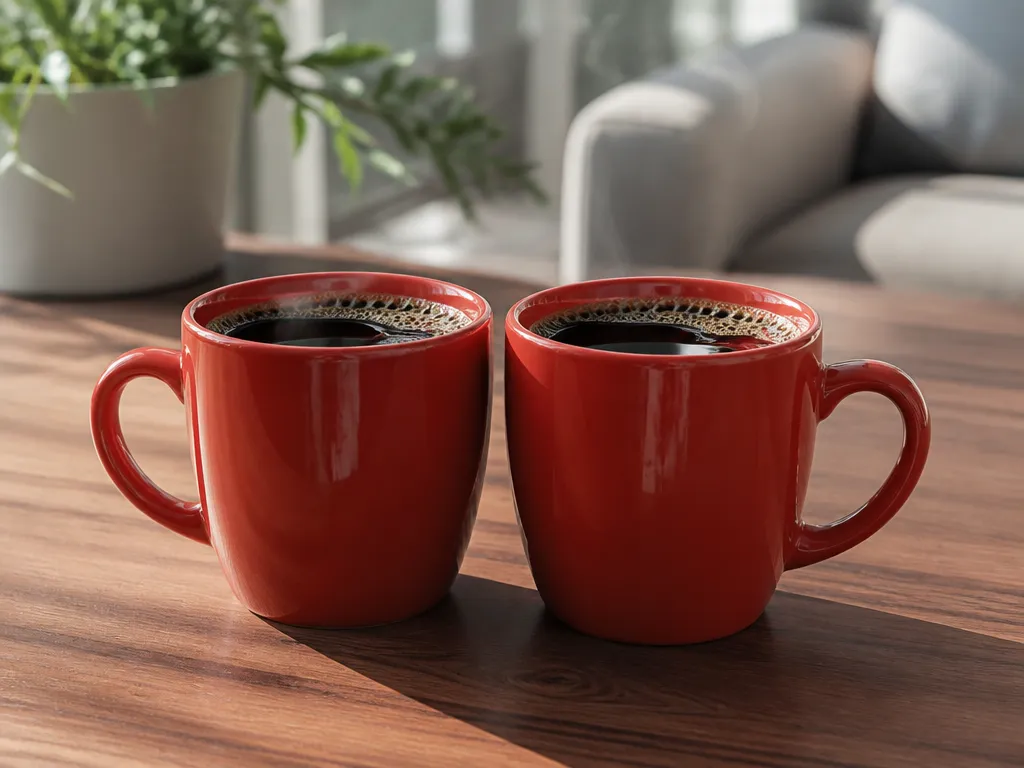
Two standard cups of Folgers Classic Roast brewed at typical strength contain roughly 120 to 140 milligrams of caffeine. This estimate assumes you use the recommended two tablespoons of ground coffee per six ounces of water. Many home brewers accidentally double this ratio or use larger mugs, pushing the total closer to 200 milligrams without realizing it. Knowing exactly how much caffeine lands in your mug matters more than guessing if you track your daily intake for health reasons or sleep quality.
Real-world consumption rarely matches laboratory conditions. Most people use an eight-ounce or even twelve-ounce mug rather than a small six-ounce teacup. When you pour two twelve-ounce mugs using the same amount of grounds per ounce, you are technically drinking four standard cups, which pushes the caffeine count toward 240 milligrams. The variance comes down to your personal definition of a “cup” versus the brewing industry definition.
Consider the scenario where you switch from Classic Roast to Folgers Black Silk. While the flavor profile changes dramatically, the caffeine difference remains minimal because both are primarily Robusta and Arabica blends. Switching to a decaffeinated version drops the number to about 4 to 8 milligrams per cup, totaling less than 16 milligrams for two servings. This distinction helps those who love the ritual but need to avoid the stimulant effects late in the day.
Key Takeaways
- Standard dosage range – Two six-ounce cups of Classic Roast yield approximately 120-140 mg of caffeine total.
- Roast variation impact – Lighter roasts like Black Silk contain slightly more caffeine per scoop than darker blends.
- Scoop size risk – Using a heaping tablespoon instead of a level one increases caffeine content by up to 25%.
- Brewing method shift – Cold brew concentrations often exceed hot drip methods if diluted incorrectly.
- Daily limit context – Two cups represent about 30% of the FDA’s suggested 400 mg daily maximum for healthy adults.
Caffeine Content by Folgers Roast and Blend Type
Not all Folgers jars deliver the same jolt, even though the brand aims for consistency across its lineup. The primary driver of difference is the bean blend ratio and the roast level, which alters the density of the grounds. Lighter roasts generally retain slightly more caffeine by volume because the beans spend less time in the roaster, whereas darker roasts lose more mass and moisture, making them less dense.
Folgers Classic Roast sits in the middle as a medium blend, balancing Arabica and Robusta beans to hit that standard 60-70 mg per six-ounce cup mark. Their 1850 Roast line markets itself as premium small-batch style and uses 100% Arabica beans. Since Arabica naturally contains about half the caffeine of Robusta, switching to a pure Arabica Folgers product might slightly lower your total intake if you measure by scoop volume rather than weight.
| Folgers Product | Estimated Caffeine (per 6 oz cup) | Estimated Caffeine (2 cups) | Primary Bean Type |
|---|---|---|---|
| Classic Roast | 60-70 mg | 120-140 mg | Blend (Arabica/Robusta) |
| Black Silk | 60-70 mg | 120-140 mg | Blend (Dark Roast) |
| 1850 Original | 50-60 mg | 100-120 mg | 100% Arabica |
| Decaf Classic | 2-4 mg | 4-8 mg | Blend (Decaffeinated) |
| Instant Crystals | 50-60 mg | 100-120 mg | Blend (Freeze-Dried) |
Instant versions like Folgers Classic Roast Instant often test slightly lower than ground coffee. The freeze-drying process and granule size affect extraction efficiency. If you are sensitive to caffeine, sticking to the 1850 line or the instant varieties gives you a small buffer, though the difference is rarely enough to prevent jitters if you drink excessive amounts.
Scoop Size and Water Ratio
Your kitchen spoon is the single biggest variable in determining how much caffeine you actually consume. Folgers recommends using a standard measuring tablespoon, yet most consumers grab whatever utensil is nearest, often a dinner spoon or a coffee scoop that holds significantly more than 15 milliliters. A heaping tablespoon can contain up to 50% more coffee grounds than a level one, directly spiking the caffeine content of your brew.
Water ratio plays an equally critical role. If you use the recommended amount of coffee but reduce the water, you create a concentrated solution with higher caffeine per ounce. Conversely, adding extra water dilutes the caffeine concentration but does not remove the total caffeine extracted from the grounds. For example, brewing two cups worth of grounds into a single large mug results in a drink with double the caffeine density of a standard cup.
Try weighing your coffee instead of scooping it for a week. A standard ratio is 1 gram of coffee for every 16 grams of water. If you aim for two six-ounce cups (about 340 grams of water), you should use roughly 21 grams of coffee. This method eliminates the air pockets and packing density issues that make volume measurements unreliable. You will likely find that your usual “two scoops” was actually three, explaining why you feel overly wired after just two mugs.
Brewing Method Effects
The device you use to brew Folgers changes the extraction rate and final caffeine count significantly. Automatic drip machines, which most households use, maintain water temperatures between 195°F and 205°F, extracting caffeine efficiently over a 4-to-6-minute cycle. This method produces the baseline numbers cited earlier.
French press brewing involves full immersion of grounds in hot water for four minutes or longer. This extended contact time allows more soluble compounds, including caffeine, to dissolve into the liquid. If you use the same coffee-to-water ratio as your drip machine but steep it in a press, expect a 10 to 15% increase in total caffeine. The metal mesh filter also allows fine particles and oils to pass through, which can carry additional dissolved solids compared to paper filters.
Cold brew uses room temperature or cold water over 12 to 24 hours, creating a highly concentrated extract. Many people dilute this concentrate with water or milk before drinking. If you drink it straight or under-dilute it, two cups of Folgers cold brew could easily exceed 300 milligrams of caffeine. Always check if your recipe calls for a 1:1 dilution; failing to do so turns a mild morning drink into a potent stimulant bomb.
Comparing Folgers to Other Brands
Folgers occupies a specific niche as a mass-market blend, and its caffeine levels reflect that positioning. Stacked against competitors like Maxwell House or store-brand equivalents, the numbers remain remarkably similar because these brands target the same average consumer expectations. A cup of Maxwell House Original Roast also delivers approximately 60 to 70 milligrams per six ounces, making a direct swap negligible in terms of stimulant intake.
Specialty brands or “high-caffeine” labeled coffees tell a different story. Brands like Death Wish Coffee or Valhalla Java explicitly engineer their blends to maximize caffeine, often using higher percentages of Robusta beans or specific processing methods. These can reach 100 milligrams per cup or more. If you switch from Folgers to one of these high-octane options while keeping your two-cup habit, you effectively double your dose without changing your routine.
Premium single-origin Arabica brands often have less caffeine. A light roast Ethiopian Yirgacheffe from a local roaster might only yield 45 to 50 milligrams per cup due to the bean genetics and lower Robusta content. For someone trying to cut back without quitting coffee, swapping Folgers Classic for a pure Arabica single-origin reduces intake by roughly 20% per cup. This trade-off sacrifices some of the bold, bitter punch Folgers is known for in exchange for a smoother, less stimulating experience.
Daily Caffeine Limits
Knowing where two cups of Folgers fits into your daily allowance helps prevent accidental overconsumption. The FDA cites 400 milligrams per day as a safe upper limit for most healthy adults. Two standard cups of Folgers account for roughly 30% of this total budget. This leaves ample room for afternoon tea, soda, or chocolate, provided you stick to the standard six-ounce serving size.
Problems arise when “two cups” becomes code for two large travel mugs. A 16-ounce mug filled with Folgers at standard strength contains nearly 160 milligrams of caffeine on its own. Drinking two of these in the morning consumes 80% of your daily limit before noon. Adding a lunchtime soda or an afternoon energy drink then pushes you well past the 400 mg threshold, increasing risks of anxiety, insomnia, and elevated heart rate.
Certain groups need stricter limits than the general 400 mg guideline. Pregnant individuals are often advised to cap intake at 200 milligrams per day. For this demographic, two cups of Folgers essentially max out the entire daily allowance, leaving no room for other sources. People with hypertension or anxiety disorders may also find that even 120 milligrams triggers symptoms. In these cases, switching to half-caff or decaf for the second cup is a practical strategy to enjoy the taste without exceeding physiological tolerance.
FAQ
Does Folgers Dark Roast have less caffeine than Light Roast?
Yes, but the difference is minor for volume-based measuring. Dark roasts are less dense, so a scoop contains fewer beans and slightly less caffeine than a scoop of light roast. The variation is usually less than 5 mg per cup, so roast level matters less than your scoop size when calculating total intake.
How accurate are the caffeine counts on instant coffee labels?
Instant coffee labels provide averages, but actual content varies by how much powder you use. One teaspoon of Folgers Instant typically yields 50 to 60 mg of caffeine. Because crystals vary in density, weighing your portion ensures you know the exact dose rather than relying on volume estimates.
Can I reduce caffeine in Folgers by brewing it for less time?
Shortening brew time slightly reduces extraction, but it also ruins the flavor profile, making the coffee sour and weak. Caffeine extracts very early in the brewing process, so reducing time has minimal impact on total caffeine. Diluting the final cup with hot water is a more effective way to lower concentration without sacrificing taste.
Is there more caffeine in Folgers K-Cups than ground coffee?
A standard Folgers K-Cup contains about 10 to 12 grams of coffee, designed to brew an 8-ounce cup with roughly 70 to 80 mg of caffeine. This is slightly higher than a manually brewed 6-ounce cup because the pod forces water through the grounds under pressure, maximizing extraction efficiency in a short time.
What happens if I drink 4 cups of Folgers in a day?
Drinking four standard cups brings you to approximately 240 to 280 mg of caffeine, which remains under the 400 mg safety limit for most adults. However, if those are large mugs, you could exceed 500 mg, leading to potential side effects like jitteriness, digestive issues, and disrupted sleep patterns later that night.

- Are Pod Coffee Machines Healthy? The Unfiltered Truth About Your Daily Cup - September 27, 2026
- Does Gatorade Have Caffeine? Here’s What’s in Each Type - September 26, 2026
- Does Powerade Have Caffeine, or Is That a Myth? - September 26, 2026