
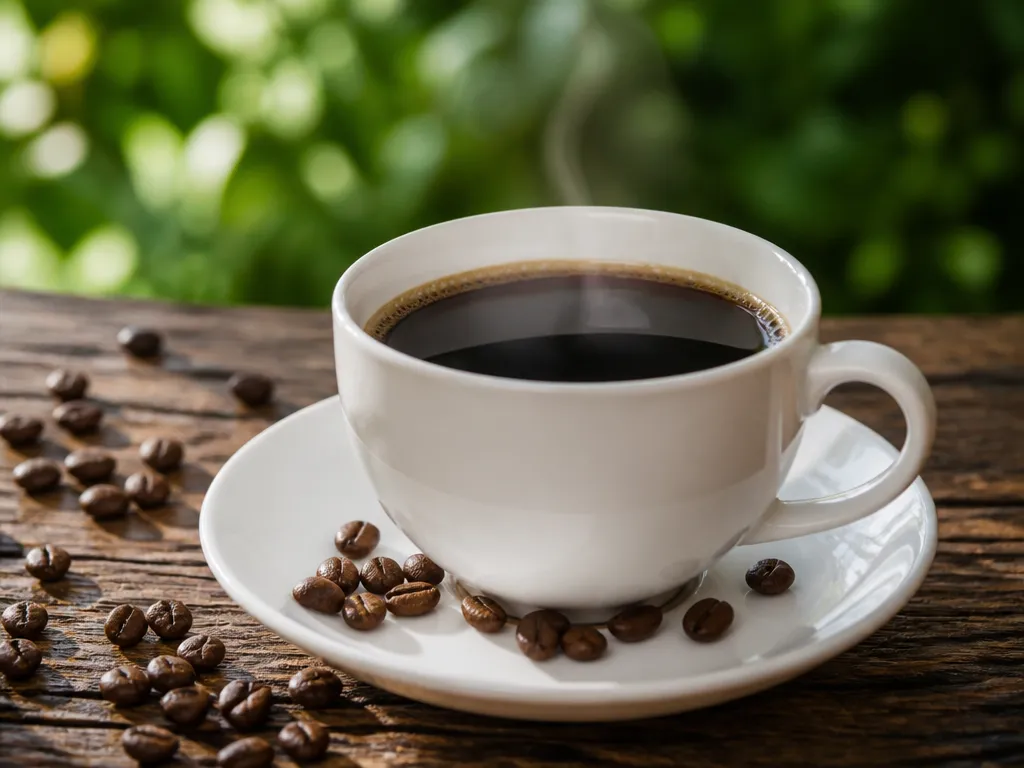
Most people get roughly 80-120 mg of caffeine from an 8 oz cup of coffee, but the amount can vary widely by brew style and serving size. An 8 oz drip coffee contains about 65-120 mg, while a single espresso shot contains about 60-72 mg. Espresso has more caffeine per ounce, but drip coffee often has more caffeine overall because the serving is larger.
Use the brewing method and serving size for your first estimate. Then refine it based on the roast, bean variety, extraction, and whether the coffee is decaf.
Key Takeaways
- Typical 8 oz range: Expect about 65-120 mg of caffeine in 8 oz of drip coffee.
- Espresso is concentrated: A single shot contains 60-72 mg in roughly 1-1.25 oz.
- French press is strong: An 8 oz serving contains about 100-137 mg.
- Cold brew needs caution: Its caffeine content depends more on the brand and recipe than on the fact that it is cold.
- Decaf still contains caffeine: Brewed decaf has around 15 mg per 8 oz.
- Quick formula: Multiply your drink’s caffeine per oz by its number of ounces.
Caffeine in Coffee by Type
Coffee caffeine depends on whether you mean drip coffee, espresso, French press, or an espresso-based drink. As a practical reference, drip coffee contains about 65-120 mg per 8 oz, while a single espresso shot contains about 60-72 mg per 1-1.25 oz.
Espresso is much more concentrated, so a small drink can contain roughly as much caffeine as a full mug. An espresso-based drink’s milk, water, or syrup changes the volume and flavor more than it changes the caffeine; the number of shots sets the starting point.
Common caffeine ranges by coffee type (mg per serving):
| Coffee type | Caffeine per serving (mg) | Serving size used |
|---|---|---|
| Espresso (single shot) | 60 – 72 | 1 – 1.25 oz |
| Espresso (double shot) | 120 – 133 | 2 – 2.25 oz |
| Drip coffee | 65 – 120 | 8 oz |
| French press | 100 – 137 | 8 oz |
| Americano (double-shot based) | 120 – 133 | 8 oz |
| Long black (double-shot based) | 120 – 133 | 6 oz |
Check the drink’s base when estimating caffeine. If it is espresso-based, start with 60-72 mg per shot, then count the shots. The milk, water, or syrup usually increases the drink’s size without changing that base caffeine amount.
Most cups fit one of two patterns:
- Drip or filter coffee: More total caffeine in a standard mug because the serving is larger.
- Espresso-based drinks: Less liquid, more caffeine per ounce, and a total determined mainly by shot count.
Caffeine by Brewing Method
Brewing method affects how much caffeine reaches the cup, so it gives you a useful caffeine-per-ounce estimate. Use these ranges for a quick calculation:
- Drip coffee: 8 – 15 mg per oz, or 65 – 120 mg per 8 oz.
- Espresso: 48 – 72 mg per oz; total caffeine depends on the number of shots.
- French press: 13 – 17 mg per oz, or 100 – 137 mg per 8 oz.
- Americano (double-shot): 15 – 17 mg per oz.
- Long black (double-shot): 20 – 22 mg per oz.
Use this three-step estimate:
- Identify the method: drip, espresso, French press, or another style.
- Choose its estimated caffeine per oz.
- Multiply that number by the ounces in your drink.
Quick calculator:
Estimated caffeine (mg) = (caffeine per oz) x (ounces)
Examples:
- A 12 oz drip coffee using 8 – 15 mg/oz contains about:
– 12 x 8 = 96 mg at the low end
– 12 x 15 = 180 mg at the high end
- An 8 oz double-shot Americano contains about 120 – 133 mg, so you can use that range directly.
Coffee-to-water ratio, extraction time, and dilution can move the actual amount within or outside these estimates. Sweetener does not reduce the caffeine, and adding water changes concentration more than total caffeine.
Does Grind Size Change Coffee’s Caffeine Content?
Grind size affects caffeine indirectly by changing extraction. A finer grind exposes more surface area to water, which can pull more caffeine from the grounds when the beans, water volume, and brew time remain the same.
The practical effect is usually smaller than the effect of serving size and brew method. A larger cup or an extra espresso shot can change your total far more than a modest grind adjustment.
Use the finished coffee as a rough clue:
- A weaker, watery, or more acidic brew may fall closer to the low end of its method’s range.
- A stronger or more bitter brew may fall closer to the high end.
Consistency makes grind size more useful. If you brew the same beans with the same equipment at home, changing the grind can shift your caffeine estimate. If you switch between cafés and recipes, those details usually give you a closer estimate than guessing the grind size.
Does Dark or Light Roast Have More Caffeine?
Roast level is less predictable than serving size and brewing method. Caffeine is tied mainly to the amount of coffee used and how much the brewing process extracts. In practical comparisons, blonde roast may show higher caffeine per serving than darker roasts, but that difference can reflect the recipe and serving size rather than roast level alone.
One example lists blonde roast at 180 mg for one serving, followed by 270 mg for 12 oz, 360 mg for 16 oz, and 475 mg for 20 oz. The values increase with serving size, which is why cup volume remains a key part of the estimate.
For everyday comparisons, use this rule:
- With the same brewing method and roughly the same serving size, roast level alone does not reliably predict caffeine.
- Light roasts may tend toward higher caffeine in some recipes.
- Extraction and the amount of ground coffee can still outweigh the roast difference.
Coffee shops may use different recipes for different roasts. A dark roast brewed with more grounds per amount of water can end up near the middle or high end of the range. If you want more caffeine from regular coffee, choose a light roast when available, then check the ounces and recipe before relying on roast color.
Arabica vs. Robusta Caffeine
Bean variety changes caffeine content. Robusta generally contains more caffeine than Arabica, so a Robusta coffee or a blend known to contain Robusta may land toward the higher end of its brewing-method range.
Use the information in this order:
- If the menu lists only roast and brew method, estimate from the method and serving size.
- If the label identifies Arabica, Robusta, or a blend, use that detail to adjust your estimate toward the lower or higher end.
- If the coffee is decaf, give the decaf label more weight than the bean variety because decaffeination reduces caffeine substantially.
Decaf can be made from either bean type, but it is still much lower in caffeine than regular coffee.
Does Milk Reduce Caffeine?
Milk does not chemically remove caffeine from coffee. It dilutes the drink and adds volume, so the caffeine concentration per sip may be lower, but the total caffeine usually stays tied to the espresso shots or brewed coffee used.
For espresso-based drinks, shot count is the main factor. The listed ranges show how drink size and recipe can change the total:
- Lattes: 75 mg for 8 oz and 150 mg for 16 oz.
- Mochas: 90 mg for 8 oz and 175 mg for 16 oz.
Those differences are more likely to come from the recipe and shot count than from milk removing caffeine.
To reduce caffeine, use one of these levers:
- Switch to decaf.
- Reduce the shot count.
- Choose a smaller size.
Caffeine in Popular Coffee Brand Drinks
Coffee shop drinks can vary by location because the same menu name may use different cup sizes, shot counts, or recipes. Start with the brand’s stated caffeine amount when it is available. If it is not, identify the drink’s size and espresso base, then estimate from the number of shots.
These drink-type estimates provide useful comparisons:
- Americano: 75 mg (8 oz), 150 mg (16 oz), 225 mg (20 oz).
- Lattes: 75 mg (8 oz), 150 mg (16 oz).
- Mochas: 90 mg (8 oz), 175 mg (16 oz), 185 mg (20 oz).
Many chain drinks use espresso as their base, so the recipe matters more than the drink’s name. An Americano with one shot and an Americano with two shots are not equivalent, even if they come in the same cup.
Caffeine can vary among samples of the same coffee category. For the closest estimate, check the nutrition label or the brand’s caffeine statement for your exact drink and size. If you buy the same drink repeatedly, keep the size and recipe consistent so you know what amount you are getting.
FAQ
How much caffeine is in a typical 8 oz cup of coffee?
An 8 oz cup of drip coffee usually contains about 65-120 mg of caffeine. A single espresso shot contains 60-72 mg in only about 1-1.25 oz, so comparing the two by total cup ounces can be misleading.
How many mg of caffeine are in a double espresso?
A double espresso typically contains 120-133 mg in about 2-2.25 oz. Double-shot drinks such as Americanos and long blacks often contain 120-133 mg, even when the final drink is much larger.
Is decaf coffee really caffeine-free?
No. Brewed decaf contains around 15 mg per 8 oz and about 30 mg per 16 oz, based on the same cup-size scaling. Treat decaf as much lower in caffeine, not as caffeine-free.
What is the easiest way to estimate caffeine in coffee?
Multiply the drink’s caffeine per ounce by its size. Drip coffee contains about 8-15 mg per oz, so a 12 oz serving contains roughly 96-180 mg.
What is the most common mistake when calculating caffeine?
Many people assume that dark roast contains more caffeine because it tastes stronger. Roast level is usually a smaller factor than serving size and brew method. Another common mistake is comparing espresso by cup ounces instead of by shot count.
Measure your usual cup size and identify whether the coffee is drip, espresso, French press, or an espresso-based drink such as a latte or mocha. Those two details will give you a tighter estimate than the generic average for coffee.

- Unlocking the Venti: Discover the Perfect Shot Count for Your Drink - October 13, 2026
- Unpacking the Buzz: Caffeine Levels in Café Bustelo Espresso - October 13, 2026
- How to Fix Bitter Coffee: 10 Expert Ways to Improve the Taste - October 4, 2026