
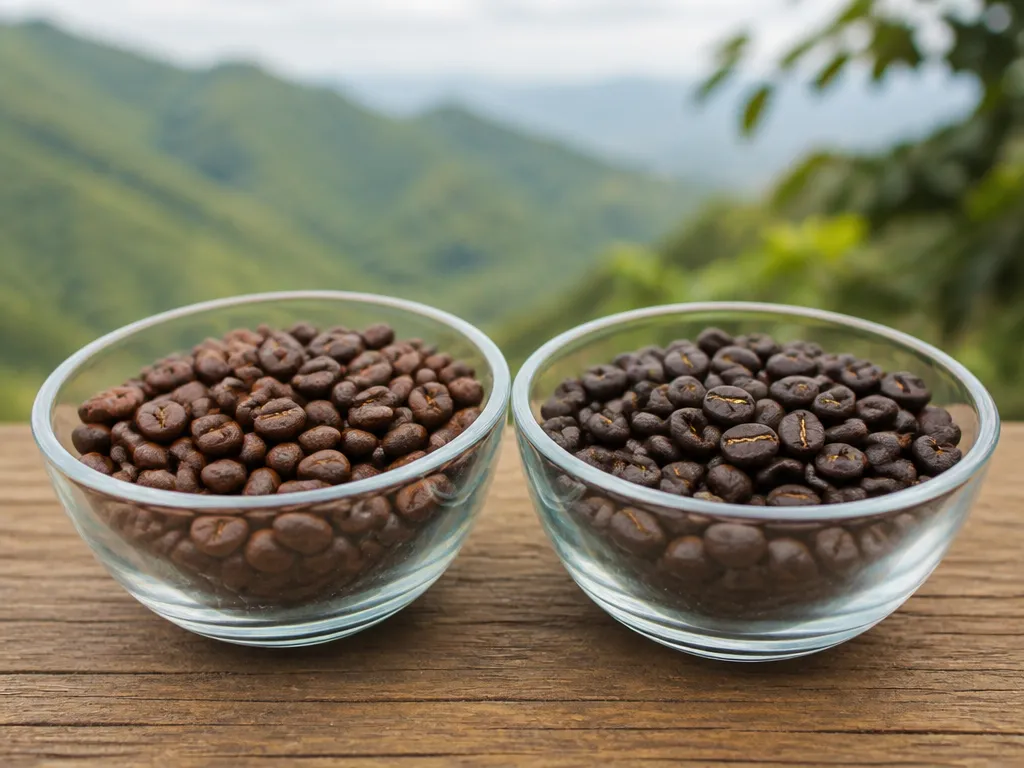
Robusta usually has more caffeine than Arabica, which is why many “extra energy” blends include Robusta. The catch is that caffeine in your cup depends heavily on how you brew, grind, and dose – not just the bean. Choose Robusta for higher caffeine and a more bitter, heavier cup; choose Arabica for smoother flavor and more nuanced aromas.
Robusta has more caffeine per bean by weight than Arabica, but your cup’s caffeine depends on brew method and dose. Switching from Arabica to Robusta can raise caffeine, yet changing the espresso dose, grind size, water temperature, and brew time can swing the result more than most people expect.
Arabica vs Robusta
- Dose often matters more than origin. The amount of coffee you brew usually matters more than the label on the bag.
- Espresso concentrates coffee. Its short, pressurized extraction and high coffee-to-water ratio can produce a caffeine-dense serving.
- Roast level makes a smaller difference. Dark roasts can taste more intense, but roasting usually changes caffeine only slightly.
- Grind affects extraction. A finer grind and longer contact time can increase caffeine extraction, up to a point.
- Choose according to your goal. Pick Arabica for smoother flavor; pick Robusta for higher caffeine and a greater chance of bitterness.
Arabica vs Robusta Caffeine Levels Explained
Robusta generally has more caffeine than Arabica because the plant produces a higher caffeine concentration in its beans. A cup can still contain a similar amount if you use different coffee doses or brewing settings, but the baseline difference usually favors Robusta.
Caffeine is only one of the compounds that shape coffee’s flavor and effect. Robusta tends to bring more bitterness and a harsher edge, partly because of differences in its other chemical components. People sometimes blame caffeine for a flavor they dislike when the bigger factor is Robusta’s overall profile.
How Brewing Changes Caffeine in Both Coffees
Brewing method can affect caffeine extraction more than switching from Arabica to Robusta. Extraction depends on contact time, temperature, grind size, and dose. Espresso usually uses a high coffee-to-water ratio, so even its short contact time can produce a caffeine-dense serving.
With drip or pour-over coffee, caffeine generally rises with the amount of coffee and the degree of extraction. A longer bloom, finer grind, and longer contact time can increase caffeine in the cup, but they can also push bitterness higher. Two people can brew the “same coffee” and get very different perceived effects if one uses a finer grind or more grounds.
Your biggest controllable variables are coffee dose and brew ratio. To increase caffeine without changing bean type, try increasing the grams of coffee per 8-12 oz (240-350 ml) serving, or use a method that naturally calls for a higher ratio, such as espresso. To keep caffeine more consistent, hold those variables steady when switching beans.
Roast Level and Its Impact on Caffeine
Roast level affects caffeine less than many people assume. Coffee loses some mass during roasting, and dark-roasted beans are typically lighter by weight for a given volume. As a result, “caffeine per scoop” can change even when “caffeine per bean” changes only slightly.
Roast level affects taste and perceived strength more than caffeine. Dark roast often tastes more intense because roasted flavors dominate the cup, and you may grind or brew it differently. That bold flavor can feel like a stronger stimulant effect even when the caffeine difference is modest.
Going darker usually makes coffee taste bolder and can increase perceived bitterness, even if it does not make the coffee dramatically higher in caffeine. A lighter roast can taste brighter while still delivering plenty of caffeine when you use an appropriate dose and grind for adequate extraction.
Taste, Body, and Bitterness Differences
Robusta’s higher caffeine content often comes with a stronger, more bitter flavor profile. That bitterness does not come from caffeine alone. Robusta’s other compounds also contribute to a harsher finish, so an all-Robusta espresso can taste aggressive because of the bean’s overall character, not just its stimulant content.
Arabica usually produces a smoother, more aromatic cup with greater perceived sweetness and more nuanced flavors. It can still taste strong and deliver plenty of caffeine, but its flavor is generally less sharp at the edges. People who dislike bitterness often find Arabica easier to drink.
Body is another noticeable difference. Arabica often tastes light- to medium-bodied with greater clarity, while Robusta commonly feels heavier or thicker, especially in espresso, where it can also produce more crema. Your grinder and roast can change body substantially, but bean type provides a real starting point.
If caffeine comes first, Robusta makes the goal easier but raises the risk of bitterness. If you want caffeine without fighting the flavor, Arabica is usually the safer choice, especially in milk drinks that soften sharp flavors and add sweetness.
Which Type Gives More Energy Per Cup?
Robusta usually provides more caffeine per unit of coffee, so it is the more likely winner for “energy per cup” when the dose, grind, brew method, and serving size are otherwise the same. Brew both with the same coffee dose, similar grind, and the same drink size, and Robusta should generally deliver the larger caffeine hit.
My practical verdict is simple: choose Robusta when you want more caffeine without changing your brewing routine and you do not mind bitterness. Choose Arabica when you want the most pleasant cup and can accept slightly less caffeine per gram.
To get more energy from your coffee today, keep the brewing method steady and increase the coffee dose first. If that still falls short, switch part or all of the coffee to Robusta, or use a Robusta blend. This approach gives you a clearer result with less guesswork.
| Bean type | Typical caffeine tendency | Typical flavor tendency | Best for energy-focused cups when… |
|---|---|---|---|
| Arabica | Lower than Robusta per bean weight | Smoother, more nuanced, less harsh | You want a cleaner taste and still-good caffeine |
| Robusta | Higher than Arabica per bean weight | More bitter, more intense | You want maximum caffeine and accept a harsher edge |
| Blends (both) | Middle, depends on ratio | More balanced, varies by blend | You want a compromise: caffeine lift without all-Robusta harshness |
How to Choose Beans for Your Caffeine Goals
For many people, a blend is the best compromise: it adds a caffeine bump without giving the cup the full harshness of all-Robusta coffee.
Start with your brewing setup. If you mostly drink espresso, caffeine per serving can be high because the method uses a strong coffee-to-water ratio. In that case, switching from Arabica to a Robusta-forward blend may be noticeable. If you brew large drip cups, the bean difference can still matter, but changes in dose are easier to make and can dominate the outcome.
Use this checklist:
- How sensitive are you to bitterness? If bitterness bothers you, start with Arabica or a light Robusta blend.
- Which brew method do you use most? Match the bean choice to your method, and do not change every variable at once.
- How consistent is your dose? If you measure by eye, your caffeine will vary regardless of the bean you choose.
- Do you want more kick or more flavor? Caffeine-first usually points to Robusta; taste-first points to Arabica.
For a useful comparison, change only one variable for 3-5 days. Keep the same bean weight, grind setting, and brew ratio. Then switch either the bean type or the roast, not both, so you can identify the cause of the change.
If you want more energy without losing your current flavor, keep your Arabica roast and dose the same, then replace 25-50% of the blend with Robusta and reassess. For a bigger jump, try 100% Robusta only if you are comfortable with its more bitter profile.
FAQ
Does Robusta coffee have more caffeine than Arabica?
Robusta typically has more caffeine than Arabica by bean weight. Your cup can still contain a similar amount if you use different doses or brewing settings.
Will dark roast have more caffeine than light roast?
Dark roast often tastes stronger, but caffeine differences between roast levels are usually smaller than people expect. What changes more is how you measure the coffee – by scoop volume or weight – and how the roast affects grinding and extraction.
How much caffeine is in an Arabica vs Robusta cup?
The exact amount depends on the coffee dose in grams, grind size, brew time, water temperature, and drink size. The specific amount varies by method.
What’s the fastest way to get more caffeine from the same coffee?
Increase the coffee dose while keeping your brew method and drink size the same. If you already use a strong ratio, a finer grind can increase extraction, but it can also increase bitterness, so adjust gradually.
Is Robusta better for energy if I’m sensitive to bitter taste?
Full Robusta may be unpleasant if you are sensitive to bitterness. A blend with some Robusta, or Arabica with a higher dose, can increase caffeine without forcing a harsher flavor.

- Unlocking the Venti: Discover the Perfect Shot Count for Your Drink - October 13, 2026
- Unpacking the Buzz: Caffeine Levels in Café Bustelo Espresso - October 13, 2026
- How to Fix Bitter Coffee: 10 Expert Ways to Improve the Taste - October 4, 2026