
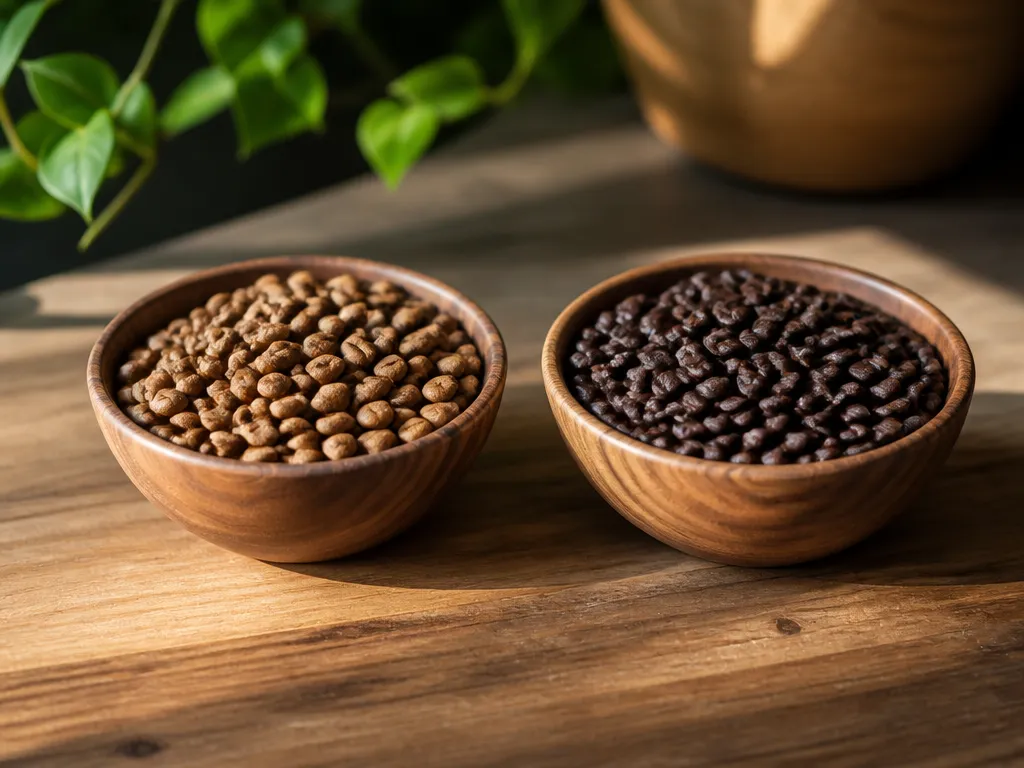
If you’re trying to stay sharp, roast level matters – but less than most people think. A common claim says dark roast has more caffeine, yet caffeine content depends more on bean weight, roasting losses, and brewing method. For a typical US coffee routine, light roast usually has slightly more caffeine per scoop because the beans are denser, while caffeine per bean and per gram of coffee is generally similar.
Dark roast typically has less caffeine by volume but can taste stronger because its flavor is bolder. That intensity can make the coffee feel more caffeinated even when the caffeine dose is similar.
Key Takeaways
- Dark roast does not gain caffeine from longer roasting. It loses more water and some solids, which makes each bean lighter.
- Brewing has the biggest effect. Dose, extraction time, water ratio, and serving size can change caffeine more than roast level.
- Weight gives you the fairest comparison. Measure coffee in grams instead of relying on scoops or spoons.
- Taste and caffeine are different. Dark roast can taste stronger without containing more caffeine.
- For more caffeine, increase the dose. A lighter roast can help when you measure by volume, but grams matter more than color.
Light vs Dark Roast Caffeine Content Explained
Light roast and dark roast do not create new caffeine during roasting. Caffeine is already present in green coffee beans. Roasting mainly changes flavor, density, and mass through heat-driven reactions.
The most consistent change is bean weight. Darker-roasted beans lose more water and some solids, so the same physical scoop of dark roast usually contains less coffee mass than a scoop of light roast.
That makes coffee mass the fairest way to compare caffeine. If you measure by grams, light and dark roast usually contain similar amounts of caffeine.
Roast level also creates a perception trap. Dark roast tastes deeper and more intense, and that heavier flavor can make the coffee seem more caffeinated even when the caffeine content is not higher.
How Roasting Changes Coffee Caffeine Levels
Roasting changes the coffee bean’s chemistry, density, and composition. Caffeine does not double because the beans roast longer, and it does not disappear immediately either.
Caffeine can degrade slowly under heat, but within normal roasting ranges, mass loss usually has the larger effect on everyday caffeine intake. If you brew with the same mass of coffee, the caffeine difference between light and dark roast is generally small.
Coffee from different roasters can still vary. Two bags labeled “dark” may have different roast development and target colors, which can shift caffeine per gram slightly.
The practical takeaway is simple: roasting affects caffeine mainly indirectly, by changing how much bean mass fits into a scoop, and only somewhat directly, by altering how much caffeine survives the heat. Dose and brew method deserve more attention than roast color.
How Dose and Brewing Affect Caffeine
Caffeine in your cup depends largely on the amount of coffee you use and how much caffeine the brew extracts. Roast level affects caffeine per gram somewhat, but brewing variables often matter more.
Dose is the first lever. If you use two tablespoons of coffee in one brew and one tablespoon in another, you have changed the caffeine amount even if the beans are identical.
Extraction is the second lever. Longer contact time and higher coffee-to-water ratios can increase the amount of caffeine extracted, although extraction has limits. Dark roast may taste stronger because more flavor compounds dissolve into the cup, even when caffeine per gram remains similar.
That distinction causes much of the confusion around coffee “strength.” Strength describes the concentration of dissolved coffee compounds, while caffeine is one specific compound among them. A dark roast can taste heavier at the same caffeine dose.
For more caffeine without guesswork, use a larger dose and keep it consistent. Measure coffee by weight in grams, then hold your brew method and other parameters steady when switching roast levels.
Light Roast vs Dark Roast for Higher Caffeine
If your goal is more caffeine per cup using ordinary home or café measurements, light roast is the safer bet.
Use this rule for a fair comparison:
- Same grams of coffee: Light and dark roast caffeine is usually similar.
- Same volume or scoop: The result can vary with bean density.
Choose light roast if you:
- measure by scoops, pods, or “one scoop per cup,”
- want a noticeable caffeine increase without changing your brew method,
- drink drip, pour-over, or Americano-style coffee with a fairly standard dose.
Choose dark roast if you:
- care most about flavor and accept roughly similar caffeine,
- brew by grams and prioritize taste over maximum caffeine,
- prefer lower acidity and a heavier roasted profile.
The tradeoff is straightforward. Light roast often tastes brighter and more acidic, which some people find less comforting. Dark roast may provide slightly less caffeine per scoop but offers the bolder, more roasted flavor many coffee drinkers prefer.
My verdict: choose light roast when caffeine comes first and dark roast when comfort and flavor come first. If you are chasing caffeine, standardize your dose by weight rather than relying on roast color.
Which Roast Wins?
Cold brew and espresso make caffeine a question of dose and preparation more than roast color.
For espresso, the shot volume is small and the coffee dose is controlled. If you use the same dose weight and keep the grinder setting consistent, caffeine per shot tends to be similar enough that roast differences become secondary. Changing beans without adjusting for density and grind behavior can still change the amount of coffee in the dose.
Cold brew often uses a higher coffee-to-water ratio and a long contact time. That can increase extraction, making caffeine especially sensitive to how much coffee you add. Roast level may shift caffeine per gram slightly, but the dominant factors are your ratio and steep time.
The idea that light roast wins still applies to everyday caffeine comparisons because many people measure cold brew by volume or use a standard scoop.
Who wins?
- Cold brew, measured by volume: The result depends mainly on the recipe.
- Espresso, measured by grams: Roast level matters less; the biggest factor is how many grams you use in the shot.
To compare them, keep one recipe constant for a week and change only the roast level. If caffeine is your priority, pay attention to how your grams-to-water ratio affects the final cup size.
How to Measure Caffeine in Your Cup
You cannot measure caffeine accurately at home without lab testing, but you can make useful comparisons by controlling the variables that drive caffeine.
Start with coffee mass. Brew with a scale, measure the coffee in grams, and keep the brew ratio constant. If you always use, for example, 20 grams of coffee per batch, you eliminate most of the guesswork caused by roast density.
Next, keep your brew method fixed. Change one variable at a time: compare roast level first, then adjust grind size if needed. Keep contact time and water temperature as consistent as your setup allows.
Standardize your cup size as well. A 6-ounce drink and a 12-ounce drink are not comparable, even if both taste “medium strength.” The larger drink usually contains more extracted caffeine because it contains more brewed coffee.
For a practical comparison without lab equipment:
- Pick one brew method: drip, pour-over, French press, cold brew, or espresso.
- Choose a fixed dose by weight.
- Brew two cups back-to-back, using light roast in one and dark roast in the other.
- Compare how each feels, then adjust and lock in your preferred dose.
Pods limit this process. Their labels rarely provide caffeine information in a consistent way that allows reliable roast-to-roast comparisons. Pods are convenient, but they give you less control over dose by mass.
FAQ
Is light roast always higher in caffeine than dark roast?
No. When you brew with the same grams of coffee, caffeine differences between light and dark roast are usually smaller. Brew method and dose matter more than roast color.
Does dark roast have more caffeine because it’s roasted longer?
No. Longer roasting does not reliably add caffeine. Dark roasting mainly changes bean mass and flavor, and the beans lose solids as they darken.
How can I increase caffeine without switching to light roast?
Increase your coffee dose by adding more grams per cup, or use a brew method with higher concentration, such as stronger drip or cold brew with a higher ratio. Also check that you are not diluting the coffee by using a larger mug than your recipe assumes.
Is cold brew or espresso higher in caffeine per serving?
It depends on serving size and recipe. Cold brew is often higher per ounce because it uses a concentrated ratio and long steeping. Espresso can contain a high amount of caffeine per volume, but a shot is smaller, so compare the amount you actually drink rather than the drink’s name.
What’s a common mistake when comparing light vs dark roast caffeine?
People compare roast color while measuring by volume, such as using “one scoop each,” without checking the grams. That hides the main driver: the amount of coffee mass extracted. Measure your dose by weight for a fair comparison.

- Unlocking the Venti: Discover the Perfect Shot Count for Your Drink - October 13, 2026
- Unpacking the Buzz: Caffeine Levels in Café Bustelo Espresso - October 13, 2026
- How to Fix Bitter Coffee: 10 Expert Ways to Improve the Taste - October 4, 2026