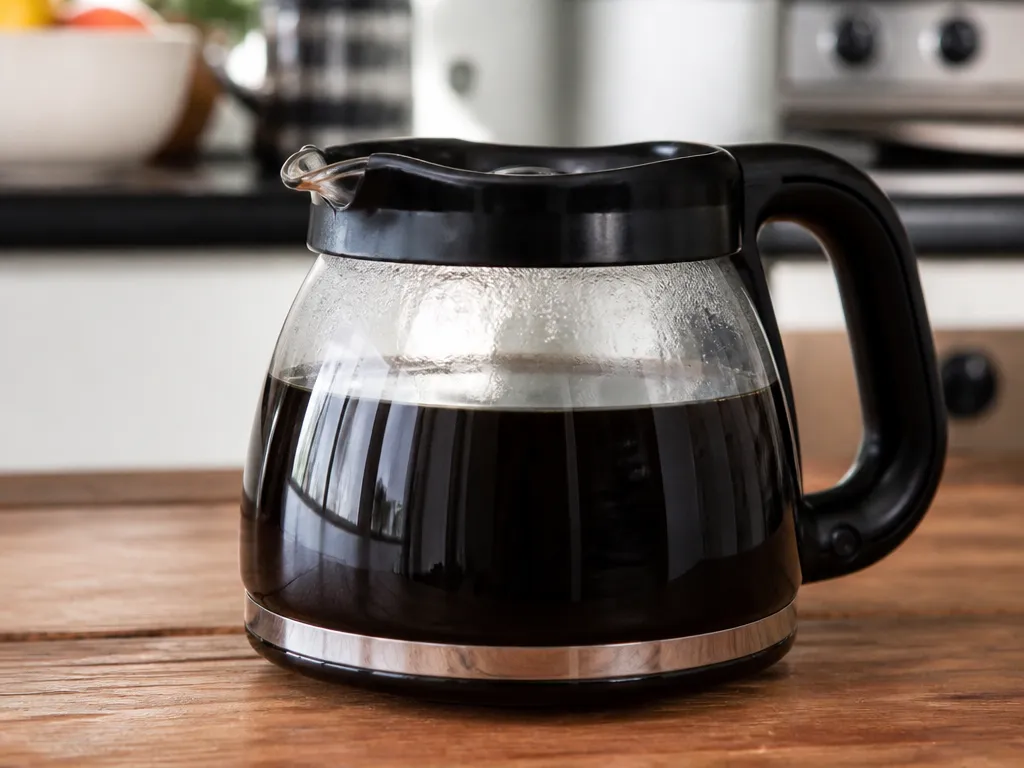
A 12-cup pot of Folgers Classic Roast contains between 960 and 1,200 milligrams of caffeine when brewed according to package instructions. This estimate relies on the industry standard of 80 to 100 milligrams per six-ounce cup. Folgers uses a blend of Arabica and Robusta beans, which influences its caffeine profile compared to pure Arabica brands. Robusta beans naturally contain nearly double the caffeine of Arabica, giving Folgers a slight kick even in its medium roast profiles.
The variability comes from how you define a “cup.” Most drip coffee makers mark their carafes in five- or six-ounce increments. Fill the reservoir to the 12-cup line and you are brewing roughly 60 to 72 ounces of coffee. Multiply that volume by the average caffeine concentration and you reach the upper end of the range. Drinking from a standard 12-ounce travel mug means you are consuming two servings at once, roughly 160 to 200 milligrams per mug.
The FDA cites 400 milligrams per day as a safe limit for healthy adults. A single full pot of Folgers exceeds this by more than double. Sharing the pot among three or four people keeps individual intake within safe boundaries. Drinking half the pot alone pushes you close to the daily ceiling before noon.
Key Takeaways
- Standard pot total. A 12-cup carafe contains roughly 960 to 1,200 mg of caffeine based on standard brewing ratios.
- Serving size definition. Coffee maker “cups” are five to six ounces, meaning a full pot yields only four to five large mugs.
- Decaf reduction. Folgers Decaf retains 2 to 5 mg per cup, totaling less than 60 mg for an entire 12-cup pot.
- Scoop impact. Adding one extra tablespoon per cup can increase total caffeine content by up to 20 percent.
- Roast difference. Darker roasts like Black Silk have slightly less caffeine by weight but similar levels by volume due to density changes.
- Brand comparison. Folgers sits in the mid-range for caffeine, trailing strong blends like Death Wish but exceeding most light commercial roasts.
Caffeine Content by Folgers Pot Size and Scoop Count
Pot size directly dictates total caffeine load, but scoop count determines strength. Most home brewers use a standard ratio of one to two tablespoons of grounds per six ounces of water. Folgers recommends two level tablespoons for a regular brew. Deviating from this ratio changes the milligram count significantly. A heaping tablespoon can hold up to 30 percent more coffee than a level one, spiking the caffeine content without changing the water volume.
| Pot Size (Cups) | Water Volume (oz) | Grounds Needed (tbsp) | Est. Total Caffeine (mg) | Servings (12 oz mugs) |
|---|---|---|---|---|
| 4-Cup | 20-24 | 4-5 | 320-400 | 1.5 – 2 |
| 8-Cup | 40-48 | 8-10 | 640-800 | 3 – 4 |
| 12-Cup | 60-72 | 12-15 | 960-1,200 | 5 – 6 |
| 14-Cup | 70-84 | 14-17 | 1,120-1,400 | 6 – 7 |
Using fewer scoops drops the total caffeine proportionally. Using only one tablespoon per cup in a 12-cup pot halves the caffeine to roughly 480 to 600 mg. This weaker brew may taste thin, but it reduces the stimulant load. Adding an extra scoop per cup for a bold taste can push a 12-cup pot toward 1,500 mg.
A digital scale provides the most accurate measurement, aiming for 10 grams of coffee per six ounces of water. Without a scale, leveling your tablespoon ensures you do not accidentally overdose your morning brew. Inconsistent scooping leads to unpredictable caffeine hits, making it harder to gauge your tolerance day over day.
Folgers Decaf vs Regular Pot Caffeine Levels
Folgers Decaf contains significantly less caffeine than its regular counterpart, but it is not caffeine-free. A six-ounce cup of Folgers Decaf typically holds 2 to 5 milligrams of caffeine. Brewing a full 12-cup pot results in a total of 24 to 60 milligrams for the entire carafe. This amount is negligible for most people but may affect those with extreme sensitivity or specific medical restrictions.
The decaffeination process removes at least 97 percent of the caffeine from the beans. Folgers uses methods that preserve flavor compounds while stripping out the stimulant. Despite this, trace amounts remain. Drinking four mugs from a decaf pot delivers roughly 20 mg of caffeine, equivalent to a few bites of dark chocolate. It will not provide the alertness boost of regular coffee, but it also will not cause jitters.
Brew Strength Variables That Change Folgers Caffeine
Water temperature and contact time drive caffeine extraction beyond scoop count. Caffeine dissolves readily in hot water but requires sufficient time to fully extract from the grounds. Most drip machines heat water to between 195 and 205 degrees Fahrenheit, which is the ideal range for extraction. If your machine runs cooler, the coffee may taste sour and contain less caffeine because the water failed to pull all the solubles from the grounds.
Grind size also plays a critical role. Folgers Classic Roast is pre-ground to a medium consistency suitable for drip brewers. Grinding finer increases surface area and allows water to extract caffeine more quickly. Too fine a grind can clog the filter and lead to over-extraction, resulting in bitterness. Coarser grinds reduce extraction, yielding a weaker cup with lower caffeine content. Stick to the manufacturer’s pre-ground setting for consistent results.
Coffee beans lose volatile compounds and some caffeine stability over time after opening. While caffeine itself is relatively stable, stale coffee often tastes flat, leading users to add more grounds to compensate. This behavioral adjustment increases caffeine intake unintentionally. Store your Folgers in an airtight container away from light and heat to maintain consistent flavor and strength without overloading the basket.
Comparing Folgers Pot Caffeine to Other Drip Brands
Folgers sits in the middle of the pack regarding caffeine content among major commercial brands. Its blend of Arabica and Robusta gives it a slight edge over pure Arabica competitors like Starbucks House Blend or Dunkin’ Original Blend. Robusta beans are hardier and contain more caffeine, which translates to a stronger buzz per ounce. Specialty high-caffeine brands like Death Wish or Black Insomnia far exceed Folgers, packing up to 200 mg per cup.
| Brand | Bean Type | Est. Caffeine per 6 oz Cup (mg) | Est. Total per 12-Cup Pot (mg) |
|---|---|---|---|
| Folgers Classic | Arabica/Robusta Blend | 80-100 | 960-1,200 |
| Dunkin’ Original | 100% Arabica | 70-90 | 840-1,080 |
| Starbucks House | 100% Arabica | 75-95 | 900-1,140 |
| Maxwell House | Arabica/Robusta Blend | 70-90 | 840-1,080 |
| Death Wish | Arabica/Robusta Blend | 150-200 | 1,800-2,400 |
Starbucks and Dunkin’ rely on high-quality Arabica beans, which generally have lower caffeine levels than Robusta. Their brewing standards are rigorous, but the bean choice limits the maximum caffeine potential per scoop. Folgers and Maxwell House use blends that include Robusta, boosting the caffeine count without requiring extra grounds. This makes Folgers a cost-effective choice for those seeking a stronger wake-up call without buying specialty high-caffeine labels.
Switching from Folgers to a pure Arabica brand may produce a slight drop in energy levels despite drinking the same volume. Moving to a high-caffeine brand like Death Wish requires halving your usual intake to avoid exceeding safe limits.
Estimating Milligrams Per Cup From a Full Carafe
Calculating your personal intake requires converting carafe volume into your actual mug size. Most people use mugs that hold 12 to 16 ounces, yet coffee makers measure in five- or six-ounce units. A 12-cup carafe contains roughly 60 to 72 ounces of liquid. If you use a 12-ounce mug, the pot yields only five to six servings, not twelve. Each of those large mugs contains approximately 160 to 200 milligrams of caffeine.
To estimate your intake, divide the total pot caffeine by the number of mugs you actually pour. For a standard 12-cup pot with 1,000 mg of caffeine, pouring four 15-ounce mugs means each mug has 250 mg. This exceeds the typical 80 to 100 mg found in a small diner cup. If you feel jittery after two mugs, you have likely hit your personal threshold.
Use this formula for future batches: total scoops multiplied by 100 mg, divided by the number of mugs. If you use 12 scoops for a pot and pour 4 mugs, each mug has roughly 300 mg. Reducing the grounds to 8 scoops lowers each mug to 200 mg. Small adjustments in the basket yield significant changes in your cup, allowing you to fine-tune your daily caffeine dose without switching brands.
FAQ
How much caffeine is in a single tablespoon of Folgers?
One level tablespoon of Folgers ground coffee contains approximately 50 to 70 milligrams of caffeine. This amount varies slightly based on the roast and bean density, but it serves as a reliable baseline for calculating total pot strength. Using two tablespoons per cup doubles this dose.
Does Folgers Black Silk have more caffeine than Classic Roast?
Folgers Black Silk, a dark roast, has slightly less caffeine by weight than Classic Roast due to the longer roasting process. Because dark roast beans are less dense, a volume-based scoop may contain fewer beans, resulting in comparable or slightly lower caffeine levels per cup. The difference is minimal for most drinkers.
How long does caffeine from a pot of Folgers stay in your system?
Caffeine has a half-life of 3 to 5 hours in the average adult. Half the caffeine from your morning pot remains in your body five hours later. It can take up to 10 hours for caffeine levels to drop significantly, which is why afternoon coffee can disrupt sleep.
Is Folgers coffee stronger than Maxwell House?
Folgers and Maxwell House are very similar in caffeine content, as both use Arabica-Robusta blends. Folgers may taste slightly bolder due to its roasting profile, but the actual milligram count per cup is nearly identical. Both brands deliver a moderate to high caffeine kick compared to pure Arabica options.
Can I reduce caffeine in a pot of Folgers without buying decaf?
Mixing half regular and half decaf grounds in the filter cuts the total caffeine of the pot by roughly 50 percent while maintaining the full flavor profile of regular coffee. This half-caf approach is effective for lowering intake without sacrificing taste.

- Are Pod Coffee Machines Healthy? The Unfiltered Truth About Your Daily Cup - September 27, 2026
- Does Gatorade Have Caffeine? Here’s What’s in Each Type - September 26, 2026
- Does Powerade Have Caffeine, or Is That a Myth? - September 26, 2026