
How coffee extraction affects flavor is a fundamental principle that dictates the sensory journey of every cup, profoundly shaping its taste, aroma, and body. Understanding the intricate dance between ground coffee and water is paramount for anyone seeking to master the art of brewing, as slight adjustments in the extraction process can completely transform the final flavor profile from delightfully complex to disappointingly bitter or sour. This article delves deep into the science and art of coffee extraction, providing invaluable insights into how various brewing parameters influence the delicious nuances you experience with every sip.
The Science Behind Coffee Extraction
Coffee extraction is the process by which hot (or cold) water dissolves soluble compounds from roasted and ground coffee beans. These compounds are what give coffee its distinct flavor, aroma, and body. It’s a delicate balance, as different compounds dissolve at different rates and contribute varying characteristics to the final beverage. Early in the extraction, desirable acids and fruity notes are released. As extraction progresses, sugars and complex aromatics emerge, followed by more bitter compounds and tannins. My experience has shown that recognizing this progression is key to manipulating the outcome.

Key Variables Influencing Extraction
Achieving optimal flavor in coffee is a meticulous process, heavily reliant on controlling several key variables during extraction. Each element plays a critical role in how coffee extraction affects flavor, and understanding their interplay is essential for consistent and delicious results.
Grind Size
The size of your coffee grounds is arguably the most critical variable, directly impacting the surface area exposed to water. A finer grind increases the surface area, allowing water to extract compounds more quickly. Conversely, a coarser grind offers less surface area, slowing down the extraction. Too fine a grind can lead to over-extraction, resulting in a bitter cup, while too coarse a grind often causes under-extraction, yielding a sour or weak flavor. In my years of experimenting, I've found that the ideal grind size is always method-dependent, varying significantly between espresso and French press.
Water Temperature
Water temperature is a crucial factor in the solubility of coffee compounds. Generally, water between 195°F and 205°F (90°C and 96°C) is considered ideal for most brewing methods. Water that is too cold will under-extract the coffee, producing a flat, sour, or underdeveloped taste because it cannot dissolve the desired compounds efficiently. Conversely, water that is too hot can lead to over-extraction, scorching the grounds and leading to excessive bitterness and astringency. Maintaining a stable temperature throughout the brew cycle is vital for consistent how coffee extraction affects flavor.
Contact Time
Contact time refers to how long the water is in contact with the coffee grounds. This variable works in tandem with grind size and water temperature to determine the level of extraction. Short contact times, typically seen in espresso, require a very fine grind to achieve sufficient extraction within seconds. Longer contact times, as in French press or cold brew, necessitate a coarser grind to prevent over-extraction. My personal rule of thumb is to think of these three variables as interconnected: adjust one, and you likely need to adjust another to maintain balance in how coffee extraction affects flavor.
Brew Ratio (Coffee-to-Water Ratio)
The brew ratio dictates the strength and concentration of your final coffee. It is typically expressed as a ratio of coffee grounds to water by weight. A common starting point is 1:15 to 1:18 (e.g., 1 gram of coffee to 15-18 grams of water). A lower ratio (more coffee) results in a stronger, more concentrated brew, while a higher ratio (less coffee) produces a lighter, more dilute cup. This ratio profoundly influences the perception of flavor, impacting the balance between sweetness, acidity, and bitterness. Getting this right is a simple yet powerful way to tailor how coffee extraction affects flavor to individual preferences.
Turbulence and Agitation
Turbulence, or the agitation of the coffee grounds during brewing, promotes more even extraction by ensuring all grounds come into contact with fresh water. In methods like pour-over, controlling the pour rate and patterns helps manage turbulence. Too much agitation can lead to preferential channeling or over-extraction of smaller particles, while too little can result in under-extraction and uneven flavor. I’ve often noticed that a gentle, uniform saturation creates a much more balanced cup, highlighting the nuanced aspects of how coffee extraction affects flavor.
Water Quality
Often overlooked, the quality of your brewing water significantly affects how coffee extraction affects flavor. Water contains minerals that interact with coffee compounds during extraction. Water that is too soft (lacking minerals) can produce a flat taste, while water that is too hard (excessive minerals) can inhibit proper extraction or introduce undesirable flavors. Filtered water with a balanced mineral content, typically around 150 ppm (parts per million) total dissolved solids, is generally recommended for optimal flavor clarity.
Understanding Under-extraction vs. Over-extraction
The goal of coffee brewing is to achieve optimal extraction, a sweet spot where all desirable flavors are present in harmony, without the harshness of over-extraction or the undeveloped notes of under-extraction. Recognizing the signs of each is fundamental for troubleshooting your brew.
Under-extracted Coffee
Under-extracted coffee typically results when the water hasn't dissolved enough soluble compounds from the grounds.
- Flavor Profile: Often tastes sour, thin, weak, and underdeveloped. You might detect notes of lemon, grass, or hay, with a distinct lack of sweetness and body. It can also have a drying sensation on the tongue.
- Causes: Too coarse a grind, insufficient contact time, low water temperature, or too little turbulence.
- Remedy: Try grinding finer, increasing contact time, or raising the water temperature.
Over-extracted Coffee
Over-extracted coffee occurs when the water has dissolved too many bitter and undesirable compounds from the grounds.
- Flavor Profile: Characterized by excessive bitterness, astringency (a drying sensation, like unripe persimmon), and a hollow, burnt, or rubbery taste. The sweetness and acidity are often masked or completely absent.
- Causes: Too fine a grind, excessive contact time, too high water temperature, or excessive turbulence.
- Remedy: Try grinding coarser, decreasing contact time, or lowering the water temperature.
The "Sweet Spot" of Optimal Extraction
The ideal extraction range, often cited as 18% to 22% of dissolved solids from the coffee grounds, yields a balanced, complex, and enjoyable cup. This is where sweetness, acidity, and bitterness are in perfect harmony, reflecting the intrinsic qualities of the coffee bean. Achieving this balance is the ultimate aim of how coffee extraction affects flavor. It's a journey of continuous refinement, where each adjustment brings you closer to that perfect cup.

Different Brewing Methods and Their Extraction Profiles
Each coffee brewing method employs unique mechanisms that significantly influence how coffee extraction affects flavor. The choice of method dictates specific parameters like grind size, water contact, and pressure, leading to vastly different sensory experiences.
Espresso
Espresso is renowned for its intense, concentrated flavor. It uses finely ground coffee, high pressure, and a very short contact time (typically 25-30 seconds). The high pressure rapidly extracts oils and soluble solids, resulting in a full-bodied shot with a thick crema layer and a rich, complex flavor profile. The precise control over grind, tamp, and time is crucial for preventing both under and over-extraction in such a rapid process.
Pour Over
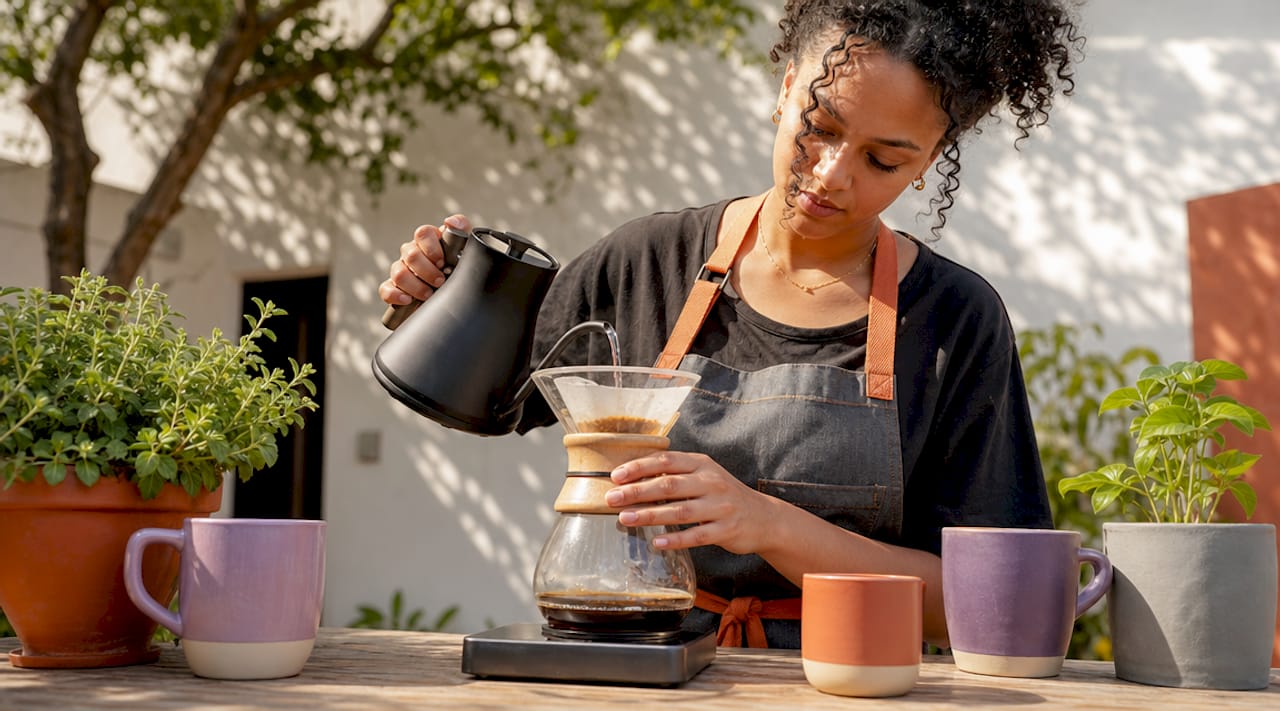
Pour-over methods, such as Hario V60 or Kalita Wave, emphasize clarity and aromatic complexity. They typically use a medium grind and a controlled, consistent flow of hot water through a filter. This gentle, gravity-fed extraction highlights the bright acidity and delicate flavors of the coffee, producing a clean cup with a lighter body than espresso or French press. The skill in pouring significantly impacts the uniformity of how coffee extraction affects flavor.
French Press
The French press is an immersion brewing method known for producing a full-bodied, rich cup. It uses coarsely ground coffee and a long contact time (usually 4-5 minutes) with hot water. Since the coffee grounds remain in contact with the water throughout the brewing process and are only separated by a mesh filter, more oils and fine particles pass into the cup, contributing to its characteristic heavy body and robust flavor. This method is forgiving but requires careful attention to grind to avoid excessive bitterness.
Cold Brew
Cold brew coffee involves steeping coarsely ground coffee in cold water for an extended period, typically 12-24 hours. The lower temperature results in a slower, gentler extraction, dissolving fewer acidic and bitter compounds. This method produces a concentrate that is naturally sweeter, smoother, and significantly less acidic than hot-brewed coffee, making it excellent for sensitive stomachs and as a base for various drinks. The extended time is key to how coffee extraction affects flavor in this method.
Aeropress
The AeroPress offers remarkable versatility, acting as a hybrid between immersion and pressure brewing. It can produce highly concentrated shots similar to espresso or full-bodied coffee similar to a French press, depending on the grind size, water temperature, and plunge time. The pressure applied during the plunge helps to extract efficiently, often resulting in a clean cup with minimal sediment and a broad spectrum of flavors, controlled by the brewer's technique.

Achieving Optimal Flavor: Practical Tips
Mastering how coffee extraction affects flavor is a journey, not a destination. For any coffee enthusiast, refining your brewing technique can elevate your daily cup from routine to extraordinary.
Invest in a Quality Grinder
A consistent grind is the cornerstone of even extraction. A burr grinder (either manual or electric) is a worthwhile investment, providing uniform particle sizes far superior to blade grinders. This consistency ensures that all coffee particles extract at a similar rate, preventing a mixed bag of under and over-extracted flavors in a single brew. My personal experience strongly advocates for prioritizing a good grinder; it makes the biggest difference after the coffee itself.
Use a Scale for Precision
Measuring coffee grounds and water by weight, not volume, provides unparalleled precision. Coffee beans vary in density, so a tablespoon might contain different amounts of coffee depending on the roast or bean type. A simple kitchen scale allows you to accurately replicate successful brew ratios and consistently manage how coffee extraction affects flavor. This small step has drastically improved my brewing consistency over the years.
Control Water Temperature
While a fancy kettle with temperature control is ideal, even a basic thermometer can help you hit the sweet spot of 195-205°F (90-96°C). Boiling water can be too hot, so letting it sit for about 30-60 seconds after boiling often brings it into the optimal range. Consistent temperature is a non-negotiable aspect of how coffee extraction affects flavor.
Experiment with Contact Time
Adjusting contact time in conjunction with grind size is your primary lever for fine-tuning extraction. If your coffee tastes sour, try a slightly longer contact time (or finer grind). If it tastes bitter, shorten the contact time (or coarsen the grind). Keep notes on your adjustments to track what works best for specific beans and brewing methods.
Understand Your Coffee's Roast Level and Origin
The roast level and origin of your coffee beans significantly influence their optimal extraction parameters. Lighter roasts tend to be denser and require finer grinds and higher water temperatures to fully extract their complex acidity and fruit notes. Darker roasts, being more porous, extract faster and can quickly become bitter if over-extracted, often benefiting from slightly coarser grinds and cooler water. Understanding these intrinsic characteristics helps in predicting how coffee extraction affects flavor from different beans.

Frequently Asked Questions
What happens if coffee is under-extracted?
Under-extracted coffee often tastes sour, thin, and weak, sometimes with grassy or lemony notes, because desirable compounds like acids haven't fully dissolved, and sweetness is underdeveloped.
What happens if coffee is over-extracted?
Over-extracted coffee typically tastes excessively bitter, astringent, and can have a burnt or hollow flavor due to the dissolution of too many undesirable bitter compounds and tannins.
How does grind size specifically impact extraction?
Grind size affects the surface area of the coffee in contact with water; finer grinds increase surface area for faster extraction, while coarser grinds reduce it for slower extraction.
Does water temperature really make a difference in coffee flavor?
Absolutely, water temperature significantly influences solubility; too cold water leads to under-extraction and sourness, while too hot water causes over-extraction and bitterness.
What is the ideal brew ratio for most coffee?
A common ideal brew ratio is between 1:15 and 1:18 (coffee to water by weight), providing a balanced strength and flavor for most brewing methods.
Conclusion
The journey of understanding how coffee extraction affects flavor is a captivating blend of science, art, and personal preference. By meticulously controlling variables such as grind size, water temperature, contact time, and brew ratio, you gain the power to unlock the full potential of your coffee beans. Remember, every adjustment you make to the extraction process directly translates into a different sensory experience in your cup. Embrace experimentation, pay close attention to the nuanced feedback your palate provides, and continue to refine your technique. This ongoing exploration will not only deepen your appreciation for coffee but also empower you to consistently brew exceptional cups tailored to your exact taste. We encourage you to start experimenting with these insights today; your perfect cup awaits.

- How to Fix a Portafilter: Size, Locking Mechanism, and Troubleshooting Guide - October 22, 2026
- 35 Coffee Machine Parts and Functions: Complete Guide With Names and Uses - October 22, 2026
- 25 Espresso Machine Parts Names and Their Functions Explained - October 22, 2026