
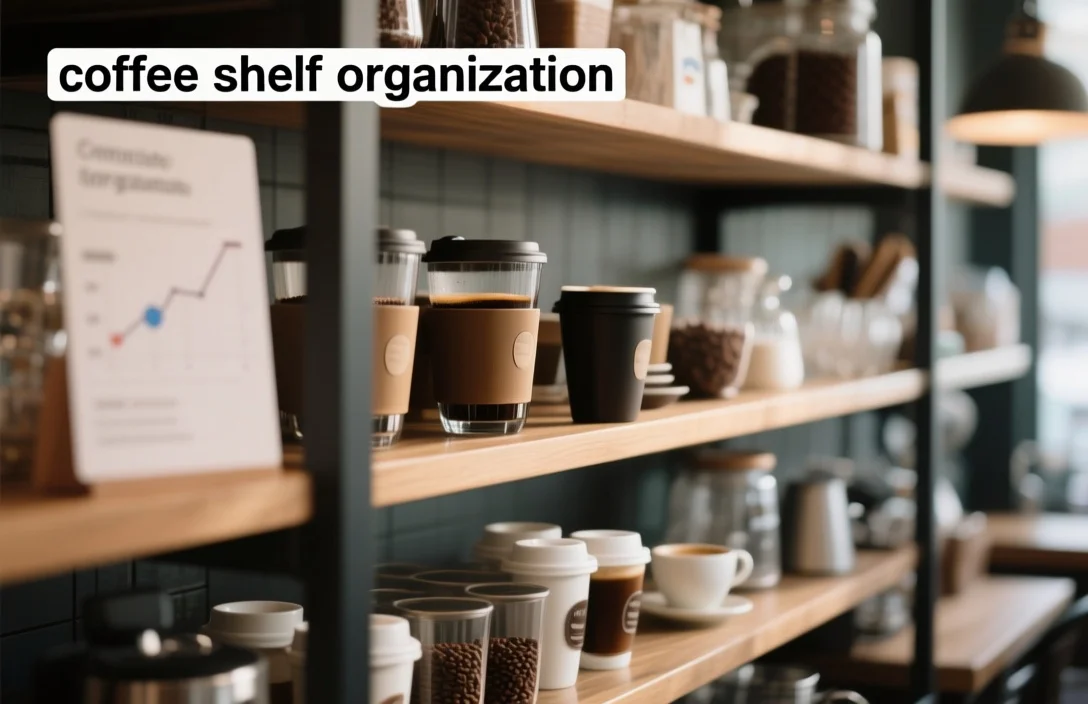
Coffee shelf organization works best when it does three things at once: it keeps coffee fresh, it puts the daily stuff within reach, and it makes the routine easier to repeat. I would start there and ignore the decorative part until the system works. If you brew every morning, your shelf should support that habit, not fight it.
The basic rule is simple. Keep whole beans sealed, keep frequently used tools close to the brewer, and move backup stock out of the way. That one decision does more for a coffee station than any matching jar set.
Why organize a coffee shelf at all
The point is freshness first, convenience second, looks third. Coffee beans lose aroma after opening, and ground coffee loses it even faster. If your shelf is messy, you are more likely to reach for the wrong bag, leave something open, or buy a duplicate because you did not see what you already had.
A good setup also cuts down on small daily annoyances. You waste less time hunting for filters, scooping from a half-open bag, or moving things around just to make room for the grinder. My practical rule is this: anything you use every day should be visible and easy to grab, and anything you use once in a while can live farther back.
Start with your space and your routine
Before buying containers, look at the space you actually have. Countertop depth, cabinet height, pantry shelf spacing, and the location of outlets all matter. A daily coffee station on the counter needs a different layout than a pantry shelf that holds backup bags and spare pods.
I would separate your coffee items by how often you use them.
- Daily items: beans, grinder, brewer, filters, scoop, pods, or grounds
- Weekly items: backup bags, extra filters, cleaning supplies
- Occasional items: seasonal coffee, travel gear, backup accessories
That split keeps the station lean. The more often you use something, the closer it should be to the brewer.
Containers that actually help
Not every container is worth keeping. Some are better for freshness, some are better for visibility, and some are just easier to live with. The right choice depends on what you are storing.
| Name | Price / Key Spec | Best For |
|---|---|---|
| Airtight canister (metal or BPA-free plastic lid) | Budget to mid-range – tight lid seal, opaque options | Whole beans you use daily; blocks light and seals aromatics |
| Glass jar with rubber gasket | Mid-range – visible contents, good seal if quality gasket | Single-origin bags or pre-ground used within a week |
| Vacuum-seal jar or pump-top canister | Mid to premium – removes air, extends aromatics | Long-term bean storage or coffee you buy in bulk |
| Resealable bag with clip | Low cost – variable seal, portable | Short-term storage for opened bags when transferred to canister later |
| Stackable drawer bins | Budget to mid-range – organizes pods, filters, accessories | Single-serve pods or small tools to keep tidy |
| Airtight tin for grounds | Budget – small footprint, usually opaque | Grounds for immediate use; avoid storing long-term |
I keep coming back to one point: seal quality matters more than style. Opaque metal canisters block light well, but you need to label them. Glass jars let you see what is inside, but they only work well if the gasket is solid. Resealable bags are fine for short stretches, but they are not my first choice for daily storage.
Put the brewing path in order
The easiest shelf to use is the one that follows your hands. Grinder, beans, brewer, and tools should sit in the order you actually reach for them. If you move left to right while brewing, set it up that way. If you work the other direction, match that instead.
A compact coffee station usually works best when the heaviest or most-used items sit between waist and shoulder height. You want room in front of the brewer, too. If the area is cramped, the whole routine slows down and spills become more likely.
If you have enough space, think in terms of a small brew triangle:
- water source
- grinder or beans
- brewer
That layout keeps the routine short. If space is tight, a narrow shelf above the brewer can hold filters and spoons, while a shallow tray below or beside it keeps small items from wandering.
A simple setup for a small countertop
For a small kitchen, I would keep the plan blunt and practical.
- Clear a 12-24 inch stretch of counter near water and power.
- Put the grinder closest to the outlet, with 2-3 inches of breathing room.
- Keep the daily bean canister within easy reach of the grinder.
- Store filters and dosing tools in a small bin or shallow drawer beside or above the brewer.
- Move backup beans, pods, and cleaning supplies to a labeled pantry shelf.
That setup works because it compresses the routine into one clean motion. If you label the canister with roast date and bean type, you cut down on confusion. If you keep coffee in the original bag, set that bag out on the counter when you brew instead of reaching into the pantry each time.
Keep stock moving in the right order
Coffee does not belong in the back of a shelf to be forgotten. Use the older bag first. That is the whole logic behind a first-in, first-out system.
Opened whole-bean bags should be treated as short-term coffee, not a permanent stash. Whole beans hold up better than pre-ground coffee, but they still lose aroma over time. Room temperature, dry storage, and protection from light are the main goals here. Keep coffee away from ovens, windows with strong sun, and damp spots.
I would avoid the fridge for daily coffee. Condensation is the problem, and it can create more trouble than it solves. Vacuum-sealed or nitrogen-flushed packaging can slow staling, but once a bag is open, the clock starts.
Organize by use, not by mood
A shelf works better when it reflects how you drink coffee, not how you feel about coffee in theory. Everyday blend? Put it front and center. Specialty bag you open once a week? Give it a clear but secondary spot. Pods, instant coffee, and backup filters can live in drawer bins or small boxes where they stay visible and separate.
A useful rule is this: daily items at eye level, occasional items above or below, bulk backup in the pantry. That structure saves time every morning. It also helps if more than one person uses the coffee station, because the system does not depend on memory alone.
Labels and dates are worth the trouble
I would label almost everything. A container with no label becomes a guess, and guesses lead to stale coffee or the wrong grind.
Useful labels include:
- roast date
- bean origin
- grind size
- open date, if you want a simple rotation check
A permanent marker works on opaque containers. Removable labels are better on glass. If you have several open bags at once, keep a small index card or whiteboard nearby with the dates written down. That is enough for most homes. You do not need a complicated inventory system.
Mistakes that make the shelf harder to use
The most common problem is leaving opened bags unsealed. That is a fast way to lose flavor. Another mistake is storing beans in thin plastic near heat or bright light. The coffee may still be usable, but it will not stay at its best for long.
I would also avoid mixing old grounds, fresh beans, and grinders in the same container or corner. That creates mess and confusion. Too many container styles can be its own problem. If every lid works differently, the shelf becomes annoying to maintain. Standardize on one or two container types and stop there.
Small-space and low-budget fixes
If your kitchen is tiny, use vertical space. A tension rod with small baskets inside a cabinet can separate filters, pods, and tools. A narrow spice rack on the inside of a pantry door can hold single-serve items or samples. Clean, food-safe tins can work for short-term grounds or small coffee portions if they are labeled clearly.
Glass jars from the store can also work, provided the lids seal well enough for your use. The key is not the price tag. It is whether the lid closes securely and the container suits the coffee you keep in it. For long-term bean storage, I would not trust very cheap lids that never really seal.
Choosing materials by what matters most
Different container materials solve different problems.
- Opaque metal is best for light protection.
- Glass is best when you want to see inventory at a glance.
- Vacuum or pump-top canisters are useful if you buy in larger amounts and want to slow staling.
- BPA-free plastic is light and inexpensive, but the lid and seal deserve close attention.
If you use plastic, check that the lid closes firmly and that the container is meant for food storage. High-quality polymer containers with silicone gaskets can work well, but they usually need a darker storage spot because they do not block light the way metal does.
Keep the containers clean
Coffee oils build up. If you refill a dirty container, you are mixing fresh coffee with old residue. I would rinse and dry canisters before refilling them, then do a more thorough wash about once a month.
Use hot water and a neutral detergent. Skip scented soaps, because odors can linger. Make sure the container is fully dry before adding coffee back in.
The grinder needs attention too. Burrs, chutes, and ports collect residue over time. For a typical home setup, a monthly deep clean is a reasonable baseline. If you switch beans often or grind oily coffee, you may need to clean more often.
Coffee shelf ideas for common kitchens
Apartment kitchens usually need a tight, compact setup. A grinder, a narrow canister, and a tray for tools on one short run of counter is often enough. If outlets are limited, a short power strip tucked under the counter can help, as long as cords stay out of the way.
Open-plan kitchens can use an island as the main coffee zone. In that case, keep the brewer and grinder there, and put backup supplies in nearby cabinets. A drawer under the island is a good place for filters, spoons, and small tools. Just keep beans sealed, because coffee odor travels.
How to set up a pantry coffee shelf
A pantry shelf can work better than the counter if you keep it simple. I would divide it into active coffee and backup coffee. Put the daily canister where it is easy to reach. Put spare bags and bulk stock below or above it.
Uniform containers make a pantry look calmer, but the real advantage is that they stack and label well. Use bins for pods or small accessories. Keep the heaviest bags on lower shelves so you are not lifting them from overhead every week.
If you store open bags, give them their own zone. Do not bury them behind snacks or baking supplies. That is how coffee gets forgotten.
What to buy first
If you are starting from scratch, do not overbuy. I would begin with these items:
- one airtight canister for daily beans
- one small bin for filters and accessories
- a label maker or waterproof labels
- a kitchen scale, if you want more consistent dosing
That list covers the basics without turning your shelf into a display. A vacuum jar or pump canister is a reasonable upgrade later if you buy coffee in bulk. Decorative jars can wait until the storage system actually works.
If something feels off
If coffee tastes flat, check the simple things first. Look at the roast date, the seal on the container, and whether the grinder is clean. If stale flavor keeps showing up, the issue may be storage, not the coffee itself.
If you see condensation problems, move the coffee out of the fridge and into a dry shelf or cabinet. If labels keep peeling off, add a second form of identification, such as a card clipped to the lid. If pantry pests become an issue, seal all edible items and clean crumbs out of the shelf area.
FAQ
How long does coffee stay fresh on a shelf?
There is no single number that fits every home setup. Freshness depends on whether the coffee is whole bean or ground, how airtight the container is, and how much heat, light, or moisture it sees. Roast dates matter, and your senses still matter most.
Should I store coffee in the freezer?
Freezing unopened bulk bags can slow staling, but it also brings moisture risk when the bag is thawed. I would avoid the freezer for coffee you open often. If you do freeze it, portion it so you only thaw what you plan to use.
Are glass jars a bad choice because they let in light?
Glass is fine if it is kept out of direct sunlight. The problem is not glass itself, it is exposure. Put glass jars in a shaded cabinet or pantry, or choose opaque containers for coffee you keep longer.
What is the best way to store grounds versus whole beans?
Whole beans hold up better than grounds, so keep them sealed and grind right before brewing. Grounds should be used quickly and kept airtight while they last.
How often should I clean coffee containers?
Wipe them out and dry them before refilling. Do a deeper clean about once a month, or sooner if you switch beans often or notice residue.
A practical place to begin
If you want the shortest path to a better coffee shelf, empty one section, keep only the daily items there, and move the rest to labeled backup storage. Standardize on one airtight canister and one bin for tools. Then brew from that setup for a week.
That is usually enough to show what needs to change. The best coffee shelf is not the prettiest one. It is the one you can use without thinking about it.

- Espresso Tastes Watery? 10 Common Causes and How to Fix It - October 23, 2026
- 10 Common Coffee Equipment Cleaning Mistakes and How to Avoid Them - October 23, 2026
- 17 Common Coffee Grinder Problems and How to Fix Them - October 23, 2026