
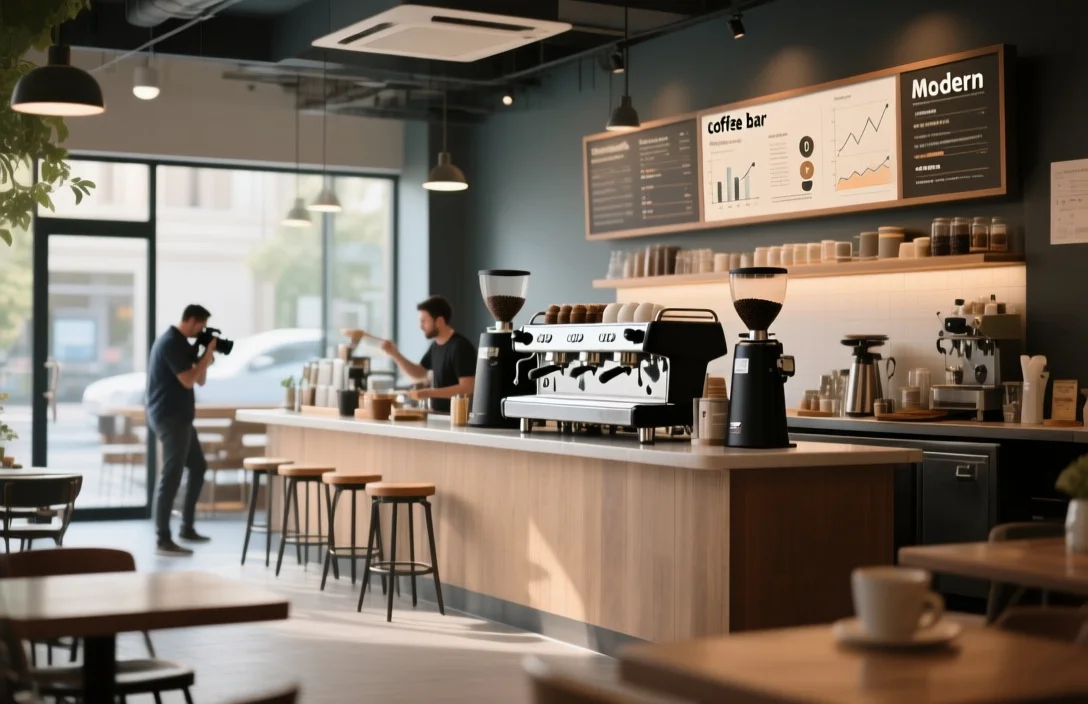
A modern coffee bar is a compact, intentionally arranged space in your home built to make real coffee, quickly and without the usual counter clutter. If you are setting one up, I would start with three decisions: where it goes, what brewing method it centers on, and how much gear you actually need within reach. Get those right, and the rest becomes much easier.
What a modern coffee bar is, and why it works
At its best, a coffee bar groups the equipment, ingredients, and tools you use every morning into one reachable zone. That makes the routine smoother. It also makes cleanup easier, which is usually the part people forget to plan for.
The modern version leans on clean lines, restrained materials, and visible order. I would not treat that as decoration for its own sake. The point is that a calmer setup is easier to use. It should feel deliberate, not crowded.
There are three things to keep in balance: convenience, durability, and appearance. Convenience means the bar is close to water and power. Durability means the surfaces and containers can handle heat, moisture, and coffee oils. Appearance means the station looks tidy enough that you do not mind seeing it every day.
What every setup needs before you buy accessories
Start with the basics. Any espresso machine or electric kettle needs a grounded outlet. Most pour-over setups are better near a sink, because quick rinses matter more than people expect. Counter space of at least 18 to 24 inches wide is useful for drip or pour-over setups. Espresso work usually needs more clearance for tamping and steaming.
Then choose the brewing equipment that fits the way you drink coffee. If you want fresh coffee more than once a week, a grinder matters. If you make milk drinks, a milk frother or a steam-capable espresso machine is worth planning for. A scale helps if you care about repeatable brew ratios. An airtight canister keeps beans fresher than leaving them in a bag on the counter.
Picking the right location
I would place the coffee bar where it supports your actual morning flow, not just where it photographs well. A breakfast zone near the kitchen entrance works well for commuters who want a fast exit. A living-room cart makes sense if you entertain and want a guest drink station.
The other practical question is cleanup. A setup near a sink is easier to rinse. One near a trash bin makes spent grounds less annoying to handle. Accessibility matters more than style once the novelty fades.
Footprint options, from simplest to most permanent
Before buying gear, decide how fixed you want the setup to be.
A cabinet-concealed coffee nook is the cleanest option if you need your counters clear. It hides the mess when you are done.
A bar cart is the most flexible choice. It works well in rentals and small homes, and you can move it when needed.
A built-in niche or dedicated island run is the most settled solution. That is the route for households that know coffee will stay a daily habit.
Each one trades off permanence, visibility, and wiring or plumbing needs. I would treat that as the real planning question, more than the decorative style.
What to buy first
If you buy whole beans, I would put the grinder ahead of a prettier machine. Freshly ground coffee affects every method, and a weak grinder limits what the rest of your setup can do. That is the item people most often underbuy.
For daily espresso drinkers, the priority shifts. In that case, a reliable espresso machine and a burr grinder that fits its dose range make more sense together. One without the other is a poor trade.
Choose one brewing method to center the station around. Pour-over and drip setups need a precise kettle and scale. Espresso needs a group-head or pump machine plus a steam wand. Bean-to-cup machines simplify the workflow by grinding and tamping for you, but they give up some control. My practical rule is simple: pick the method you will use consistently, not the one that sounds most ambitious.
How to keep the station organized
Organize by frequency of use. Daily items, like beans, a favorite mug, and a spoon, should be within arm’s reach. Decorative items can go higher or farther back, but I would keep those to a minimum.
Use the same containers where you can. Airtight canisters for beans and sugar make the whole setup look calmer. A tray for the grinder and portafilter helps contain stray grounds. A mug rack or peg rail keeps cups accessible without cluttering the counter.
A restrained palette helps too. Wood with matte metal works. So does white lacquer with black hardware. The goal is not to make the bar look empty. It is to keep it visually coherent.
Practical storage items to consider:
- Uniform airtight canisters for beans, sugar, and tea
- A tray that catches spills and protects the counter
- A drawer or caddy for tampers, brushes, and spare filters
- Floating shelves or a single open cabinet for mugs and a small plant
- A small waste bin or knock box close to the machine
Surfaces and lighting that earn their keep
Choose surfaces that can handle heat, moisture, and stains. Quartz or sealed stone is easier to live with than untreated wood. If you are working with wood, a removable mat or metal drip tray helps protect the surface.
Lighting matters more than most people think. Under-cabinet LEDs or a small adjustable lamp make tamping and dosing easier to see. That is not a luxury detail. It keeps the station usable early in the morning, when your eye is not at its best.
Accent lighting can work, but I would use it sparingly. A little depth is enough. The station should still read as a work area, not a display case.
Small-space and renter-friendly approaches
If you are short on space, a cabinet-based nook is often the smartest move. A pull-out shelf and a power strip inside the cabinet can hide the whole setup when not in use. That keeps counters open and cuts visual noise.
A bar cart is the easiest renter-friendly option. No drilling. No commitment. It also lets you move the station if the layout changes.
For tight footprints, keep the equipment compact. A single-boiler or compact semi-automatic espresso machine works better than oversized gear. If you are staying portable, a gooseneck kettle, a pour-over dripper, a scale, and stackable canisters are the safer bet. I would also keep the footprint under 24 inches wide if you want the station to stay unobtrusive.
Which setup fits your budget and habits
Here is the simplest way to compare common setups.
| Name | Price/Key Spec | Best For |
|---|---|---|
| Minimal Countertop Station | Budget to Mid-range; single-cup brewer or pour-over, small burr grinder | Renters and casual drinkers who want low clutter |
| Compact Espresso Station | Mid-range; compact semi-automatic machine with small grinder | Daily espresso drinkers with limited space |
| Bean-to-Cup Integrated | Mid to High; automated grinding and dosing | Convenience-first households who want café drinks with minimal skill |
| Mobile Bar Cart | Budget to Mid-range; portable cart with basic equipment | Entertainers and small-space users who need mobility |
| Built-In Niche | Mid to High; dedicated wiring and larger machines possible | Owners renovating a kitchen who want a long-term setup |
I would not choose based on category alone. The better question is how often you will use it and how much cleanup you are willing to tolerate.
Keeping the station clean without turning it into a chore
Daily maintenance does not need to be elaborate. Wipe the steam wand immediately after milk drinks, and purge it so residue does not dry inside. Empty the portafilter or filter basket after each shot. Brush the grinder chute weekly so buildup does not affect flavor or performance.
A short schedule helps:
- Backflush an espresso machine weekly if the machine supports it
- Clean grinder burrs and doser surfaces monthly
- Descale boilers or kettles according to the manufacturer guidance and your water hardness
- Wash canisters, trays, and removable drip trays weekly
- Check seals and hoses quarterly for wear or leaks
That sounds like a lot in list form. In practice, it is a few small habits that keep the station from slowly turning grimy.
Mistakes that make a coffee bar harder to use
The biggest mistake is buying an expensive espresso machine before you have matched it with a decent grinder. That setup looks complete, but it usually performs unevenly.
Another common problem is ignoring outlet and water placement until the equipment is already home. Then people end up with awkward cords or a machine that sits in the wrong spot.
I would also avoid filling open shelves with every mug you own. Too much display turns into dusting and visual clutter fast. And if you plan to make espresso regularly, do not save money in the wrong place. A weak tamper or inaccurate scale becomes a daily annoyance.
Matching the setup to the household
A commuter household benefits from a setup near the exit. Keep to-go cups, beans, and a kettle or brewer close by. The point is speed, not display.
A host-heavy household needs more flexibility. A mobile station or a setup near the entertaining area makes serving easier. Extra cups, a small milk pitcher, and a few syrups on one shelf are enough.
For a solo brewer who cares about technique, I would keep it simple and precise. A quality burr grinder, a dedicated espresso or pour-over kit, a good scale, and a temperature-consistent kettle are enough. That kind of setup rewards attention more than extra gadgets.
Where the money is worth spending
If you drink brewed coffee often, spend first on the burr grinder. That is the purchase that improves the whole setup.
Next, buy a machine that matches your chosen method. Do not overspend to cover every possible style of coffee. That is how people end up with expensive gear they rarely use well.
Accessories can be mid-range instead of the cheapest option. A good scale and a solid tamper are worth more than decorative extras. They last longer and save frustration.
FAQ
How much space does a modern coffee bar need?
A functional setup can fit in 18 to 24 inches of counter width if you are doing pour-over or a very small station. Espresso-focused setups usually work better with 30 to 36 inches because they need room for the machine, the grinder, and clearance around the portafilter and steam wand.
Can a renter set one up without modifications?
Yes. A bar cart, a cabinet-based nook, or a pull-out tray can all stay reversible. Plug-in machines and clamp-mounted or freestanding storage are the easiest ways to avoid drilling into walls or cabinets.
Which matters more, the grinder or the espresso machine?
The grinder matters more if you buy whole beans and care about flavor consistency. Grind uniformity affects extraction more than most people expect. If espresso is your daily drink and you already own a decent grinder, then the machine becomes the next priority.
How do I keep the coffee bar from getting cluttered?
Limit what stays visible. My practical rule is one shelf and one tray for daily items. Everything else can go into closed storage. If you keep rotating new decorative pieces in, the station stops feeling calm.
What maintenance does it need?
Daily wiping, weekly cleaning of removable parts, monthly grinder cleaning, and periodic descaling if your machine or kettle uses water heaters. A short checklist near the station makes this easier to keep up.
Is under-cabinet lighting necessary?
It is not required, but I would recommend it. It makes dosing and tamping easier to see, and it works well in compact nooks or under shelving without taking up space.
A modern coffee bar works best when it is built around the way you actually drink coffee. Decide on the brewing method first, then plan the footprint, power, and storage around that choice. If you start with the right grinder, enough clearance, and a simple layout, the station will feel useful instead of ornamental.

- Espresso Tastes Watery? 10 Common Causes and How to Fix It - October 23, 2026
- 10 Common Coffee Equipment Cleaning Mistakes and How to Avoid Them - October 23, 2026
- 17 Common Coffee Grinder Problems and How to Fix Them - October 23, 2026