
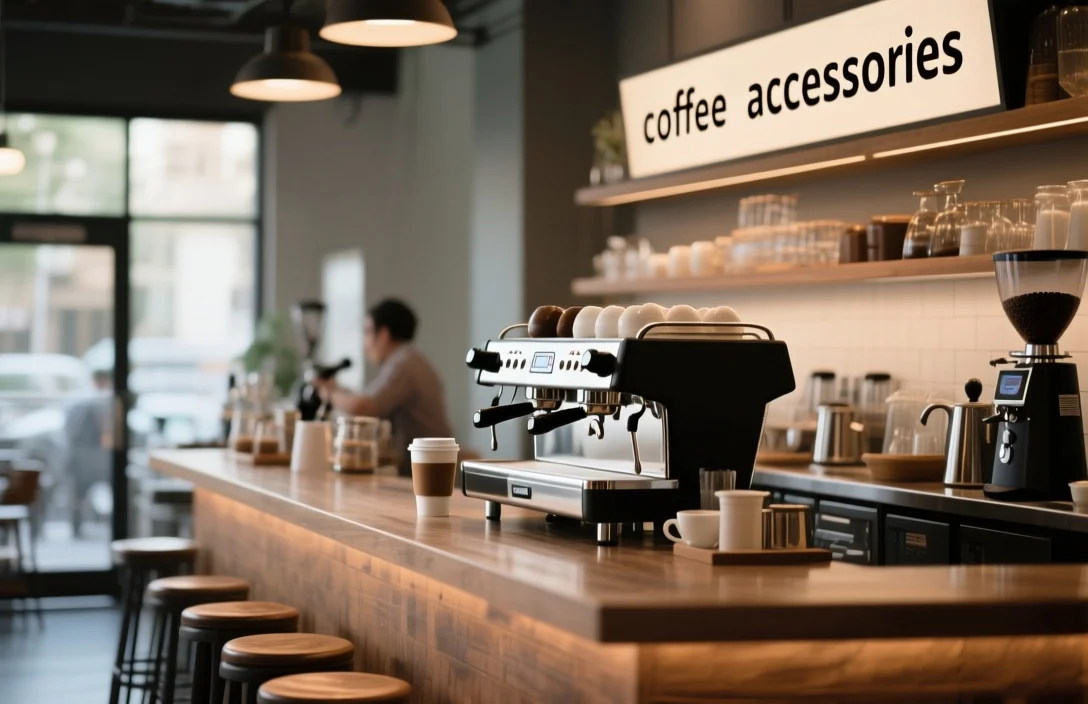
Essential coffee bar accessories help you brew more consistently, store beans properly, and keep the whole setup manageable. I would start with the tools that affect taste first, then add the items that make the routine cleaner and easier. That keeps the bar useful instead of crowded.
what belongs in a practical coffee bar
At minimum, a home coffee bar needs a grinder, a brewer, a scale, and airtight storage for beans. If you make espresso, add a tamper and a milk frother. If you brew by hand, a gooseneck kettle matters more than decorative extras. Spoons, a knock box, cleaning brushes, and a towel round out the basics.
My practical rule is simple: buy for the way you actually make coffee, not for the way the shelf looks in a photo. A better grinder usually gives you more day-to-day value than a nicer tamper. For pour-over, a digital scale that measures to 0.1 g and a controlled-spout kettle do more work than serving pieces ever will.
Table: sensible starter picks and who they help most
| Name | Price / Key Spec | Best For |
|---|---|---|
| Burr grinder (entry) | Budget to mid – consistent grind vs blade | Daily filter coffee drinkers who buy whole beans |
| Digital scale (0.1 g) | Low-cost, accurate | Anyone measuring dose and brew ratio |
| Gooseneck kettle | $41.99 – $59.99 (example listing range) | Pour-over and manual brewers needing flow control |
| Espresso machine (entry-level) | $299.99 (example sale price) | Home espresso fans wanting shots and milk drinks |
| Airtight canister | Airtight seal, opaque or dark | Preserving whole-bean freshness |
| Milk frother / steam wand | Handheld or machine-integrated | Latte and cappuccino drinkers |
| Knock box | Compact, rubber-lined | Espresso users who need a tidy puck disposal |
| Dripper + filters | Ceramic or plastic dripper, cone filters | Pour-over brewers focused on clarity |
Choose accessories by brewing style, not by category label
Espresso, pour-over, French press, and automatic drip all ask for different tools. That sounds obvious, but it is where a lot of people overspend. Espresso needs a burr grinder that can handle fine settings, plus a tamper and, if you want milk drinks, a machine with a steam wand. Pour-over leans on control, so a scale and gooseneck kettle matter more than anything else.
Pour-over also benefits from a solid dripper and the filter type you prefer. Paper filters give more clarity. Reusable metal filters give more body. French press is less demanding about grind precision, but the carafe and mesh filter still need to be sturdy and easy to clean. Automatic drip is the convenience choice, and a good burr grinder is often the best upgrade for that setup.
Grinder consistency is the common thread. If I had to pick one accessory that changes the most cups, I would pick the burr grinder. Pair it with airtight storage, and you remove two of the most common problems at once: stale beans and uneven grind size.
How to set up the bar so it actually works day to day
A coffee bar is only useful if the workflow is easy. Keep the grinder and brewer close to a dedicated outlet. Put beans, mugs, and filters within reach, but leave clear counter space for the part where you actually measure and brew. That little bit of breathing room matters more than people expect.
I would also keep cleaning tools out of sight but not out of reach. Brushes, cloths, and descaling supplies can live in a drawer or under the counter. A shallow tray beneath the grinder is worth it too. It catches stray grounds and saves the counter from unnecessary wear.
If more than one person uses the coffee bar, labeling helps. Roast dates, filter sizes, and preferred grind settings are easy to mark and easy to ignore until someone else makes the coffee. A small notebook or whiteboard is enough. Write down the dose, water temperature, and grind setting, then reset those details after cleaning if needed.
Materials that hold up, and a few that wear badly
Stainless steel, glass, ceramic, wood, and food-safe plastics each have a place. Stainless steel is the safest default for kettles, grinders, and knock boxes because it handles heat and bumps well. Glass can look tidy, but it chips more easily and shows oils and stains faster than most people want.
Ceramic drippers are stable and neutral in use, but they break if dropped. Wood adds warmth to a setup, though it needs care and should stay away from constant moisture. BPA-free plastic is light and usually cheaper, but lower-grade plastics can hold coffee odors over time.
If you use milk drinks often, cleanability deserves more attention than appearance. Pitchers, steam wands, frothers, and tamping mats need regular rinsing and deeper cleaning on a schedule. I would choose the material I can keep clean without thinking too hard about it. That is the one that lasts.
Budget, midrange, and premium setups
Different budgets answer different questions. How often will you use the bar? How much counter space do you have? Are you buying a starter setup or building something you will keep?
Budget build: start with a manual brewer, a basic burr grinder if possible, a reusable kettle, and a digital scale. A pour-over dripper or French press can get most beginners to a solid cup without a large spend. Add a simple airtight jar, a spoon, and a towel, and you are covered for everyday use.
Midrange build: this is where a better electric grinder, a dedicated gooseneck kettle, and either an entry espresso machine or a stronger automatic brewer start to make sense. A tamper mat, stainless milk pitcher, and knock box keep the workflow neat. Retail listings show gooseneck kettles around $41.99 – $59.99 and occasional sale-price espresso machines around $299.99, so sale timing can matter.
Premium build: if coffee is a daily hobby, a higher-end espresso machine with PID temperature control and a commercial-grade grinder make sense. You might also add a hot-water dispenser or a second kettle for speed. A compact bar cart or built-in shelving helps when the accessory list starts to outgrow the counter.
Keeping the equipment in shape
Maintenance is not optional if you want the bar to keep tasting good. Descale kettles and machines on the schedule the manufacturer gives you, and pay attention to water hardness in your area. Scale buildup slows heating and can make temperatures less steady. Clean grinder burrs when you see oil buildup or output start to drop.
Steam wands and frothing pitchers need daily rinses and periodic deeper cleaning. Milk residue is not something to let sit. Espresso machines also need shower screens, gaskets, and water filters replaced at the intervals listed in the manual. Empty the knock box, wipe the tamping mat, and clear grounds off the counter each day. Those small tasks keep the setup from turning messy.
Storage matters too. Keep beans in an opaque, airtight container at room temperature. I would avoid refrigeration unless you have a very deliberate moisture-control setup. Replace paper filters as needed and wash reusable filters after each use. A little routine care is cheaper than replacing worn accessories later.
Mistakes that make a coffee bar harder to use
The biggest mistake is buying tools before learning the basic workflow. Fancy gadgets can fill drawers quickly, but they do not fix grind size, water temperature, or dose. Those are the levers that matter.
Another common problem is mismatched gear. A high-end grinder paired with a machine that cannot hold temperature well is an uneven setup. I would rather have a balanced workflow than one expensive piece surrounded by weak links.
Cleaning gets skipped more often than it should. Coffee oils and milk residue build up fast, and that changes flavor before people notice the problem on the surface. Keep a short cleaning list. If a tool is used daily, it should be easy to clean daily.
Layout can also get in the way. If the items you use most are buried, the bar will not get used much. Put the essentials within arm’s reach and store the rest where they do not block the workflow.
Small-space and portable coffee bars
Tiny kitchens, apartments, and dorm rooms can still support a good coffee routine. The trick is to choose equipment that does more than one job or stores easily. A compact hand grinder and an Aeropress, or a small pour-over dripper, take up very little room and still give good results.
Collapsible kettles, battery-operated milk frothers, and foldable scales help in travel setups or temporary stations. Portable grinders are slower, but they can still do the job if you are patient. A small case or roll-up organizer keeps everything together and cuts down on missing pieces after a move.
For travel, I would favor stainless steel and hard plastic over glass and ceramic. They are less fragile and easier to pack. A simple checklist is useful too, especially when you are trying to leave without forgetting filters or a spoon.
A practical shopping order
A lot of people buy the decorative pieces first. I would do the opposite. Buy the pieces that shape the cup and the routine, then fill in the rest later.
A sensible order looks like this: whole-bean coffee, burr grinder, scale, kettle, brewer, storage canister, tamper and knock box, milk frother, then decorative items if you still want them. Quality matters most on the grinder, scale, and kettle. Those are the pieces you are least likely to replace soon.
Retail pricing varies by brand and sale timing, but current listings show a gooseneck kettle in the $41.99 – $59.99 range and sale-priced espresso machines around $299.99. I would use those figures as a rough guide, not a promise. Keep an eye on bundles too, since some include filters or cleaning kits and save a little upfront cost.
Bulleted checklist:
- Burr grinder
- Accurate digital scale, 0.1 g resolution preferred
- Kettle suited to your brew method, gooseneck for pour-over
- Airtight canister for beans
- Brewer matched to your coffee style
- Basic cleaning kit, brush, descaler, microfiber towels
- Serving items, spoons, mugs, pitcher for milk
- Storage or cart to keep the workflow organized
FAQ
What are the first accessories I should buy?
Start with a burr grinder and a digital scale. Those two affect consistency more than any decorative item or secondary tool.
Do I need a gooseneck kettle if I use an automatic drip machine?
No. A gooseneck kettle mainly helps with pour-over and other hand-brewing methods where pour control matters. Automatic drip machines do not need one.
How should I store coffee beans for best freshness?
Use an opaque, airtight container and keep the beans at room temperature. Whole beans are usually best within 1-3 weeks of opening. If you freeze them, divide them into single-use portions so you are not thawing the same beans over and over.
Is a milk frother necessary for a coffee bar?
Only if you make milk drinks like lattes or cappuccinos. A handheld frother or a standalone electric frother is usually enough unless you want a machine with a steam wand.
What I would do next
A coffee bar works best when you keep the focus on three things, grind quality, accurate dosing, and controlled water delivery. That usually means starting with a burr grinder, a reliable scale, and the right kettle for your brewing method. After that, add the brewer, storage, and any milk tools you actually use.
If I were building one from scratch, I would list the drinks I make most often, choose the grinder and brewer around that habit, and buy an airtight canister right away. The rest can come later.

- Espresso Tastes Watery? 10 Common Causes and How to Fix It - October 23, 2026
- 10 Common Coffee Equipment Cleaning Mistakes and How to Avoid Them - October 23, 2026
- 17 Common Coffee Grinder Problems and How to Fix Them - October 23, 2026