
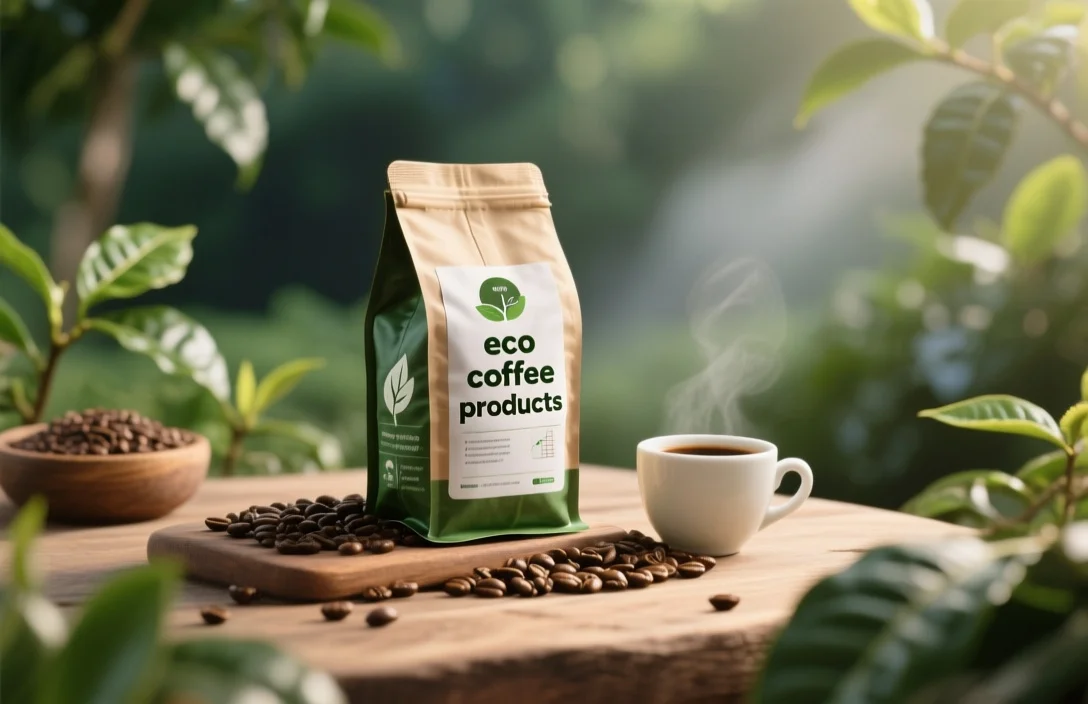
Short answer: eco coffee products are coffee beans, packaging, accessories, and brewing supplies designed to reduce environmental harm across production, transport, and disposal. They typically emphasize sustainable farming, lower-waste packaging, or reusability and should be chosen to match your strongest environmental priority.
What eco coffee products mean and how to read the label
Eco coffee products refers to a set of coffee-related goods where the manufacturer or seller claims reduced ecological impact. Those goods include green-bean sourcing (for example, shade-grown or organic), processing and transport choices, and the materials used for packaging, single-serve formats, filters, and machines.
Definition of an eco product depends on the claim: some labels focus on farm-level practices (soil health, biodiversity), while other claims target consumer-phase waste (recyclable packaging, compostable pods) or social standards (fair wages and co-op premiums). Reading the package and the seller’s site for specific, auditable claims is the first step; broad phrases such as “eco” or “sustainable” carry little information without named standards.
Why choose eco coffee products
Climate emissions, land use change, and waste are the main environmental pathways affected by coffee choices. Farming methods influence soil carbon, biodiversity, and pesticide use; transport and roasting affect fuel consumption and embodied emissions; packaging and disposables determine household and municipal waste streams.
Choosing a product that targets the mechanism you care about produces the best outcome for your efforts. Consumers focused on waste should prioritize reusable equipment or truly compostable packaging; people worried about land conversion should look for shade-grown or agroforestry-labeled beans; those aiming to support livelihoods should consider direct-trade or verified fair-trade options.
Types of eco coffee products and a quick comparison
Beans, packaging, single-serve formats, filters, and machines each present different trade-offs between waste, convenience, and supply-chain impacts. The table below compares common product categories by the key spec you should check and what each category is best for.
| Name | Price / Key Spec | Best For |
|---|---|---|
| Organic or shade-grown beans | Price varies; key spec: certified organic label or “shade-grown”/”agroforestry” claim with verification | Protecting soil and biodiversity on the farm |
| Fair Trade or direct-trade beans | Price varies; key spec: named certification or producer relationship details | Improving farmer income and supply-chain transparency |
| Bulk or whole-bean retail (bagged) | Price varies; key spec: minimal packaging, recyclable bags, or bulk refills | Reducing single-use packaging at home |
| Reusable metal/cloth filters | Up-front cost varies; key spec: material durability and fit for your brewer | Eliminating paper filter waste |
| Reusable single-serve pods | Price varies; key spec: compatibility with machine and construction material | Reducing single-use pod waste if you already own a pod machine |
| Compostable single-serve pods | Price varies; key spec: “home compostable” vs “industrial compostable” label | Lower waste footprint only if accepted by your local composting system |
| Recyclable plastic or aluminum pods | Price varies; key spec: local recycling acceptance and pod disassembly requirements | Convenience when recycling infrastructure exists |
| Low-energy or programmable brewers | Price varies; key spec: standby consumption and energy-saving modes | Cutting in-home electrical consumption over time |
Beans and packaging choices change the upstream impacts; filters and single-serve formats affect the downstream household waste. Comparing spec sheets side by side, the key difference among pod types is whether they require industrial composting, home composting, or municipal recycling – and whether local facilities accept those materials.
How to evaluate sustainability claims and certifications
Look for named, verifiable labels rather than vague marketing phrases. Certifications such as USDA Organic, Fair Trade, Rainforest Alliance, or Bird-Friendly each address different problems: organic emphasizes chemical inputs and approved practices, Fair Trade targets social premiums and labor standards, and Rainforest Alliance focuses on a mix of environmental and social requirements.
Labels vary in rigor, scope, and auditing frequency. Labels that include a traceable lot code or a link to a certifier’s verification page are easier to validate. Certification names are helpful, but reading the certifier’s public standard (available on that certifier’s website) tells you exactly which practices the product promises.
Certification or label alone does not cover everything: packaging and end-of-life labels matter too. Packaging marked as compostable may require industrial composting; labeling that claims “biodegradable” without a standard or timeframe is a red flag. Check the product copy for “home compostable,” “industrial compostable,” or a recognized compostability standard referenced explicitly.
Buying guide: match product choices to priorities (ranked guidance)
Ranked by immediate household waste reduction, then by feature breadth for that tier: 1) reusable metal or cloth filter, 2) reusable single-serve pod, 3) bulk whole-bean coffee in refillable containers, 4) compostable pods (only if your local system accepts them), 5) recyclable packaging where local recycling accepts the material.
If your priority is supporting small producers while limiting environmental harm, choose small roasters who publish farm-level sourcing details or offer direct-trade options. Those brands often provide roast-level transparency and sometimes shipping consolidation to reduce freight emissions.
Budget-conscious buyers should prioritize per-use waste reduction rather than the lowest upfront cost. Reusable items typically have a higher initial price but become less expensive per cup over time. For consumers balancing convenience and impact, reusable pods combined with a compatible machine often deliver the best waste reduction without changing daily routines.
Checklist for buying:
- Check the product for named certifications or traceable sourcing claims.
- Confirm packaging end-of-life: recyclable where you live, home compostable, or industrial compostable.
- Evaluate per-cup waste: estimate how often you’ll brew and whether single-serve or bulk will create more household waste.
- Compare total cost of ownership for reusable equipment against ongoing disposable purchases.
- Read seller pages for producer relationships, not just marketing language.
Brewing and end-of-life practices that make a difference
Composting spent coffee grounds and truly compostable packaging diverts waste from landfill and returns organic matter to soil. Municipal composting rules differ widely, so contact your local program or check posted guidance before assuming a “compostable” wrapper will be accepted; many municipal systems accept only certain materials.
Recycling systems also vary: rigid aluminum and certain plastics can be recycled in many places, whereas multi-layer bags and pods glued from mixed materials often cannot. Brewing choices influence energy use: brew methods that heat only the amount of water you need, or machines with programmable energy-saving modes, reduce electrical consumption over time.
Practical steps to reduce impact:
- Rinse and separate components when recycling requires disassembly.
- Empty and compost grounds (they are widely suitable for home compost piles).
- Keep reusable filters and pods clean and in service; a well-maintained reusable lasts years.
- If buying compostable pods, verify whether the label says “home compostable” or “industrial compostable” and then confirm local acceptance.
Common mistakes, greenwashing red flags, and what to avoid
Vague language like “eco-friendly,” “green,” or “planet-safe” without a named standard is a common greenwashing sign. Marketing images of forests, birds, or farmworkers do not substitute for auditable labels or transparent sourcing information.
Biodegradable or compostable claims without a referenced certifier or standard should be treated cautiously. Products made from multiple materials glued together (paper + foil liner + plastic) are frequently unrecyclable and unlikely to break down easily in home composting.
Red flags to watch for:
- No certifier named for a sustainability claim.
- Packaging that lists “biodegradable” without timeframes or standards.
- Claims about “carbon neutral” with no reference to offset method or third-party verification.
- Single-serve pods labeled recyclable with no instructions for disassembly – that usually means local recycling will reject them.
Where to buy eco coffee products and what to expect on price
Roasters that sell direct to consumer, local coffee co-ops, bulk bins, and specialty retailers are typical sources for sustainably produced beans. Mainstream grocery chains carry eco-labeled options as well, but transparency varies by brand.
Current nationwide pricing for specific eco-labeled products was not available here; expect price variability across roasters and product types. Specialty and certified items often carry a premium to cover certification and producer premiums, but bulk purchasing and local roasters can offset some of that cost.
Shopping tips:
- Ask local roasters about grain-of-origin, farmer relationships, and packaging options.
- Look for refill stations or bulk-buy programs to lower packaging waste and per-cup cost.
- Compare per-cup cost for reusable vs disposable formats over a projected period (three to twelve months is a practical horizon).
FAQ
Are compostable coffee pods a reliable eco choice?
Compostable pods can reduce landfill waste only if the materials are accepted by your local composting system or truly home-compostable. Verify whether the pod specifies “home compostable” or “industrial compostable,” then confirm local facility acceptance, because terms are often used inconsistently in product marketing.
How much impact does choosing organic coffee have?
Organic certification primarily limits the use of synthetic pesticides and fertilizers and changes how the farm manages soil and inputs. The environmental benefits depend on the specific farm practices and landscape context; certification is a useful indicator but not a universal guarantee of lower impact in every metric.
Can I recycle single-use coffee pods in curbside programs?
Most curbside programs do not accept intact pod units, especially mixed-material pods. Some manufacturers design pods to be recyclable if you separate components; check the pod instructions and your local recycling rules before assuming curbside acceptance.
Is reusable pod use hygienic and practical?
Reusable pods are hygienic when rinsed and cleaned after each use, and many users find them convenient once they match a consistent grind and pack method. Proper maintenance preserves flavor and reduces waste; manufacturers typically provide cleaning guidance for their models.
Which certification should I trust for small-farm sustainability?
No single certification covers every sustainability dimension. Choose the certification aligned with your priority: USDA Organic for chemical input restrictions, Fair Trade for social premiums and trader requirements, and producer-disclosed direct trade or transparency programs for traceability. Prefer products that publish producer or farm details in addition to certification claims.
Conclusion
My practical verdict: start by identifying which environmental outcome matters most to you – waste reduction, farm-level biodiversity, or producer welfare – and then buy the product category that targets that outcome (reusable hardware for waste; certified shade-grown/organic beans for biodiversity; Fair Trade or direct-sourced beans for livelihoods). A simple next step is to check a favorite coffee bag or pod for a named certification and the packaging end-of-life instructions, then compare a reusable option for per-cup cost and waste over the next six months.

- Espresso Tastes Watery? 10 Common Causes and How to Fix It - October 23, 2026
- 10 Common Coffee Equipment Cleaning Mistakes and How to Avoid Them - October 23, 2026
- 17 Common Coffee Grinder Problems and How to Fix Them - October 23, 2026