
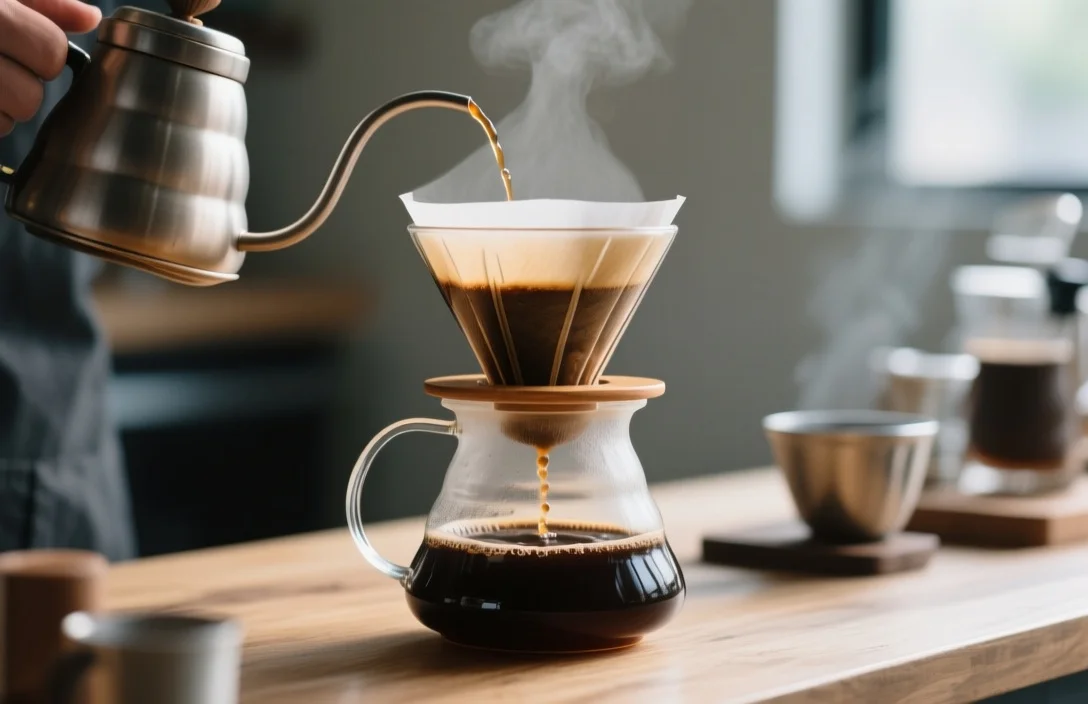
Slow coffee brewing is a set of techniques that extend contact time and tighten control over extraction so the cup highlights sweetness, nuanced acidity, and texture. Use longer contact time, a coarser or more consistent grind, and gentle water flow or low temperatures to pull different flavor profiles from the same beans.
Why slow brewing changes the cup
Extraction is the core process that turns roasted coffee into a drinkable cup: water dissolves soluble compounds out of ground coffee. Faster extraction tends to emphasize acids and volatile aromatics; slower extraction gives more time for larger, less-soluble compounds to come out, which often increases body and perceived sweetness while muting some quick-release acids. Many home brewers seek slow methods to reduce sour brightness, tame unpleasant bitterness, or coax floral and chocolate notes without over-extracting.
Chemistry matters. Soluble solids in coffee include acids, sugars, oils, and bitter alkaloids. Each group dissolves at different rates depending on grind, temperature, and agitation. A coarser grind exposes fewer surfaces; lower temperature slows solubility; and restricted flow or immersion increases dwell time. Combining those variables produces what most people call “slow coffee.” Practical home brewing treats these variables as knobs to adjust toward a desired cup rather than fixed rules.
Practical taste testing is the most reliable proof. After comparing common slow-brew approaches side by side in my kitchen – using the same beans, scale, and pouring technique – I found that the methods which emphasized gentle, prolonged contact consistently produced sweeter, fuller cups than aggressive, fast pour-overs. That result held for lighter- and medium-roast beans, though very dark roasts can taste flatter when brewed slowly because their soluble profile shifts.
Slow coffee brewing methods compared
Choosing a slow-brew method depends on how much hands-on time you want, the equipment you own, and what you want from flavor and mouthfeel. The table below compares the main categories by the defining variable and the typical user outcome.
| Name | Contact Time / Key Spec | Best For |
|---|---|---|
| Immersion (French press, Aeropress – long steep) | Full immersion; extended dwell time; gentle plunge or press | Heavier body, forgiving technique, simple equipment |
| Low-temp immersion (cold brew) | Cold water steep for many hours | Smooth, low-acidity, concentrate for iced drinks |
| Slow pour-over (gentle, slow pour with coarse grind) | Slower flow rate; reduced agitation | Clean but syrupy cup, clarity with more body |
| Steep-and-drip hybrid (slow drip towers / slow-brew devices) | Very slow drip or controlled percolation over long time | Complex, crystalline clarity; requires patience and gear |
| Extended immersion with pressure release (inverted Aeropress with long steep) | Immersion plus short pressure extraction at end | Concentrated, quick cleanup, adaptable to small servings |
Practical trade-offs surface in each category. Immersion methods are forgiving and scale easily for groups, but they can trap fines and sediment unless you use a finer filter. Cold brew is low-acid and shelf-stable in the fridge for several days, but the long steep hides delicate aromatics that heat would otherwise release. Slow pour-over techniques can yield remarkable clarity but demand a uniform grind and steady pouring rhythm.
How to choose which slow method fits you
Start by matching method to the outcome you want, then account for practical constraints like time and equipment.
- Want rounded sweetness and full mouthfeel with minimum fuss? Choose an immersion method (French press or an extended Aeropress recipe).
- Need a low-acid iced coffee you can make in advance? Cold brew is appropriate.
- Prefer a clean cup that still feels syrupy and detailed? Slow pour-over techniques with a coarser grind are the right fit.
- Want something showy that extracts complex aromatics and clarity? Consider a slow-drip tower or a dedicated slow-brew device if you’re willing to invest time and money.
Equipment also affects day-to-day decisions. A French press or a sturdy glass jar and a fine sieve can handle most immersion experiments. A gooseneck kettle and a stable dripper (V60, Kalita, or similar) make controlled pour-overs practical. Dedicated slow-brew hardware yields the most predictable long-drip results but adds cost and bench space.
Personal schedule matters: cold brew requires the least active time but the longest calendar time; a slow pour-over takes active attention for a few minutes but finishes immediately. Select the method you will actually do on busy mornings rather than the one that sounds best on paper.
A starter slow-brew recipe you can make at home
Home testing makes principles concrete. The following protocol gives a reproducible starting point for a slow, balanced cup using common kitchen tools. Treat the recipe as an adjustable framework – tweak grind size, water temperature, and contact time to match your beans and taste.
- Measure and grind. Use freshly roasted beans and grind to a coarse, even texture when possible. Avoid fluffy, uneven grinds; aim for consistency.
- Heat water. Bring water to a temperature that is warm but not aggressively boiling. Let it rest off heat if it has reached a vigorous boil.
- Bloom (if using pour-over). Wet the grounds lightly and wait for trapped gases to escape; this initial wetting helps even extraction in the minutes that follow.
- Control pour or immersion. For immersion: pour water to fully saturate grounds and let sit for an extended period. For slow pour-over: pour in slow, steady concentric circles, keeping the bed wet without vigorous agitation.
- Finish and serve. Separate grounds from liquid using the appropriate filter or press and serve immediately for hot methods. If you used a cold or long immersion, chill and dilute to taste.
A few directional tuning notes: reduce contact time if the cup tastes muddy or bitter; increase contact time if it tastes thin or overly bright. Grind coarser to slow extraction, and finer to speed it. Water temperature will shift perceived acidity – cooler water softens acids; hotter water highlights aromatics and acids.
How grind, temperature, and agitation interact in slow brewing
Grind size is the single most influential variable for extraction rate. Coarser grinds present less surface area, slowing extraction. Finer grinds increase extraction speed and change mouthfeel. Consistency matters more than absolute size: a burr grinder that produces uniform particles will yield a more controllable slow brew than a blade grinder that creates both fines and large particles.
Temperature changes solubility. Lower temperatures reduce how quickly compounds dissolve; slow methods exploit that to favor sugars and oils over sharp acids. High temperatures pull a broader range of compounds more quickly and can expose bitterness if contact time is long.
Agitation and flow rate finish the triad. Gentle, minimal agitation reduces the milling out of fines and prevents channeling in pour-overs. Slow, steady flow – or full immersion with no flow – equalizes extraction across the bed. Many slow-brew proponents use slow pulsed pours or controlled drip to prevent high-velocity spots that extract too fast.
Practical experimentation approach: change one variable at a time and taste. Start with grind, then tune temperature, then refine pour speed or immersion time. Keep a short notebook: bean origin and roast level, grind setting or description, water temp, and minutes of contact. That log will reveal patterns far faster than random adjustments.
Common slow-brewing mistakes and how to avoid them
Beginners often assume that “slow” is always better. Overdoing any single variable can create predictable faults. Here are the most common mistakes and precise fixes.
- Under-extraction (sour, thin, or vegetal). Usually caused by excessively coarse grind, too little contact time, or very cool water. Fix by slightly finer grind, longer contact, or small temperature increase.
- Over-extraction (bitter, hollow, drying). Usually the result of too-fine grind, too-long contact, or too-hot water. Fix by coarsening the grind, shortening contact time, or dropping water temperature slightly.
- Muddiness or excessive sediment. Common with immersion methods and uneven grinds. Fix by using a finer filter or settling method, or switching to a dripper with paper filtration.
- Flat flavor from dark roasts. Dark-roasted beans often contain more soluble compounds that extract quickly; long, slow brewing can mute brightness and aromatic lift. Fix by shortening contact or raising temperature slightly; consider a faster method if you want pronounced aromatics.
- Inconsistent results. Variable pouring rhythm, an inconsistent grind, or not controlling water-to-coffee ratio cause day-to-day drift. Fix by using a scale to dose and measure water, a timer, and a single grinder setting.
A simple diagnostic routine reduces guesswork. Sip the brew and describe three features: body (light to heavy), acidity (muted to bright), and finish (clean to lingering bitterness). That framework points clearly to which variable to tweak.
Recipes and variations to try (with tasting goals)
Trying several recipes helps you understand how slow methods shape flavor. The three below are practical starting points for different objectives. Each description explains why the method works and what to expect, then offers a tweak to move dialed flavor in one direction.
- Immersion for body and sweetness: Use a coarse, even grind and let coffee steep fully in water, then separate grounds. Expect round texture and forward sweetness. To increase clarity, use a paper-filtered immersion technique or decant the brewed liquid through a fine cloth or paper.
- Slow pour-over for clarity and syrupy texture: Use a slightly coarser grind than your normal pour-over and pour in slow, steady intervals to maintain an even bed. Expect a cup with clarity but higher perceived body than a fast pour. To increase brightness, pour a bit faster or slightly raise water temperature.
- Cold steep for low acidity and iced drinks: Submerge grounds in cool water and leave undisturbed for an extended period. Expect a smooth, mellow concentrate that works well over ice. To bring out more aromatics, brew at cool-to-room temperature for a shorter period rather than ice-cold for very long.
Try two beans side-by-side with the same slow method to highlight bean differences. Lighter single-origin beans tend to reveal floral and tea-like nuances under slow extraction, while blends or naturally processed beans deliver fruit sweetness and weight.
Tasting protocol and how to adjust based on flavor
A consistent tasting protocol helps translate sensory impressions into concrete adjustments. Use the following brief loop each time you evaluate a new slow-brewed cup:
- Note the first impression: is the cup bright, flat, creamy, or sharp?
- Assess the middle palate: do sugars, fruit, or savory notes appear, or is there bitterness?
- Evaluate the finish: does flavor linger pleasantly, or is there a drying bitter aftertaste?
- Adjust a single variable and brew again.
If the first impression is overly bright and short-lived, increase contact time or slightly decrease grind coarseness. If a bitter finish dominates, coarsen the grind or shorten the steep. If the cup feels thin but clean, make the grind slightly finer or use a touch more coffee.
Keeping changes small – a single tweak at a time – produces clear feedback. Taste immediately when hot methods finish; cold brews benefit from chilling and resting before evaluating.
Equipment notes and small investments that matter
You can begin slow brewing with inexpensive tools, but a few modest upgrades improve repeatability and quality.
- A scale matters. Dosing coffee and water precisely makes adjustments meaningful.
- A burr grinder produces a uniform particle distribution; that consistency is essential for controlling slow extractions.
- A gooseneck kettle helps maintain a steady, gentle pour for slow pour-over work.
- Paper filters or a fine mesh cloth reduce sediment in immersion brews without losing too much body.
- A reliable thermometer or a kettle with temperature control helps reproduce temperature-related subtleties.
Spending wisely shifts the problem from equipment to technique. Start with a scale and a burr grinder if you can buy only one upgrade. Those two purchases reduce variation far more than buying a specialty slow-brew tower.
Practical workflow for making slow coffee without wasting time
A simple workflow keeps slow brewing compatible with busy mornings.
- Night-before prep. If you plan to drink cold brew or long-steep immersion, set it up before bed and store in the refrigerator. That reduces morning friction.
- Batch brewing. Make enough to last 24-48 hours for hot- or cold-brew concentrates if you tend to repeat the same cup each day. Keep the concentrate refrigerated and dilute to taste.
- Quick slow-brew alternative. Use a short extended-immersion Aeropress technique that steepens longer than a quick press but finishes in minutes. It produces concentrated, syrupy cups with minimal cleanup.
- Cleanup plan. Have a designated brewing and cleanup routine so sediment and oils don’t build up. Rinse equipment immediately after use when possible.
Workflow choices depend on how much you want to trade active time for convenience. Long cold steeps win on passive time, while slow pour-overs demand focused minutes but yield immediate hot cups.
Common beans and roast levels that work best with slow methods
Certain bean characteristics respond predictably to slow extraction. Lighter roasts benefit from slower extraction because delicate aromatics and sugar balance have more time to develop without being overwhelmed by rapid acidity. Naturally processed single-origin beans often reveal layered fruit and sweetness under slow methods. Dark roasts sometimes become dull or overly heavy when brewed slowly because much of their desirable aromatics are quickly soluble and the remaining solubles can taste flat.
Match roast and method by desired effect: choose slow pour-over or long immersion for light-to-medium roasts to explore nuance; use shorter slow-method variants for very dark roasts to preserve aromatics. Always taste and adapt.
FAQ
How long is “slow” when brewing coffee?
Expect slow methods to involve noticeably longer contact times than quick pour-overs. For hot methods, “slow” means minutes of dwell time rather than rapid drain; cold methods run for many hours. Consider the end taste more than an exact minute count.
Will slow brewing always reduce acidity?
Slow brewing tends to moderate sharp, volatile acidity because of reduced temperature or slower extraction, but it will not eliminate desirable bright notes. Taste should guide adjustments – reducing acidity sometimes sacrifices some aromatic lift.
Can I use any grinder for slow-brew methods?
A uniform grind yields more predictable slow-brew results. A burr grinder is strongly preferred. Blade grinders often produce uneven particles that create both under- and over-extraction in the same cup.
Is slow brewing better for dark roasts?
Not necessarily. Dark roasts can lose nuance when brewed slowly; faster methods or slightly higher temperatures often preserve their aromatic strength. Try a shorter slow method first and compare.
How should I store cold brew concentrate?
Keep cold-brew concentrate refrigerated and use within a few days for best flavor. Dilute to taste with water or milk before serving.
Practical verdict and next
Slow coffee brewing gives you control over extraction and lets you tailor cups toward sweetness, body, or clarity. Start with one method that fits your schedule – try an extended immersion for simplicity, a slow pour-over for clarity, or a cold steep for iced drinks – and keep a brief log of grinder setting, water warmth, and contact approach. Your next step: pick one method from this article and run three small experiments, changing only grind size between brews to hear how that single variable shifts the final cup.

- Rocket R NINE ONE Edizione Speciale: Features and Buying Guide - October 25, 2026
- LUCCA A53 Mini V2 Espresso Machine: Features and Buying Guide - October 25, 2026
- Caffena Coffee Nuova Simonelli Appia Life 2GR Espresso Machine: Features and Buying Guide - October 25, 2026