
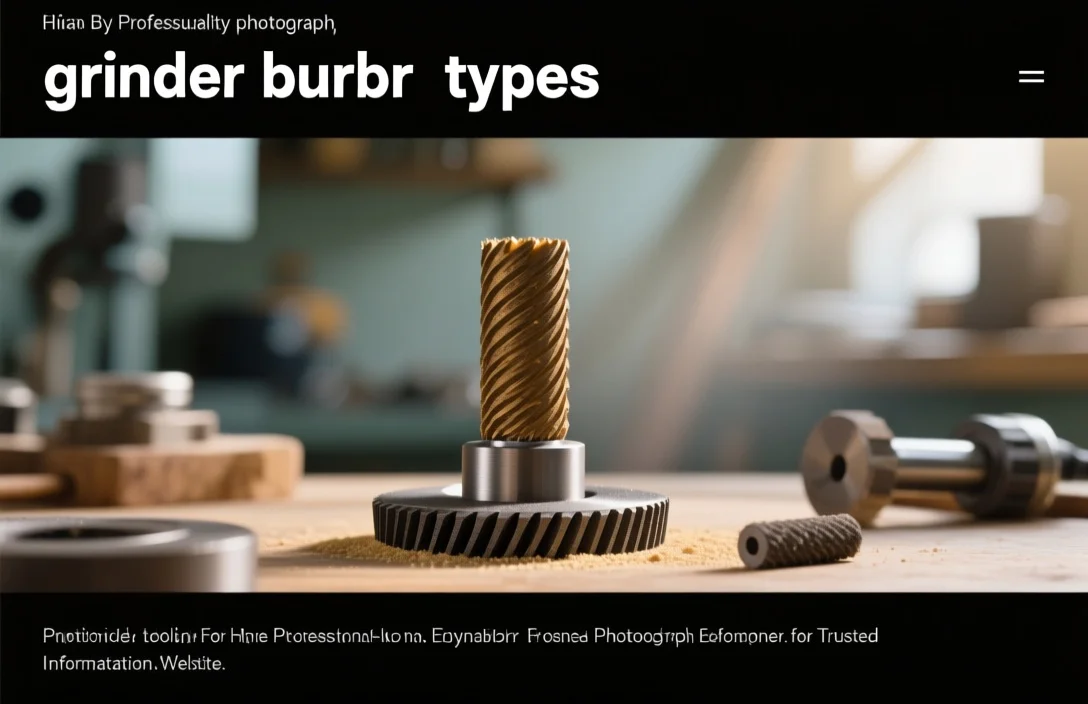
Two common grinder burr types are flat and conical, and the basic choice comes down to how you weigh consistency, heat generation, and ease of cleaning. Choosing between stainless steel or ceramic material, single versus stepped profiles, and commercial versus home-grade sizes further changes how a grinder performs for espresso, drip, or coarse methods.
What grinder burrs do and why shape matters
Burrs are the pair of abrasive surfaces inside a grinder that crush and shear coffee beans into particles. Good burr contact creates a narrow particle distribution that helps espresso extraction, while inconsistent contact produces fines and large particles that throw brew balance off.
Shape determines how beans feed and how particles exit the grind chamber. Conical burrs feed beans from the top center toward an outer ring, producing a flow pattern that tends to eject grounds into a chute with relatively low retention. Flat burrs grind between two parallel rings and eject particles outward into a collection chamber, which typically increases retention but can yield a more uniform particle size for many users.
Grinding mechanism directly affects temperature and noise. Conical designs generally run cooler at a given motor RPM because of slower rotational surface speed at the inner cone, while flat burrs often run faster at the outer edge and may transfer more heat into the beans in high-throughput scenarios. Sound profiles differ, too; conical burrs are frequently quieter in domestic machines.
Flat burrs: pros, cons, and typical performance
Flat burrs consist of two parallel annular rings with matching teeth profiles that shear beans between their edges. Performance concentrates on tight particle distribution, which helps produce consistent extraction when dose and distribution are well controlled.
Advantages include predictable grind uniformity and repeatable settings on grinders that use precise micrometer adjustments. Drawbacks for home users often include higher retention and more required cleaning because ground coffee accumulates between flat rings and in the chute. Commercial units use larger diameter flat burrs to increase throughput and manage heat buildup, a point to note when comparing machines.
Real-world trade-offs become visible across brew methods. Espresso users who chase puck consistency and low shot variance often favor flat burrs for their even particle curves. Drip and French press drinkers sometimes prefer slightly different profiles because extraction tolerance is broader; that allows other burr attributes, such as retention or noise, to guide the choice instead.
Conical burrs: pros, cons, and typical performance
Conical burrs pair an inner cone with an outer ring; beans fall into the gap and are crushed radially outward. Performance emphasizes low retention and simple feed dynamics, making conical burrs forgiving for grinders with single-dose workflows.
Benefits include easier cleaning in many models, generally lower noise at home, and fewer grounds trapped in the grinder body. Downsides may include a wider particle distribution in some designs, which shows up as slightly more fines relative to a matched flat burr under the same settings. That difference matters most for espresso where fines influence crema, channeling, and extraction balance.
User experience varies by grinder design and burr quality. High-end conical burrs can outperform cheap flat sets, while budget conicals can underperform mid-range flat burrs. Match burr geometry to your goals rather than picking by shape alone.
what affects wear and flavor influence
Stainless steel and ceramic are the two materials most commonly used in burr manufacture. Stainless steel burrs are tough, resist chipping, and are the default choice for high-speed commercial grinders because of durability under heavy loads.
Ceramic burrs offer corrosion resistance and can stay sharp longer in low-usage domestic environments, but they are more brittle and can fracture if a stone or metal fragment enters the grind chamber. Ceramic surfaces sometimes produce a slightly cooler grind because ceramics have lower thermal conductivity than metal, which can preserve aromatic volatiles better during high-volume grinding.
Coatings and alloy treatments change hardness and wear rate without altering basic geometry. Titanium or diamond-like carbon coatings appear on some premium burrs to extend life or reduce friction. Material choice influences how often you need to replace or resurface burrs, and it affects how the grinder ages in taste and retention.
Grind size, particle distribution, and brew-method matching
Grind size setting is how you express burr gap and feed rate, but particle distribution – how many fines versus large particles you produce – largely determines extraction behavior. Espresso requires a narrow distribution with controlled fines; pour-over prefers an even spread that highlights clarity; French press tolerates a broader mix with larger median particle size.
Dialing in is about matching grind profile to brew device. Espresso setups are sensitive to small changes in particle distribution and retention; switching from flat to conical may demand re-timing and tamp pressure adjustments. Drip and immersion methods allow wider margins for error, making burr shape and retention less critical than consistent dosing and agitation.
Retention changes how you dose and taste between adjustments. High retention requires purging or weighing the grinder outlet to ensure a repeatable dose. Low-retention designs suit single-dosing and rapid switching between beans.
How to choose a burr type for your setup
Ranked by practical criteria – consistency for espresso, low retention for single dosing, ease of cleaning for home use – the following table compares representative burr profiles without relying on brand-specific prices.
| Name | Price / Key Spec | Best For |
|---|---|---|
| Conical stainless steel | Price: budget to premium; Shape: conical; Material: stainless steel; Key trait: low retention | Single-dosing, home use, quieter grinders |
| Flat stainless steel | Price: mid-range to premium; Shape: flat annular; Material: stainless steel; Key trait: tight particle distribution | Espresso shops, users prioritizing shot repeatability |
| Ceramic conical | Price: mid-range; Shape: conical; Material: ceramic; Key trait: long sharpness, cooler grinding | Low-volume single-dosing, flavor preservation |
| Titanium/dia-coated flat | Price: premium; Shape: flat; Material: coated steel; Key trait: extended wear life | High-volume users who want less frequent replacement |
| Stepped/stepped-flat hybrids | Price: varies; Shape: mixed; Material: steel/ceramic; Key trait: combined benefits | Users seeking compromise between retention and uniformity |
Selection criteria used here include particle distribution precision, retention, ease of cleaning, expected wear, and suitability for your primary brew method. Measure against those priorities rather than relying solely on shape or material buzzwords.
Practical actions: testing burr type with your beans and brew method
Start by choosing a small test batch of beans you use regularly to control variables. Pull consecutive shots or brews with the same dose and time between changes; evaluate taste differences that trace back to mouthfeel, sweetness, and acidity, not just strength variation.
Step 1: Record the initial dose and setting on your grinder.
Step 2: Make three brews at the same setting to establish a baseline palate note.
Step 3: Change burr type or geometry if possible, or swap to a known different grinder.
Step 4: Taste side-by-side and note where extraction leans – bitterness, sourness, body, clarity.
Step 5: Adjust grind size in small steps and map how each change affects flavor to find the target particle distribution.
Routine checks for retention reduce false positives during testing. Skip a brew, then grind a blank and weigh the output to quantify how many grams of old grounds emerge. Repeatability improves when you either purge or single-dose.
Maintenance, sharpening, and expected life considerations
Clean burrs regularly to prevent old coffee oils and fines from changing flavor. Use a stiff brush, periodic deep-clean tablets made for grinders, and disassemble only if your grinder manual explicitly allows it. Improper teardown can void warranties.
Sharpening is possible for many steel burrs but requires expertise and tools. Professional resharpening services or manufacturer replacement programs are often safer and provide predictable wear cycles. Ceramic burrs generally are not resharpened in the field; replacement is the typical path.
Expect life to depend on load and bean impurities. Home users who grind a few hundred grams per week will see different wear timelines than cafés that grind kilograms daily. Replace or resurface when grind consistency drifts and repeated setting adjustments no longer restore particle distribution.
Common mistakes and how to avoid them
Buying solely on marketing claims misses key performance variables such as burr diameter, tooth geometry, and motor torque. Small burrs produce lower throughput and may heat beans faster under sustained operation, while large burrs preserve flavors better at scale.
Overlooking retention leads to inconsistent dosing and confusing troubleshooting steps. Measure retention early and plan to purge or weigh doses when switching beans or settings. Storing coffee in the grinder hopper for long periods exposes grounds to oxidation; move beans to sealed containers for longer freshness.
Neglecting to match burr type to brew method causes unnecessary frustration. Espresso-focused users who pick a burr optimized for coarse grind may find tamping and shot stability problematic. Drip and immersion users who chase the final word in particle uniformity may pay premium prices with little perceived return.
Common maintenance mistakes include using metal tools for cleaning and reassembling parts incorrectly. Use manufacturer-approved cleaning agents and keep a simple maintenance log to track when you cleaned, changed burrs, or had the grinder serviced.
Troubleshooting flavor problems linked to burrs
If espresso tastes sour and underextracted while your grind setting appears correct, consider whether your burrs are producing too many large particles. Sourness often signals that water passes too quickly through a bed with oversized particles, which can come from worn burrs or geometry unsuited to your portafilter.
Bitterness with thin body suggests excess fines or overextraction. High fines count clogs the puck and causes channeling, which can create an uneven flow path and localized overextraction. Brightness loss and stale flavors often point toward old oils in burr grooves or high retention mixing old and new grounds.
Clumping grounds in drip methods usually result from static generation and fine particles. Trials with anti-static dosing funnels or alternating static reduction techniques – such as slightly altering humidity or using a metal catch bin – can isolate whether burr geometry influences static behavior for your setup.
How to test whether your burrs need replacement
Measure a particle size distribution if you have access to a third-party lab or a home sieve set to observe the spread of particle sizes. Practical home signals include needing drastically different grind settings to hit the same shot time, increasing bitter or flat flavors despite technique constant, and visual evidence of chipped teeth.
Perform a simple retention and output test at home by weighing a fixed number of blank turns versus actual ground output over several trials. Significant deviation from prior results signals wear. If sharpness loss is suspected, test two beans at the same setting and compare clarity and extraction time; persistent underextraction at previously successful settings indicates dull burrs.
Manufacturer replacement intervals vary, and many vendors provide clear service life guidance. If you discover that resharpening options are unavailable for your exact burr profile, budget for replacement and choose a compatible geometry when buying new burrs.
Choosing between replacement burrs and a new grinder
Replace burrs when the grinder’s body, motor, and adjustment mechanisms remain solid. Benefits include preserving ergonomics and saving cost while restoring grind quality. Decide against replacement when electronic or mechanical failures coincide with burr wear; a full grinder replacement might be more economical.
Evaluate compatibility carefully because not every burr set fits every grinder head. Seek burrs manufactured or approved for your model, and confirm whether resharpened units are available. If in doubt, contact the grinder manufacturer for fitment guidance.
Warranty and service options factor heavily into the decision. Warranty status often covers motor and switch faults but not wear; confirm whether changing burrs voids any remaining warranty before you proceed.
FAQ
What are the main grinder burr types?
Two main shapes dominate: conical and flat. Conical burrs use an inner cone and outer ring and often deliver lower retention, while flat burrs use two parallel rings and tend to give tighter particle distributions; material choice and burr quality further influence performance.
Does burr material change flavor?
Material influences heat transfer, durability, and brittleness rather than flavor directly. Ceramic has lower thermal conductivity and resists corrosion, which can preserve volatiles in high-usage settings, while stainless steel holds up under high throughput and frequent cleaning.
How often should I replace burrs?
Replacement depends on use: high-volume commercial grinding requires more frequent replacement than home use. Watch for drift in grind settings, taste deterioration, and visible damage; those signals are more reliable than a calendar-based rule.
Can I sharpen burrs myself?
Sharpening steel burrs requires specialized tools and skill; home resharpening risks altering geometry and shortening burr life. Using professional resharpening services or buying replacement burrs usually produces more consistent results.
Will switching from conical to flat require equipment changes?
Expect to retune your grinder and possibly adjust dosing, distribution, or tamping practices. No mechanical changes to espresso machines are typically required, but small workflow and technique adjustments usually follow a burr swap.
How do I reduce grinder retention?
Reduce retention by choosing low-retention burr shapes, using grinders with straight-through chutes, and single-dosing where possible. Regular cleaning and minimizing dead space in the grinder also lower the grams of old grounds that remain.
Closing verdict and next ste
If you need precise, repeatable espresso shots and plan on modest daily volume, flat stainless steel burrs usually deliver the particle uniformity you want. Single-dose home users who value simplicity and quieter operation will often prefer conical sets, possibly ceramic, with an eye toward lower retention. Test one change at a time: pick a burr profile that matches your grind goals, grind several identical doses, and taste methodically to confirm the result.

- Espresso Tastes Watery? 10 Common Causes and How to Fix It - October 23, 2026
- 10 Common Coffee Equipment Cleaning Mistakes and How to Avoid Them - October 23, 2026
- 17 Common Coffee Grinder Problems and How to Fix Them - October 23, 2026