
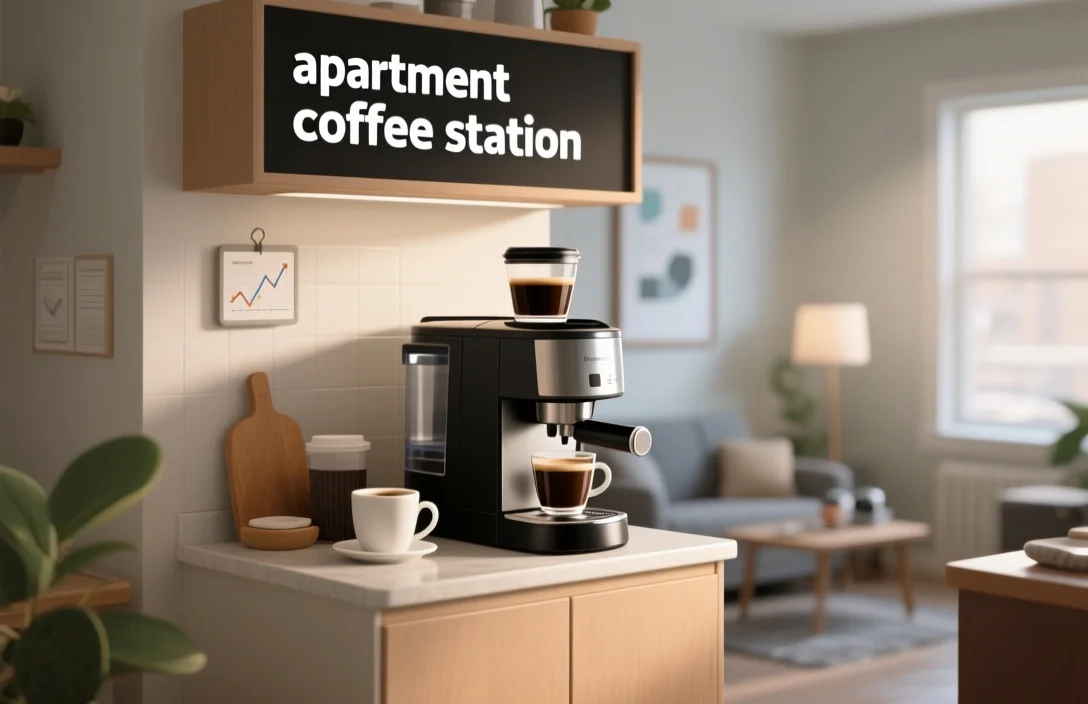
An apartment coffee station is a compact, dedicated area that holds your brewing gear, beans, and accessories so you can make coffee quickly and consistently without sacrificing countertop or storage space. This guide explains layouts, appliance choices, storage systems, budget tiers, landlord considerations, and daily workflows so you can build a functional station that fits your apartment and routine.
Apartment Coffee Station
A coffee station’s primary role is to centralize everything you need to brew a cup so you save time and avoid hunting for filters, scoops, or mugs. Placing the grinder, brewer, and beans in one spot reduces friction in a morning routine and makes cleanup faster. After comparing the main options side by side, the setups that work best in apartments balance footprint, noise, and required utilities.
Small apartments demand a different approach than larger kitchens. Compact espresso machines or single-serve brewers excel where counter space is scarce; manual pour-over rigs pair well with tiny setups because they store flat and require only a kettle and filter. Identifying your brewing style first – espresso, pour-over, drip, or cold brew – lets you prioritize which equipment must live on the station versus what can be stored elsewhere.
Measuring Your Space and Power
Measure the cabinet, counter, or cart area you plan to use before you buy anything. Record width, depth, and available vertical space, along with the distance to the nearest electrical outlet. Count the outlets on that wall and note whether they are on a dedicated circuit if you run multiple high-wattage appliances simultaneously.
Check appliance plug types and wattage requirements before committing. Many espresso machines and kettles draw substantial power; apartment circuits sometimes trip when you run a high-wattage kettle and an espresso machine at once. If your landlord or complex provides building-level power information, consult it before installing a permanent shelf or hardwired device. If you cannot find definitive wattage or circuit info, plan for alternating use instead of simultaneous use and purchase a power strip with built-in overload protection.
Appliances and Equipment by Need
Choosing gear starts with defining the coffee you want to drink every day and how much counter space you can spare. For clarity, this table compares typical appliance categories, the practical price/spec note you should verify, and who each choice suits best.
| Name | Price / Key Spec | Best For |
|---|---|---|
| Automatic Drip Coffee Maker | Price varies – exact prices not found; look up retailer listings for current models. Look for brew capacity, programmable timer, and carafe type. | People who want ease, repeatable batches, and low hands-on time. |
| Single-Serve Pod Machine | Price varies – exact prices not found; check capsule compatibility and pod cost. | Dormant or micro-kitchen users who prioritize speed and minimal cleanup. |
| Manual Pour-Over Kit (V60/Chemex) | Price varies – exact prices not found; consider cone size and filter style. | Home brewers who prefer control and compact storage. |
| Burr Grinder | Price varies – exact prices not found; check grind range and hopper capacity. | Anyone using espresso or pour-over who needs consistent grind. |
| Home Espresso Machine | Price varies – exact prices not found; confirm pump pressure and boiler type. | Enthusiasts who want café-style shots at home and have space for maintenance. |
| Electric Kettle (variable temp) | Price varies – exact prices not found; important for pour-over and tea. | Precision brewers who need temperature control. |
| Cold Brew Pitcher | Price varies – exact prices not found; consider filter style and fridge fit. | People who drink cold brew and want a low-effort batch option. |
After comparing these categories, prioritize a grinder when you value fresh flavor; a quality grinder changes extraction more than most machines. If space or budget restricts you, a poured-over setup with a kettle and hand grinder can outperform an entry-level automatic machine.
Layouts and Placement Ideas
Place the station where you will most often brew and serve coffee to minimize walking and spills. Near the sink makes rinsing filters and cleaning tools easier. A small cart on casters becomes mobile storage and lets you tuck the station into a closet or corner when guests arrive.
Use vertical space with a narrow open shelf or wall-mounted pegboard to keep mugs, filters, and scoops accessible without using counter real estate. Position frequently used items at eye level and reserve the top shelf for backup supplies. If you have undercabinet lighting, point it toward the station to improve visibility for measuring and tamping.
Create task zones inside the station: bean storage and grinder on the left, brewer and kettle in the middle, mugs and finishing gear on the right. This left-to-right flow suits right-handed users; reverse it if left-handed. Consider a small silicone mat under the grinder and brewer to protect the countertop and contain spills.
Storage, Supplies, and Consumables
Store beans in an opaque, airtight container and keep only enough on the counter for one to two weeks to preserve freshness. Avoid clear canisters that sit in direct sunlight. Keep filters, a spare water filter (if your brewer uses one), tampers, and cleaning brushes in labeled drawers or a small utensil caddy.
Buy a few standard consumables and rotate stock: paper filters compatible with your brewer, descaler tablets or solution for machines, and replacement water filters. Keep a dedicated scoop and a small scale near the station if you measure by weight. Storing a small resealable bag for used grounds makes daily cleanup simpler and prevents lingering odors.
Organizational tools that work well in apartments include a slim drawer organizer, stackable bins, and magnetic hooks mounted on the side of a cart. Use a small tray under the grinder to collect chaff for easier disposal. If you lack drawer space, a tiered shelf that sits on the counter can double as storage and serving area.
Daily Workflow and Brewing Routine
Design a repeatable sequence to reduce decision fatigue in the morning. A simple five-step routine improves consistency and speeds you from beans to cup.
- Measure and grind beans to the required dose.
- Heat water to the proper temperature while pre-wetting filters and equipment.
- Brew using your chosen method and monitor extraction timing.
- Finish with milk or additives, then transfer the brewer to the sink area for quick rinse.
- Wipe down the station and return tools to their storage spots.
Place a small towel or microfiber cloth in a convenient drawer for quick spills. Time your steps with a single timer app or a dedicated kitchen timer to build a consistent rhythm. Rotate your grind setting and dose only after documenting the result so you can compare changes.
Safety, Landlord Rules, and Maintenance
Check building rules before installing heavy wall mounts, drilling holes, or running extension cords through common areas. Many leases prohibit altering built-in fixtures without written permission. If you plan permanent installations like a mounted shelf, get approval in writing and use removable hardware when possible.
Keep maintenance tasks on a schedule to avoid flavor issues and equipment breakdown. Clean grinders weekly to remove oils and chaff buildup. Descale machines per the manufacturer’s recommended interval; if you cannot find exact guidance, adopt a monthly visual check for mineral buildup and descale when deposits appear. Replace water filters according to package instructions or sooner if you notice taste or flow changes.
Be cautious with ventilation and heat. Machines that emit steam need clearance; avoid enclosing a steam-producing espresso machine in a tight cabinet without airflow. Use a grounded outlet and a power strip with surge protection for sensitive electronics. If circuit trips occur, stop running multiple high-wattage devices together and consult an electrician if trips persist.
Design and Aesthetics That Fit Apartments
Match materials and colors to your apartment so the station feels intentional rather than an afterthought. Natural wood, stainless steel, or matte black elements integrate well into most kitchens. Keep the visual profile low by selecting compact silhouettes and hiding bags or extra equipment in opaque containers.
Create a small display area for favorite mugs or a single plant to make the station inviting. Use uniform jars for sugar and other add-ins to reduce visual clutter. If you frequently host, keep a stylish tray for serving that also doubles as a quick way to clear the station when you need the counter for other tasks.
Lighting influences perceived space. A small LED puck or an under-shelf light brightens the workspace and makes measuring more accurate. Mirrors or reflective backsplashes can visually enlarge a tight nook. If tenants’ rules limit permanent changes, choose plug-in lighting options that can be removed without marks.
Common Mistakes and Trade-offs
Picking the wrong grinder or machine for your routine causes regret more often than aesthetic mismatches. Subpar blade grinders produce inconsistent particle size that ruins extraction; a low-profile burr grinder costs more up front but improves daily cup quality. Deciding between space and capability is the core trade-off in apartment setups – compact machines sacrifice some performance and serviceability for a smaller footprint.
Another common mistake is overstocking beans and accessories on the counter. Excess items add clutter and make cleaning harder. A different misstep is assuming you can run every device at once; shared apartment circuits commonly fail when multiple heavy appliances are active. If you cannot confirm circuit capacity, prioritize alternating usage and choose energy-efficient models.
Accepting trade-offs reduces frustration. If countertop space is the limiting factor, choose a single high-quality brewer and store other items in a nearby cabinet. If you crave variety, designate a slightly larger cart and sacrifice floor space. Both approaches work; select based on your top priorities: consistency, convenience, or variety.
Troubleshooting and Simple Fixes
Grainy or inconsistent coffee often traces back to grind settings, dosing, or tamping pressure for espresso. Adjust one variable at a time and record changes so you can identify what improved the cup. If flow is too fast in pour-over, try a finer grind or slower pour rate; if shots in espresso are channeling, check for an uneven tamp and a clogged portafilter.
If your brewer tastes metallic or stale despite fresh beans, run a few cycles with filtered water and perform a descaling procedure. Machine noises that suddenly increase often indicate either mineral buildup or a worn component; stop using the device if you suspect a mechanical failure and consult the manual for troubleshooting. If performance persists as an issue and you lack a service plan, consider replacing the problematic unit rather than attempting unsafe repairs.
FAQ
How much counter space do I need for an apartment coffee station?
A functional station can fit into as little as 12-18 inches of counter width when you choose compact equipment and vertical storage. Many successful setups use a narrow cart or a single shelf plus a slim counter footprint. Measure your appliances before you buy and plan storage for accessories to avoid overcrowding the brewing area.
Do I need a grinder, or can I buy pre-ground coffee?
A grinder is the most impactful upgrade for flavor because grind freshness and particle uniformity directly influence extraction. Pre-ground coffee is convenient but loses volatile aromatics faster. If you prioritize peak flavor and have space, buy a burr grinder; otherwise, purchase freshly ground beans from a reliable roast shop and consume them quickly.
How often should I descale my machine?
Descaling frequency depends on water hardness and machine usage, so package instructions are the best source for exact intervals. If you cannot find specific guidance, monitor for slow flow, strange tastes, or visible mineral buildup and descale when those signs appear. Using filtered water reduces the need for frequent descaling.
What if my landlord forbids drilling into walls for shelves?
Choose freestanding solutions: a narrow cart, tension-mounted shelf, or over-the-sink shelf that does not require permanent attachments. Removable adhesive hooks and magnetic organizers work on many surfaces if they’re rated for the load. Always retain landlord approval documents for any installed item that modifies the unit.
Which is better in a small apartment?
Your routine decides the better choice. Espresso machines deliver higher quality and richer flavor but require more space and maintenance. Single-serve pod machines are compact and low-effort but increase per-cup cost and waste. If you drink simple coffee quickly and want minimal cleanup, pods suit; if you value drink complexity, choose espresso.
Can I keep beans on the counter, or should they be refrigerated?
Keep beans in an opaque, airtight container at room temperature rather than refrigeration. Moisture from condensation degrades beans if moved between cold and warm environments. Store only a small amount that you can use within one to two weeks for optimum freshness.
A short final note with a next action: measure the space you plan to use and list the brewing methods you actually enjoy, then prioritize which appliance you must buy first.

- Espresso Tastes Watery? 10 Common Causes and How to Fix It - October 23, 2026
- 10 Common Coffee Equipment Cleaning Mistakes and How to Avoid Them - October 23, 2026
- 17 Common Coffee Grinder Problems and How to Fix Them - October 23, 2026