
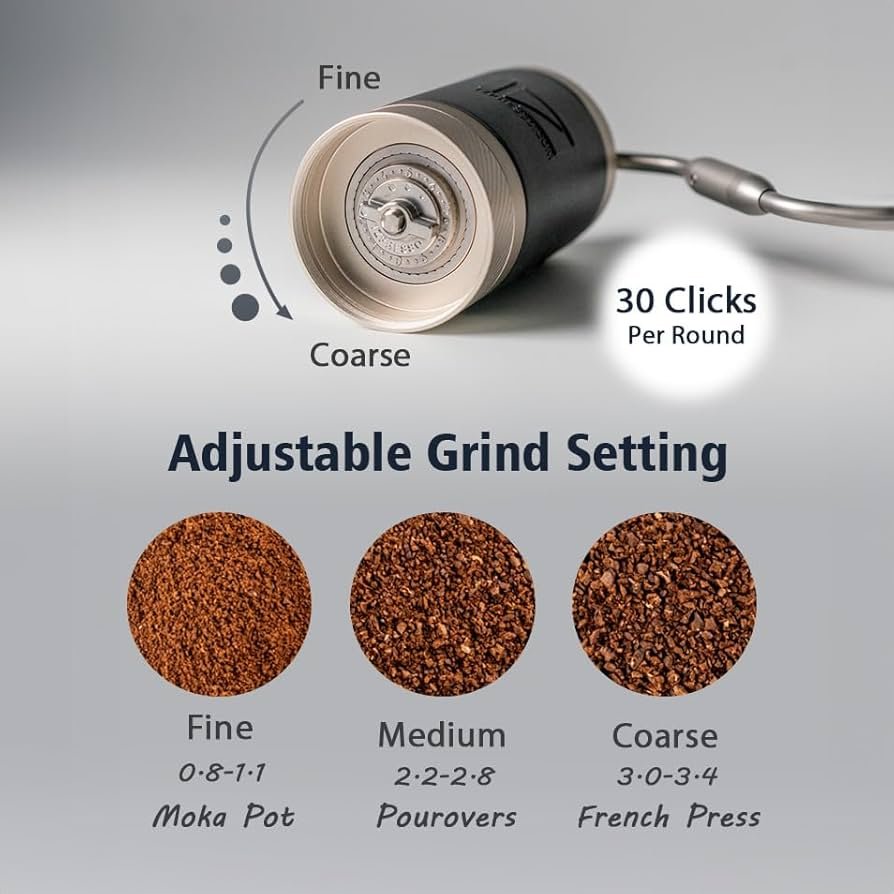
Mastering your coffee grind size is crucial for preventing bitter or sour brews, ensuring optimal flavor extraction every time.
This initial statement encapsulates the core challenge many coffee enthusiasts face, and precisely why a comprehensive coffee grind size troubleshooting guide is indispensable. As someone who has spent years meticulously exploring the nuances of coffee preparation, from fine espresso grinds to coarse French press textures, I understand the frustration that comes with a less-than-perfect cup. This guide aims to equip you with the expertise needed to diagnose common issues related to grind size, providing actionable solutions to transform your daily brew from acceptable to extraordinary. We will delve deep into the science of extraction, offering practical advice derived from extensive experience to help you confidently navigate the intricate world of coffee grind size troubleshooting.
Understanding Coffee Grind Size: The Foundation of Flavor
Achieving the perfect cup of coffee hinges significantly on one often-overlooked factor: the coffee grind size. This isn't merely a preference but a fundamental element dictating the extraction process, which in turn defines the flavor profile of your final brew. A consistent and appropriate grind size for your chosen brew method is the cornerstone of exceptional coffee.
What is Grind Size?
Grind size refers to the coarseness or fineness of your ground coffee particles. Think of it like sand: you have fine beach sand, medium playground sand, and coarse construction sand. Each has a different surface area, which is key to how water interacts with the coffee during brewing. The more surface area exposed, the faster the extraction of soluble coffee compounds.
Why Grind Size Matters
The primary reason grind size matters is its direct impact on extraction. When water passes through coffee grounds, it dissolves various compounds that contribute to flavor, aroma, and body. If the grind is too fine, water extracts too much, leading to over-extraction. Conversely, if the grind is too coarse, water extracts too little, resulting in under-extraction. Finding the sweet spot is what a good coffee grind size troubleshooting guide aims to help you achieve.
The Spectrum of Grind Sizes
Coffee grind sizes exist on a continuum, each suited to specific brewing methods. Understanding this spectrum is vital for effective coffee grind size troubleshooting.
Coarse Grind
This grind resembles sea salt or coarse sand. The particles are large, offering less surface area for water to interact with.
- Brew Methods: French Press, Cold Brew.
- Characteristic: Slow extraction, suitable for longer steeping times.
Medium Grind
Similar to regular sand, a medium grind is the most versatile. It strikes a balance between surface area and extraction speed.
- Brew Methods: Drip coffee makers, Pour Over (Chemex, Hario V60), AeroPress (longer steep).
- Characteristic: Balanced extraction for medium brew times.
Fine Grind
This grind is finer than table salt, approaching the consistency of sugar or espresso grounds. It provides a large surface area for rapid extraction.
- Brew Methods: Espresso, Moka Pot, AeroPress (shorter steep).
- Characteristic: Fast extraction, necessary for short contact times under pressure.
Extra Fine/Pulverized Grind
This is a powder-like consistency, similar to flour or Turkish coffee. It has an immense surface area.
- Brew Methods: Turkish Coffee.
- Characteristic: Extremely fast extraction, creating a thick, sediment-rich brew.

Source: seriouseats.com
Common Coffee Grind Size Issues and Their Symptoms
Identifying the symptoms of an incorrect coffee grind size is the first critical step in any coffee grind size troubleshooting guide. Many common coffee woes can be traced directly back to a poorly chosen grind. Let's explore the tell-tale signs of over-extraction, under-extraction, and inconsistent extraction.
Over-Extraction: The Bitter Truth
Over-extraction occurs when too many soluble compounds are dissolved from the coffee grounds. This typically happens when the grind is too fine for the brew method, or the water contact time is too long.
Symptoms of Over-Extraction
- Taste: Bitter, acrid, burnt, hollow, sometimes metallic or astringent (a drying sensation in the mouth).
- Aroma: Dull, lacking vibrant notes.
- Appearance: Brew may appear darker or murky.
- Brewing Process: For espresso, the shot might run very slowly, dripping rather than flowing steadily, and the crema could be dark with a white center. For drip or pour over, the water might drain excessively slowly.
Causes Related to Grind Size
The primary grind size cause here is coffee that is ground too finely. The increased surface area and reduced interstitial space between particles restrict water flow, leading to prolonged contact and excessive dissolution of undesirable compounds. This is a common hurdle in coffee grind size troubleshooting, especially for espresso.
Under-Extraction: The Sour Story
Under-extraction is the opposite problem, where not enough soluble compounds are dissolved. This usually results from a grind that is too coarse, or insufficient water contact time.
Symptoms of Under-Extraction
- Taste: Sour, weak, watery, thin-bodied, salty, grassy, sometimes with an unpleasant sharp acidity. Flavors might seem muted or underdeveloped.
- Aroma: Faint, lacking complexity.
- Appearance: Brew may appear lighter than expected.
- Brewing Process: For espresso, the shot might gush out too quickly, appearing pale with thin, bubbly crema that dissipates rapidly. For drip or pour over, water might drain too quickly, leaving the coffee bed looking "dry" prematurely.
Causes Related to Grind Size
The main culprit here is a coffee grind size that is too coarse. With larger particles and less surface area, the water passes through too quickly without enough time to extract the desirable flavors and aromas. This is a frequent issue addressed in any effective coffee grind size troubleshooting guide.
Inconsistent Extraction: A Muddled Mess
Inconsistent extraction occurs when different parts of the coffee bed extract at different rates. This often results from an uneven grind or poor distribution of grounds.
Symptoms of Inconsistent Extraction
- Taste: A combination of both bitter and sour notes, making the coffee taste unbalanced and muddled. You might detect pleasant flavors alongside harsh, unpleasant ones.
- Aroma: Disjointed, lacking harmony.
- Appearance: Uneven flow through the coffee bed (e.g., channeling in espresso or pour over).
- Brewing Process: Water might find "channels" or paths of least resistance, bypassing significant portions of the coffee grounds. This results in some areas being over-extracted (where water concentrates) and others under-extracted (where water flows too quickly).
Causes Related to Grind Size
The most common grind size issue leading to inconsistency is an uneven grind, often produced by blade grinders. These grinders chop beans inconsistently, creating a mix of fine dust and coarse chunks. This variability makes effective extraction impossible, highlighting a crucial point in coffee grind size troubleshooting.

Your Essential Coffee Grind Size Troubleshooting Guide
Now that we understand the symptoms, let's dive into practical steps for coffee grind size troubleshooting. This systematic approach will help you pinpoint the issue and make the necessary adjustments for a superior brew.
Step 1: Identify the Problem
Before making any adjustments, taste your coffee critically.
- Is it overwhelmingly bitter and astringent? You're likely over-extracting.
- Is it noticeably sour, weak, or watery? You're probably under-extracting.
- Does it taste muddled, with elements of both? Inconsistent extraction or a severe imbalance.
This initial assessment is fundamental to any coffee grind size troubleshooting effort.
Step 2: Adjusting for Your Brew Method
Different brew methods demand specific grind sizes due to varying contact times and pressures. Here’s a quick overview to guide your coffee grind size troubleshooting.
Espresso
- Problem: Shot pulls too fast, sour taste, thin crema. Solution: Grind finer.
- Problem: Shot pulls too slow, bitter taste, dark/spotty crema. Solution: Grind coarser.
- Key: Espresso requires a very fine, consistent grind to create resistance for the pressurized water, ensuring proper extraction in a short timeframe. Even tiny adjustments make a huge difference here.
Pour Over/Drip Coffee
- Problem: Water drains too quickly, coffee tastes weak/sour. Solution: Grind finer.
- Problem: Water drains too slowly, coffee tastes bitter/stuck. Solution: Grind coarser.
- Key: Aim for a medium grind, like table salt. The goal is to allow water to saturate the grounds evenly and drain at a steady rate.
French Press
- Problem: Coffee tastes muddy, bitter, or too much sediment. Solution: Grind coarser.
- Problem: Coffee tastes weak, watery, or lacks body. Solution: Grind finer (but still coarse).
- Key: French press requires a very coarse, chunky grind, like sea salt. This prevents excessive sediment and allows for a longer steeping time without over-extraction.
AeroPress
- Problem: (Depending on method) Too bitter/sour. Solution: Adjust grind from fine (espresso-like for short brews) to medium (drip-like for longer brews), then troubleshoot.
- Key: The AeroPress is versatile. Finer grinds suit shorter steep times, coarser grinds suit longer steep times. Experimentation is key to your AeroPress coffee grind size troubleshooting.
Cold Brew
- Problem: Tastes too bitter, muddy. Solution: Grind coarser.
- Problem: Tastes too weak, watery. Solution: Ensure a very coarse grind and sufficient steep time.
- Key: Cold brew uses a very coarse grind, similar to French Press, to allow for extended steeping times (12-24 hours) without over-extraction.
Step 3: Making Incremental Adjustments
The secret to successful coffee grind size troubleshooting is small, iterative changes. Don't go from a very fine setting to a very coarse one immediately.
- Change one variable at a time: Adjust only the grind size, then brew and taste.
- Make small adjustments: Move your grinder's setting by one or two clicks (for burr grinders) or very slight shifts.
- Taste and repeat: Brew another cup, taste, and note the changes. Continue this process until you achieve the desired flavor.
Step 4: The Importance of a Quality Grinder
This guide wouldn't be complete without emphasizing the role of your equipment. A consistent grind is paramount for even extraction, and only a quality burr grinder can provide this. Blade grinders chop beans inconsistently, producing a mix of fine dust and large chunks, which makes effective coffee grind size troubleshooting nearly impossible. Investing in a good burr grinder (either manual or electric) is the single most impactful upgrade you can make to your coffee setup for consistent results.
Personal Insight: My Grind Size Journey
Early in my coffee journey, I relied on a blade grinder, convinced that any ground coffee was good coffee. My brews were perpetually inconsistent—sometimes bitter, sometimes sour, rarely balanced. It felt like I was battling an unseen force. The biggest lesson I learned was that without a consistent grind, all other variables (water temperature, brew time) become futile. Once I switched to a conical burr grinder, the difference was immediate and transformative. My coffee became predictably delicious, and my coffee grind size troubleshooting efforts became far more effective because I had a reliable baseline. It truly unlocked a new level of appreciation for coffee.

Advanced Tips for Mastering Coffee Grind Size
Beyond the basics, several advanced considerations can further refine your understanding and execution of coffee grind size troubleshooting. These elements interact with grind size to influence the final cup.
Consider Water Quality and Temperature
While not directly about grind size, water quality and temperature significantly impact extraction efficiency. Using filtered water free of impurities ensures a cleaner taste, and consistent water temperature (typically 195-205°F or 90-96°C) is crucial for optimal extraction. If your water isn't ideal, even the perfect grind size might not yield the best results.
Brew Time and Its Relationship with Grind
Brew time is inextricably linked to grind size. For any given brew method, there's an optimal contact time between water and coffee. A finer grind demands a shorter brew time to prevent over-extraction, while a coarser grind requires a longer brew time for adequate extraction. Mastering your coffee grind size troubleshooting involves understanding this delicate balance. Adjusting one often necessitates adjusting the other.
The Role of Freshness
Freshly roasted and freshly ground coffee are cornerstones of flavor. As coffee ages, it loses volatile aromatics, and its structure changes, affecting how it extracts. Grinding coffee just before brewing is critical. Pre-ground coffee, even if initially at the correct grind size, rapidly stales, making consistent extraction challenging and diminishing the impact of your coffee grind size troubleshooting efforts.
What about burr vs. blade grinders?
Burr grinders crush coffee beans between abrasive surfaces, providing a uniform particle size, which is essential for consistent extraction. Blade grinders, on the other hand, chop beans with spinning blades, resulting in an inconsistent mix of fine dust and coarse chunks, leading to uneven extraction and a muddled flavor. For effective coffee grind size troubleshooting, a burr grinder is always recommended.
How does humidity affect grind size?
Humidity can significantly impact coffee beans and grounds. In humid conditions, coffee absorbs moisture, making beans softer and potentially requiring a slightly finer grind to achieve the same resistance during brewing. Conversely, in dry conditions, coffee can become more brittle, sometimes requiring a slightly coarser grind. Being aware of ambient humidity helps refine your coffee grind size troubleshooting.
Can I use the same grind size for different brew methods?
Generally, no. Each brew method is designed for a specific water contact time and flow rate, which necessitates a particular grind size. Using an espresso grind for a French press, for instance, would result in extreme over-extraction and a very muddy cup due to too much fine sediment. Adapting your grind size for each specific brew method is fundamental to effective coffee grind size troubleshooting.
Frequently Asked Questions of coffee grind size troubleshooting guide
What is the ideal grind size for my coffee?
The ideal grind size depends entirely on your chosen brew method; espresso requires fine, pour-over medium, and French press coarse. Adjusting based on your equipment and desired taste is key.
How do I know if my coffee is over-extracted?
Over-extracted coffee tastes excessively bitter, acrid, or astringent, often leaving a dry sensation in your mouth. The brew might also appear darker and drain slowly.
What are the signs of under-extracted coffee?
Under-extracted coffee typically tastes sour, weak, watery, or salty, with a thin body and underdeveloped flavors. For espresso, shots may gush too quickly with pale crema.
Can an inconsistent grind affect my coffee flavor?
Yes, an inconsistent grind leads to both over-extraction (from fine particles) and under-extraction (from coarse particles) simultaneously, resulting in a muddled, unbalanced cup. A quality burr grinder is crucial for preventing this.
How often should I adjust my grinder settings?
You should adjust your grinder settings whenever you change coffee beans, notice changes in humidity, or perceive a shift in your coffee's flavor profile. Small, incremental adjustments are usually best for precise coffee grind size troubleshooting.
Conclusion
Navigating the intricacies of coffee grind size is a fundamental skill for any coffee enthusiast seeking to elevate their brewing experience. By understanding the profound impact of grind size on extraction and recognizing the tell-tale signs of over- and under-extraction, you can systematically diagnose and resolve common issues. Remember that precision in your grind, achieved with a quality burr grinder, combined with incremental adjustments, is your most powerful tool in the coffee grind size troubleshooting arsenal. Embrace the journey of fine-tuning your grind, and prepare to unlock the full, rich potential of every bean. Don't let a sub-par cup be your norm; take charge of your coffee experience today. Explore new beans, experiment with different grind settings, and share your perfect brew stories in the comments below!

- 17 Common Coffee Grinder Problems and How to Fix Them - October 23, 2026
- How to Fix a Portafilter: Size, Locking Mechanism, and Troubleshooting Guide - October 22, 2026
- 35 Coffee Machine Parts and Functions: Complete Guide With Names and Uses - October 22, 2026