
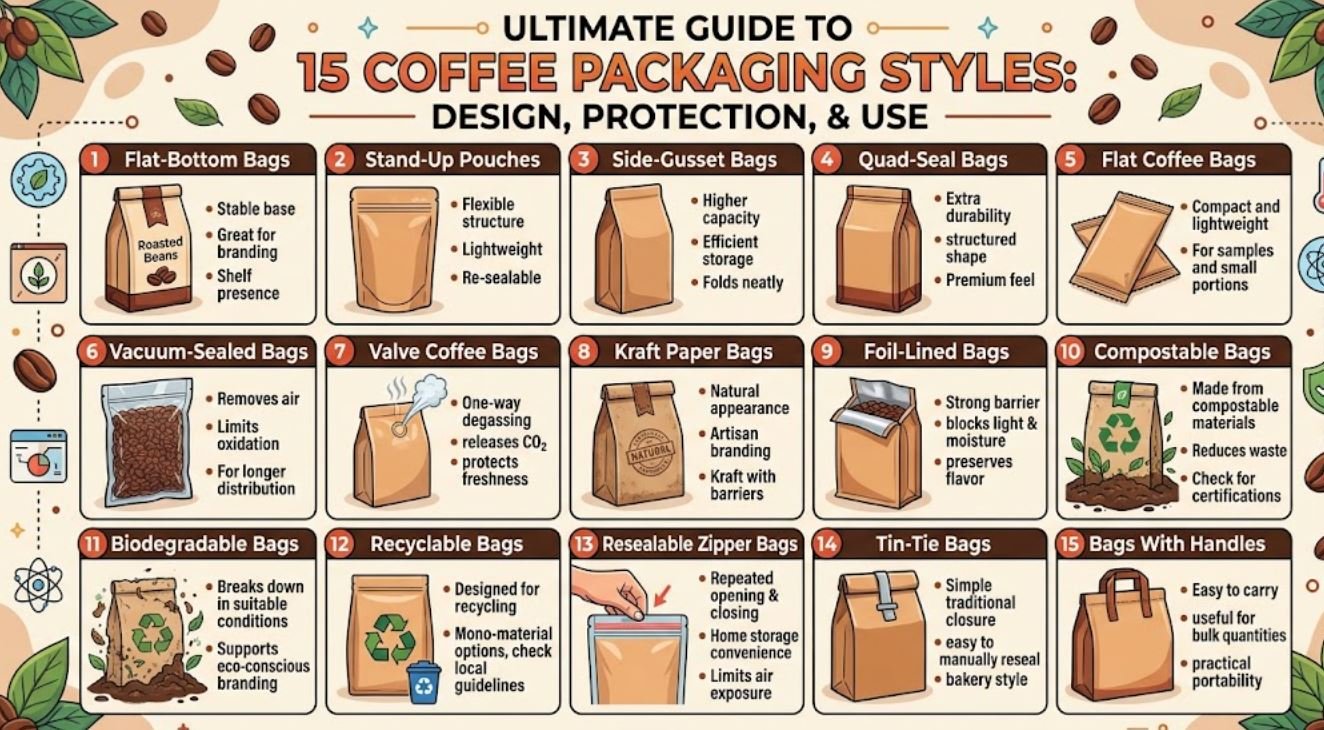
Coffee bags do more than hold roasted beans or ground coffee. They help protect coffee from oxygen, moisture, light, and outside odors that can reduce freshness and flavor. Different bag styles are designed for different storage, retail, and transportation needs. Some focus on durability and shelf presentation, while others prioritize resealing, portability, or environmental considerations. Popular options include flat-bottom bags, stand-up pouches, side-gusset bags, quad-seal bags, and flat coffee bags. Understanding the differences between these packaging styles can help coffee roasters, retailers, and home users select a bag that suits the coffee quantity, storage period, freshness requirements, and overall packaging goals.
1. Flat-Bottom Coffee Bags
Design and Construction
Flat-bottom coffee bags feature a wide, reinforced base that allows the package to stand upright. Their structured design provides stability while creating a generous front surface for labels, logos, roast information, and product details.
Freshness Protection
Many flat-bottom bags use multiple barrier layers to reduce exposure to oxygen, moisture, and light. Some also include one-way valves that allow carbon dioxide from freshly roasted coffee to escape without allowing outside air to enter easily.
Retail and Storage Benefits
The upright shape makes these bags particularly useful for retail shelves and kitchen counters. They can remain stable when filled and make product information easy to see.
Key Benefits
- Strong and stable structure
- Excellent shelf presentation
- Good packaging space for branding
- Available with resealable closures and valves
2. Stand-Up Pouch Coffee Bags
Flexible Pouch Structure
Stand-up pouches use a flexible material with a bottom gusset that allows the bag to remain upright after filling. Their lightweight construction makes them practical for both coffee businesses and consumers.
Barrier Protection
High-quality stand-up pouches can contain barrier layers designed to protect coffee from oxygen, moisture, and light. The effectiveness depends on the materials and construction used.
Resealable Convenience
Many stand-up coffee bags feature zipper closures. This allows consumers to open the package, remove coffee, and reseal it between uses.
Key Benefits
- Lightweight and flexible
- Convenient upright storage
- Often available with zipper closures
- Suitable for different coffee quantities
3. Side-Gusset Coffee Bags
Expanded Side Design
Side-gusset bags have folded sections on both sides that expand when the package is filled. This creates additional internal capacity while maintaining a relatively narrow front profile.
Material Options
Manufacturers can produce side-gusset bags using kraft paper, plastic films, aluminum foil, or laminated combinations. Material selection affects durability and protection against environmental factors.
Capacity and Shelf Use
The gusseted design allows these bags to hold larger quantities of coffee efficiently. They are frequently used for one-pound packages and larger commercial coffee formats.
Key Benefits
- High storage capacity
- Efficient use of packaging space
- Suitable for whole beans and ground coffee
- Large printable areas for branding
4. Quad-Seal Coffee Bags
Four-Sided Sealing
Quad-seal bags use four sealed corners to create a structured, box-like package. This construction gives the bag additional strength and helps it maintain its shape after filling.
Structural Durability
The reinforced design can provide good resistance during handling, transportation, and storage. It is particularly useful for brands looking for a premium and sturdy package appearance.
Shelf Presentation
Quad-seal bags can stand upright and maintain a neat shape on retail shelves. Their structured appearance also provides several surfaces that can be used for product information and branding.
Key Benefits
- Strong and durable construction
- Stable upright presentation
- Efficient use of shelf space
- Suitable for premium coffee packaging
5. Flat Coffee Bags
Simple Flexible Construction
Flat coffee bags use a straightforward flexible design without a large bottom or side gusset. Their slim profile makes them easy to handle, store, and transport.
Space-Saving Design
Because these bags remain relatively flat, they are useful where storage space is limited. They can also be practical for smaller portions and coffee samples.
Suitable Coffee Applications
Flat bags are commonly suited to ground coffee, small quantities of whole beans, sample packs, and single-serving coffee products. Their simple shape can also make them easy to customize.
Key Benefits
- Compact and lightweight
- Easy to store
- Suitable for small coffee portions
- Simple and economical packaging design
6. Vacuum-Sealed Coffee Bags
Vacuum-Sealed Construction
Vacuum-sealed coffee bags are designed to remove much of the air from inside the package before sealing. Reducing trapped oxygen can help slow the oxidation process that affects coffee aroma and flavor.
Freshness and Oxygen Control
Oxygen is one of the main factors that can contribute to coffee staling. Vacuum packaging limits the amount of oxygen surrounding the coffee, making it useful for certain storage and distribution situations.
Whole Bean and Ground Coffee
Vacuum-sealed packaging can be used for both whole-bean and ground coffee. Ground coffee generally has more exposed surface area, so controlling oxygen can be particularly important for maintaining quality.
Key Benefits
- Reduces air inside the package
- Helps limit oxidation
- Suitable for whole and ground coffee
- Useful for longer distribution periods
7. Valve Coffee Bags
One-Way Valve Design
Valve coffee bags include a small one-way degassing valve, usually positioned near the upper portion of the package. The valve allows gases produced by freshly roasted coffee to escape while helping limit outside air entering the bag.
Coffee Degassing Process
Freshly roasted coffee naturally releases carbon dioxide after roasting. Packaging coffee too tightly without allowing this gas to escape can cause pressure to build inside the package.
Freshness Protection
A properly designed valve bag can help maintain a protective packaging environment while allowing roasted coffee to degas. This makes valve bags especially popular among specialty coffee roasters.
Key Benefits
- Allows carbon dioxide to escape
- Helps protect freshly roasted coffee
- Commonly used for specialty coffee
- Available in several bag designs
8. Kraft Paper Coffee Bags
Kraft Paper Construction
Kraft coffee bags use paper as part of their outer packaging structure. The material gives the package a natural appearance that is popular with specialty coffee brands and businesses seeking a more traditional look.
Barrier Layer Protection
Paper alone does not provide complete protection against oxygen and moisture. For this reason, many Kraft coffee bags combine paper with inner barrier layers or coatings to improve coffee preservation.
Branding and Appearance
The natural texture of Kraft paper works well with minimalist labels, printed logos, roast information, and eco-focused branding. It can give coffee packaging a warm and handcrafted appearance.
Key Benefits
- Natural paper appearance
- Popular for specialty coffee
- Strong branding potential
- Available with barrier layers and valves
9. Foil-Lined Coffee Bags
Aluminum Foil Barrier
Foil-lined coffee bags contain an aluminum foil layer within the packaging structure. This layer provides a strong barrier against light, oxygen, and moisture when properly sealed.
Light and Moisture Protection
Exposure to light and moisture can negatively affect stored coffee. A foil barrier helps reduce these external influences, making this type of packaging useful for protecting coffee during storage and transportation.
Flavor Preservation
By limiting exposure to environmental factors, foil-lined bags can help preserve the aroma and flavor characteristics of roasted coffee. The overall result also depends on the quality of the seal and other packaging layers.
Key Benefits
- Strong barrier protection
- Helps block light
- Reduces moisture exposure
- Suitable for long-distance coffee distribution
10. Compostable Coffee Bags
Compostable Packaging Materials
Compostable coffee bags are made with materials designed to break down under specific composting conditions. Depending on the product, these materials may include certified compostable films, paper, or plant-based components.
Freshness and Barrier Performance
Coffee still requires protection from oxygen and moisture, so compostable packaging must balance environmental goals with barrier performance. Some compostable bags include specialized layers to improve protection.
Home and Industrial Composting
Not every compostable coffee bag is suitable for a home compost pile. Some require commercial or industrial composting facilities, so consumers should check the manufacturer’s disposal instructions.
Key Benefits
- Designed with compostability in mind
- Can reduce reliance on conventional packaging materials
- Available in different coffee bag formats
- Useful for sustainability-focused coffee brands
| Purpose | Best Coffee Bag Types |
|---|---|
| Best overall freshness | Valve, foil-lined, vacuum-sealed |
| Best for specialty coffee | Flat-bottom, quad-seal, Kraft paper |
| Best for home storage | Stand-up pouch, zipper bag |
| Best for large quantities | Side-gusset, quad-seal |
| Best for small portions | Flat coffee bag |
| Best for sustainability | Compostable, biodegradable, recyclable |
| Best for retail display | Flat-bottom, stand-up pouch, quad-seal |
| Best for easy carrying | Coffee bag with handle |
| Best simple closure | Tin-tie bag |
| Best oxygen protection | Vacuum-sealed and foil-lined bags |
11. Biodegradable Coffee Bags
Biodegradable Packaging Materials
Biodegradable coffee bags are made with materials designed to break down naturally under suitable environmental conditions. Depending on the packaging, they may contain paper, plant-based materials, or specially developed biodegradable films.
Coffee Freshness Protection
A coffee bag still needs to protect beans or grounds from oxygen, moisture, heat, and light. Quality biodegradable bags therefore use barrier materials or layered construction to balance environmental considerations with coffee freshness.
Environmental Considerations
The term biodegradable does not necessarily mean that a bag will disappear quickly in every environment. Breakdown depends on the material, temperature, moisture, microorganisms, and disposal conditions.
Key Benefits
- Designed to break down under suitable conditions
- Available in different packaging formats
- Can support eco-conscious branding
- May reduce dependence on conventional materials
12. Recyclable Coffee Bags
Recyclable Material Construction
Recyclable coffee bags are designed using materials that may be collected and processed through appropriate recycling systems. Some newer designs use simpler material structures to improve recyclability.
Barrier and Freshness Performance
Coffee packaging needs strong protection against oxygen and moisture. Recyclable designs aim to provide this protection while making the packaging more compatible with recycling processes.
Recycling Availability
Whether a coffee bag can actually be recycled depends on its material and local recycling infrastructure. Consumers should check the packaging label and local recycling guidelines before disposal.
Key Benefits
- Designed with recycling in mind
- Can provide useful barrier protection
- Available in several coffee bag styles
- Supports waste-reduction goals where recycling is available
13. Resealable Zipper Coffee Bags
Zipper Closure Design
Zipper coffee bags include an integrated closure that allows the package to be opened and resealed repeatedly. This makes them convenient for people who use small amounts of coffee throughout the week.
Freshness After Opening
Resealing the bag helps reduce unnecessary exposure to air and moisture between uses. However, the zipper does not replace a high-quality barrier layer or proper coffee storage conditions.
Home Coffee Storage
These bags are especially convenient for home users because they do not require clips or separate storage containers. The package can remain upright or flat depending on its design.
Key Benefits
- Easy to open and close
- Convenient for repeated use
- Helps limit exposure after opening
- No separate closure accessory required
14. Tin-Tie Coffee Bags
Tin-Tie Closure
Tin-tie coffee bags use a flexible metal strip attached near the opening. After the bag is rolled or folded down, the metal tie can be bent around the package to keep it closed.
Traditional Coffee Packaging
Tin-tie bags have a familiar appearance often associated with bakeries, cafés, and traditional coffee packaging. They offer a simple alternative to zipper closures.
Ease of Resealing
The closure can be opened and secured repeatedly without requiring additional clips. Folding the top tightly before securing the tie can help reduce the amount of air entering the package.
Key Benefits
- Simple and familiar closure
- Easy to reseal manually
- Useful for retail coffee
- Traditional and attractive packaging style
15. Coffee Bags With Handles
Integrated Handle Design
Coffee bags with handles include a built-in carrying feature that makes the package easier to transport. The handle may be cut directly into the bag or created as part of the packaging structure.
Bulk Coffee Applications
These bags are useful when coffee is sold in larger quantities or when customers need to carry the package from a store, café, or warehouse. They can be particularly practical for commercial and retail environments.
Convenience and Branding
A handle adds convenience while providing another opportunity for packaging design. Brands can combine the handle with printed graphics, labels, product information, and other visual elements.
Key Benefits
- Easy to carry
- Useful for larger coffee quantities
- Practical for retail customers
- Provides additional branding opportunities
Coffee Bag Materials: What Are They Made From?
Paper Coffee Bags
Paper coffee bags are popular because they provide a natural appearance and can be printed with attractive branding. However, paper by itself offers limited protection against moisture and oxygen, so many coffee bags combine paper with inner barrier layers.
Plastic Coffee Bags
Plastic films are lightweight, flexible, and useful for creating strong moisture and oxygen barriers. They can be used in stand-up pouches, flat bags, and other flexible coffee packaging formats.
Aluminum Foil Coffee Bags
Aluminum foil provides a strong barrier against light, oxygen, and moisture. Foil is often combined with other materials to create multilayer packaging that protects roasted coffee during storage and transportation.
Multi-Layer Barrier Bags
Multi-layer bags combine different materials so each layer performs a specific function. One layer may provide strength, another may improve sealing, while an inner barrier helps protect the coffee from external elements.
Coffee Bag Closures and Features
One-Way Degassing Valves
One-way valves are especially useful for freshly roasted coffee. They allow carbon dioxide to escape from the package while helping prevent outside air from entering, making them a common feature in specialty coffee bags.
Zipper Closures
Zipper closures make coffee bags easy to open and reseal. They are convenient for home users who regularly access their coffee and want to close the package after each use.
Tin-Tie Closures
Tin ties provide a simple mechanical closure. The top of the bag is folded down and secured with the attached metal strip, offering a traditional option for coffee shops and retail packaging.
Heat-Sealed Tops
Heat sealing creates an airtight-style closure across the top of the package. It is commonly used for unopened coffee bags because it provides a strong seal until the consumer opens the package.
How to Choose the Right Coffee Bag
Whole Beans or Ground Coffee
Consider the coffee format before selecting packaging. Whole beans generally maintain their quality longer than ground coffee because they have less exposed surface area, while ground coffee benefits from strong protection against oxygen.
Coffee Bag Size
Choose a bag size based on the quantity of coffee being packaged. Smaller bags work well for samples and limited portions, while larger gusseted or structured bags are better suited to bulk quantities.
Freshness and Oxygen Protection
Freshness should be a major consideration when selecting a coffee bag. Look for appropriate barrier materials and, when packaging freshly roasted beans, consider a bag equipped with a one-way degassing valve.
Key Selection Factors
- Coffee type and quantity
- Expected storage period
- Oxygen and moisture protection
- Closure style
- Packaging material
- Retail presentation
- Sustainability goals
Coffee Bag Sizes Explained
4 oz Coffee Bags
Four-ounce bags are useful for coffee samples, limited-edition beans, and small portions. They are also convenient for customers who want to try a new roast without purchasing a larger package.
8 oz Coffee Bags
Eight-ounce bags provide a practical middle ground between samples and standard retail packages. They can suit specialty coffees, smaller households, and rotating coffee selections.
12 oz Coffee Bags
Twelve-ounce bags are common for retail coffee and provide enough capacity for regular home brewing. They can be produced in several formats, including stand-up, flat-bottom, and gusseted designs.
1 lb and 2 lb Coffee Bags
One-pound and two-pound bags are better suited to frequent coffee drinkers, cafés, offices, and bulk buyers. Gusseted and structured designs are often useful because they provide additional capacity and stability.
Coffee Bag vs Coffee Canister
Freshness Protection
A quality coffee bag with a strong barrier can provide excellent protection against oxygen, moisture, and light. Coffee canisters can also protect coffee when they have a reliable airtight seal and are stored properly.
Convenience
Coffee bags are lightweight and easy to transport, while canisters are reusable and can be convenient for repeated refilling. The better option depends on whether portability or long-term reuse is more important.
Cost and Storage
Coffee bags generally require less storage space and are inexpensive to transport. A reusable canister costs more initially but can be used repeatedly, reducing the need for disposable packaging.
Best Storage Choice
- Coffee bags: Best for original packaging and portability
- Airtight canisters: Best for reusable home storage
- Valve bags: Best for freshly roasted coffee
- Foil-lined bags: Best when strong barrier protection is needed
Final Verdict: Which Type of Coffee Bag Is Best?
Best for Freshly Roasted Coffee
Valve coffee bags are among the most practical choices for freshly roasted beans because the one-way valve allows carbon dioxide to escape. A strong oxygen barrier further supports freshness during storage.
Best for Long-Term Protection
Foil-lined and vacuum-sealed bags can provide strong protection against oxygen and environmental exposure. They are useful when coffee needs to remain protected during transportation or extended storage.
Best Eco-Friendly Option
Compostable, biodegradable, and recyclable bags can be considered by brands that prioritize packaging sustainability. The best choice depends on the actual materials, certifications, barrier performance, and available disposal infrastructure.
Best Overall Choice
There is no single coffee bag that is ideal for every situation. A good choice balances freshness protection, size, closure, durability, appearance, cost, and environmental goals.
FAQs About Coffee Bags
What Are the Different Types of Coffee Bags?
Common coffee bag types include flat-bottom bags, stand-up pouches, side-gusset bags, quad-seal bags, flat bags, vacuum-sealed bags, valve bags, Kraft bags, foil-lined bags, compostable bags, biodegradable bags, recyclable bags, zipper bags, tin-tie bags, and bags with handles.
Which Coffee Bag Keeps Coffee Freshest?
Coffee freshness depends on the complete packaging system rather than the shape alone. A bag with a strong oxygen barrier, proper sealing, and a one-way valve can be highly effective for freshly roasted coffee.
What Is the Purpose of a Valve on a Coffee Bag?
A one-way valve allows carbon dioxide released by freshly roasted coffee to escape while helping prevent outside air from entering the package. This helps manage pressure and supports freshness.
Are Kraft Coffee Bags Good for Coffee?
Kraft paper can be an effective outer packaging material when combined with suitable barrier layers. Paper alone does not provide the same level of protection against oxygen and moisture as specialized multilayer packaging.
Are Coffee Bags Recyclable?
Some coffee bags are recyclable, but recyclability depends on the materials used and the recycling facilities available in a particular area. Consumers should check the packaging instructions and local recycling requirements.
Are Compostable Coffee Bags Better?
Compostable bags can be a useful option for brands focused on reducing conventional packaging waste. However, they still need to provide adequate protection for coffee, and some require commercial composting facilities.
What Size Coffee Bag Is Best for 1 Pound of Coffee?
A one-pound coffee package generally works well with a suitably sized gusseted, flat-bottom, or quad-seal bag. The exact dimensions depend on the coffee density and the bag manufacturer’s specifications.
How Long Does Coffee Last in a Sealed Bag?
Shelf life varies according to the roast, packaging materials, seal quality, storage conditions, and whether the package has been opened. Coffee generally maintains its best flavor when protected from oxygen, moisture, heat, and direct light.

- Espresso Tastes Watery? 10 Common Causes and How to Fix It - October 23, 2026
- 10 Common Coffee Equipment Cleaning Mistakes and How to Avoid Them - October 23, 2026
- 17 Common Coffee Grinder Problems and How to Fix Them - October 23, 2026