
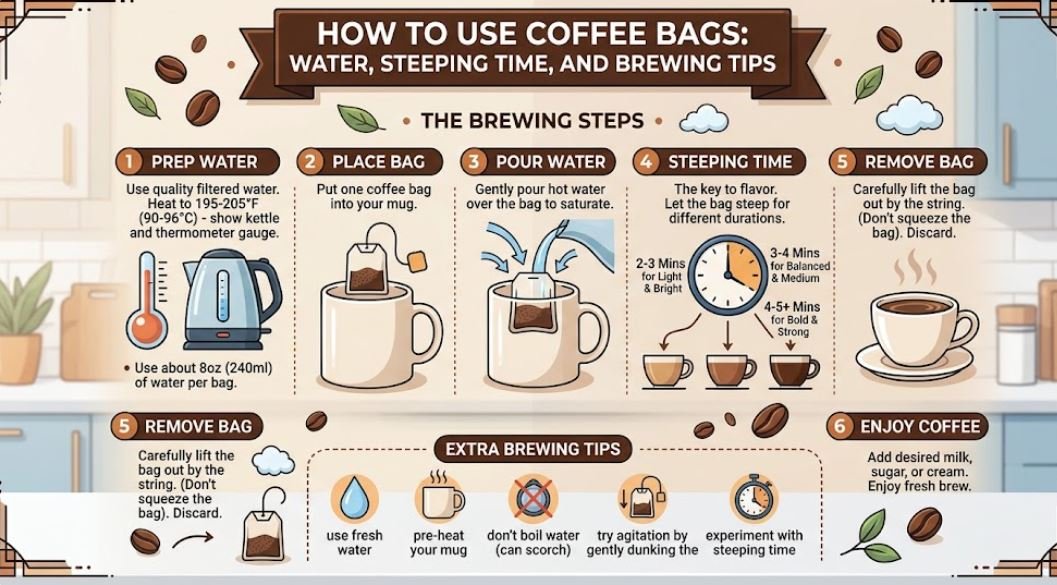
Coffee bags are one of the easiest ways to make a fresh cup of coffee without pulling out a coffee maker, grinder, or French press. They look a little like tea bags, but they contain ground coffee instead of tea leaves. You simply place the bag in your mug, add hot water, wait a few minutes, and remove it.
The basic process is simple, but water temperature, steeping time, coffee quantity, and water volume can all change the final taste. Here’s how to get a better cup every time.
What Is a Coffee Bag?
A coffee bag is a small filter-style pouch filled with ground coffee. It is designed to sit in hot water while the water extracts the coffee’s soluble flavors, oils, aroma, and other compounds.
The concept is similar to a tea bag, making it especially convenient for people who want brewed coffee without using traditional equipment.
Coffee Bag Definition
A coffee bag usually contains pre-ground coffee sealed inside a porous filter material. The filter allows hot water to pass through the coffee grounds while keeping most of the grounds contained.
Unlike instant coffee, the grounds do not dissolve in your cup. Instead, they are brewed through contact with hot water.
How a Coffee Bag Works
Using one is essentially a small immersion-brewing process.
When hot water surrounds the coffee grounds, it gradually pulls flavor compounds from them. The longer the grounds remain in contact with the water, the more extraction takes place.
This means coffee grounds → interact with → hot water → produce → brewed coffee.
Your final cup depends on how well you balance that extraction. Too little extraction can leave coffee tasting thin or sour, while excessive extraction may produce a bitter or harsh flavor.
Coffee Bag vs. Coffee Pod
Coffee bags and coffee pods are both convenient, but they work differently.
A coffee bag is immersed directly in hot water, so it does not require a coffee machine. A coffee pod typically needs a compatible brewer that forces hot water through the packed coffee.
For travel, the office, camping, or a quick morning cup, coffee bags can be particularly convenient because all you really need is a mug and hot water.
Types of Coffee Bags
Not every coffee bag is the same. Some contain finely ground coffee, while others use a slightly coarser grind designed for immersion brewing.
You may also find bags made with different filter materials, roast levels, and coffee origins. Light, medium, and dark roasts can all be packaged as coffee bags, giving you plenty of flavor options.
What You Need to Brew Coffee With a Coffee Bag
One reason coffee bags are so convenient is the short equipment list. You don’t need a grinder, scale, espresso machine, or complicated brewing setup.
Coffee Bag
Start with a fresh coffee bag. Check the packaging for the recommended water amount and brewing instructions because different brands can use different quantities of coffee.
The amount of coffee inside the bag affects the strength of your drink, while the grind size influences how quickly the coffee extracts.
Hot Water
Good water makes a noticeable difference. If your tap water has a strong smell, taste, or high mineral content, it can affect the flavor of the finished coffee.
Freshly heated water is generally preferable to water that has been sitting in a kettle for a long time.
Coffee Mug or Cup
Choose a mug large enough to hold the recommended amount of brewing water while leaving enough room to remove the coffee bag comfortably.
A preheated mug can also help keep your coffee warmer during brewing.
Kettle or Water Heater
A kettle is the easiest option for heating your water. If you have a temperature-controlled kettle, you can select a suitable brewing temperature more precisely.
If you don’t, simply avoid pouring aggressively boiling water directly onto the coffee unless the product instructions specifically recommend it.
How to Use a Coffee Bag Step by Step
Once your water is ready, the actual brewing process takes only a few minutes.
Step 1: Heat the Water
Heat enough water for your cup. Aim for hot water rather than aggressively boiling water.
If your kettle has temperature control, follow the coffee bag manufacturer’s recommendation. Otherwise, allowing freshly boiled water to sit briefly can bring its temperature down.
Step 2: Place the Coffee Bag in Your Cup
Open the package and remove the coffee bag without tearing the filter.
Place it directly inside your mug. Some coffee bags have small paper handles or tabs that rest over the edge of the cup.
Make sure the bag is positioned so that it will remain submerged when you add water.
Step 3: Pour Hot Water Over the Bag
Slowly pour the hot water into the mug.
Try to wet the entire coffee bag rather than pouring all the water into one spot. This helps the grounds become evenly saturated and encourages more consistent extraction.
Step 4: Let the Coffee Steep
Allow the coffee bag to remain in the hot water for the recommended time.
This is one of the most important parts of the process. A very short steep can result in weak coffee, while leaving the bag in for too long can increase bitterness and astringency.
You can gently move the bag up and down once or twice if the manufacturer’s instructions allow it, but there’s no need to aggressively dunk it.
Step 5: Remove the Bag and Serve
Once the brewing time is finished, lift the bag out of your mug and let excess coffee drain naturally.
Avoid squeezing it aggressively unless the package specifically recommends doing so. Squeezing can force more fine particles and extracted compounds into the cup, potentially changing the texture and taste.
Your coffee is now ready to drink—or customize with milk, cream, sugar, or another ingredient.
How Much Water Should You Use With a Coffee Bag?
Water quantity has a direct effect on coffee strength. The more water you use with the same amount of coffee, the lighter the resulting cup will generally taste.
Standard Coffee-to-Water Ratio
Many coffee bags are designed for a single serving, so the simplest approach is to follow the amount printed on the package.
If no instructions are available, start with the manufacturer’s suggested serving size rather than guessing. Different bags contain different amounts of coffee, so there isn’t one universal water measurement that works for every product.
Adjusting Water for a Stronger Coffee
If your first cup tastes too weak, you can use slightly less water the next time.
For example, reducing the water volume while keeping the same coffee bag increases the relative amount of coffee available per cup. This generally produces a fuller and stronger drink.
Adjusting Water for a Milder Coffee
If the coffee tastes too intense, increase the amount of water slightly.
This doesn’t change the amount of coffee extracted from the bag, but it dilutes the brewed coffee and produces a lighter cup.
The key is to make small adjustments rather than dramatically changing the recipe.
Recommended Cup Sizes
Your mug size matters because a large mug can easily dilute a coffee bag intended for a smaller serving.
Before filling a large cup to the top, check the package instructions. If the bag is designed for a smaller serving, using significantly more water may leave the coffee tasting noticeably thin.
How Long Should You Steep a Coffee Bag?
Steeping time is one of the easiest things to adjust when a coffee bag doesn’t taste quite right. The longer the coffee grounds stay in contact with hot water, the more compounds are extracted.
For a balanced cup, follow the brewing time printed on the package. If there are no instructions, start with a few minutes and adjust according to taste.
Recommended Steeping Time
Most coffee bags need several minutes of contact with hot water. The exact time depends on the coffee blend, grind size, bag design, and amount of coffee inside.
Rather than treating one brewing time as a strict rule, use the manufacturer’s recommendation as your starting point. After tasting the coffee, you can shorten or extend the steep slightly.
What Happens if You Steep Too Long?
Leaving the coffee bag in hot water for too long can lead to excessive extraction.
The resulting coffee may taste bitter, dry, heavy, or astringent. If your cup consistently tastes harsh, try removing the bag earlier rather than adding more milk or sugar to cover the problem.
What Happens if You Steep Too Short?
A coffee bag that hasn’t had enough time to brew may produce a weak or underdeveloped cup.
You might notice sourness, a thin body, or a lack of aroma and flavor. In that situation, giving the bag a little more brewing time can help.
How Steeping Time Changes Flavor
Steeping time affects how much flavor is extracted from the grounds.
Shorter brewing → less extraction → lighter flavor
Longer brewing → more extraction → stronger flavor
The goal isn’t simply to extract as much as possible. Good coffee depends on extracting the right balance of desirable compounds.
What Temperature Should the Water Be?
Water temperature plays an important role in coffee extraction. Hot water extracts compounds from coffee more efficiently than cold water, but extremely hot water can sometimes make the brewing process less forgiving.
Ideal Water Temperature
The best temperature depends on the coffee and the manufacturer’s brewing instructions.
For most brewed coffee, water should be hot but not necessarily at a violently boiling temperature. If you have a temperature-controlled kettle, following the recommended temperature on the package is the easiest approach.
Why Boiling Water Can Affect Coffee
Freshly boiling water can extract coffee compounds quickly. If the coffee is already prone to bitterness or you leave the bag steeping for too long, very hot water may contribute to an overly intense cup.
This doesn’t mean boiling water automatically ruins coffee. It simply means temperature should be considered alongside grind size and brewing time.
Using a Kettle Without Temperature Control
You don’t need an expensive kettle to make coffee bags.
If your kettle switches off immediately after boiling, allow the water to sit briefly before pouring it over the coffee bag. This gives the water time to cool somewhat.
The important thing is consistency. Once you find a method that produces coffee you enjoy, repeat it.
Water Temperature and Coffee Extraction
Temperature affects extraction speed.
Higher temperatures generally encourage faster extraction, while cooler water extracts more slowly. This is why water temperature shouldn’t be considered separately from steeping time.
A hotter brew with a long steep may taste very different from a slightly cooler brew with the same steeping time.
How to Make Coffee Bags Taste Better
A coffee bag is convenient, but convenience doesn’t mean you have to settle for bland coffee. A few simple changes can noticeably improve the cup.
Use Fresh, Good-Quality Water
Coffee is mostly water, so the water you use has a major influence on the final flavor.
Fresh drinking water with a clean taste is a good starting point. If your tap water has a strong chlorine or mineral taste, filtered water may produce a cleaner cup.
Preheat Your Coffee Cup
Preheating your mug is a small step, but it can help maintain brewing temperature.
Simply rinse the mug with hot water before brewing, discard that water, and then place your coffee bag inside.
This is especially useful when you’re making coffee in a cold ceramic mug.
Follow the Recommended Brew Time
Don’t automatically assume that stronger coffee means longer steeping.
If the manufacturer provides a recommended brewing time, start there. If the coffee is too weak, experiment with a slightly longer steep or less water. If it is bitter, try reducing the steeping time.
Gently Move or Dunk the Bag
A gentle movement of the coffee bag can help water circulate around the grounds.
However, there’s no need to repeatedly squeeze or aggressively dunk the bag. A few gentle movements are enough to encourage even contact between water and coffee.
Common Coffee Bag Brewing Mistakes
Coffee bags are simple, but a few common mistakes can make an otherwise good product taste disappointing.
Using Too Much or Too Little Water
Water volume directly affects concentration.
Too much water can make coffee taste weak and diluted, while too little water can produce an overly concentrated cup.
Start with the recommended amount and adjust gradually.
Steeping for the Wrong Amount of Time
Time is another common problem.
Leaving the bag in the mug for an extra 10 or 15 minutes while you get distracted may change the flavor significantly. If you’re someone who tends to forget about your coffee, set a simple timer.
Using Extremely Hot Water
Very hot water isn’t automatically bad, but combining it with a long steep can result in an overly extracted cup.
If your coffee tastes harsh, consider changing the temperature or reducing the brewing time.
Squeezing the Coffee Bag
Squeezing the bag at the end of brewing is tempting because it seems like you’re getting every last drop.
However, aggressively pressing the bag can push more fine particles and strongly extracted liquid into your cup. If the coffee tastes bitter or muddy when you squeeze the bag, simply remove it without pressing.
How to Customize Coffee Bag Coffee
Once you’ve learned the basic brewing method, you can easily turn coffee-bag coffee into different styles of drinks.
Adding Milk or Cream
Milk or cream can soften the flavor of coffee and add body.
For a smoother morning drink, brew the coffee normally and add a small amount of warm or cold milk afterward. Cream creates a richer texture, while regular milk keeps the drink relatively light.
Adding Sugar or Sweeteners
Sugar can balance bitterness and make darker roasted coffee taste smoother.
Start with a small amount and add more only if necessary. You can also experiment with other sweeteners depending on your preferences.
Making Iced Coffee
Coffee bags can also be used to make iced coffee.
One simple approach is to brew a stronger cup using slightly less water, allow it to cool, and then pour it over ice. Using a stronger brew helps compensate for dilution as the ice melts.
For a smoother result, chill the brewed coffee before adding it to a glass filled with ice.
Adding Flavored Ingredients
Coffee bags provide a convenient base for flavored drinks.
You can add ingredients such as vanilla, cinnamon, cocoa, caramel-style syrup, or flavored milk. Start with small amounts so the additional ingredients don’t completely overwhelm the coffee’s natural flavor.
Coffee Bag vs. Other Brewing Methods
Coffee bags are convenient, but they aren’t the only way to make coffee. Different brewing methods offer different levels of control, flavor, and convenience.
Coffee Bag vs. Instant Coffee
Instant coffee dissolves directly into hot water, while a coffee bag contains actual ground coffee that must be extracted.
Because of this difference, coffee bags can provide a brewing experience closer to traditional ground coffee. Instant coffee, however, is usually faster because there is no steeping period.
Coffee Bag vs. Coffee Pod
Coffee pods generally require a compatible coffee machine, whereas coffee bags only need hot water and a cup.
Coffee pods can provide greater consistency when used with a good machine, while coffee bags are particularly useful when portability and simplicity matter.
Coffee Bag vs. French Press
A French press gives you more control over coffee quantity, water volume, grind size, and steeping time.
A coffee bag sacrifices some of that control in exchange for convenience. If you want a quick cup with minimal cleanup, the bag has an advantage. If you enjoy experimenting with brewing variables, a French press offers more flexibility.
Coffee Bag vs. Pour-Over Coffee
Pour-over brewing involves gradually adding water to coffee grounds through a filter.
It provides considerable control over pouring technique, extraction, and brewing time. Coffee bags are much simpler because the filter and grounds are already prepared.
For everyday convenience, coffee bags win on simplicity. For hands-on brewing and precise control, pour-over has the edge.
How to Store and Dispose of Coffee Bags
Proper storage helps protect the coffee’s freshness before you brew it. After brewing, disposal depends on the materials used in the bag and the rules of your local waste or composting system.
Proper Coffee Bag Storage
Keep unused coffee bags in a cool, dry location away from direct sunlight.
If the individual bags are sealed, leave them in their original packaging until you’re ready to use them. Avoid storing them somewhere exposed to heat or moisture.
Protecting Coffee Bags From Moisture
Moisture can damage coffee quality and packaging.
A dry cupboard or pantry is usually a better location than a humid area near a sink or kettle. Always reseal the outer package if it contains multiple individual coffee bags.
Checking Freshness
Coffee gradually loses aroma and flavor over time.
Check the package for its best-before or freshness information. If a coffee bag has been stored improperly, has damaged packaging, or has an unusual smell, it’s better to avoid using it.
How to Dispose of a Used Coffee Bag
Don’t assume every coffee bag is compostable.
Some bags contain plastic or other materials designed to improve strength and filtration. Check the manufacturer’s packaging for disposal instructions before putting the used bag into compost or recycling.
If you’re unsure, regular household waste may be the appropriate option according to your local waste-management rules.
FAQs About Using a Coffee Bag
Can You Use a Coffee Bag More Than Once?
You can physically steep a coffee bag more than once, but the second cup will usually be considerably weaker because many of the readily extracted flavor compounds were removed during the first brew. For the best flavor and aroma, use a fresh coffee bag for each cup.
Can You Make Iced Coffee With a Coffee Bag?
Yes. Brew the coffee normally or slightly stronger, allow it to cool, and pour it over ice. Using a stronger brew helps prevent the melting ice from making the finished drink taste watery.
Can You Drink Coffee Without Removing the Bag?
It’s better to remove the coffee bag once the recommended brewing time has finished. Leaving it submerged continues the extraction process and may make the coffee increasingly bitter or astringent.
Can You Squeeze a Coffee Bag After Brewing?
You can, but aggressive squeezing isn’t usually necessary. Let the bag drain naturally after removing it from the cup. Squeezing may introduce more fine particles and strongly extracted liquid into your coffee.
Are Coffee Bags Better Than Instant Coffee?
Neither is universally better. Coffee bags use ground coffee and require a short brewing period, while instant coffee dissolves immediately in hot water. Choose a coffee bag when you want a simple brewed-coffee experience and instant coffee when speed is your main priority.
Final Verdict
Learning how to use a coffee bag is straightforward: heat your water, place the bag in your mug, add the recommended amount of hot water, steep for the suggested time, and remove the bag.
The biggest factors affecting the result are water quality, water temperature, coffee-to-water ratio, and steeping time. Once you’ve mastered those basics, you can adjust the recipe to make your coffee stronger, milder, creamier, sweeter, or even turn it into iced coffee.
For anyone who wants brewed coffee without a machine and with very little cleanup, a coffee bag offers a practical middle ground between instant coffee and traditional brewing.

- Espresso Tastes Watery? 10 Common Causes and How to Fix It - October 23, 2026
- 10 Common Coffee Equipment Cleaning Mistakes and How to Avoid Them - October 23, 2026
- 17 Common Coffee Grinder Problems and How to Fix Them - October 23, 2026