
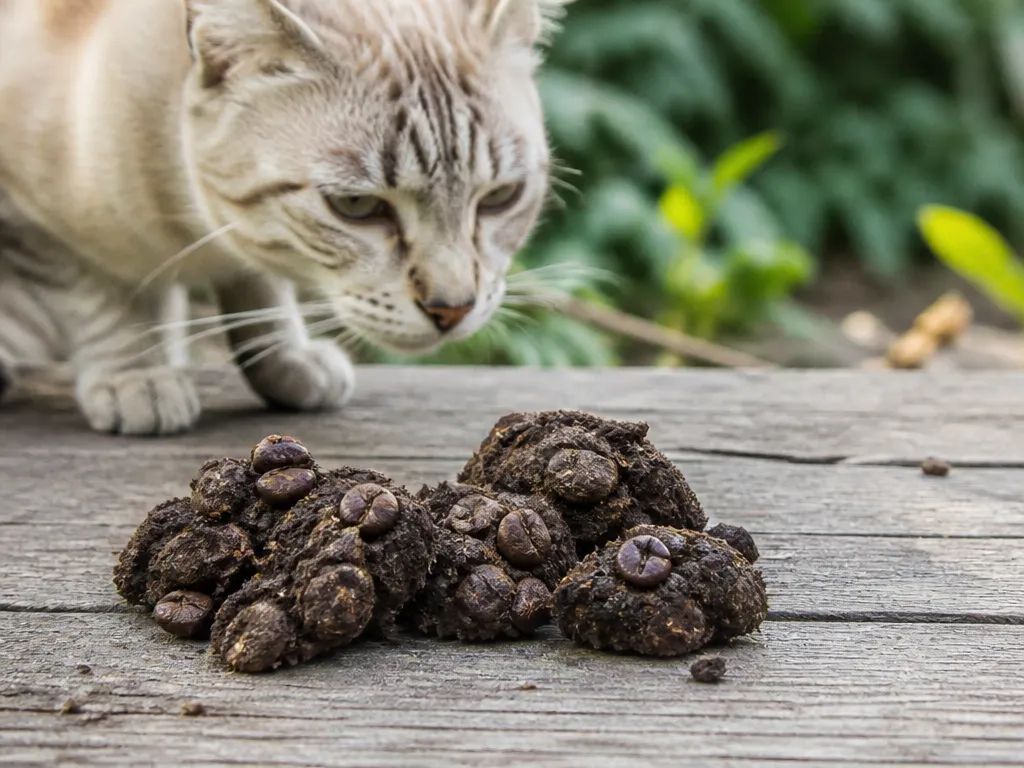
Coffee beans from cat poop are not safe or reliable to roast. A cat’s digestive tract can crack or soften seeds, and feces can carry pathogens even when a seed looks intact. Bag and discard anything that resembles coffee beans, then clean and disinfect the area. Do not rinse and roast it – the food-safety risk is not worth it.
Key Takeaways
- Don’t roast it. Seeds from feces can carry germs, and digestion can damage their structure and roasting quality.
- Dispose of it. Double-bag the material, tie the bags shut, and put them in the trash.
- Sanitize thoroughly. Clean first, then disinfect cat-feces contact areas while wearing gloves and maintaining good ventilation.
- Prevent spread. Feces can transfer organisms to soil, litter, shoes, hands, and other surfaces during cleanup.
- Do not plant it. Cat-digested seeds can spread contamination and may have poor germination.
- Expect poor quality. Even an intact-looking seed may roast unevenly and taste unpredictable.
What Happens to Coffee Beans in Cat Poop?
Cat digestion is hard on seeds. A cat’s mouth, stomach, and intestines expose them to mechanical movement, acid, enzymes, and moisture. That combination can crack the outer layers, soften the seed coat, reduce germination ability, and alter the seed’s interior.
A seed that looks like a coffee bean in litter or feces is still a feces-contaminated seed. Coffee comes from clean, green seeds collected from Coffea cherries and then processed for roasting. Once a seed has passed through feces, contamination becomes the first concern and quality becomes the second.
Treat it as contaminated organic waste, not as an ingredient. Appearance cannot tell you whether the seed is intact, free of microbes, or suitable for roasting. Rinsing will not make it a safe coffee bean.
Can Cats Digest Coffee Beans?
Cats digest food, but digestion does not turn every solid item into harmless liquid. Some seeds can pass through an animal largely intact because their outer structures resist breakdown. Others emerge partially digested, split, softened, or mixed with other material.
Coffee beans are seeds from Coffea plants with protective outer structures, but those structures do not guarantee that the seed will come through unchanged. Stomach acid, intestinal enzymes, and physical movement can damage the seed even when its outer surface appears whole.
Cats are obligate carnivores, and their digestive systems are adapted mainly to animal protein and fat rather than plant-seed processing. The result is unpredictable. A seed may retain its shape while losing internal integrity or viability.
If the question is whether it will roast into normal coffee, the practical answer is no. Roasting depends on relatively consistent moisture and structure in clean green beans. Digestive exposure creates unknown damage and contamination, so both the roast and the flavor may be poor.
How to Handle and Inspect Seeds From Cat Feces
Treat anything from cat feces as contaminated because appearance cannot prove that it is clean. If you see coffee-like seeds in litter-box waste, scoop and contain them promptly. Work carefully to avoid tracking litter or stirring up dust.
Wear gloves and keep the litter box closed or covered when possible. Put the waste in a trash bag, double-bag it if you can, and tie it shut. Remove your gloves carefully, wash your hands thoroughly, and clean nearby surfaces where litter or feces may have spread.
If you need to inspect the material, do so only to identify it – never to prepare it as food. Place a small amount on disposable paper in a well-lit area and compare its size and shape with known coffee seeds. Unroasted coffee beans are typically oval and firm, but the material could instead be a plant seed, piece of kibble, or unrelated debris.
Whatever the identification result, disposal remains the right choice if the seed contacted feces. Do not rinse and store it for roasting. Quick washing cannot reliably remove pathogens, and splashing can spread contamination.
Why Cat Waste Should Stay Out of Soil and Compost
Cat feces and cat-digested seeds do not belong in garden soil or home compost. Feces can contain organisms that survive cleanup and persist outdoors. Spreading the material increases the chance that contamination reaches plants, soil, and surfaces people later touch.
Planting the seeds creates another problem: it encourages material from contaminated waste to spread. Some seeds pass through animals and remain capable of germination, but that does not make them suitable for planting when feces are involved.
Typical home composting conditions may not reliably inactivate pathogens. Contamination can also spread through routine handling, from the compost bin to tools, gloves, shoes, or garden beds. Keep cat feces out of compost and out of soil used for growing food.
Think in terms of pathways rather than intentions. Litter particles and fecal material can travel on cleaning cloths, footwear, hands, and tools. Once contaminated material reaches the environment, reversing that spread is difficult.
How to Sanitize the Litter-Box Area
Sanitizing removes contamination from surfaces; it does not make a contaminated seed safe. Treat the litter box, nearby floor, and any contacted fabrics as one cleanup zone. Clean away waste and clumps first, then disinfect the cleaned surfaces.
Follow the disinfectant label for contact time and safe use around pets. Do not mix cleaners, especially bleach with other products. Keep the area ventilated and prevent your cat from entering until the product has finished working and the surfaces are safe and dry.
If feces or litter could have been tracked, clean the route as well. Check floor edges, the area around the litter-box entrance, and any mops or brushes used during cleanup. Do not reuse a contaminated cloth on a countertop or food-preparation surface.
To reduce future pest problems, remove attractants. Scoop litter promptly, wash the litter box on a regular schedule, and keep pet waste contained. Roaches and flies are attracted to organic waste, including messes kept indoors.
Why These Seeds Will Not Roast Normally
A seed from cat feces has two problems: its structure may be damaged, and it is contaminated. Roasting depends on how clean green coffee beans hold moisture and how heat moves through a consistent seed. Digestive damage can produce uneven roasting, scorched flavors, or bitterness.
Roasting also does not eliminate every food-safety concern. Heat can kill many microbes, but it is not a guarantee against every pathogen, toxin, residue, or contamination introduced during handling. Starting with feces-contaminated material means guessing about both the seed and the risk.
If you want coffee at home, use commercially purchased green or roasted beans from a normal source. You will get predictable roasting results without the fecal-contamination pathway.
Why Coffee Species Do Not Change the Safety Answer
Coffee plants are commonly discussed as two cultivated types, Coffea arabica and Coffea robusta, which differ in bean characteristics and flavor profiles. That distinction does not make a feces-contaminated seed suitable for roasting or planting.
Seed-coat damage and internal disruption can occur after digestion regardless of species. A seed may look intact while having reduced viability, and viability is not the only concern for roasting. Roasted quality also depends on the seed’s internal structure and chemistry.
Identification creates another problem. A seed that resembles a coffee bean may not be from a Coffea plant at all. Litter boxes and yards can contain plant seeds, kibble fragments, and other debris with similar shapes. Digestion makes visual identification even less reliable.
FAQ
What should I do immediately if I find coffee beans in cat poop?
Bag and discard them right away. Wear gloves, scoop carefully, and prevent litter from spreading. Clean the litter box and surrounding area, then wash your hands thoroughly.
Can I rinse coffee beans from cat poop and roast them anyway?
Rinsing does not guarantee removal of pathogens or contamination residues, and digestion may damage the bean’s structure, making roasting unpredictable. If you want coffee, start with commercially sourced beans.
Is it safe to compost cat-poop seeds?
No. Treat cat-feces-contaminated material as unsuitable for garden compost. Pathogens can persist, and handling can spread contamination. Keep cat waste out of compost and soil beds used for growing food.
How do I sanitize the litter box after this happens?
Remove the waste first, then clean and disinfect the surfaces with a product labeled for the job. Follow the product’s contact-time instructions, avoid mixing cleaners, and keep the area ventilated until it is safe for your cat. Wash your hands and any reusable tools used during cleanup.
What is the biggest mistake people make in this situation?
Trying to save the seeds. People collect them, rinse them, or try to plant them, which creates food-safety and contamination risks. The safer approach is containment, disposal, and disinfection of every area where feces or litter made contact.

- Espresso Tastes Watery? 10 Common Causes and How to Fix It - October 23, 2026
- 10 Common Coffee Equipment Cleaning Mistakes and How to Avoid Them - October 23, 2026
- 17 Common Coffee Grinder Problems and How to Fix Them - October 23, 2026