
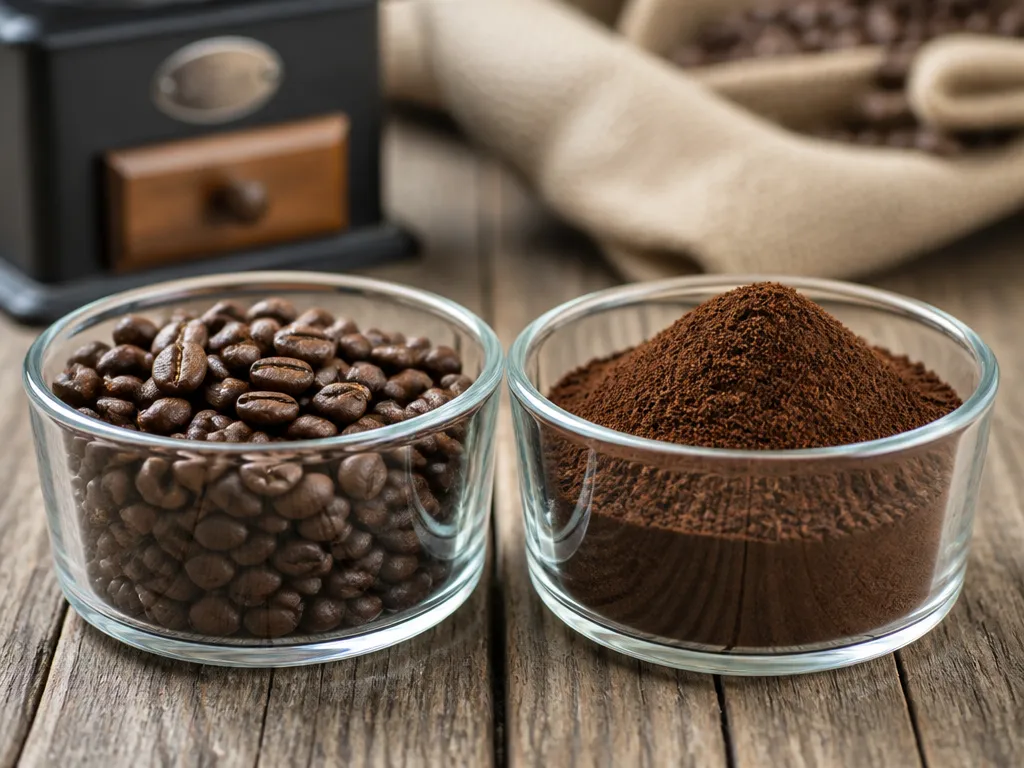
Whole bean coffee is the better choice for most home brewers who can grind at home. Grinding just before brewing delays aroma loss and gives you control over grind size. Ground coffee is the better choice when speed matters, provided you buy the right grind and use the bag quickly.
The main tradeoff is freshness. Whole beans usually stay at peak flavor longer because they remain intact until brewing. Ground coffee starts losing aroma as soon as it is ground, and the larger exposed surface area speeds staling. If you brew at home and can grind, whole bean is the safer bet. If you need convenience, ground coffee works well when you buy smaller quantities and store them properly.
The Short Answer
- Whole bean wins for flavor because grinding right before brewing slows aroma loss.
- Ground coffee saves time, but it fades faster after roasting and especially after factory grinding.
- Freshness beats roast level, so check roast dates and buy smaller batches when possible.
- Grind size is critical to the method: espresso needs a very fine grind, while French press needs a coarse grind.
- Storage affects both formats: keeping coffee sealed and cool slows staling.
- Your workflow decides the winner. Grinder access matters more than claims about which format is universally “better.”
What Changes
The difference comes down to when the coffee is ground. With whole bean coffee, you grind at home shortly before brewing. With ground coffee, the factory does that work earlier, so the clock on aroma loss starts sooner.
Grinding exposes far more surface area to oxygen. Coffee contains volatile aroma compounds that fade with exposure, and fine particles lose those compounds faster than intact beans. Over time, the same coffee can taste less aromatic, more muted, or slightly papery.
Most US coffee bags include a roast date, but that date does not tell the whole story. The freshness gap between whole bean and ground coffee depends on how long the coffee sits before brewing and how you store it after opening. A large bag left open for weeks can become flat.
Two bags from the same roast batch can taste noticeably different if one is ground immediately and the other stays whole until brewing. You may enjoy both, with aroma and definition especially noticeable in lighter roasts.
Freshness and Flavor Peak Timing
Peak flavor depends on roast date, oxygen exposure, and storage. Grinding increases the exposed surface area, so the coffee can lose aroma more quickly once it becomes ground. Once opened, both formats decline as air reaches the coffee.
For most home drinkers, coffee tastes best in the first couple of weeks after roast and gradually declines afterward. Ground coffee can show a noticeable drop sooner, particularly after the bag is opened and exposed to air repeatedly.
The roast date is only part of the equation. A sealed bag kept cool and dark slows degradation. A bag left in a warm cabinet near the stove, or opened repeatedly over a month, stales faster because air and moisture move in and out.
With drip coffee, pour-over, or AeroPress, staleness usually appears first as a loss of aroma and sweetness. Coffee may taste thin, flat, or “off” even when the strength is correct. Milk can hide some of that decline, but it cannot restore the chocolatey or fruity notes that make a good coffee worth repeating.
Roast level also changes how clearly you notice freshness. Darker roasts are more forgiving because they have fewer delicate aromatics left to lose, but old dark coffee can still taste ashy or bitter. Lighter roasts tend to show freshness differences more clearly, especially in pour-over and other filter brews.
Brew Compatibility by Method and Grind Size
Grind size connects the coffee you buy to the way you brew it. Whole bean gives you the ability to match the grind to your method. Ground coffee can taste excellent when you buy the correct grind, but the factory setting limits your ability to adjust it.
The basic rule is simple: finer grounds extract faster, while coarser grounds extract more slowly. Espresso needs a very fine grind because water passes through the coffee quickly. French press needs a coarse grind because the coffee steeps for longer.
If coffee tastes sour or weak, the grind is often too coarse. If it tastes bitter, harsh, or overly strong, the grind may be too fine for the method.
Grind Size and Method Quick Map
| Brew method | Typical grind size | What it usually tastes like when wrong |
|---|---|---|
| Espresso (machine) | Very fine | Sour and watery if too coarse, bitter if too fine |
| AeroPress | Fine to medium | Weak if too coarse, harsh if too fine |
| Pour-over (V60, Chemex, Kalita) | Medium | Sour/underdeveloped if too coarse, bitter if too fine |
| Drip machine | Medium | Similar issues as pour-over, often muted when stale |
| Moka pot | Medium-fine | Bitter and dry if too fine, weak and watery if too coarse |
| French press | Coarse | Overly bitter/muddy if too fine, thin if too coarse |
| Cold brew | Extra coarse | Under-flavored if too fine, too weak if too coarse |
Most bagged ground coffee is labeled for common methods such as drip or espresso. If you use multiple brewing methods, whole bean is more flexible because you can adjust the grind instead of buying separate bags.
Many drip machines do not grind coffee, so you must use pre-ground coffee or supply your own grinder. A basic blade grinder can produce uneven particles, which may make coffee taste inconsistent even when you choose the correct grind label.
Grinding Whole Beans: Equipment and Results
Whole bean coffee only delivers its full advantage when the grind is reasonably consistent. Uneven particles extract at different speeds, creating under-extracted and over-extracted flavors in the same cup.
A burr grinder is the cleanest option. It produces more consistent particle sizes, which can improve clarity, reduce harsh notes, and make the coffee easier to adjust. Repeatable grinding also helps maintain a similar flavor from one batch to the next.
Blade grinders cost less, but they usually create a wide range of particle sizes. Fine powder extracts quickly and can push bitterness higher, while larger pieces may under-extract and keep the cup from tasting sweet or aromatic. If you use a blade grinder, aiming for a slightly coarser grind than you would with a burr grinder may help, but the result will remain less precise.
Manual hand grinders offer another middle ground. Many use burrs and can produce excellent consistency, with time and effort as the tradeoff. Grinding one or two cups is realistic for many people. Grinding enough coffee for a family every morning can become a chore.
Your grinder changes the convenience calculation. Whole bean plus a good grinder can produce better flavor than pre-ground coffee, but it adds another step. Whole bean plus a mediocre grinder may reduce that advantage because fresh grinding cannot fully compensate for uneven extraction.
For example, switching from pre-ground drip coffee to whole beans with a blade grinder may give you fresher aroma but still produce an uneven cup. That is why someone may conclude that whole bean tastes fresher while still feeling disappointed with the results. Grind consistency is the missing piece.
Flavor Consistency From the First Cup to the Last
Consistency has two meanings: how stable the coffee tastes over time and how evenly each serving is ground. The grinder determines the second.
After opening, each scoop exposes the remaining ground coffee to fresh air. Aroma can fade early, so the middle of the bag may taste less vivid than the first few cups.
Whole bean coffee depends on your routine. Weighing the same amount, keeping the grinder at the same setting, and following the same brewing process can produce highly consistent cups. Eyeballing doses, changing the grinder often, or loosely resealing the bag can make whole bean coffee vary as well.
Freshness and grind consistency also interact with the brewing method. Pour-over and espresso are particularly sensitive to both factors. Standard drip coffee is more forgiving and can hide some differences by blending flavors across the brew.
A simple home test can reveal your own timeline: brew one cup from a newly opened bag and another from the same bag two or three weeks later, using the same method and dose. If the second cup tastes flatter, you have found how quickly that coffee declines in your kitchen.
Cost, Convenience, and Storage Trade-Offs
Whole bean requires a grinder or access to one, while ground coffee costs less to start because it requires no additional equipment.
Convenience also has a shelf-life cost. Ground coffee is easy to use, but the benefit shrinks if you buy several bags and leave one open for weeks. Aroma loss can occur before you finish the coffee, meaning you pay for convenience while drinking a less vivid cup.
Whole Bean vs Ground Coffee Tradeoffs
| Option | Upfront setup | Best for | Main downside |
|---|---|---|---|
| Whole bean | Grinder (or grinder access) | People who care about flavor clarity | Takes extra step each brew |
| Pre-ground (drip/espresso blends) | None | People who want speed and simplicity | Fades faster after factory grind and bag opening |
Measurement affects convenience and consistency too. Whole bean paired with a scale makes accurate dosing straightforward. Pre-ground coffee removes a step, but scoop sizes often vary from cup to cup, which can make one batch taste weaker than the last.
Your drinking habits should guide the budget decision. If you brew daily and finish each bag quickly, ground coffee can be a practical choice. If you brew less often, whole bean usually preserves more flavor between sessions.
How to Choose the Better Coffee for You
Choose based on your brewing routine, desired control, and available equipment. Regular home brewers who can grind will get more control over flavor, while those prioritizing speed may prefer a correctly matched pre-ground coffee.
For ground coffee, buy smaller bags that you will finish quickly and match the grind to your brewing method.
Use this checklist:
- How often do you brew? If you brew daily or near-daily, grinding at home may be worth the extra step.
- Do you already have a grinder? If yes, whole bean is the natural choice.
- What brew method do you use? Pour-over and espresso benefit most from adjustable grind size.
- How big are your bags? If an opened bag sits around, whole bean usually holds up better.
- Do you measure doses? Accurate dosing increases the payoff from whole bean.
A practical compromise is to use whole bean for your main coffee and pre-ground coffee for travel or backup days. Your everyday cups get the freshness advantage without requiring every brew to follow the same routine.
A common US setup is a burr grinder for filter coffee and pre-ground coffee for emergencies. If you finish a bag within about a couple of weeks after opening, pre-ground coffee may work well enough. If a bag lasts a month or more, whole bean is the better choice, stored in an airtight container.
FAQ
What’s fresher: whole bean or pre-ground coffee?
Freshness depends primarily on the time since grinding, roast date, and storage. Grinding closer to brew time limits aroma loss, while smaller bags and airtight storage improve the experience.
How long does ground coffee stay good after opening?
Ground coffee generally tastes best relatively soon after opening, often within a couple of weeks, depending on storage and roast. When the aroma fades and the cup tastes flatter, the coffee has started to decline. Airtight storage in a cool, dark place can extend its quality.
Is it cheaper to buy whole bean or ground coffee?
Whole bean is often cheaper per cup for flavor, but only if you already have a grinder. Without one, the upfront cost can outweigh the difference. Grinder time, bag size, and how quickly you use the coffee all affect which option costs less for your routine.
Can I use pre-ground coffee in an espresso machine?
Yes, if the coffee matches the espresso grind size and your machine’s requirements. Many bags labeled “espresso-style” are close, but they may not be dialed in for your particular setup. If the coffee tastes sour or bitter, the grind may need an adjustment that pre-ground coffee cannot provide.
What’s the most common mistake when buying whole bean or ground coffee?
Match the grind to your brewing method and protect either format from heat, air, light, and moisture. Drip grind in a French press can taste muddy or harsh, while espresso grind in a pour-over can over-extract.

- Unlocking the Venti: Discover the Perfect Shot Count for Your Drink - October 13, 2026
- Unpacking the Buzz: Caffeine Levels in Café Bustelo Espresso - October 13, 2026
- How to Fix Bitter Coffee: 10 Expert Ways to Improve the Taste - October 4, 2026