
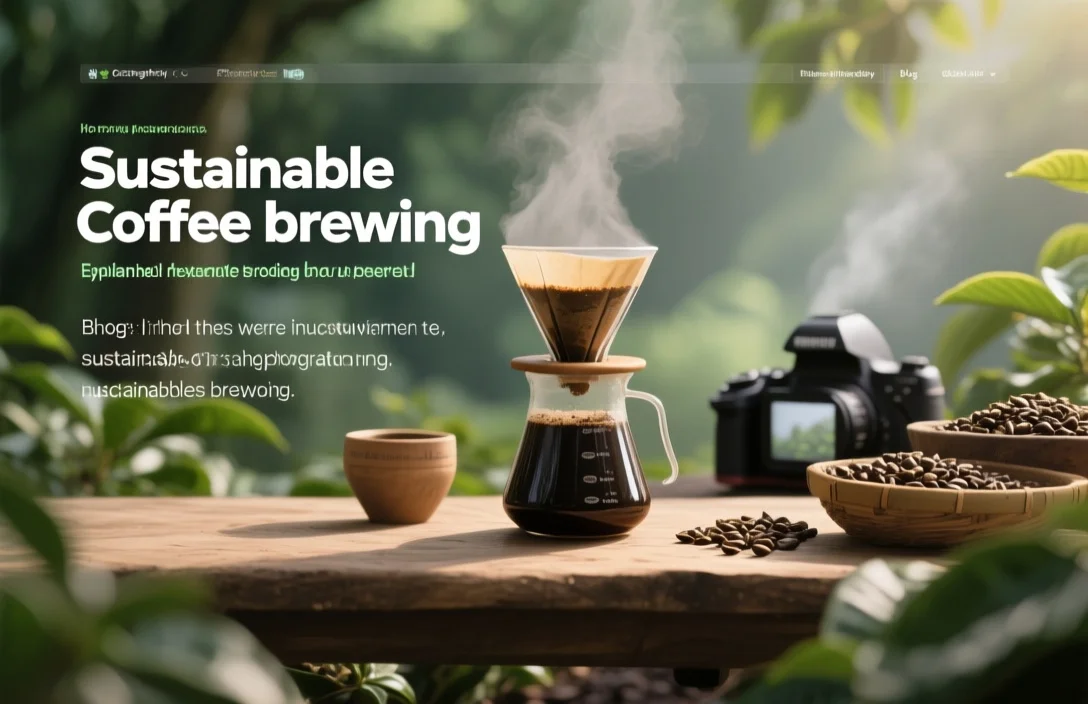
Sustainable coffee brewing cuts waste and energy use while supporting better farming practices. I would start with three decisions: what beans you buy, how you brew, and what you do with the grounds and packaging afterward.
Sustainable Coffee Brewing: The Basics That Matter
Sustainable coffee brewing is really about lowering impact across the full path of the cup, from farm and roasting to packaging, home brewing, and disposal. That sounds broad, but the practical version is not complicated.
My rule is simple. Buy beans with better sourcing and less wasteful packaging. Use a brewing method that avoids disposable pods and unnecessary filters. Keep spent grounds out of the trash when you can compost or reuse them.
A few terms come up often in this area: fair trade, organic, composting, reusable filters, single-use pods, energy efficiency, shade-grown, and home roasting.
Choosing Beans With Lower Environmental and Social Costs
I would begin at the bag, because bean selection shapes a lot of the rest of the story. Coffee grown on land converted from forest or native habitat carries a higher environmental cost. Shade-grown or agroforestry-grown coffee is usually a better fit if biodiversity matters to you.
Labels can help, but they do different jobs.
Organic certification limits synthetic pesticides and fertilizers. Fair-trade programs address minimum price and worker conditions, though they do not guarantee environmental protection by themselves. Direct-trade roasters often publish origin stories and price premiums, and that can be useful if they also give farm-level details and traceability.
There are trade-offs here, and I think it helps to name them plainly. Single-origin direct-trade beans may support farmer income, but they often cost more. Blended certified beans usually cost less and move some of the verification burden to certification bodies. Local roasters can reduce transport distance, but packaging choices still matter.
Practical steps for buying beans:
- Look for traceability and clear sourcing on the roaster’s website.
- Favor shade-grown or agroforestry claims if biodiversity is a priority.
- Check whether the packaging can be recycled or composted.
- Buy whole beans in reusable containers when you can, since that helps reduce waste and keeps coffee fresher longer.
Where Waste Usually Creeps In
This is where many people want a quick answer. I would skip single-serve pods if your priority is waste reduction. They are convenient, but they often create plastic or aluminum waste that is hard to handle at home.
The filter choice is more nuanced.
Paper filters are single-use, but they are biodegradable and compostable in many systems. Reusable metal or cloth filters cut down on disposables, though they change the brew and need cleaning. Metal filters let more oils and fine particles through. Cloth filters catch more of those, but they need careful drying so they do not develop mold.
Table: Brewing-Method Waste and Best Use
| Name | Price / Key Spec | Best For |
|---|---|---|
| Reusable metal filter (permanent) | Low ongoing cost, durable | Households focused on waste reduction and easy rinsing |
| Cloth filter | Moderate upkeep, washable | Drinkers who want a cleaner cup with low disposable waste |
| Paper cone or basket filter | Low cost per filter, compostable in many systems | People who like sediment-free coffee and have compost access |
| Single-serve pod (proprietary) | Convenience, brand-specific recycling varies | Users who prioritize convenience and consistent single cups |
| Compostable pods | Premium price, compostability depends on facility | Buyers near industrial composting facilities who want pod convenience |
Reusable filters shift the burden from disposal to washing. Cold-water rinsing is usually enough for metal filters. Cloth filters need more care, and I would dry them thoroughly every time. If you use paper filters, unbleached or chlorine-free options are the cleaner choice.
What To Do With Grounds and Packaging
Coffee grounds are useful, not just waste. They add nitrogen and organic matter to soil, can help with some household cleaning jobs, and can be used in a few DIY applications. If you compost, grounds are one of the easiest kitchen additions to manage.
They do best when mixed with carbon-rich materials like leaves, cardboard, or shredded paper. That balance matters. A pile that is too wet or too heavy on grounds can turn sour and compact. Hot composting handles grounds faster. Cold piles work too, just more slowly. Worm bins can accept coffee grounds in moderation, but I would not overdo them.
A few practical uses for spent grounds:
- Mix them into garden beds with brown material.
- Use them in small household cleaning tasks.
- Add them to homemade scrubs for kitchen cleaning or skin care.
- Freeze them in portions until your compost pickup day.
Packaging is the other part of the waste stream. Flexible plastic bags, foil-lined pouches, and multilayer laminates are often difficult to recycle through curbside programs. If you want less waste here, bulk buying and refill stations are the cleaner path. Some roasters also use reusable-bean programs, where you bring back a container instead of buying a new bag each time.
Brewing Efficiently Without Making It Complicated
Energy use at home usually comes from heating water and keeping machines running. That means the most efficient method is usually the one that heats only what you need.
A kettle that boils a measured amount of water uses less energy than one that heats an oversized reservoir. Stovetop brewing can be efficient too, as long as the pot matches the burner and you are not throwing heat away.
Manual methods like pour-over and AeroPress use only the water required for the recipe. Automatic drip machines with insulated carafes are better than versions that sit on a hot plate. Espresso machines with large boilers are the heavy users in this group, so if you only pull espresso occasionally, I would think carefully before buying one.
A few habits reduce energy and water use without much effort:
- Measure coffee and water instead of guessing.
- Use insulated carafes so you do not keep reheating or rebrewing.
- Descale and maintain equipment so it runs efficiently.
- Use manual brewing for small batches instead of firing up a large machine.
Home Roasting and Grinding, Worth It or Not?
Home roasting can make sense, but I would not treat it as a default sustainability upgrade. It can reduce transport emissions if you buy green beans locally, and it may help you use coffee more fully because fresh beans are less likely to sit around unused. But home roasting also takes energy, produces smoke or odor, and requires equipment and practice.
Grinding at home is easier to recommend. Whole beans stay fresher longer and cut down on some pre-ground waste. Blade grinders are cheap, but burr grinders give a more even grind and are generally the better tool for pour-over and espresso.
My practical cutoff is this:
- Home roasting makes more sense for people roasting multiple pounds a month and willing to handle ventilation and smoke.
- Local small-batch roasting is often the simpler sustainable choice for most households.
- A good burr grinder is a high-value, low-waste improvement for almost anyone who drinks coffee regularly.
A Practical Routine You Can Actually Keep
Sustainable brewing works best when it becomes routine, not when it depends on perfect behavior.
- Buy beans with clear sourcing and minimal packaging, or use a refill option when it is available.
- Pick a brewing method that avoids disposable waste, such as a reusable filter, French press, or pour-over with a rinseable filter.
- Measure coffee and water for each brew.
- Save spent grounds for compost, or freeze them until pickup day.
- Rinse and dry reusable filters right after use.
- Clean and descale equipment on schedule.
- Reuse packaging when it is sturdy, or sort it according to local recycling rules.
- Change one thing at a time, so the habit has a chance to stick.
If one of those steps becomes automatic within two weeks, that is enough to count as progress.
Mistakes That Undercut the Point
A lot of well-meaning coffee habits fail because they are annoying, confusing, or based on bad assumptions.
The common missteps are straightforward:
- Tossing recyclable packaging in the trash because you assume it is contaminated.
- Treating “compostable” as if it automatically means curbside compostable. It does not.
- Buying recyclable pods without checking whether your local system accepts them.
- Washing reusable filters with hot water after every small brew when a cold rinse would do.
- Buying a large espresso machine for occasional use.
A few warning signs tell you something is off. If your compost smells bad, the mix probably has too many grounds and not enough brown material. If the bag has multiple layers of plastic and foil, it is likely not recyclable in curbside programs. If the sustainable version tastes so poor that you stop using it, the change will not last.
Cost, Convenience, and What Usually Pays Off
This is where I think people need a realistic view. Sustainable choices are not all expensive, but some do cost more upfront.
A reusable metal filter or burr grinder may cost more at the start, then save money over time by reducing disposables. Certified or specialty beans can cost more per pound. That does not make them a bad choice, but it does mean the budget matters.
For most households, the highest-return changes are the simple ones:
- Replace single-use pods with a reusable filter or another low-waste method.
- Buy whole beans and grind them at home.
- Compost or repurpose grounds instead of sending them to landfill.
Table: Brewing Method, Typical Cost Characteristic, Best For
| Name | Cost / Key Spec | Best For |
|---|---|---|
| Automatic drip with reusable basket | Low-to-moderate upfront, uses electricity | Families making multiple cups a day |
| Manual pour-over (cone + kettle) | Low upfront, uses only boiled water | People who brew 1 to 2 cups and pay attention to method |
| French press | Low upfront cost, metal/mesh plunger | Those who prefer fuller body and minimal filters |
| AeroPress | Low-to-moderate cost, compact | Travelers and single-cup brewers seeking low waste |
| Espresso machine (domestic) | Higher upfront and maintenance cost | Daily espresso drinkers who will use it often |
I would match the purchase to the way you actually drink coffee. Overbuying for convenience can erase a lot of the environmental benefit.
Small Habits That Make the Difference
The easiest way to keep this practical is to set a few default rules.
- If you buy coffee outside, bring a reusable cup.
- If your home setup uses pods, keep a refillable capsule nearby.
- If you do not compost every week, store grounds in a labeled container in the freezer.
- Keep cloth or metal filters where you can see them, not buried in a drawer.
These are small habits, but they matter because they reduce the number of decisions you have to make each day. That is usually what determines whether a sustainable choice sticks.
FAQ
How do I compost coffee grounds if I don’t have a backyard?
Many municipal composting programs accept coffee grounds. Check your local public works department or municipal sustainability office for drop-off locations and rules. Indoor options include worm bins and sealed countertop composters that are emptied to a community or municipal program.
Are reusable metal filters safe for my coffee?
Yes. Reusable metal filters are safe and durable. They let more oils and fine particles into the cup, which gives a fuller body. Rinse the filter after each use and clean it more thoroughly from time to time.
Can I recycle coffee bags?
Sometimes, but not always. Many flexible coffee bags are not accepted in curbside recycling because of their layered construction. Look for bags clearly labeled recyclable, or choose roasters that offer refill or take-back options.
Is organic coffee always better for the environment?
No. Organic certification addresses synthetic pesticide use and certain soil practices, but it does not automatically cover biodiversity or worker conditions. If those issues matter to you, combine organic with shade-grown, traceability, or other sourcing information.
Do compostable pods solve the pod waste problem?
Only partly. Compostable pods help only if your local composting system accepts them. Some industrial facilities do, but not all municipal systems or home compost piles will.
A Good Place to Start
If you want the shortest path, I would start with one disposal change and one sourcing change. Swap single-use pods for a reusable filter or another lower-waste method. Then choose beans with traceability, organic certification, or another sourcing standard that fits your priorities.
For composting and recycling rules, check your local municipal sustainability office. The details are local, and that is the part worth getting right.

- How to Fix a Portafilter: Size, Locking Mechanism, and Troubleshooting Guide - October 22, 2026
- 35 Coffee Machine Parts and Functions: Complete Guide With Names and Uses - October 22, 2026
- 25 Espresso Machine Parts Names and Their Functions Explained - October 22, 2026