
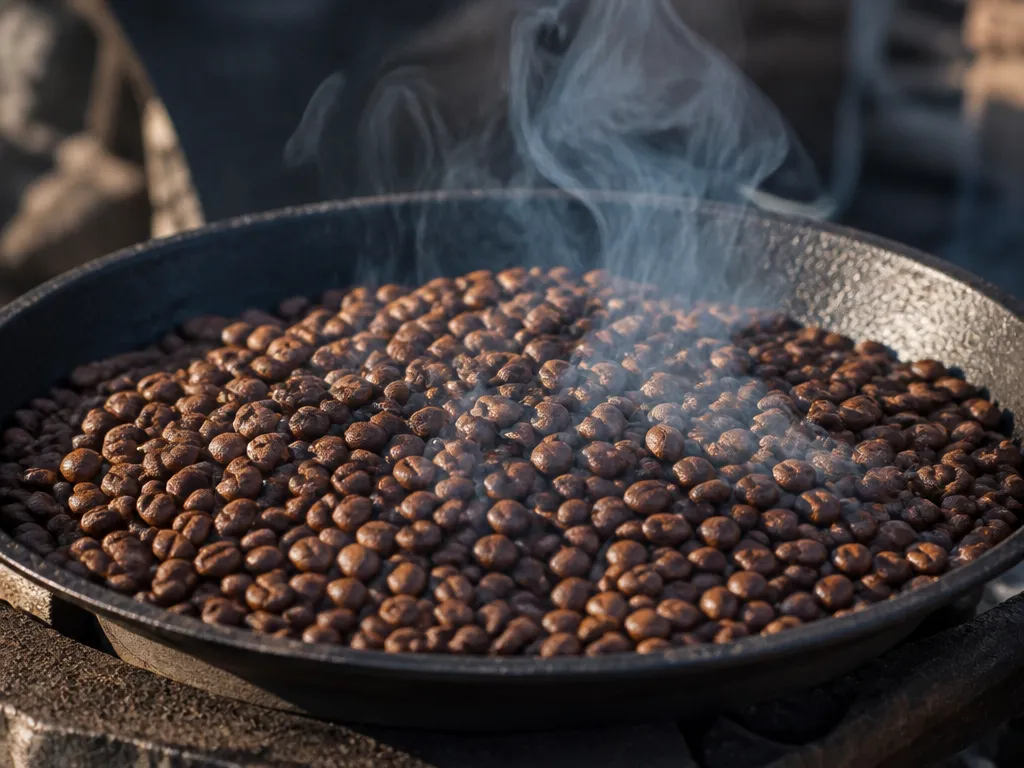
Smoky coffee beans can taste like campfire, char, or toasted wood. That character usually comes from a dark roasting profile or smoke-related processing, not magic additives. Medium-dark to dark beans give the clearest smoky flavor, while a controlled brew keeps the smoke aromatic instead of turning it bitter.
Start with a normal dose, fresh grinding, and a method that limits over-extraction. Use 1 to 2 tablespoons per 6 ounces of water, or about a 1:16 to 1:18 coffee-to-water ratio by weight. Paper-filter drip is the safest first choice; French press gives more body and aroma but needs a short steep.
Quick Guide to Smoky Coffee Beans
- Smoky taste source. Smoke notes usually come from roasting depth or smoke-related processing, not added flavor.
- Roast affects balance. Darker roasts boost smoky char flavors, but over-dark roasting increases bitterness.
Smoky Coffee Flavor Profile and Roasting Notes
Smoky coffee can taste like charred toast, campfire wood, or smoked meat seasoning. The profile may feel pleasantly roasty or harsh and ashy if the roast went too far. “Smoke” is an aroma impression that changes with roast depth, bean freshness, and extraction.
You will usually notice two layers: upfront smokiness in the aroma and first sip, followed by the flavor left on the finish. Well-roasted smoky coffee often finishes dry and roasty. Poorly dialed or overly dark coffee can finish ashy, bitter, and lingering.
Roasting notes offer useful clues. Terms such as “char,” “roasty,” “blackened,” and “woodsmoke” usually point to a darker roast profile or processing that leaves smoke-derived compounds in the beans. If the label also says “oily” or “shiny,” expect a bolder roast character with greater sensitivity to grind size and brew temperature.
How Smoky Coffee Beans Are Made
Smoky coffee beans reach that flavor through two main paths: roasting that creates a char-forward profile or processing that introduces smoky character into the green beans. Most mass-market smoky coffee gets its flavor from roasting because producers can control that approach more consistently.
Roast-driven smokiness develops during the later stages of roasting. As the beans darken, sugars caramelize further and aromas associated with toast, wood, and char become more prominent. The same process can increase bitterness, especially when you brew the beans with very hot water or a fine grind.
Processing-driven smokiness is closer to flavor infusion during the green-bean stage. Some producers use smoke-related steps to treat or dry the beans, leaving a smoky character behind. These beans may smell strongly of smoke even when the roast itself is not extremely dark, although the roast still determines the cup’s balance.
When shopping in the United States, look for terms that suggest where the flavor comes from: “smoked,” “woodsmoke,” “char,” “dark roast,” or “campfire.” A bag that says only “smoky flavor” without a roast direction or processing description may be using the word mainly as marketing. Brew it carefully so you do not turn a vague smoky note into bitterness.
Smoky Coffee vs. Peaty or Woodsy Coffee
Smoky coffee tastes of smoke and char. Peaty coffee leans earthy, mineral, and sometimes medicinal. Woodsy coffee is more resinous and fragrant, with notes of forest floor, cedar, pine, or bark. The profiles can overlap, but they feel different on the palate.
Smoky coffee usually carries the heaviest roast character. Darker versions can taste like burning wood or grilled food, particularly with espresso-style extraction. Peaty coffee may suggest wet soil, moss, or a smoky peat fire, often with a drying mineral edge. Woodsy coffee tends to feel greener and more aromatic, even when the roast is dark.
| Coffee style | What it tastes like | Typical roast clues | Best brewing “vibe” |
|---|---|---|---|
| Smoky | char, campfire wood, roasty ash | often medium-dark to dark | drip or immersion with controlled bitterness |
| Peaty | earthy mineral, mossy, medicinal | often medium-dark, sometimes roasted unevenly for character | pour-over with careful temperature |
| Woodsy | cedar/pine/bark, forest aromas | can be medium to dark | lighter extractions and aromatic preservation |
If you want campfire and grilled aromas, choose smoky coffee. If you prefer earth, mineral character, and a funky edge, choose peaty coffee. If you want forest-like fragrance without as much burnt flavor, choose woodsy coffee.
What Roast Level Best Matches a Smoky Taste
Dark roast is the most reliable route to smoky flavor because it increases char-like aromas and body. The darker the roast, the easier it is to find smoke notes, but the harder it becomes to avoid bitterness.
For a smoky cup that still tastes rounded, choose medium-dark to dark rather than an extremely dark espresso-style roast. Very dark beans can become ashy, and their sweetness may drop off, especially when brewed too hot or too fine.
Beans processed for smokiness can still taste smoky at a lighter roast. In that case, the flavor will be more aroma-driven than char-driven. A medium roast may preserve that distinction better than roasting the beans darker.
Use the first brew to judge the balance:
- If you taste smoke but it feels sharp and dry, the extraction may be too aggressive, or the roast may be too dark for your method.
- If you taste mostly bitterness with little smoke, your grind may be too fine or your water too hot.
- If the coffee tastes watery and the smoke disappears, the extraction may be too weak, or your grind may be too coarse.
Which Brewing Methods Preserve Smoky Aroma
Smoky aroma comes through best when the brew extracts enough flavor without pulling excessive bitterness. Consistent contact time, suitable water temperature, and a grind matched to the method all help.
Paper-filter drip is the safest starting point because the filter removes some oils and fine particles that can make dark roasts taste harsh. If smoky coffee tastes burnt in a drip brewer, try a slightly coarser grind or slightly cooler water before changing the beans.
French press brings out more smoky aroma and body because oils and fine particles remain in the cup. It is also easier to over-extract. Keep the steep short and plunge on time; otherwise, the smoke can turn into charcoal-like bitterness.
Espresso can suit smoky beans when the shot is dialed in, but it is less forgiving. If the coffee tastes like burnt plastic or ash, shorten the extraction or adjust the grind finer or coarser according to your current shot times.
Choose your method based on the cup you want:
- Controlled smoke without much harshness: Use drip with a medium grind.
- Maximum aroma and body: Use French press with a short steep.
- Intense, concentrated smoke: Use espresso and dial for sweetness rather than speed.
How Much Smoky Coffee to Use Per Cup
Use a standard coffee-to-water ratio and adjust by taste. Smoky beans can behave like other dark roasts: too much coffee makes the smoke read as ash, while too little lets the smoke disappear behind acidity and wateriness.
A solid starting point is 1 to 2 tablespoons per 6 ounces of water. This range usually produces a balanced cup from medium-dark to dark smoky beans without making them harsh immediately.
When possible, measure by weight for more consistent results. A practical target is about 1:16 to 1:18 coffee-to-water by weight. Start closer to 1:16 when you want the aroma to stand out, and move toward 1:18 when you want less bitterness.
For 12 ounces of water, or about a mug and a half, use about 20 to 22 grams of coffee. If the cup tastes too smoky and bitter, reduce the dose toward 18 to 20 grams. If it tastes faint, increase it toward 22 to 24 grams.
Pre-ground coffee may require adjustments because grind freshness affects aroma. Stale grounds mute the smoky character and make the cup taste flatter, even when the dose is correct.
How to Store Smoky Coffee Beans to Prevent Staling
Smoky coffee tastes most vivid when the beans are fresh. Smoke-like aromatics fade after the bag is opened, leaving behind a flatter roast and stale ash flavor.
Store the beans in an airtight container to limit oxygen exposure. Keep them away from light and heat, which speed flavor loss. A cool cabinet is usually better than a sunny windowsill or a shelf beside a warm appliance.
Humidity can damage the flavor too. Coffee beans absorb moisture and odors, so avoid storing them in the refrigerator if opening the container will repeatedly expose the beans to condensation. If you freeze them, divide them into small portions in airtight bags so you thaw only what you plan to use.
A practical storage routine is simple:
- Buy quantities you can finish within a few weeks.
- Keep the bag sealed as long as possible.
- Once opened, move the beans to a truly airtight container.
- Grind them immediately before brewing.
FAQ
Are smoky coffee beans just regular beans roasted darker?
Smoky coffee beans are usually either roasted darker to create char and wood aromas or processed with smoke-related steps that add character to the green beans. If the bag emphasizes “dark roast” and notes such as “char” or “woodsmoke,” the flavor is probably roast-driven. If it says “smoked” or uses similar processing terms, the beans may have smoky character before roasting.
Do smoky coffee beans cost more than regular coffee?
Prices vary by brand and origin. In the United States, smoky-labeled coffees often fall within the same range as other specialty coffees. Compare the price per ounce, and buy whole beans in smaller bags if freshness is your priority.
How long do smoky coffee beans stay fresh after opening?
Smoke aromas can fade quickly after opening. Plan to use the beans within a few weeks for the strongest campfire aroma. Later, the coffee may taste more roasty than smoky. If the cup has flat ash instead of campfire wood, freshness is a likely cause.
What brew method brings out smoky flavor without bitterness?
Use a controlled method such as paper-filter drip with a medium grind and standard ratios. If the coffee tastes bitter, go slightly coarser and avoid very hot water. French press also works, but keep the steep short because the oils and fine particles increase the risk of over-extraction.
What is the most common mistake when brewing smoky coffee beans?
The most common mistake is over-extracting dark-roast beans. A grind that is too fine or water that is too hot can amplify bitterness and push smoke toward harsh ash.

- Espresso Tastes Watery? 10 Common Causes and How to Fix It - October 23, 2026
- 10 Common Coffee Equipment Cleaning Mistakes and How to Avoid Them - October 23, 2026
- 17 Common Coffee Grinder Problems and How to Fix Them - October 23, 2026