
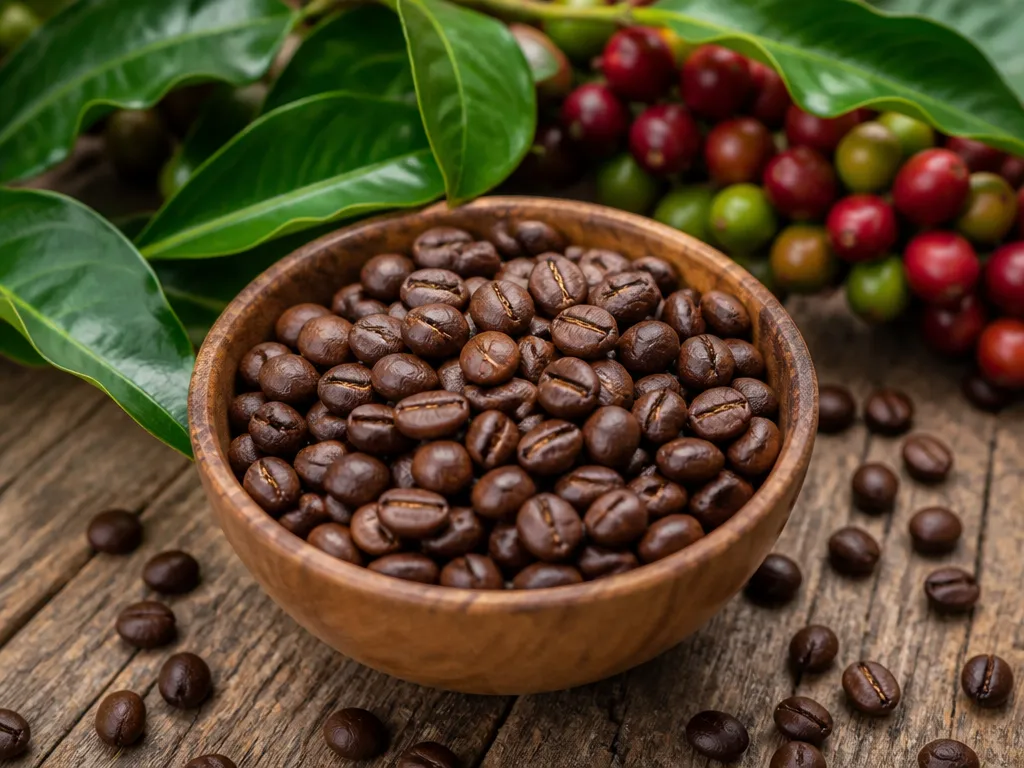
Earthy coffee beans taste like wet stone, cocoa husk, cedar, tobacco, leather, or dark earth rather than bright fruit or candy sweetness. The easiest route to that profile is a medium-dark or dark roast brewed with controlled temperature, grind, and contact time. Sour coffee is usually under-extracted; harsh or muddy coffee is usually over-extracted, too hot, or ground too fine.
You’ll usually get the cleanest earthy cup at medium-dark to dark roasts, with brew temperatures around 195-205°F and a grind matched to your method. Use a typical coffee-to-water ratio of about 1:15 to 1:17, then adjust grind before changing several other variables at once.
Key Takeaways
- Flavor notes vary – “Earthy” can mean cocoa, cedar, tobacco, wet stone, leather, or dried herbs depending on the roast and origin.
- Roast drives the profile – Medium-dark to dark roasts reduce brightness and bring out chocolatey, toasted, and smoky tones.
- Origin matters – Some regions and processing methods naturally produce more rustic, spicy, woody, or mineral-like flavors.
- Brew for clarity – Use 195-205°F water and adjust grind for even extraction rather than simply making the coffee stronger.
- Ratios control body – Start around 1:15 to 1:17 and change one variable at a time.
- Taste points to the fix – Sour coffee usually needs finer grinding or more extraction; harsh or muddy coffee usually needs less extraction.
Earthy Coffee Beans Flavor Profile and Notes
Earthy coffee beans often taste like dried herbs, cocoa husk, tobacco, cedar, leather, or wet soil. The profile feels grounded and savory, with less of the bright fruit and floral character associated with many lighter coffees.
Some earthy coffees taste like chocolate and toast first, followed by a dry, rustic finish. Others bring a smoky edge, woody backbone, or slight mineral impression. Bitterness alongside those flavors usually indicates overly aggressive extraction rather than a desirable earthy note.
The specific flavor can help identify what is happening in the cup. Graphite or dark cocoa usually points toward a darker roast profile. Garden soil with a harsh edge suggests over-extraction, excessive heat, or too fine a grind. A clean earthy coffee should taste rounded and savory, not like damp cardboard.
What Makes Coffee Beans Taste Earthy?
Earthy flavor comes from roast chemistry, origin character, processing, and brewing. Roasting changes sugars and acids into deeper compounds that taste like chocolate, toasted nuts, wood, and smoke. Those flavors push the cup away from bright acidity and floral aromatics.
A coffee tastes earthy when darker roasted compounds and heavier body become more prominent without excessive bitterness or astringency. Over-extraction can create a muddy impression that resembles earth but lacks clarity. One coffee may taste dark, rustic, and clean, while another with the same roast level tastes like damp cardboard because the brew pulled too many harsh compounds.
Origin can shift the profile as well. Some regions and processing methods tend to bring out spice, wood, and earthy aromatics, particularly at medium-dark or dark roast levels. A bean that already leans savory will usually taste more earthy as the roast gets darker because its brighter flavors fade and heavier compounds stand out.
Grind size and water determine which compounds dissolve into the cup. Too fine a grind or too much heat can pull bitter and astringent material, masking pleasant earthy notes. Too coarse a grind or too little heat can leave the coffee sour, thin, and sharp before its rounded flavors develop.
Best Roast Levels for Earthy Coffee
Medium-dark and dark roasts offer the most consistent path to an earthy flavor because they reduce acidity and emphasize toast, cocoa, and smoke. A lighter roast can taste earthy too, but it usually presents as herbal or aromatic rather than deeply savory.
For an earthy coffee that remains easy to drink, start with medium-dark and move darker if you want more smoke, cocoa husk, and less brightness. Dark roasts can conceal uneven extraction, but they also move quickly from rich to burnt when brewed too hot or too long.
Roast level changes the coffee’s texture as well as its flavor. Dark roasts often feel heavier, which many people associate with earthiness. Grind too fine, however, and bitterness and astringency will overwhelm the earthy character.
Choose medium-dark if you usually dislike sour coffee. Choose dark if you already enjoy smoky or bittersweet flavors, then adjust brewing to keep the cup clean.
Roast Pick by Taste Goal
- Want classic earthy and chocolate: medium-dark
- Want maximum rustic depth: dark
- Want earthy aromatics with a lighter body: medium, though it may not taste as earthy
Single-Origin vs. Blends for Earthy Notes
Single-origin earthy coffee usually offers a more specific, traceable profile. A consistent source signature may show up as wood, spice, or mineral-like character, especially at a medium-dark roast. The trade-off is consistency: one origin can be more sensitive to brewing, and its earthy character may taste clean and complex or flat and heavy depending on extraction.
Blends make earthy flavor easier to repeat because roasters combine coffees designed to work together across brewing methods. A blend with a darker component and a rustic origin often lands in the earth, cocoa, and toast range. Blends are also generally more forgiving when grind or water conditions vary.
Choose a blend when you want a predictable earthy cup. Choose a single-origin coffee when you want to trace the earthy character to a particular source and explore how wood, spice, or mineral notes change from one coffee to another.
| Coffee Type | Key Spec | Best For Earthy Notes | What You’ll Notice in the Cup |
|---|---|---|---|
| Single-origin | One origin | Learning a specific earthy profile | More specific woods, spice, or mineral-like notes |
| Blend | Multiple origins | Consistency across brews | More chocolatey toast base, steadier “earth” taste |
How to Brew Earthy Coffee for Clarity
Control extraction instead of chasing maximum strength. A clear earthy cup has fewer sour and astringent edges, with a smooth finish that preserves savory notes without becoming muddy.
Start with water between 195-205°F. Hotter water can push darker roasts into bitterness and harshness, which may seem earthy but usually signals a brewing problem. Cooler water often produces sourness and under-extraction, leaving the coffee sharp instead of rounded.
Match the grind to the brewing method. Espresso needs a fine grind because the water has little time to extract the coffee, but grinding too fine can make the shot bitter or dry. Longer methods such as pour-over need a grind that allows sufficient extraction without pulling excessive bitterness. Make small adjustments rather than changing grind, ratio, and temperature together.
Grinding and Water Ratios for Earthy Flavor
The coffee-to-water ratio controls concentration, while grind size controls extraction. Earthy coffee needs enough concentration for body, but too much concentration can let bitterness smother its savory notes.
Start with about 1:15 to 1:17 coffee to water for most drip and pour-over methods. This range usually provides enough body for an earthy profile without making the cup muddy. If it tastes weak, decrease the ratio by using more coffee. If it tastes bitter or heavy, increase the ratio by using more water.
Water quality affects darker roasts particularly strongly. Hard or mineral-heavy water can emphasize harshness and blur clarity. Reasonably soft water often makes earthy notes taste smoother and more like cocoa and wood rather than dust or metal.
Use this adjustment order: stabilize the ratio within the 1:15 to 1:17 range, dial in grind for clarity, then fine-tune temperature if needed.
Quick Dialing Guide
- Too sour: grind finer or brew slightly hotter; keep the ratio steady
- Too harsh or astringent: grind coarser or brew slightly cooler; keep the ratio steady
- Too muddy or heavy: coarsen the grind and reduce contact time; keep the ratio steady
- Too weak: use more coffee by reducing the water; keep the grind steady
How to Fix Sour, Harsh, or Muddy Earthy Coffee
Sour earthy coffee usually means the brew is under-extracted for the roast. Even a dark coffee can taste sharp, thin, and incomplete when the grind is too coarse or the water is too cool. Grind finer and raise the temperature toward the top of the 195-205°F range.
Harsh earthy coffee usually indicates over-extraction. Too much bitter or astringent material makes the cup dry, sharp, and closer to burnt soil than chocolatey earth. Grind coarser, shorten contact time, or lower the temperature slightly.
Muddy earthy coffee can seem appealing at first because it feels deep and heavy, but muddiness usually means fines and over-extracted compounds are blending the flavors together. Move one step coarser and check that the brew is not too hot or too long for the grind.
Practical problems can create the same impression. Stale coffee loses clarity and may bring unpleasant flavors forward. Excessive swirling in a French press can pull more fines into the cup, while overloaded filtration in some brewing methods can create a thick, murky texture even when the extraction is otherwise close.
If a medium-dark coffee tastes sour, grind 1 step finer, use water around 200°F, and keep the ratio unchanged. If the cup remains sharp, increase contact time slightly rather than making the coffee more concentrated.
FAQ
1) What does “earthy” taste like in coffee?
Earthy coffee usually tastes like cocoa husk, tobacco, cedar, leather, or wet stone. Compared with fruit-forward coffee, it has less bright acidity and more savory, grounded flavor. Woody or herbal aromas may linger after the sip.
2) Are earthy coffee beans usually light, medium, or dark roasts?
Roast level affects how earthy notes appear. Lighter roasts often show herbal or forest-floor aromatics, while darker roasts emphasize toast, cocoa, smoke, and a heavier body.
3) How can I make earthy coffee less bitter?
Coarsen the grind and brew slightly cooler, especially with a dark roast. Check contact time for pour-over and immersion methods as well. Keep the ratio steady while adjusting one variable so you can identify what corrected the bitterness.
4) What grind and ratio should I use for earthy flavor?
Start with a 1:15 to 1:17 coffee-to-water ratio and choose a grind suited to your brewing method. Dial in by taste: sour means finer or hotter, while harsh means coarser or cooler. Even extraction keeps earthy notes chocolatey and clean instead of muddy.
5) Can I brew earthy coffee without making it muddy?
Yes. Use a controlled grind, avoid excessively hot water, and keep contact time appropriate for the method. If the cup tastes thick and dull, go slightly coarser and shorten contact time first.

- Espresso Tastes Watery? 10 Common Causes and How to Fix It - October 23, 2026
- 10 Common Coffee Equipment Cleaning Mistakes and How to Avoid Them - October 23, 2026
- 17 Common Coffee Grinder Problems and How to Fix Them - October 23, 2026