
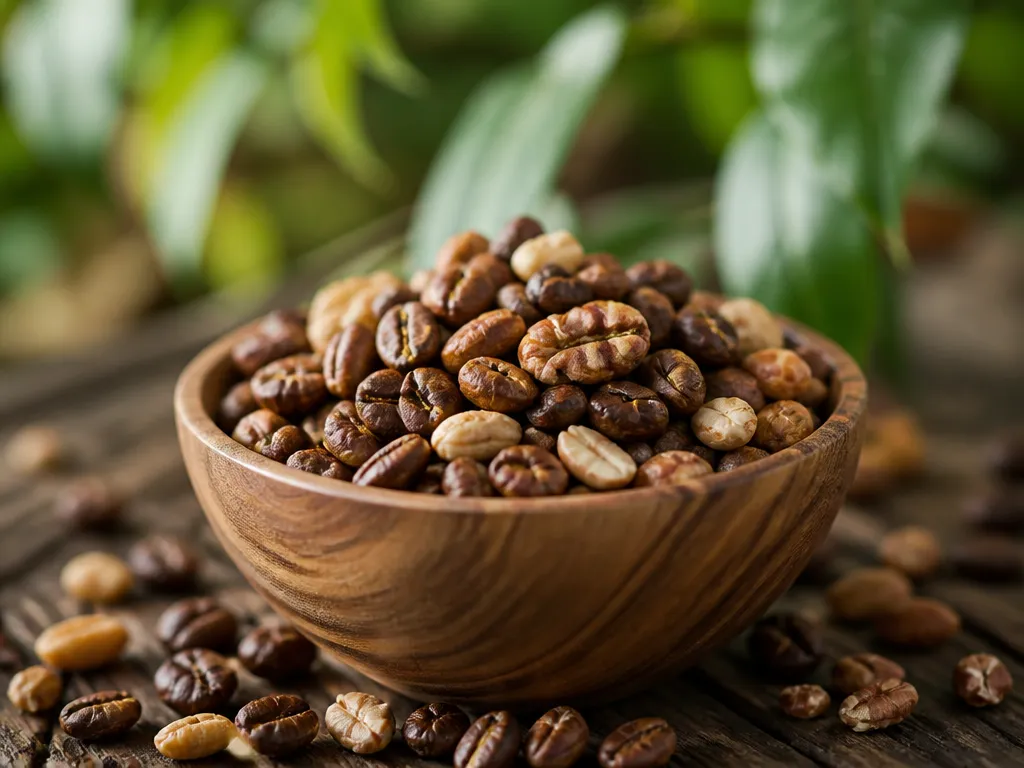
Nutty coffee beans smell like toasted nuts and taste like hazelnut, marzipan, or browned butter. You can usually bring those flavors forward by choosing a medium to medium-dark roast, grinding fresh, and matching the grind and brew time to your method.
Nutty coffee should taste sweet, rounded, and lightly toasted, with hazelnut or almond notes and a finish that may remind you of browned butter, praline, cocoa, or cookies. If the cup tastes sour or thin, it is probably under-extracted. If it tastes harsh or burnt, increase the grind size, lower the water temperature, or shorten the brew time.
How to Get a More Nutty Coffee Cup
- Choose the right roast. Medium to medium-dark roasts most reliably produce nutty, toasted flavors.
- Control extraction. Use a consistent grind and brew ratio to avoid flat or bitter notes.
- Choose a blend when unsure. Blends often produce a sweeter, more uniform nutty cup than many single origins.
- Grind fresh. Grinding immediately before brewing protects the volatile aroma compounds that create the nutty smell.
- Store beans airtight. Keep them in a cool, dark, sealed container to slow staling and flavor loss.
- Match the brew method. Espresso and moka pot usually emphasize toasty nut notes when extraction is even.
Nutty Coffee Flavor Profile
Nutty coffee usually smells like toasted hazelnuts, almonds, or praline. Its flavor often feels sweet and bready, with notes similar to browned butter or cookies. The cup may start with nut-like sweetness and finish smooth rather than sharply fruity or floral.
Body also affects how clearly you perceive the nutty character. Medium roasts tend to feel round and caramel-like, while darker roasts emphasize roasted flavors that can come across as nutty, smoky, or cocoa-like.
A genuinely nut-forward coffee should remain balanced rather than taste aggressively burnt. If the cup tastes like char or ash, roasting defects or over-extraction are probably covering the nutty sweetness.
How Roast Level Changes Hazelnut and Toasted-Nut Notes
Roasting changes the coffee’s chemical composition and aroma. As the roast moves from light to dark, nutty flavors often become more obvious, but origin brightness and crisp acidity fade.
Medium roasts usually offer the clearest balance. They can deliver a toasted-nut aroma and noticeable sweetness while retaining enough clarity for hazelnut-like flavors to stand out.
Medium-dark roasts move further into caramelized and roasted territory. Hazelnut, cocoa, and browned-sugar notes often appear together. The trade-off is that heavy roasting can make the cup taste more roasty than nutty, with more bitterness.
If you want a distinct hazelnut flavor, start with a medium roast. Try medium-dark when you want more intensity and praline-like richness. Dark roast may taste more like burnt roast than nutty sweetness.
Single-Origin vs. Blend for Nutty Coffee
Single-origin coffee can taste nutty, but the result depends on the farm, processing method, roast, and harvest. Some origins naturally lean toward nutty flavors when roasted to medium or medium-dark. Others show more chocolate, fruit, or floral character than clear hazelnut.
Blends are usually the easier choice when you want consistency. Roasters can combine coffees to build body, sweetness, and roast development around a nut-forward profile. A blend labeled “nutty” or “dessert-like” is generally more predictable than a single origin that may change from batch to batch.
| Option | Key Spec / What to Look For | Best For | What to Expect in the Cup |
|---|---|---|---|
| Single-origin | Medium to medium-dark roast; choose a style that tastes round | Trying new origins and learning flavor patterns | Nutty can appear, but it may be more subtle and shift by batch |
| Blend | Roaster-stated “nutty” or dessert-like profile; medium to medium-dark | Consistency and repeatable flavor | More uniform hazelnut, almond, or praline impression |
| Dark roast blend | Avoid “oily” or “ultra-dark” if you want true nut sweetness | People who like strong toasted flavors | Strong roast character, cocoa, and possible smoky edges |
My pick for a repeatable nutty cup is a medium to medium-dark blend. If you enjoy comparing coffees and tracking how flavors change, try a single origin roasted to the same range and taste it week to week.
How to Grind Nutty Coffee Beans
Grinding controls surface area, which controls how quickly coffee extracts. Nutty flavors are clearest when extraction is even enough to bring out sweetness without pushing the cup into harsh bitterness.
Match the grind to the brewing method instead of grinding as fine as possible. An overly fine grind can over-extract the coffee, making roasted notes sharp and bitter. An overly coarse grind can under-extract it, leaving the cup flat, thin, or sour.
Use these practical starting points:
- Espresso: Typically fine, but adjust until the shot tastes sweet and nutty rather than dry and sharp.
- Pour-over: Medium-fine, aiming for a balanced cup with clear caramel sweetness.
- French press: Coarse, so fewer fines drag bitterness into the brew.
- AeroPress: Medium, then adjust dose and brew time for sweetness.
If the dry grounds smell nutty but the brewed coffee does not, the grind may be wrong. Brew ratio and water temperature may also be suppressing the flavor. Adjust one variable at a time and take notes over two or three brews.
A simple tuning loop works well: brew with your best-guess grind, taste for sweetness and bitterness, then move the grind slightly in the direction that corrects the problem. With nutty coffee, the right extraction makes the toast note taste sweet; too much extraction turns it bitter.
Best Brewing Methods for Toasty Nutty Flavor
Espresso highlights nutty sweetness through concentration and body. When dialed in, it produces a strong toasted-nut impression without requiring much added sweetness.
Moka pot is another good choice for toasted, chocolatey, and nut-like flavors. Its pressure-brew style builds body and roasted sweetness, but the cup can become bitter if the pot runs too long or the water is too hot.
Pour-over can produce a nutty cup with a cleaner finish. Medium-roasted beans work especially well, provided the grind is consistent and the water stays hot enough for even extraction. If the grind is too coarse or the water cools too much, the result can taste weak and under-extracted.
| Brewing Method | Starting Grind Feel | Target Taste Goal | Common Failure Mode |
|---|---|---|---|
| Espresso | Fine, consistent | Sweet, toasty, nut-like finish | Sour and thin (too coarse) or bitter (too fine/too long) |
| Moka pot | Medium-fine to medium | Praline-like body with cocoa-nut character | Over-extraction and burnt taste if it runs too long |
| Pour-over | Medium-fine | Caramel nut sweetness, not harsh | Weak flavor if extraction is too short or water too cool |
| French press | Coarse | Round body with soft nut tones | Muddy bitterness from too many fines |
Why Nutty Coffee Tastes Flat or Bitter
A flat nutty coffee is usually under-extracted. The brew has not pulled enough sweetness and aroma from the grounds, so the nut notes taste muted rather than toasted. Common causes include a grind that is too coarse, low water temperature, a short brew time, or too little agitation.
Bitter nutty coffee usually comes from over-extraction or an overly dark roast. A grind that is too fine, water that is too hot, a long brew time, or many fines can push the cup toward sharp bitterness. Some beans are also roasted so dark that “burnt roast” overwhelms the nutty sweetness.
Stale beans create another problem. As coffee ages, the aromatic compounds behind the nutty smell fade. Harsher flavors then become more noticeable, even when the brewing recipe is sound.
Use taste and texture for a quick diagnosis:
- If the coffee tastes sharp and papery, suspect under-extraction.
- If it tastes dry, harsh, and persistently bitter, suspect over-extraction.
- If it tastes flat and slightly unpleasant, suspect staling.
Once you know the direction of the problem, change one variable. For bitterness, try a slightly coarser grind or a shorter brew time before changing anything else.
How to Store Nutty Coffee Beans
Nutty flavor depends on aromatic compounds that escape as soon as beans are exposed to air. Good storage slows that loss and helps the coffee retain its toasted-nut aroma.
Keep the beans in an airtight container to limit oxygen exposure. Store it in a dark place, such as a cupboard, because light can accelerate flavor loss. Heat also speeds staling, so avoid leaving the container on a countertop near the oven.
Buy whole beans and grind them immediately before brewing. Grinding early increases the coffee’s surface area and causes the nutty aroma to dissipate faster.
Freezing can help preserve coffee for longer storage, but repeated thawing creates problems. Portion the beans before freezing and keep each bag or container sealed so moisture cannot enter during thaw cycles.
Use this storage checklist:
- Airtight container – Avoid valve leaks and frequent opening when possible.
- Cool and dark – Keep beans away from heat and sunlight.
- Grind last – Grind only when you are ready to brew.
- Portion for freezing – If freezing, divide the beans into small batches.
When nutty beans stop tasting nutty, storage is often the reason. The aroma can fade faster than expected once the package is open.
FAQ
What roast level is best for nutty coffee beans?
Roast level affects whether the cup emphasizes sweetness or roast character. The darker it goes, the more likely bitterness and burnt flavors become.
How long do nutty coffee beans stay fresh after opening?
Expect noticeable aroma loss within days and a larger flavor decline within a couple of weeks after opening, depending on storage. Airtight, cool, dark storage slows that decline. If the ground coffee has little nutty aroma, the beans may already be past their peak.
Why does my nutty coffee taste bitter even when I follow the recipe?
A very dark roast or stale beans can leave harsher flavors behind even when the brewing variables are correct. Check the roast and freshness as well as the recipe.
How do I brew nutty coffee beans at home without dialing forever?
Use one consistent method, ratio, and grind. Start with a medium-fine grind for pour-over or a method-appropriate fine grind for espresso, then make small grind adjustments based on sweetness and bitterness. Moka pot and espresso often bring out toasty-nut notes faster than very light roasts.
Are there alternatives if I cannot find nutty coffee beans labeled that way?
Yes. Look for medium to medium-dark roasts described as “hazelnut,” “praline,” or “dessert-style.” These coffees are often blended to encourage nut-like flavors, even when they are not single-origin beans. Descriptors such as “caramel,” “toasted,” and “cocoa” can also point toward nutty impressions when the coffee is roasted to the right level.

- Espresso Tastes Watery? 10 Common Causes and How to Fix It - October 23, 2026
- 10 Common Coffee Equipment Cleaning Mistakes and How to Avoid Them - October 23, 2026
- 17 Common Coffee Grinder Problems and How to Fix Them - October 23, 2026