
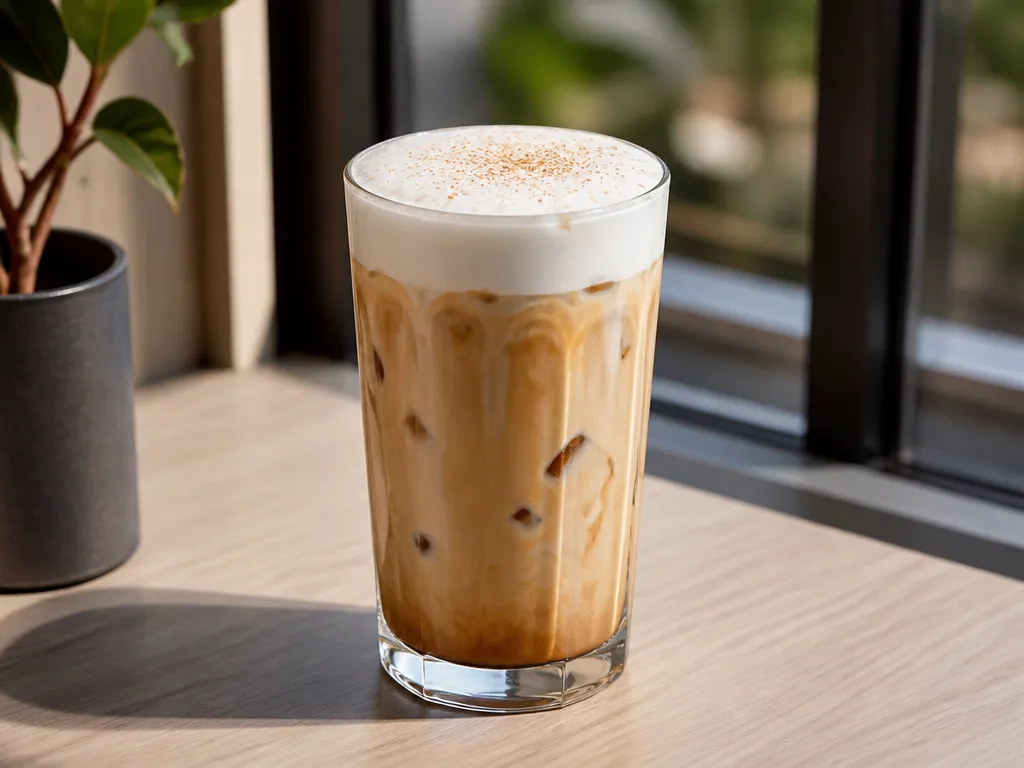
The research available for this topic did not establish a tested exact formula. Use the following as a practical starting template, then verify the espresso volume, syrup strength, milk capacity, and foam yield for your ingredients and equipment. Build the drink with espresso and vanilla syrup first, add cold milk over ice, and finish with cold foam.
Keep the foam as a topping rather than stirring it into the latte. Taste the base before adding foam, because the foam, ice, milk, and syrup all change the final balance.
What Is The Exact Base Recipe For An Iced Vanilla Latte With Cold Foam?

No exact, independently supported formula was available for this topic. For a repeatable home version, measure the espresso, syrup, milk, and foam with the same tools each time. Begin with a double espresso, add vanilla syrup while the espresso is warm, pour the mixture over ice with cold milk, and finish with a moderate layer of cold foam.
Drink volume and ice fill: use a glass with enough room for espresso, milk, ice, and a visible foam cap. Fill it generously with ice while leaving headspace for milk and foam. The appropriate fill depends on the glass and ice size, so verify the result by checking that the drink remains cold without overflowing.
Serving yield: this is intended as a single iced drink. The final yield depends on the espresso volume, milk pour, ice displacement, and foam volume. Measure those components during a test preparation, then use the same quantities for later servings.
| Component | Amount for a serving | Notes |
|---|---|---|
| Espresso | Double espresso, measured from your machine | Use the same dose and extraction each time. Verify the volume your machine produces. |
| Vanilla syrup | Start with a small measured pour, then adjust to taste | Syrup sweetness varies by brand. Check the bottle label if you need a precise sugar amount. |
| Cold milk | Enough to fill the drink while leaving room for foam | Use less for a stronger coffee taste and more for a softer, milkier drink. |
| Ice | Enough to chill the drink without crowding out the liquid | Use the same glass and ice type when testing the recipe. |
| Cold foam | A distinct topping that covers the surface without overflowing | Add it last and serve promptly. |
Build order for layering: add vanilla syrup to the warm espresso and stir until combined. Add ice to the serving glass, pour in the milk, and add the espresso mixture. Finish with cold foam. This order keeps the foam separate and makes the sweetness easier to distribute.
Why Do These Measurements Balance Flavor And Mouthfeel?
The balance comes from separating the drink into a strong coffee base, a sweetener, cold milk, ice, and a light foam topping. Espresso supplies the roasted flavor, syrup softens its bitterness, milk adds body, and foam changes the texture at the surface.
There is no universally correct syrup or milk amount because espresso strength, syrup concentration, milk type, and ice size vary. Taste the base before adding foam. If it tastes harsh, use more milk or a little more syrup. If it tastes weak or overly sweet, use less milk or syrup, or prepare a stronger coffee base next time.
Ice chills the latte and gradually dilutes it. Too little ice can leave the drink warmer than intended. Too much melting ice can make the drink watery. Use the same glass, ice, and assembly speed while testing so you can identify which change affects the flavor.
Milk and foam provide different textures. The milk forms the liquid body of the latte, while the foam gives the surface a lighter, thicker feel. A modest foam layer usually works better than a large mound, which can collapse or overpower the coffee.
| Dial you change | What shifts | What it feels like |
|---|---|---|
| Less milk | More concentrated coffee and syrup | Stronger and potentially sharper |
| More milk | Less concentrated coffee and syrup | Softer and lighter |
| More foam | More aeration and surface texture | Thicker, with a greater chance of collapse |
| Less foam | Less aeration | A thinner topping and less textural contrast |
Which Variables Change The Result And What Are The Ranges?

The main variables are coffee strength, syrup concentration, milk volume, ice, milk type, temperature, and foaming method. Exact numeric ranges were not established in the available material, so treat the following as adjustment points rather than tested specifications.
Change one variable at a time. Taste the base before adding foam, and record the measurements that produce the balance you prefer.
| Variable | Adjustment to test | What changes when you move it |
|---|---|---|
| Espresso strength | Use a stronger or milder double espresso | Changes bitterness, roast character, and coffee presence |
| Espresso volume | Use the volume your machine normally produces, then keep it consistent | Changes the coffee concentration before milk and ice are added |
| Vanilla syrup | Start with a small measured amount and increase gradually | Changes sweetness and how smooth the espresso tastes |
| Syrup timing | Add it to the warm espresso before the milk | Encourages even distribution |
| Cold milk volume | Pour enough to balance the espresso while leaving foam headspace | Changes body, sweetness perception, and coffee intensity |
| Ice volume | Use enough ice to chill the drink without forcing out the liquid | Changes chilling speed and dilution |
| Cold foam volume | Add a surface-covering layer without overflowing the glass | Changes the texture and the proportion of foam in each sip |
Milk type affects both the latte and the foam. Dairy and plant-based milks can differ in body, sweetness, separation, and ease of aeration. Test the milk on its own before changing the rest of the recipe.
Milk temperature before foaming also affects the result. Use milk straight from the refrigerator and keep the temperature consistent between tests. The available material did not establish a verified temperature target, so follow the instructions for your frother and avoid warming the milk unnecessarily.
What Is The Step-by-step Method From Brew To Foam To Serve?
Prepare the serving glass and milk before brewing. Make the espresso close to assembly, dissolve the syrup into it, and foam the milk last. This limits the time the foam spends waiting before it reaches the drink.
The drink is ready when the foam sits on the surface, the latte is cold, and the first sip contains clear coffee and vanilla flavor. If the foam sinks immediately, adjust the milk temperature, aeration, or time between foaming and serving.
How Can I Achieve Stable Cold Foam (Technique, Temps, Timings)?

Stable cold foam depends on cold milk, fine bubbles, suitable milk, and prompt serving. The available material did not establish a verified temperature, timing, or holding-life specification. Use your equipment instructions as the authority for operating limits, and judge the foam by its texture.
What Equipment Is Recommended For Espresso, Foam, And Serving?
Prioritize equipment that gives you repeatable espresso, accurate measuring, controlled foaming, and enough serving space. The available material did not establish verified product specifications or performance benchmarks, so choose equipment according to the manufacturer’s instructions and your serving size.
| Item | Spec to look for | Role in the build |
|---|---|---|
| Burr grinder | An espresso-suitable adjustment range | Helps produce repeatable grounds for the coffee base |
| Espresso machine | A double basket and adjustable extraction controls | Produces the coffee component |
| Scale | Fine enough resolution for weighing coffee and liquid | Improves repeatability |
| Milk pitcher | A narrow body and controlled pouring spout | Helps create and place the foam |
| Glass | Enough capacity for coffee, milk, ice, and foam | Prevents overflow and leaves room for a visible topping |
| Bar spoon | Long handle | Helps stir syrup and guide the foam onto the drink |
Choose the glass only after considering the volume of your espresso, milk, ice, and foam. A small glass may force you to reduce the milk or foam, while an oversized glass can make the drink look sparse. Measure your own build rather than relying on an unverified capacity claim.
Frothing Options: Choose By Batch Size, Not By Marketing
A handheld frother is simple for a serving and requires little setup, although it can create larger bubbles if used too aggressively. A steam wand can produce fine foam but adds heat and requires more control. A siphon may be useful for multiple servings, provided you follow its operating instructions and prepare only what you can serve promptly.
For occasional preparation, start with the equipment you already own. If you make the drink often, a scale and a reliable grinder usually improve consistency more than decorative serving equipment. Choose a frother based on the number of drinks you prepare and the texture you prefer.
Glassware And Upkeep
Use a clean glass with straight enough sides to show the layers and leave room for the topping. Rinse milk pitchers promptly after use, and clean frothing equipment according to its instructions. If you use a steam wand, purge and wipe it according to the machine manufacturer’s guidance.
Clean the espresso group, grinder, pitcher, and serving tools on the schedule recommended for your equipment. Descaling depends on the machine, water, and manufacturer’s instructions, so verify the correct interval rather than relying on a universal schedule.
What Are Common Problems And How Do I Fix Them Precisely?
Most failures come from the coffee strength, syrup balance, ice dilution, milk choice, foam texture, or delay before serving. Change one variable at a time so you can identify the cause.
What Edge Cases Matter And How To Scale, Hold, And Reference Values?
Repeatability becomes harder when you prepare several drinks, substitute ingredients, or hold the components. Scale the measured ingredients by the number of servings, but make foam in manageable batches and serve it promptly.
Quick Summary
Build the drink by combining a double espresso with vanilla syrup, adding cold milk over ice, and finishing with cold foam. The precise quantities should be measured and adjusted for your espresso machine, syrup, milk, glass, and frother because no tested exact values were established.
The result changes when these conditions move:
Next action: Make a test serving using measured espresso, syrup, milk, ice, and foam. Record the quantities and change only one variable on the next attempt.
Frequently Asked Questions
How Much Will This Cost If I Make It At Home?
The cost depends on your beans, milk, vanilla syrup, ice, and equipment. No reliable prices were available, so an exact per-drink figure cannot be provided.
To calculate the cost, divide the price of each ingredient by the amount in its package, then multiply by the amount used in your measured recipe. Add equipment costs separately if you want to estimate the setup cost.
If I Do Everything “Close Enough,” Will The Drink Still Come Out Okay?
Usually, the latte base will still be drinkable, but foam is less forgiving. Cold milk, clean equipment, fine bubbles, and prompt serving matter more than small changes in the liquid ingredients.
For the best chance of a repeatable result, measure the espresso and syrup, use the same glass and ice, and foam the milk immediately before serving.
What Happens If I Skip Pre-chilling Or Pour The Cold Foam Too Early Or Too Late?
Skipping pre-chilling can make the drink warm more quickly, especially in a warm room. The ice may then melt faster and change the balance.
Foam that is prepared too early may separate or lose volume. Add it immediately before serving whenever possible.
Do I Have To Make Two Full Espresso Shots, Or Can I Swap In Espresso Concentrate Or Instant?
You can use concentrate or instant coffee, but the flavor, strength, and acidity may differ from espresso. Prepare a small test base, taste it with the milk and syrup, and adjust the sweetener or milk before adding foam.
Do not assume that a stated concentrate volume equals an espresso volume. Use the product instructions and your taste test as the guide.
When Should I Get Professional Help Instead Of Troubleshooting At Home?
Seek equipment service when brewing or steaming problems continue despite consistent cleaning and technique. Examples include pressure or heating faults, leaks, blocked steam paths, or extraction that changes unexpectedly.
If milk repeatedly develops an off flavor or separates despite fresh ingredients and clean equipment, replace the suspect ingredient and check the equipment before serving the drink.
How Can I Verify A “Cold Foam Claim” From A Recipe Or Store Listing Before I Trust It?
Look for observable details: the foam should be smooth, pourable, and able to remain on the drink briefly. Treat claims about exact stability, holding time, nutrition, or equipment performance as information to verify rather than guarantees.
Test one variable at a time. Keep the coffee, syrup, milk, ice, glass, and serving order constant, then compare the foaming method or milk type under the same conditions.

- Espresso Bar Wedding: Ideas, Setup, Costs, and Tips for a Memorable Coffee Experience - November 11, 2026
- How Many Grams of Espresso Beans for a Double Shot? A Complete Brewing Guide - November 11, 2026
- Brasilia Espresso Machine: Features, Performance, Models, and Buying Guide - November 11, 2026