
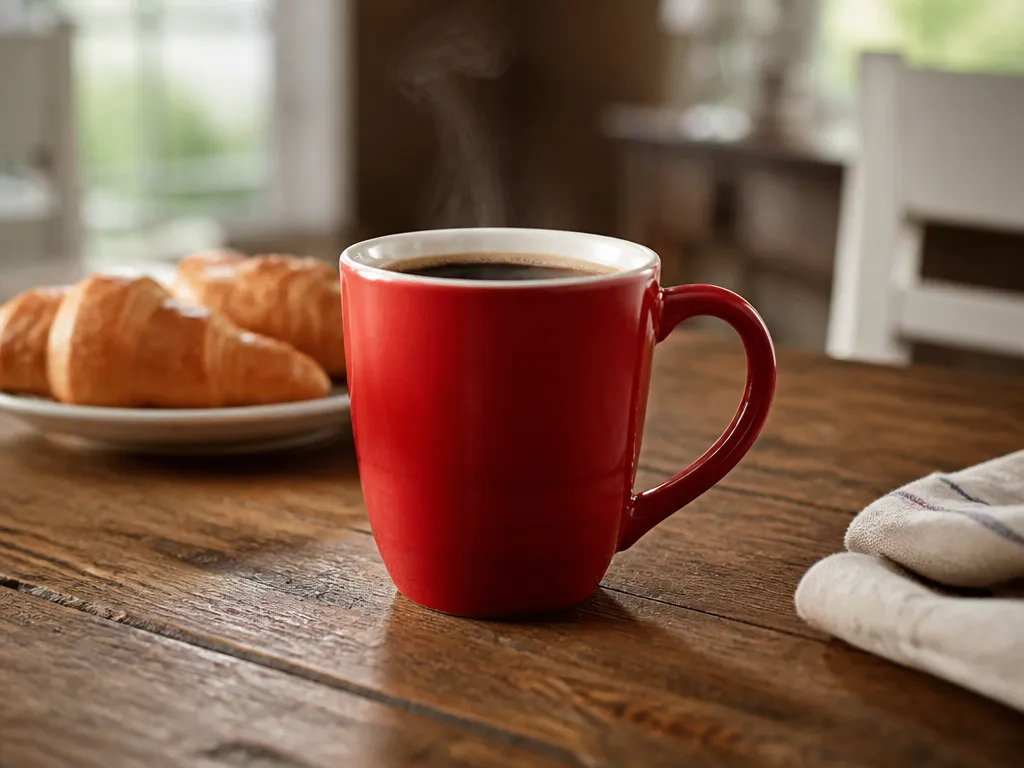
How Much Caffeine in Folgers Classic Roast
Most people assume their morning cup delivers a standard jolt, but the actual caffeine load in Folgers Classic Roast shifts based on how you measure your scoop and water. A typical 8-ounce serving of this medium roast contains between 95 and 130 milligrams of caffeine, depending heavily on the coffee-to-water ratio you use. This range places it squarely in the middle of the market, offering a reliable boost without the extreme spike found in dark roasts or espresso blends.
Folgers Classic Roast contains approximately 95 to 130 milligrams of caffeine per 8-ounce cup when brewed using standard ratios. This amount assumes a brewing strength of two tablespoons of ground coffee for every six ounces of water. Instant versions of the same roast typically deliver slightly less, ranging from 60 to 80 milligrams per cup due to processing differences. Decaf variants retain trace amounts, usually falling between 2 and 5 milligrams per serving.
Key Takeaways
- Standard cup count. An 8-ounce cup of brewed Folgers Classic Roast holds 95 to 130 mg of caffeine.
- Brew ratio matters. Using more than two tablespoons of grounds per six ounces of water increases total caffeine significantly.
- Instant difference. The instant version provides roughly 60 to 80 mg per cup, which is lower than the ground variety.
- Pot totals scale up. A full 12-cup pot contains approximately 1,344 mg of total caffeine.
- Decaf is not zero. Decaf Folgers Classic Roast still contains 2 to 5 mg of caffeine per cup.
How Much Caffeine in Folgers Classic Roast Per Cup
A single 8-ounce cup of Folgers Classic Roast brewed with standard measurements delivers about 112 milligrams of caffeine on average. This figure comes from the industry-standard assumption that a “cup” of coffee uses two tablespoons of ground beans for every six ounces of hot water. Since most home mugs hold closer to 8 to 10 ounces, the actual intake often exceeds the baseline if you fill your mug to the brim. The specific number fluctuates because coffee is an agricultural product, and bean density varies by harvest batch, but the 95 to 130 mg range covers nearly all normal brewing scenarios for this specific roast.
The roast level itself plays a smaller role than many consumers believe. Folgers Classic Roast sits in the medium category, meaning the beans are roasted long enough to develop flavor but not so long that they lose significant mass or caffeine structure. While some myths suggest dark roasts have more caffeine because they taste stronger, the opposite is often true; longer roasting times can degrade small amounts of caffeine, though the difference is often negligible compared to brew time. For Folgers Classic, the consistency of the grind is the bigger variable. Pre-ground coffee packs tightly into a scoop, potentially delivering more mass and therefore more caffeine than a coarser, hand-ground bean measured by volume.
For example, if you use a heaping tablespoon instead of a level one, you might push that single cup toward the 140 mg mark. Conversely, a scant measurement could drop it below 90 mg. The most accurate way to gauge your personal intake is to weigh your grounds. Two tablespoons of Folgers Classic Roast typically weigh around 10 to 12 grams. If your scale reads higher, your caffeine content rises proportionally. Most nutrition databases list the value at roughly 14 mg per gram of dry coffee grounds for this type of roast, which aligns with the calculated averages seen in consumer testing.
Caffeine Content Comparison
A middle-tier caffeine option describes Folgers Classic Roast when compared against other major supermarket brands, offering neither the highest nor the lowest kick in the aisle. When comparing an 8-ounce serving, Folgers generally trails behind high-octane blends like Death Wish Coffee or Black Label by Devil Mountain, which can pack over 300 mg per cup, but it beats out many light roasts that prioritize acidity over body. The table below breaks down where Folgers lands relative to its direct competitors using standard brewing parameters.
| Brand | Roast Type | Approximate Caffeine (8 oz) | Best For |
|---|---|---|---|
| Folgers Classic Roast | Medium | 95 – 130 mg | Daily drinkers wanting balance |
| Maxwell House Original | Medium | 100 – 140 mg | Traditional drip coffee fans |
| Dunkin’ Original Blend | Medium | 120 – 150 mg | Those who prefer a stronger bite |
| Starbucks Pike Place | Medium | 155 – 180 mg | High-energy morning routines |
| Green Mountain Breakfast Blend | Light | 140 – 160 mg | Light roast enthusiasts |
| Cafe Bustelo Espresso | Dark/Espresso | 160+ mg (per 2 oz shot) | Espresso lovers |
Starbucks Pike Place consistently tests higher than Folgers, often delivering nearly 50% more caffeine per cup. This gap exists largely because Starbucks recommends a higher dose of coffee grounds per ounce of water in their official brewing guidelines. Maxwell House Original Roast is the closest sibling to Folgers, with numbers so close that the difference would be imperceptible to most drinkers unless measured in a lab. If you are switching from Folgers to a “bold” or “extra bold” labeled bag from any brand, expect a jump of roughly 15 to 20 mg per cup, as these blends often use Robusta beans mixed with Arabica to boost stimulant levels.
Choosing Folgers over a premium specialty brand like Starbucks saves you about 40 mg of caffeine per cup, which equals roughly half a can of soda. This makes Folgers a solid choice for those who want a steady alertness without the jittery crash associated with ultra-high caffeine drinks. However, if your goal is maximum efficiency – getting the most caffeine for the lowest cost per milligram – Folgers remains highly competitive. Its consistent grind and predictable extraction mean you rarely get a weak cup unless you under-dose the filter basket yourself.
Impact of Brew Strength on Folgers Caffeine Levels
Changing the amount of coffee grounds you use has a far greater impact on caffeine levels than changing the water temperature or steep time. Caffeine extracts very quickly, usually within the first 30 seconds of contact with hot water, so letting the coffee sit in the carafe for an hour adds almost no additional stimulant to your cup. The primary driver of caffeine concentration is the coffee-to-water ratio. If you increase the amount of Folgers Classic Roast grounds while keeping the water volume constant, you linearly increase the caffeine content.
The standard “golden ratio” for drip coffee is 1:16, meaning one part coffee to sixteen parts water by weight. Folgers packaging typically suggests two tablespoons per six ounces of water, which translates to a ratio closer to 1:14 or 1:15 depending on how tightly you pack the spoon. Moving from two tablespoons to three tablespoons for the same pot size will boost the caffeine content of each cup by roughly 50%. For a person sensitive to stimulants, this adjustment could mean the difference between feeling focused and feeling anxious.
Consider a scenario where you brew a 12-cup pot. Using the recommended 12 tablespoons yields about 1,344 mg of total caffeine for the whole pot. If you decide the coffee tastes too weak and add 4 extra tablespoons to strengthen the flavor, the total caffeine jumps to approximately 1,792 mg. That is an increase of 448 mg across the pot, or about 37 mg extra per cup. Many drinkers mistakenly try to fix weak flavor by using hotter water or extending the brew cycle, but these methods mostly extract bitter compounds and acids rather than more caffeine. To get more energy from your Folgers, you must physically add more grounds.
Water temperature does play a minor supporting role. Water that is too cool (below 195°F) fails to extract the full spectrum of flavors and may leave a small percentage of caffeine trapped in the grounds. Water that is boiling (212°F) extracts efficiently but risks burning the oils. Staying in the 195°F to 205°F window ensures you get the full 95-130 mg potential from your grounds. If you use a machine that runs cool, you might consistently land on the lower end of the caffeine range, regardless of how much coffee you use.
Caffeine Differences Between Ground and Instant Folgers
Instant Folgers Classic Roast contains less caffeine per cup than the ground version, primarily because the freeze-drying process and serving conventions result in a lower mass of coffee solids per serving. A standard teaspoon of instant crystals typically yields between 60 and 80 milligrams of caffeine, whereas the ground version hits the 95 to 130 milligram range. This roughly 30% reduction happens because manufacturers formulate instant coffee servings to be lighter, and the solubility of the crystals means people often use less product than they would if scooping raw grounds.
The production method also influences the final count. To make instant coffee, brewers create a concentrated liquid extract and then remove the water via spray drying or freeze drying. While this process preserves most of the caffeine, some loss occurs during the high-heat stages of concentration. More importantly, the density of the product changes. A teaspoon of fluffy freeze-dried granules weighs significantly less than a teaspoon of dense, oily ground coffee. Unless you heap the spoon of instant coffee, you are simply putting less coffee material into your mug, leading to a lower total caffeine dose.
Following the label instructions for Folgers Instant Classic Roast likely calls for one rounded teaspoon per 6-8 ounces of water. That teaspoon might weigh only 2 grams. In contrast, two tablespoons of ground coffee weigh roughly 10 to 12 grams. Even if the caffeine concentration per gram were identical – which it isn’t, due to extraction losses – the sheer difference in mass guarantees the ground version is stronger. If you are trying to cut back on caffeine without switching to decaf, swapping to the instant version is an effective strategy that reduces intake by roughly 40 mg per cup automatically.
If you are an instant coffee lover who prefers a strong kick, you can easily bridge this gap by increasing the dosage. Adding a second teaspoon of instant Folgers brings the caffeine level up to match a standard cup of brewed ground coffee. The convenience of instant coffee lies in its speed, not its chemical composition. You have full control over the strength by adjusting the crystal-to-water ratio, just as you do with grounds. Keep in mind that doubling the instant coffee also doubles the acidity and potential for stomach upset, so adjust gradually.
Calculating Total Caffeine in a Full Pot of Folgers
A full 12-cup pot of Folgers Classic Roast contains approximately 1,344 mg of total caffeine, assuming you follow the standard brewing ratio of two tablespoons per six ounces. This calculation treats a “cup” on the coffee maker as the industry-standard 6 fluid ounces, not the 8 or 12 ounces found in a typical drinking mug. Consequently, a 12-cup carafe actually holds about 72 ounces of liquid, which equates to nine standard 8-ounce servings or six large 12-ounce mugs. Understanding this volume discrepancy is critical for accurately estimating total daily intake.
To calculate the exact total for your specific setup, you can use a simple formula based on your scoop count. Multiply the number of tablespoons of grounds used by 112 (the average mg of caffeine per tablespoon of Folgers Classic Roast). If you use the recommended 12 tablespoons for a full pot, the math is 12 x 112 = 1,344 mg. If you prefer a bolder brew and use 15 tablespoons, the total rises to 1,680 mg. This linear relationship makes it easy to predict the potency of your morning batch before you even turn on the machine.
| Pot Size Setting | Water Volume (oz) | Recommended Grounds (Tbsp) | Est. Total Caffeine (mg) | Servings (8 oz) |
|---|---|---|---|---|
| 4 Cups | 24 | 4 | 448 | 3 |
| 6 Cups | 36 | 6 | 672 | 4.5 |
| 8 Cups | 48 | 8 | 896 | 6 |
| 10 Cups | 60 | 10 | 1,120 | 7.5 |
| 12 Cups | 72 | 12 | 1,344 | 9 |
If you share the pot with roommates or coworkers, the distribution of caffeine depends entirely on mug size. If everyone drinks 12-ounce mugs, a 12-cup pot only serves six people, meaning each person consumes roughly 224 mg of caffeine in one sitting. This is a significant dose, equivalent to two energy drinks or four cans of cola. Being aware of the total volume helps prevent accidental overconsumption late in the day. If you need to limit intake, measuring the water into individual mugs before brewing allows for precise portion control, ensuring no single serving exceeds your desired limit.
Decaf Folgers Classic Roast Caffeine Residual Amounts
Decaf Folgers Classic Roast is not completely caffeine-free and typically retains between 2 and 5 milligrams of caffeine per 8-ounce cup. The decaffeination process removes about 97% of the original caffeine content, but trace amounts inevitably remain due to the limitations of current extraction technologies. For most people, this residual amount is physiologically negligible and will not trigger the same alertness response as regular coffee. However, individuals with extreme caffeine sensitivity or those advised by doctors to avoid caffeine entirely should treat decaf as containing a small, non-zero dose.
The specific residual level depends on the batch and the solvent used in processing, though Folgers generally adheres to strict FDA guidelines which allow a product to be labeled “decaf” if it has removed at least 97% of the caffeine. If a regular cup has 112 mg, removing 97% leaves roughly 3.36 mg, which aligns perfectly with the observed 2-5 mg range. Drinking five cups of decaf would equal the caffeine content of one single cup of regular Folgers, providing context for how low the levels truly are.
A full 12-cup pot of decaf delivers roughly 36 to 60 mg of caffeine total. This is comparable to drinking a single can of soda or a cup of green tea. It is unlikely to disrupt sleep patterns for the average adult, but timing still matters for highly sensitive individuals. If you find that decaf keeps you awake, it may be due to the psychological ritual of drinking coffee or other compounds in the bean rather than the caffeine itself, though the trace stimulant could contribute if consumed right before bed. Always check the specific packaging for any updated nutritional information, as formulations can shift slightly over time.
FAQ
Does Folgers Classic Roast have more caffeine than Starbucks?
No, Folgers Classic Roast generally has less caffeine than Starbucks Pike Place or Blonde Roast. An 8-ounce cup of Folgers contains roughly 95 to 130 mg, while Starbucks typically ranges from 155 to 180 mg for the same volume. The difference stems from Starbucks using a higher coffee-to-water ratio in their brewing standards.
How much caffeine is in a tablespoon of Folgers Classic Roast?
One level tablespoon of Folgers Classic Roast grounds contains approximately 112 mg of caffeine. This estimate assumes the coffee is brewed immediately with hot water. If you eat the dry grounds or swallow them cold, the bioavailability might differ, but brewing extracts nearly all available caffeine within the first minute.
Is Folgers Instant Coffee weaker than the ground version?
Yes, Folgers Instant Coffee is weaker per serving, delivering about 60 to 80 mg of caffeine compared to the 95 to 130 mg found in the ground version. This gap exists because a teaspoon of instant crystals weighs less than two tablespoons of ground beans, resulting in fewer coffee solids per cup.
Can I get a caffeine overdose from drinking a pot of Folgers?
It is extremely difficult to reach a dangerous overdose level from a single pot of Folgers. A full 12-cup pot contains roughly 1,344 mg of caffeine. While this exceeds the recommended daily limit of 400 mg for healthy adults and would cause severe jitters or nausea, a lethal dose typically requires consuming over 10,000 mg at once.
Why does my Folgers coffee taste weak but still keep me awake?
Flavor and caffeine content are not directly linked. Your coffee may taste weak due to under-extraction or using too much water, yet still contain high caffeine levels because caffeine extracts in the first 30 seconds of brewing. Bitterness and body come from later extraction phases, so a watery-tasting cup can still deliver a full stimulant punch.

- Are Pod Coffee Machines Healthy? The Unfiltered Truth About Your Daily Cup - September 27, 2026
- Does Gatorade Have Caffeine? Here’s What’s in Each Type - September 26, 2026
- Does Powerade Have Caffeine, or Is That a Myth? - September 26, 2026