
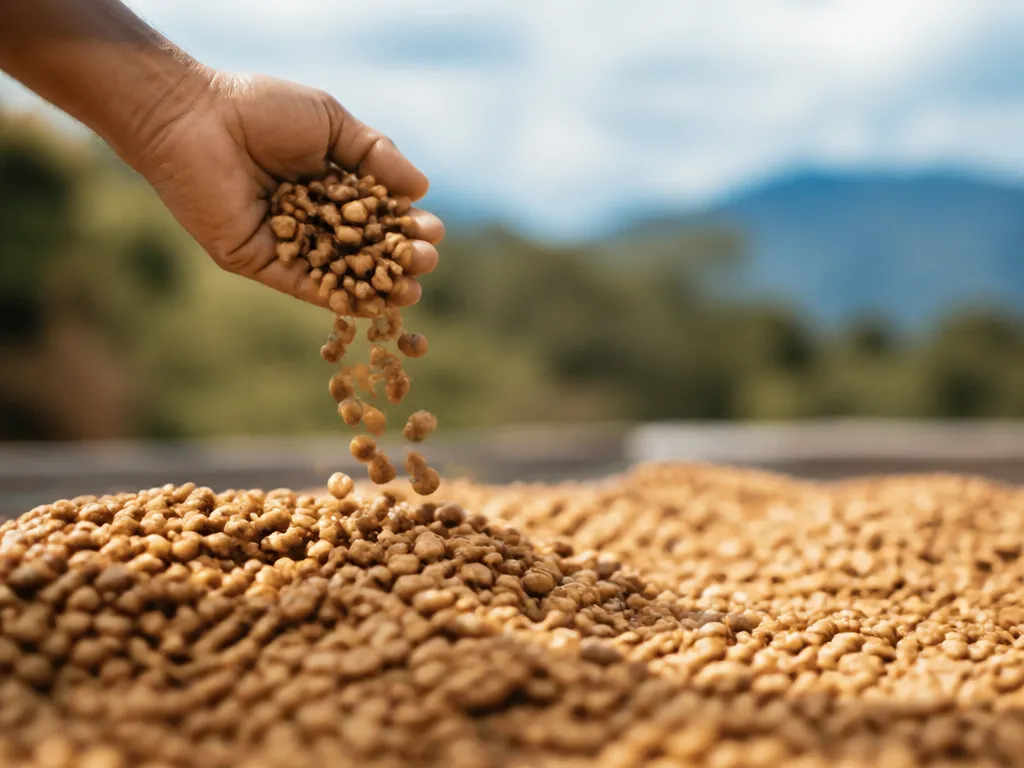
Honey process coffee tastes sweet and fruit-forward, often with caramel-like notes and a syrupy body. It usually offers more sweetness and weight than washed coffee, with less fermented fruit character than many naturals. The exact profile depends on how much mucilage remains during drying and how the beans are roasted.
Most brewers get the best results from a medium roast and a coffee-to-water ratio of about 1:16 to 1:17. If the cup tastes harsh or smoky, the coffee may be over-roasted or ground too fine.
What to Expect From Honey Process Coffee
- Caramel and ripe fruit: Honey process coffees often combine caramel sweetness with peach, berry, or tropical fruit notes.
- Medium roast preference: Medium roasts usually preserve sweetness more clearly than dark roasts.
- Faster browning during roasting: Mucilage contributes sugars that can make honey beans color faster in the roaster.
- Balanced brewing: Start with a 1:16 to 1:17 ratio and avoid over-extraction.
- Freshness matters: Fresher honey process coffee usually tastes sweeter and fruitier rather than flat.
- Flexible brewing: Pour-over and espresso can both work, but each needs grind and dose adjustments.
Honey Process Coffee Flavor Profile and Taste
The process varies widely. Some producers dry beans with only a light layer of mucilage, while others leave more mucilage attached for longer before drying the beans until they are stable. One honey processed coffee may taste like honey and peach; another may lean toward deep caramel and tropical fruit.
Think of honey process as a dial for sweetness and body. It suits drinkers who want a round, dessert-like cup without the intense fruitiness of some natural coffees. If crisp, high-acid brightness is your priority, washed coffee or a very lightly roasted honey lot may be a better fit.
How Honey Process Coffee Is Made
Honey process starts much like washed coffee: producers pulp the cherries, removing most of the fruit flesh. They then dry the beans with some mucilage still attached – the sticky layer between the seed and the peel that contains sugars and pectins.
As the beans dry, the mucilage breaks down and dries in place. That contact helps create the sweetness and fuller body associated with many honey process coffees.
The amount of mucilage and the drying time make a major difference. More mucilage generally produces a sweeter, fuller cup, but it also raises the risk of uneven drying if the producer does not manage turning and airflow carefully. Well-dried honey lots deliver sweetness without muddy or fermented off-notes.
For buyers, “honey process” is not a single flavor promise. It describes a family of processing methods. Quality shows up in the cleanliness of the fermentation notes, the ripeness and juiciness of the fruit flavors, and the absence of unpleasant ferment funk.
What Honey Processing Does to the Roast
Honey process beans often roast differently because sugars from the mucilage remain on the bean. They may brown faster and develop sweetness quickly, so roasters often handle them with more restraint than washed coffees.
Roast the beans too dark and their sweetness can disappear beneath bitterness and smoke. Many honey coffees taste best at medium roast levels, where caramel and fruit notes remain clear without excessive roast character.
Honey process beans can also tolerate a little more development than expected, particularly when they are dense or grown at higher altitude. My rule is to choose the roast level that preserves sweetness and keeps acidity pleasant, then move lighter if the cup becomes ashy or overly bitter.
A honey process coffee that tastes like “dry caramel” or “burnt sugar” is probably past its ideal roast level or over-extracted. A grassy, underdeveloped cup may indicate an insufficient roast or a grind that is too coarse for proper extraction.
Honey vs. Washed vs. Natural Coffee
Honey, washed, and natural coffees can taste very different even when they come from the same farm. The main distinction is how much of the cherry’s mucilage and sugars remain on the bean during drying.
Honey process usually falls between washed and natural. Washed coffee tends to be cleaner and brighter, natural coffee tends to be fruitier and heavier, and honey process often aims for sweetness and balance. It usually offers more body than washed coffee and less fermented, jam-like character than many naturals.
| Processing method | Typical flavor direction | Best for | Common “watch-outs” |
|---|---|---|---|
| Honey | Caramel sweetness, ripe fruit, syrupy body | People who want dessert-like sweetness without extreme funk | Over-roast can turn it smoky or ashy |
| Washed | Clear acidity, cleaner cups, more “crisp fruit” | Brewing lovers who want clarity in pour-over | Can feel less sweet or less heavy |
| Natural | Juicy fruit, berry or tropical notes, heavier fermentation character | Fans of bold fruit-forward profiles | Poor drying can lead to funky or muddy flavors |
When you are unsure what to buy, choose honey process for sweetness and body without giving up a familiar coffee character. Choose washed for crispness and clarity, or natural for a bolder fruit profile.
How to Brew Honey Process Coffee at Home
For filter brewing with a V60, Kalita, Chemex, or batch brewer, start with a 1:16 to 1:17 coffee-to-water ratio by weight. Use water at roughly 195°F to 205°F (90°C to 96°C), then adjust the grind according to taste.
Use this baseline:
- Weigh your dose and water. Try 1:16 first.
- Grind for medium extraction. For pour-over, start with a medium-fine grind.
- Pre-wet the grounds with a short bloom.
- Brew to your target time, then taste.
- Adjust the grind and contact time. Go faster and coarser if the cup tastes harsh; go slower and finer if it tastes sour or thin.
For espresso, honey process coffee often responds well to a slightly coarser grind than a washed coffee with a similar roast. A cup that tastes sweet but uneven or dry may be over-extracted at the surface because the grind is too fine. Sourness usually points to under-extraction.
Honey process coffee also works well in milk drinks because its sweetness carries through milk. If a black cup tastes too heavy, reduce extraction with a slightly coarser grind or shorter brew. If it tastes too light, increase extraction gently with a slightly finer grind or longer contact time.
Choosing a Roast Level for Honey Process Beans
Light roasts can work well, but they require more careful brewing. A light honey coffee may show stone fruit and floral aromatics, along with more fermentation character if the lot dried warmer or for longer. The trade-off is greater clarity but less of the syrupy caramel body many people want from honey process coffee.
Dark roasts usually replace sweetness clarity with heavier roast character. The coffee may still taste sweet, but that sweetness becomes more roast-driven and may resemble cocoa and smoke rather than honeyed caramel.
Use this decision rule:
- Want dessert sweetness? Choose medium, or possibly medium-light.
- Want fruit clarity and brightness? Choose light, but expect less syrupy body.
- Want classic dark roast flavor? Choose dark only if roast character matters more to you than fruit sweetness.
Roast level is only one variable. Freshness, bean density, and drying quality can shift the balance substantially. Start with the roast level, then adjust grind and brew time to reach the flavor you want.
How to Tell Whether Honey Process Coffee Is Fresh
Freshness has an outsized effect on honey process coffee. Fresh beans usually produce more vivid sweetness and fruit, a thicker cup, and fermentation notes that taste ripe rather than muted.
You do not need a roast-date calculator to make a basic assessment. Fresh honey process coffee often smells like ripe fruit, caramel, or warm bread rather than flat grain or stale sweetness. In the cup, sweetness should build clearly instead of appearing briefly before a bitter first sip and watery finish.
Look for these signs:
- Recent roast date: Buy closer to the roast date when possible, especially when sweetness is the main appeal.
- Active aroma: Subdued aroma after grinding can indicate that the coffee is past its best.
- Stable extraction: Fresh coffee usually gives you a wider sweet spot, allowing grind adjustments without turning harsh immediately.
A cup that tastes faintly sweet but dull may be stale or under-extracted. A cup that tastes harsh and bitter right away may be fresh but too dark for your preference, or it may be ground too fine.
Change one variable at a time. If freshness is uncertain, brew the same coffee with a slightly shorter contact time and coarser grind. A sudden improvement points to an extraction problem. If the cup remains dull and the fruit notes never appear, replace the coffee with a fresher bag.
FAQ
What does honey process coffee taste like?
Its profile depends on how much mucilage remained during drying, along with the roast level and brewing method. It may lean toward caramel and peach or toward deeper caramel and tropical fruit.
Is honey process coffee more expensive than washed coffee?
Pricing varies by roaster, origin, harvest, lot size, and marketing. Honey process coffee can cost more than washed coffee when it comes from a small lot or is sold for a distinctive flavor profile. Compare roast level, origin, and roast date rather than choosing by the processing label alone.
How long should I wait after roasting to brew honey process coffee?
Start tasting around a week after roasting and adjust based on the cup. If the coffee tastes sharp or thin, wait a little longer. If it tastes dull or flat despite sound brewing, try a fresher bag or adjust extraction slightly.
What is the easiest brewing method for honey process coffee?
Pour-over is the easiest method for most people because it gives you direct control over grind size and contact time.
What common mistake ruins honey process coffee?
Over-extraction is the most common problem. See the brewing baseline above for adjustment guidance.
Once the grind and brew time fall into place, the coffee can deliver a distinctly sweet, dessert-like cup without losing its coffee character.

- Espresso Tastes Watery? 10 Common Causes and How to Fix It - October 23, 2026
- 10 Common Coffee Equipment Cleaning Mistakes and How to Avoid Them - October 23, 2026
- 17 Common Coffee Grinder Problems and How to Fix Them - October 23, 2026