
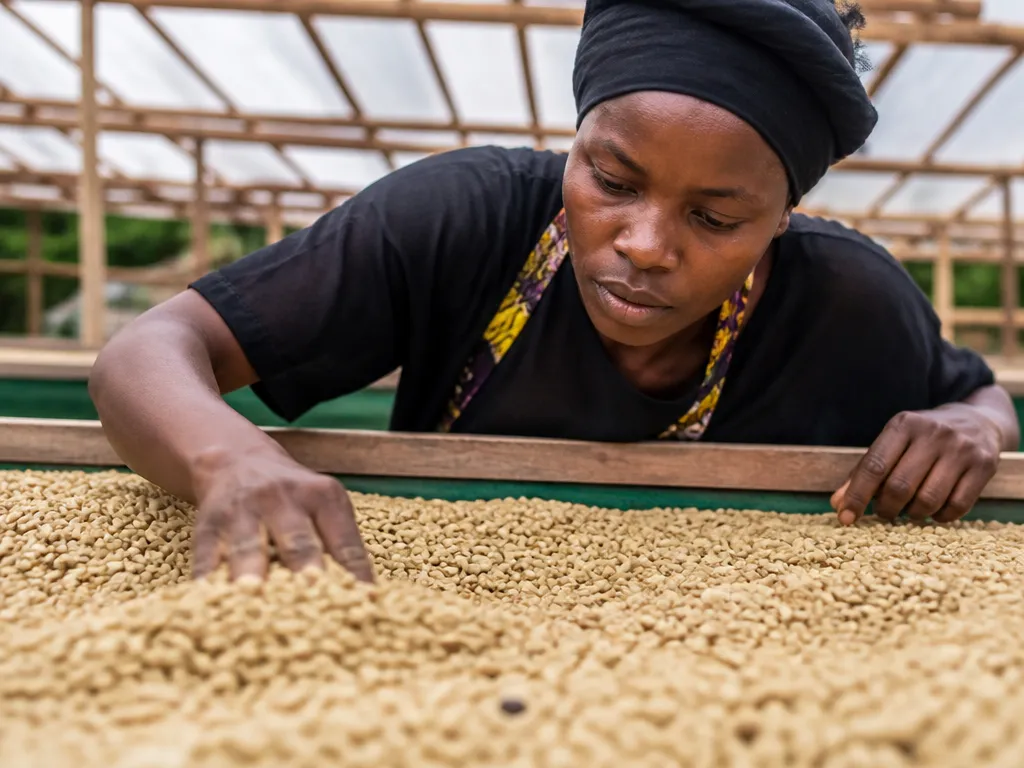
Coffee beans are seeds inside coffee cherries, not beans when they are picked. Processing turns that fruit-covered seed into green coffee ready for roasting. The U.S. coffee market was valued at $48 billion in 2015, so the quality-control decisions made during processing affect a large market and the coffee people drink every day.
Coffee processing is the farm process that converts harvested coffee cherries into green coffee beans for roasting. It includes harvesting, de-pulping or de-hulling, drying to a safe moisture level, and milling to remove parchment so the beans can be sorted and stored.
- Start with ripe cherries. Harvest timing controls how much sugar becomes flavor after processing.
- Choose a processing method. Washed, natural, and honey (semi-washed) methods affect acidity, sweetness, and body.
- Dry to prevent defects. Drying lowers moisture so mold and uncontrolled fermentation do not damage the lot.
- Sort before storage. Milling and grading remove broken, underdeveloped, or damaged beans.
- Control fermentation carefully. Carbonic maceration and anaerobic methods can add fruit complexity when managed well.
- Keep moisture stable. Consistent storage protects the coffee’s flavor until roasting.
How Coffee Cherries Become Green Coffee
Coffee processing starts immediately after picking because the coffee cherry is perishable. The goal is to convert the fruit-covered seed into a stable green bean.
The coffee “bean” is the seed inside several layers of fruit. Processing removes the outer skin and pulp, along with some or all of the mucilage depending on the method. The seed is then dried until it is stable enough to ship. After drying, milling removes the parchment layer, and sorting creates a more consistent lot for roasters.
Three decisions shape the process:
- Harvesting: Producers may selectively pick ripe cherries by hand or gather larger sections of the crop through strip harvesting or machine harvesting.
- Fruit removal: Producers choose washed, natural, honey, or another method based on the desired profile, available equipment, labor, and climate.
- Drying and storage: The coffee must dry evenly and retain stable moisture until milling and storage.
Hand-Picking and Machine Harvesting
Harvesting is where processing quality begins. Picking too early or too late forces the rest of the process to compensate for uneven fruit quality. Selective hand-picking is often used for higher-quality lots because workers can target ripe cherries more consistently.
Strip harvesting by hand is faster but gathers more underripe and overripe cherries in the same lot. Machine harvesting is faster still and efficient on large plantations, but it usually produces a wider range of ripeness unless farms manage variety and timing carefully.
The harvest method also affects the best processing choice. A mixed-ripeness lot may behave more predictably in washed processing because pulp removal and controlled fermentation can reduce some unevenness. In a natural process, fruit remains on the seed during drying, so mixed ripeness can lead to uneven fermentation. That may create pleasantly funky flavors or, if drying and timing go poorly, clear fermented defects.
Hand-Picking Trade-Offs
Hand-picking requires more labor, but it gives producers tighter control over ripeness. Ripe fruit contains the sugars that drive much of the sweetness associated with well-processed coffee. The extra labor can make sense when a producer is building a small, high-quality lot rather than harvesting the entire crop as quickly as possible.
Machine Harvesting Trade-Offs
Machine harvesting saves time and labor and can make sense on large plantations. Its trade-off is a wider ripeness spread, which increases the importance of sorting and careful processing. Producers may need to separate the harvest or use additional sorting before the cherries enter the next stage.
Washed, Natural, Honey, and Wet-Hulled Coffee
Processing methods determine how much of the cherry remains around the seed during fermentation and drying. The three most common terms are washed, natural, and honey, which is often called semi-washed. Wet hulled is another important variation, especially where producers want a profile shaped by early depulping and drying in a wetter environment.
Washed processing removes more of the outer fruit before drying. The result often has a cleaner flavor and more defined acidity. Natural processing dries the whole cherry with the fruit still around the seed, which can produce deeper fruit flavors because sugars and other fruit compounds remain in contact with the seed longer. Honey processing removes the skin and pulp but leaves some mucilage during drying, giving producers a middle path between natural intensity and washed clarity.
Wet-hulled processing involves depulping and hulling at a higher-moisture stage before final drying. The handling and local drying conditions can shape the resulting profile, which is often described as earthy-sweet.
Moisture control matters in every method. Drying gradually lowers moisture until the green coffee can be milled and stored safely. Uneven drying, delayed turning on a patio or raised bed, or persistently wet conditions can increase the risk of mold and off flavors.
| Processing method | What happens to the cherry layers | Typical flavor direction |
|---|---|---|
| Washed (wet process) | More pulp and mucilage removed before drying | Cleaner taste, more distinct acidity |
| Natural (dry process) | Cherries dried with fruit on seed | More fruitiness and heavier sweetness |
| Honey (semi-washed) | Pulp removed, mucilage left partially during drying | Balanced sweetness, often more body |
| Wet hulled | Depulping/hulling happens in a higher-moisture stage before drying | Profile shaped by wet handling, often earthy-sweet |
Drying Coffee on Patios and Raised Beds
Drying makes processed coffee stable enough to survive shipping and roasting. The coffee needs time and airflow so moisture drops gradually.
Producers may dry coffee on patios or raised beds. Whole cherries are spread out for natural processing, while honey coffee is dried with mucilage still attached. Washed coffee is dried after most of the fruit has been removed. Workers turn or move the material to promote even drying and reduce hot spots where fermentation can go wrong.
Raised beds improve airflow beneath the coffee, which can help in humid climates. Patios are simpler but may be more exposed to ground moisture and uneven heat. Either setup requires a consistent routine. Drying is a schedule of spreading, turning, covering, and monitoring rather than a single step.
Underdrying leaves moisture that can cause spoilage or flavor deterioration during milling and storage. Overdrying or uneven drying can stress the seed and mute desirable flavors. Producers who dry coffee well treat the work as quality control, not housekeeping.
Milling, Sorting, and Storing Green Coffee
Once the coffee is dry, milling removes the parchment layer so the green beans can be graded and exported. Milling also exposes quality differences: broken or defective seeds are separated, and the remaining beans can be sized for greater consistency.
Sorting and grading matter because coffee lots are rarely perfect. Beans in the same lot may differ because of harvest ripeness, processing conditions, and drying speed. Removing defective beans reduces the chance of uneven roasting and unpleasant flavors in the cup.
Storage is the protection stage. Green coffee needs shelter from moisture swings, odor contamination, and pests. Any of these can change the coffee before roasting. In the United States, people often notice this as freshness or aroma retention at the roaster, but upstream it depends largely on keeping moisture and the storage environment stable from the mill through the warehouse.
The most dramatic flavor changes happen during processing and roasting, but storage determines whether those flavors remain intact until roast day.
Carbonic Maceration and Anaerobic Fermentation
Fermentation occurs whenever microbes act on sugars in the coffee cherry or mucilage. Traditional fermentation is often more exposed to air, while newer methods use enclosed or low-oxygen conditions to steer the process toward specific flavors.
Carbonic maceration manages the fermentation environment to encourage intense fruit aromatics and a cleaner sweetness. Anaerobic processing limits oxygen exposure, which can change the fermentation pathway and produce heavier fruit tones or a distinct wine-like character. The result depends on time, temperature, and handling.
These methods are forms of process control, not shortcuts. Producers still need disciplined timing and thorough drying after fermentation. Well-managed fermentation can add complexity; poor control can create harsh, rotten, or overly fermented notes that roasting cannot fully remove.
Why Fermentation Control Matters
Low-oxygen and carbonic-style methods can intensify flavor, but they also make mistakes more obvious. Fermentation that runs too long, or drying that follows unevenly, can produce off flavors that appear early during cupping.
What to Expect in the Cup
Coffee labeled carbonic or anaerobic often has more noticeable fruit aromatics and higher perceived sweetness. Acidity may also be more pronounced when fermentation and drying are carefully balanced. Those labels indicate a processing approach, not a guaranteed flavor, so the producer’s execution still matters.
How Processing Affects Flavor and Roasting
These differences influence roast profiles. A roaster may develop a washed coffee carefully to preserve its structured acidity without making it sharp. A natural coffee with heavier fruit and syrupy notes may need enough development to balance sweetness without producing baked fruit flavors.
Poor drying and uncontrolled fermentation create defects such as sourness, moldy notes, or harsh overfermented flavors. Those defects can overpower the coffee and make the roaster’s job harder.
Processing labels are useful starting points, not promises. The same method can taste different from farm to farm because harvest ripeness, drying technique, and fermentation control vary.
FAQ
How long does it take to process coffee after harvesting?
The time depends on the processing method and weather, but drying is usually the longest stage. Natural and honey lots often require longer drying on patios or raised beds because fruit layers remain during the process. Washed coffee has more fruit removed before drying, which can reduce the time spent managing thick fruit layers.
Does the processing method change the roast level needed?
Yes. Roasters may adjust the profile to balance acidity, sweetness, body, and fermentation character rather than using one approach for every lot.
Is washed coffee always cleaner than natural coffee?
No. Processing method alone does not determine cup quality; harvest, drying, fermentation, and sorting also matter.
What is the biggest processing mistake beginners should avoid?
A surface that feels dry does not necessarily mean the seed is evenly dry throughout. Moisture needs to be assessed across the lot before processing is considered complete.
Why do some coffees use anaerobic or carbonic maceration?
Producers use anaerobic and carbonic maceration to manage fermentation and encourage specific fruit and aromatic profiles. These methods can create strong fruit character, but they require careful control of temperature, timing, and follow-up drying. The goal is consistency and a clear flavor profile, not simply more fermentation.

- Espresso Tastes Watery? 10 Common Causes and How to Fix It - October 23, 2026
- 10 Common Coffee Equipment Cleaning Mistakes and How to Avoid Them - October 23, 2026
- 17 Common Coffee Grinder Problems and How to Fix Them - October 23, 2026