
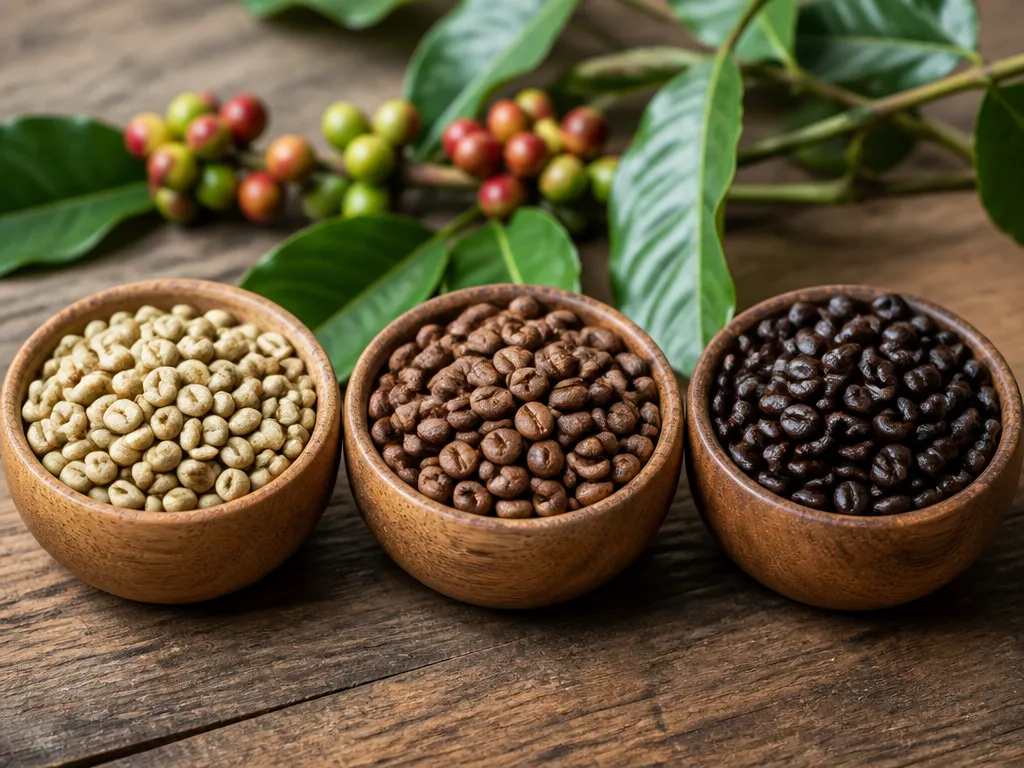
Coffee beans are best understood by four traits: processing method, species, origin, and roast level. Processing shapes fruitiness and body, species affects sweetness and intensity, origin influences acidity and texture, and roast determines how much brightness or smokiness reaches the cup. Those choices drive what you taste – acidity, sweetness, bitterness, body, and roast character.
Choose coffee beans according to your preferred cup: washed beans usually taste brighter and cleaner, natural beans are fruitier and heavier, and honey-processed beans fall between them. Light roasts preserve more acidity, dark roasts bring more bitterness and smokiness, and espresso usually works best with medium to dark roasts, depending on your machine and taste.
Coffee Bean Choices at a Glance
- Processing method matters. Washed coffee tastes cleaner and brighter than natural coffee, while honey processing typically falls in the middle.
- Arabica is usually sweeter. Arabica tends to taste more nuanced; Robusta is often stronger, harsher, and higher in caffeine.
- Origin shapes mouthfeel. Elevation and climate often influence acidity and body more than marketing language does.
- Roast changes the balance quickly. Light roast emphasizes acidity, medium roast adds sweetness, and dark roast leans smoky and bitter.
- Match beans to the brewing method. Espresso is usually easiest with medium to dark roast; drip often suits light to medium roast; cold brew commonly works well with medium to dark roast.
- Freshness beats “best” claims. Your preferred flavor and the coffee’s freshness matter more than internet rankings.
Types of Coffee Beans by Processing Method
Processing begins after coffee cherries are harvested and ends before the beans are roasted. It affects flavor clarity, fruitiness, sweetness, and body. Two coffees with the same species and roast level can taste markedly different because they were processed differently.
Washed, or wet-processed, beans usually taste clean, bright, and structured. Producers remove the fruit from the bean before drying, and fermentation tends to reduce the fruity or fermented notes associated with natural processing. Washed coffee is a reliable starting point if you enjoy fruit or floral flavors without a heavy, winey character.
Natural, or dry-processed, beans dry inside the coffee cherry. The bean spends more time in contact with the fruit, which often produces stronger fruit flavors and fuller body. Berry-like or winey notes are common. The trade-off is less clarity: some natural lots taste beautifully jammy, while others show distracting fermented flavors when drying is inconsistent.
Honey-processed beans retain some of the cherry’s pulp during drying. The style ranges from light honey, with less pulp left on the bean, to black honey, with much more pulp remaining. More retained pulp generally brings greater sweetness and body, although the final result also depends on the roast and the producer’s technique. Honey coffees often taste rounded and sweet, with more character than washed coffee and less heaviness than many naturals.
Choose washed for brightness and clarity. Choose natural for fruitiness and weight. Choose honey for sweetness with balance. Since honey coffees can still be roasted dark, check the roast level as well.
Arabica vs. Robusta: Flavor and Intensity
Arabica and Robusta are different coffee species, and the distinction affects flavor, aroma, body, and perceived strength. Arabica dominates specialty coffee and most single-origin bags in US stores. Robusta appears frequently in espresso blends, instant coffee, and styles that prioritize thick crema and a forceful flavor.
Arabica is usually more aromatic and nuanced, with greater sweetness and a wider range of flavors across origins. Depending on the coffee, you may taste fruit, chocolate, nuts, or florals rather than one dominant bold note. Arabica is also often easier to enjoy at lighter roasts because its acidity can taste bright and pleasant instead of harsh.
Robusta tends to taste earthy, woody, and bold. It can become bitter or grain-like at very dark roasts, but it brings intensity and often adds more crema to espresso blends. If you prefer thick, forceful coffee and do not need every flavor note to remain distinct, Robusta may suit you well.
“Robusta is bad” and “Arabica is always better” are both poor buying rules. Robusta’s assertive character can be useful in espresso, especially when you want a thick body or a flavor that stands up to milk. Arabica is often the better choice for black coffee when you want origin and processing details to come through clearly.
Choose Arabica for clarity, sweetness, and variety. Choose Robusta, or a blend containing Robusta, for intensity, deeper body, and extra punch.
Single-Origin vs. Blend Coffee Beans
Single-origin and blend describe how a roaster combines or separates coffees. Single-origin coffee comes from one farm, co-op, or lot, often identified by country or region. A blend combines multiple origins, varieties, or processing lots.
Single-origin coffee lets you explore the flavor character of a place. It may show distinct acidity, citrus or stone-fruit notes, and a clearer expression of the processing method. The drawback is seasonal variation. A bag you enjoy one month may taste different the next year because harvest conditions and available lots change.
Blends aim for consistency and balance. Roasters combine components to create a dependable flavor across brew methods and batches. A blend can also target a specific use, such as chocolate-forward espresso or a milk-friendly everyday coffee.
Choose single-origin coffee when you brew black coffee and want to explore flavor differences. Choose a blend when you want reliable results, make espresso every day, or usually add milk. A bag that lists both a blend name and its origin components can offer variety with a familiar flavor structure.
Light, Medium, and Dark Roast Coffee Beans
Roast level changes the coffee’s chemistry and flavor, not merely its color. As the roast gets darker, bright acidity becomes less prominent while smoky, bitter, and roasted flavors become more noticeable.
Light roast is usually lighter in body and more acidity-forward. It may taste bright, tangy, fruity, floral, or tea-like, with more of the bean’s origin character intact. Washed coffees often work especially well at this level if you want clear, delicate flavors.
Medium roast offers a practical middle ground. It generally has more body than light roast, less sharpness, and a toasty sweetness that works across many brew methods. For a grinder-and-brew setup without much adjustment, medium roast is often the easiest place to start.
Dark roast brings heavier roasted flavors, greater bitterness potential, and smoky depth. It can suit chocolate, nutty, and smoky profiles, although the roast may overpower subtle origin characteristics. Dark roast is common in bold, milk-friendly espresso because its roasted flavor remains noticeable after milk is added.
Dark roast is not automatically stronger. The amount of coffee, grind size, and extraction have more influence on strength in the cup than roast darkness alone. Dark coffee may taste more intense because of roasting compounds, while actual caffeine content varies by bean and brew.
Choose light roast for bright, clean black coffee. Choose medium roast for the broadest range of brewing methods. Choose dark roast for smoky, chocolate-forward cups.
Washed, Natural, and Honey Coffee Compared
Washed, natural, and honey are the three processing styles most commonly named on coffee bags and cafe menus. They influence clarity, sweetness, fruitiness, and mouthfeel more than caffeine. Learning these labels gives you a useful prediction of the cup before you brew it.
Use these buying rules when you are unsure:
- Choose washed, medium roast for a safe, bright profile.
- Choose natural, light to medium roast for fruit and body.
- Choose honey, medium roast for sweetness without a fully heavy cup.
How Origin Affects Acidity and Body
Origin describes more than a country on a label. Climate, elevation, soil, and harvest timing affect how coffee cherries develop, while processing and roasting determine how those traits appear in the cup. The result often shows up most clearly in acidity and body.
Higher elevations can produce slower-growing cherries with developed flavors and noticeable acidity. That does not mean high-altitude coffee always tastes sour. It means these coffees are more likely to show bright fruit notes, particularly when they are washed and lightly roasted.
Lower elevations can produce a rounder body and less perceived acidity. Coffees from these conditions may taste more like chocolate or nuts and less like bright fruit, although processing and roast level can change the result.
Climate matters as well. Regions with distinct wet and dry seasons can develop different levels of sweetness in the cherry. Processing may amplify or soften those traits, which is why coffees from the same country can taste surprisingly different.
Roast and grind also affect body. A dark roast can make coffee feel heavier, while a light roast may feel thinner even when both come from the same bean. Treat origin as the starting point, then use roast level and brewing method to adjust the final texture.
Look for bright, lifted coffee by combining origins and processing styles associated with acidity, often washed coffee at a lighter roast. Choose natural or honey processing with a medium to dark roast when you want a thicker mouthfeel.
Best Coffee Beans for Espresso, Drip, and Cold Brew
The best beans depend on the brewing method because contact time, temperature, and grind change extraction. Espresso is a short, high-pressure extraction. Drip coffee involves longer contact, while cold brew extracts for many hours at a low temperature. A profile that tastes balanced in one method may taste harsh or flat in another.
Espresso Beans: Bold, Balanced, and Milk-Friendly
Espresso generally needs enough body and flavor to avoid tasting thin or sour. Medium roast is a common sweet spot because it brings sweetness without becoming fully smoky. Many espresso blends include some Robusta to increase perceived intensity and crema stability.
Choose a medium-roast, Arabica-forward blend, sometimes with a small Robusta component, for balanced espresso. A medium-roast natural or honey-processed bean can work well if you prefer fruity espresso. Dark roast is also a practical choice for milk drinks because its roasted flavors remain noticeable through steamed milk and foam.
Drip Coffee Beans: Clean and Clear
Drip brewing often suits washed coffee because its longer extraction can bring out bright aromatics and clean fruit flavors. Light to medium roasts are usually the most interesting choice for people who drink coffee black, particularly when the beans are washed and freshly roasted.
Choose washed beans at a light to medium roast for a crisp, readable cup. If you prefer a more familiar, comforting flavor with less acidity, choose medium roast.
Cold Brew Beans: Sweet and Full-Bodied
Cold brew often emphasizes chocolate and sweetness while reducing perceived acidity. That is why medium and dark roasts are popular: they can taste smooth and rich after many hours of extraction at cold temperatures. Natural coffee can also make excellent fruit-forward cold brew, although heavily fermented notes may become distracting when processing quality varies.
Choose medium roast for balanced cold brew, dark roast for a deeper roasted flavor, and natural or honey processing for extra sweetness and fruitiness.
FAQ
What coffee bean type is best for a beginner?
Medium-roast Arabica is the easiest starting point for most people in the US. It balances sweetness, acidity, and bitterness without requiring a highly precise brewing setup. Choose washed processing for extra clarity, or honey or natural processing for more body.
Do washed, natural, and honey coffee beans taste different?
Yes. Washed coffee usually tastes cleaner and brighter, natural coffee is typically fruitier and heavier, and honey coffee is often sweeter and more rounded. Roast level changes how strongly these traits appear, so medium roast is a useful choice for comparing them.
Is Robusta stronger than Arabica?
Robusta often tastes more intense and can feel stronger in espresso because of its bold, dominant character. Perceived strength also depends heavily on dose and extraction, so species is only one factor.
Which coffee beans should I use for espresso vs. drip?
Choose medium-roast beans for espresso. Many people prefer blends, sometimes containing Robusta, because they provide body and balance. For drip coffee, washed beans at a light to medium roast are a strong default when you drink it black and want clarity.
What’s a common mistake when choosing coffee bean types?
The most common mistake is choosing a roast or processing style that conflicts with the brewing method. Dark-roasted beans can taste overly bitter in light, delicate drip setups, while very light roasts may taste sharp or underwhelming in espresso. Match the roast and processing method to the brew style, then adjust the grind and dose if the cup still tastes off.

- Rocket R NINE ONE Edizione Speciale: Features and Buying Guide - October 25, 2026
- LUCCA A53 Mini V2 Espresso Machine: Features and Buying Guide - October 25, 2026
- Caffena Coffee Nuova Simonelli Appia Life 2GR Espresso Machine: Features and Buying Guide - October 25, 2026