
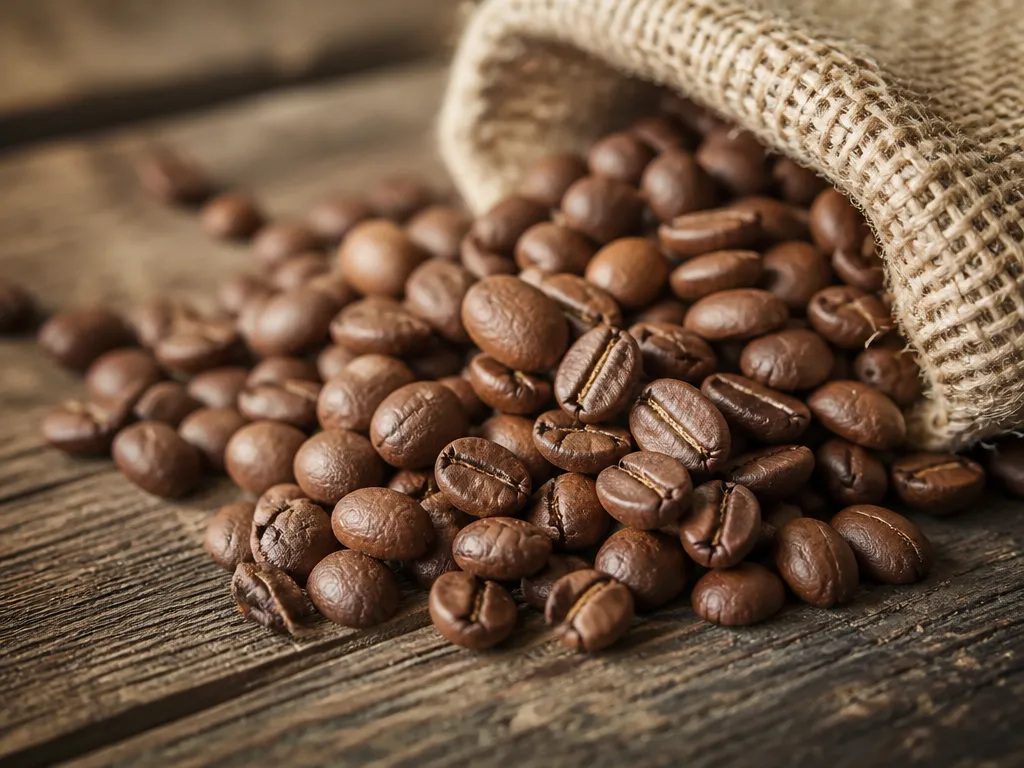
Coffee beans are the roasted seeds inside coffee cherries. They come from Coffea plants and become the brown, aromatic ingredient you grind and brew after producers remove them from the fruit, dry them, and roasters apply heat. The seeds already contain caffeine, while roasting develops the flavor compounds, color, and bitterness associated with coffee.
Coffee beans usually come from two main species, C. arabica and C. robusta. They begin as green seeds inside cherries on a tree-like plant. Roasting turns those green seeds brown and develops the flavors people recognize as coffee.
- Coffee beans are seeds. They come from the cherry of a Coffea plant, not from a true “bean” pod.
- Roasting makes coffee. Green seeds become brown, aromatic coffee beans.
- Two species dominate. C. arabica and C. robusta are the most commonly grown coffee bean types.
- Cherries drive sourcing. Coffee production begins by separating seeds from coffee cherries.
- Processing changes flavor. Fermentation and drying after harvest affect the final taste.
- Trade shapes the world. Coffee became widely imported and later mass-produced beyond its original region.
What Coffee Beans Are and What They Contain
Each cherry surrounds its seed with layers of fruit material that producers remove during processing. The unroasted seed is called green coffee. After roasting, it becomes the ingredient you grind into fine particles and brew with hot water.
Roasting changes the seed’s color and chemistry. Depending on the roast level, it can become black, dark brown, light brown, or beige. Heat also develops the distinctive, somewhat bitter flavor associated with coffee.
A useful mental model is simple: the cherry is the fruit, the seed is the “bean,” and roasting transforms its flavor. When people debate the quality of coffee beans, they are usually discussing seed quality, plant variety, processing, roasting, and roast profile together.
Coffee Bean Biology and Species Variations
Coffea plants are grown for their seeds, and C. arabica and C. robusta are the two most commonly grown coffee bean types. Species influence how plants grow, how cherries develop, and how the roasted seeds taste.
Arabica is the best-known coffee bean type in specialty circles, while robusta is common in blends and in coffees made for specific production goals. Different species and varieties develop different sugars, acidity levels, and flavor precursors, which become more noticeable during roasting.
Coffee plants are cultivated in over 70 countries, mainly in equatorial regions of the Americas, Southeast Asia, the Indian subcontinent, and Africa. The same species can taste very different depending on altitude, temperature swings, rainfall, soil, and how long the cherries ripen on the tree.
Species is only a starting point. Cultivar, farm practices, and post-harvest handling can change the final cup as much as, or more than, the species listed on the bag. For more predictable flavor, consider the full chain: species, origin, processing method, and roast date.
Two bags labeled “arabica” can taste completely different if they come from different regions, use different processing methods, or receive different roast levels. “Coffee beans” are not one uniform product; they are the final form of many agricultural and production choices.
How Coffee Cherries Become Green Coffee
Coffee production begins with cherries from Coffea plants because the seeds grow inside the fruit. After harvest, producers separate the seeds from the cherries to produce unroasted green coffee beans.
This separation moves coffee from agriculture into processing. Once the fruit has been removed and the seeds have been dried and stabilized, green coffee is easier to store, trade, transport, and roast across supply chains.
Harvest timing also affects quality. Picking cherries too early or too late changes seed maturity, which can lead to weaker flavor development or uneven roasting and brewing. Two farms growing the same species can produce different results because their harvest windows and sorting practices differ.
Coffee plants grow in climates that support long growing seasons and steady cherry development. Higher elevations often slow growth, which can influence flavor development in the seed. The effect varies by region and variety, but the basic relationship remains: how the cherry matures affects what you taste later.
How Processing Changes Coffee Flavor
After harvest, producers process the cherries to remove fruit material, dry the seeds, and bring the green coffee to a stable moisture level for storage and roasting. The method can significantly affect flavor.
One major difference is how much fruit remains around the seed during fermentation and drying. Fermentation and drying conditions influence how sugars and organic compounds break down, which can change acidity, sweetness, and whether the coffee tastes clean or funky.
Dry processing, often called natural processing, leaves more fruit material around the seed while it dries. This can deepen fruit-derived notes. Wet processing, often associated with washing, removes more pulp before drying and tends to produce a cleaner baseline cup. These are general trends, not guarantees; timing, weather, and producer skill still matter.
Drying must be controlled carefully. If the coffee dries too slowly or unevenly, defects can develop and survive roasting. If it dries too quickly or in poor conditions, some desirable development can be lost.
Use processing terms as a starting point when choosing coffee. If you prefer brighter, cleaner profiles, try washed coffees first. If you enjoy heavier, fruit-forward flavors, try natural coffees. Roast level and the specific roaster still matter, so adjust based on what you taste.
Pests, Diseases, and Coffee Yield
Coffee plants face pests and diseases that can reduce yield, damage cherries, and lower quality. Farms may end up with fewer usable seeds, while the remaining cherries may mature unevenly or carry defects into the green coffee stage.
Farmers manage these problems through monitoring, sanitation, shade management, and targeted treatments when needed. The balance is difficult: too little intervention can cause losses, while excessive or poorly timed treatment can add cost and still fail to protect the crop.
Pest pressure varies by region and climate. Some farms deal with insects that attack leaves or cherries, while others face plant diseases encouraged by moisture and specific environmental conditions.
Pest control affects more than harvest volume. It can change how evenly cherries mature and how much sorting is required after picking. Sorting can recover some quality, but it adds cost and cannot correct every problem once damage or contamination has spread.
Pest pressure is one reason coffees from the same country can taste different from year to year. Conditions during the growing season and the farm’s control decisions can affect the coffee all the way through roasting and brewing.
Coffee’s History as a Global Import
Coffee became widely consumed through trade and shifting regional power, with early roots in a Red Sea food tradition. Early reports of coffee drinking involve its use among Sufis in Yemen in the middle of the 15th century.
As demand grew, coffee moved beyond the region. Up to the end of the 17th century, most of the world’s coffee was imported from Yemen, showing how concentrated early supply was.
The word “coffee” entered English in 1582 via Dutch koffie, borrowed from Ottoman Turkish kahve, borrowed from Arabic qahwah. That path reflects the commercial and cultural networks through which coffee traveled before becoming an everyday commodity.
As coffee spread, it developed into a colonial import system in many parts of the world. Ports, trading companies, and plantation systems moved coffee from producing regions into broader markets, changing consumption habits and creating global demand.
Coffee became globally standardized because it could be processed into a tradable green commodity and roasted far from where it was grown. What began as a local fruit and seed became an exportable product that could be shipped, stored, and prepared in distant markets.
Mass Production and Ecological Effects
Mass production made coffee a large-scale agricultural commodity, but expansion brings environmental trade-offs. Rising demand can increase pressure to clear land, while plantations can affect nearby ecosystems.
Coffee is a long-term crop, so decisions made years earlier shape later conditions. Shade-grown and sun-grown systems, biodiversity, soil health, and water management all influence the sustainability of a producing region.
Large-scale production also puts pressure on processing and quality control. When producers prioritize volume, sorting and preprocessing can become less consistent. That can increase variability in green coffee and produce a wider range of flavors across lots.
Trade values also show regional concentration. Brazil is listed at 3.41, Vietnam at 1.96, Indonesia at 0.76, Colombia at 0.68, Ethiopia at 0.56, and “World” at 11.06, illustrating how certain countries dominate volumes.
Coffee is also an agricultural system. Knowing how those seeds are grown, processed, roasted, and traded makes it easier to choose coffee based on more than a roast label.
FAQ
What are coffee beans, exactly?
The “bean” begins as green coffee after producers separate it from the cherry, then becomes a brown coffee bean through roasting. People grind and brew the roasted seed with hot water. Coffee is typically served hot, though it’s commonly made iced too.
Are coffee beans always arabica or robusta?
No, but arabica and robusta are the two most commonly grown coffee bean types. Many bags say “100% arabica” or list an origin and variety. The underlying species can help set initial flavor expectations, while processing, origin, and roasting also shape the cup. Some blends mix species to balance taste and cost.
How long does it take to turn cherries into green coffee beans?
Turning cherries into green coffee involves separating the seeds, drying them, and stabilizing them. Exact timelines vary by region and weather, but drying is the long phase that makes green coffee suitable for storage and transport. If drying is rushed or uneven, the green coffee can carry defects that survive roasting.
Do coffee beans expire, and does storage matter?
Yes. Coffee beans go stale as aromatic compounds escape over time, which changes the brewed flavor even when the beans are still safe to consume. Keep them sealed and away from heat, light, and moisture. For the best taste, use recently roasted coffee and avoid grinding it long before brewing.
What’s a common mistake people make with coffee beans?
A common mistake is buying “dark roast” while assuming it will taste better, then brewing it too hot or too long. Darker beans can taste bitter when brewed aggressively, and the brewing method gets blamed for a problem it helped create. Match the brewing method to the roast level, and measure coffee and water for consistent results.

- Espresso Tastes Watery? 10 Common Causes and How to Fix It - October 23, 2026
- 10 Common Coffee Equipment Cleaning Mistakes and How to Avoid Them - October 23, 2026
- 17 Common Coffee Grinder Problems and How to Fix Them - October 23, 2026