
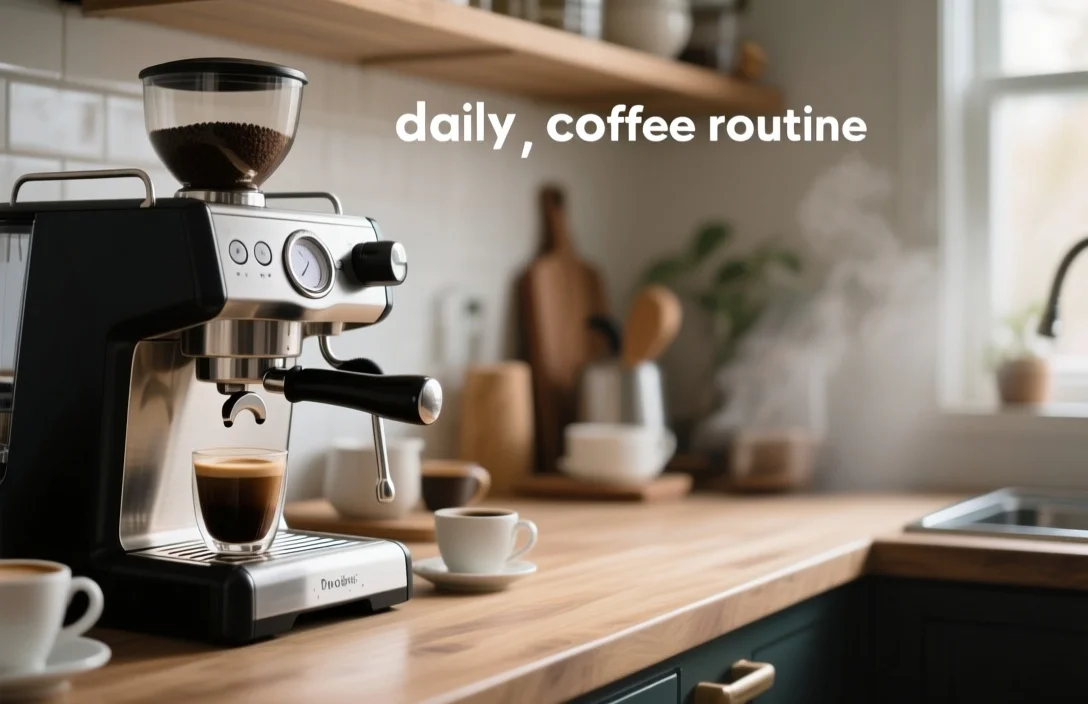
A daily coffee routine is a short, repeatable set of choices you make each day about what to brew, how to brew it, and when to drink it. This guide gives step-by-step actions, clear trade-offs between common methods, and simple maintenance practices so you can build a routine that fits your taste, schedule, and energy needs.
What a daily coffee routine looks like
A useful routine begins with a decision framework rather than a single recipe. That framework identifies your target flavor profile, the time available each morning, any dietary needs, and the gear you already own. Each morning you will follow the same small sequence of tasks – selecting beans, dosing and grinding, brewing, and finishing – so that the outcome becomes predictable and repeatable.
A second component of an effective routine is small, measurable controls you can change one at a time. Examples include switching roast level, changing grind coarseness, or adjusting brew time. Small changes let you learn how each variable affects taste without overcomplicating the process. Repeating the same basic workflow produces consistency and isolates what matters to your taste.
Why a routine matters for taste and time
Routines reduce decision fatigue on busy mornings by turning subjective choices into simple defaults that fit your priorities. Choosing a default method and a default bean reduces the number of variables you must manage, which leads to more reliable flavor and less waste. Predictability also speeds preparation because muscle memory replaces deliberation.
Routines improve learning about coffee extraction and flavor. Tasting the same preparation repeatedly reveals subtle differences when you adjust one variable at a time. Tracking those changes – by noting grind, brew time, and sensory impressions – lets you refine a profile that reliably produces chocolate, citrus, or caramel notes, depending on your preference. That learning curve is the main practical benefit of a daily routine.
Choose your brewing method
Selecting a brewing method defines most of the rest of your routine because it dictates grind, equipment, and active time. After comparing the main options side by side, the key differences are speed, control, and cleanup. The table below summarizes the decisions that matter.
| Name | Key advantage | Best for |
|---|---|---|
| Espresso | Concentrated flavor and quick extraction | Short mornings, milk drinks, high perceived strength |
| Pour-over | Precise control over extraction and an easy clean cup | Tasting single-origin beans, ritual-focused mornings |
| French press | Full-bodied mouthfeel with simple equipment | Cozy, low-tech brewing; heartier roast profiles |
| Aeropress | Fast, forgiving, and portable | Travel, experimentation, one-cup flexibility |
| Cold brew | Smooth, low-acidity concentrate brewed ahead | Make-ahead planning and hot-weather drinking |
| Drip machine | Hands-off repeatability and capacity | Multiple cups for household or office use |
Choosing a method requires weighing available time against flavor goals. Espresso delivers concentrated flavor fast but requires investment in equipment and a learning curve for grinding and tamping. Pour-over provides control over bloom and flow but takes active attention. French press yields a heavier body that suits darker roasts, while Aeropress offers an experimental middle ground with short brew times and minimal cleanup.
Build a morning sequence you can stick to
Pick a concise sequence of actions that you repeat every day. A reliable sequence should be short enough to fit your morning and flexible enough to adapt on busy days. The numbered list below gives a practical starting sequence you can adopt and tweak.
- Choose beans and portion them out according to your usual cup size.
- Grind immediately before brewing to preserve aromatics.
- Heat your water and pre-wet or preheat any metal or ceramic surfaces you use.
- Brew using your chosen method while timing the extraction.
- Taste and finalize with milk, sweetener, or nothing, then clean the most critical parts.
A few practical notes help the sequence run well. Grinding immediately before brewing preserves volatile aromatics that evaporate quickly after grinding. Pre-wetting paper filters or preheating the brewer reduces heat loss during extraction and keeps temperatures steadier. Timing the extraction and tasting the first sip are the fastest ways to spot when the grind or brew time needs one small adjustment.
how they interact
Grind size is one of the most influential variables in daily brewing because it controls flow rate and extraction. Coarser grinds produce a slower surface-area-to-volume ratio and often a heavier mouthfeel when steeped, while finer grinds increase extraction speed and perceived intensity. Adjust grind before changing beans and document the result.
Water matters beyond cleanliness; its temperature and contact time with grounds determine which flavor compounds are extracted. Too cool and the brew tastes underdeveloped; too hot and some desirable aromatics can be overwhelmed by bitterness. Exact temperature and ratio numbers were not sourced for this guide, so use your device’s standard settings or manufacturer recommendations as a starting point and refine by tasting.
A clean, consistent approach to measuring and timing helps you tune these variables. Using the same scoop, a basic scale, or a single timer reduces noise from inconsistent dosing. Taste each adjustment in isolation, then record the result in a simple log so you can repeat successful experiments and avoid reintroducing mistakes.
Practical adjustments for energy, sleep, and sensitivity
Coffee affects people differently depending on tolerance and timing relative to sleep. If you notice jitteriness, consider shortening or spacing your consumption, switching to lower-caffeine beans, or replacing one cup with a decaffeinated option. The guide does not include exact thresholds or clinical timing recommendations because precise health guidance and numerical caffeine limits were not found in the available material.
Daily scheduling also matters for sleep. Drinking coffee very late in the day can interfere with falling asleep for many people. Try designating your main coffee window earlier in the day and using weaker or decaf preparations later on. Tracking your sleep and next-day alertness alongside your coffee choices helps you learn your personal sensitivity.
Seasonal adjustments keep a routine sustainable. Switching from hot to cold preparations or lowering roast intensity can match changing taste preferences and weather. Rotating roast levels or bean origins across weeks prevents palate fatigue and keeps the ritual engaging while staying within the same basic workflow.
Common mistakes and how to avoid them
A frequent mistake is changing multiple variables at once and then wondering which change affected flavor. Restrict experiments to one variable – grind, brew time, or water – so you can identify cause and effect. Another common error is neglecting equipment cleanliness because residue and oils build up and distort flavor over time.
Skipping a short rinse or preheat step is a small omission that produces inconsistent results. Running water through a dripper or heating a serving vessel before brewing eliminates cold spots that sap flavor. Storing beans improperly is another widespread problem; coffee absorbs moisture and odors, so keep beans in a cool, dark container and use them while fresh.
Waste and overfilling are practical errors on busy days. Preparing slightly less coffee when you expect to be out of the house reduces waste and ensures that the cup you do make is fresher. When brewing for more than one person, prioritize a single method everyone accepts most of the time to simplify steps and cleanup.
Equipment care, shopping, and what to buy first
If you are starting from scratch, buy equipment in the order that delivers the most immediately useful upgrade. A reliable grinder is the single most impactful purchase after your beans because pre-ground coffee loses aroma quickly. Brew devices range widely in price and complexity, so match your first purchases to how much hands-on control you want.
Cleaning frequency affects both taste and machine lifespan. Rinse removable parts after each use and perform a deeper clean weekly for devices that contact oils and residues. Descaling procedures depend on water hardness and machine type; check manufacturer guidance and follow a regular maintenance schedule that suits the water in your area.
Replacing small items can be more cost-effective than trying to fix frequent faults. Replace paper filters regularly, swap gaskets and seals when performance or leaks appear, and maintain tampers and portafilters for espresso gear. If you must choose between upgrading a grinder or a brewer, prioritize the grinder for more consistent extraction across all brew methods.
Tasting notes and tracking progress
Create a simple tasting log to capture what you liked or disliked about each cup. Note the bean origin and roast level, the grind setting, the brew method, and at least one clear sensory impression such as “bright acidity,” “chocolate finish,” or “flat/weak.” Recording this information once per day builds a useful dataset after a few weeks.
Regularly reviewing your notes helps you spot patterns such as which roast levels suit your morning routine or when a change in grind consistently improves clarity. If multiple household members drink coffee, a shared log clarifies preferences without discussion each morning. Using a small notebook or a minimal notes app provides an accessible archive for adjustments and repeatable successes.
Realistic routines for varied schedules
People with a long morning can favor full-control methods like pour-over or espresso and use the extra time for ritual and tasting. Those with only a few minutes benefit from Aeropress, pre-measured capsules, or a well-calibrated drip machine. Preparing a small batch of cold brew or a concentrated extract the night before also serves as a time-saving option without sacrificing flavor.
Travel and commuting require portable solutions such as compact grinders and Aeropress-style devices or pre-brewed concentrates that reheat well. Keeping a travel version of your routine – same beans, similar grind, and a single reliable brewer – produces consistent results despite changing locations. A short packing checklist preserves your routine on busy mornings away from home.
FAQ
How soon after waking should I drink coffee?
Personal sensitivity varies, and exact timing guidance was not sourced here. Many people find that waiting until they have completed a short morning routine or until after a light breakfast helps avoid stomach discomfort and allows the coffee to be a planned boost rather than a reactive habit.
How often should I clean my grinder and brewer?
Rinse or wipe removable parts after each use and perform a deeper clean weekly for manual devices. Machines that use water and heat may require descaling at intervals recommended by the manufacturer depending on local water hardness.
Which roast level is best for daily drinking?
Daily preferences depend on taste and how you pair coffee with milk or food. Lighter roasts highlight origin-specific flavors and acidity, while darker roasts tend to offer richer, more familiar roast-driven notes that stand up well to milk.
Can I reduce caffeine without switching to decaf entirely?
Yes. Mixing decaffeinated beans with regular beans or shifting to a brewing method that produces a smoother, lower-perceived intensity cup can reduce stimulation.
What should I record in a tasting log?
Include bean name or origin, roast level, brew method, grind setting, and one or two simple tasting descriptors. Dates help track freshness and let you revisit what worked over time.
Is it worth investing in an espresso machine?
An espresso machine is a good investment for people who want concentrated shots and milk-based drinks at home, but it requires consistent technique and maintenance. If you prefer a simpler routine, a well-made pour-over or Aeropress often delivers excellent daily value with less setup and upkeep.
A straightforward daily coffee routine reduces morning friction and produces more satisfying cups. Start by choosing a single brewing method and a favorite bean, then follow the short sequence in this guide for two to four weeks while recording results. Adjust one variable at a time, and the next step is to make a small change – grind, brew time, or roast – and note the effect.

- Espresso Tastes Watery? 10 Common Causes and How to Fix It - October 23, 2026
- 10 Common Coffee Equipment Cleaning Mistakes and How to Avoid Them - October 23, 2026
- 17 Common Coffee Grinder Problems and How to Fix Them - October 23, 2026