
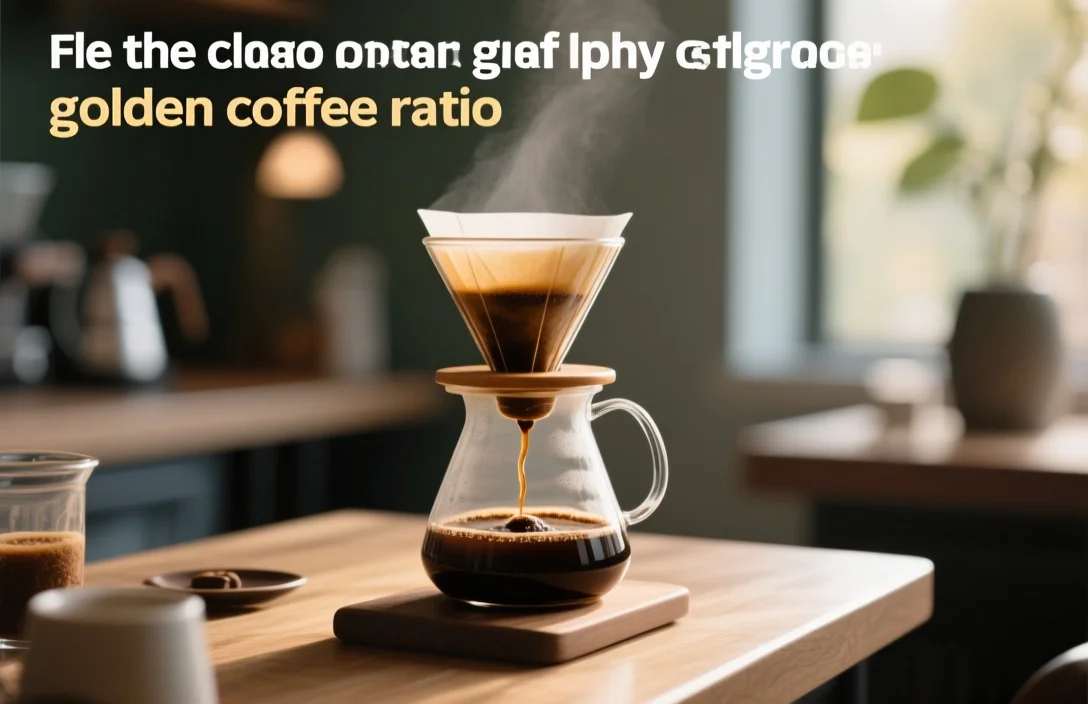
Start with a coffee-to-water ratio near 1:16 by weight – the widely cited golden coffee ratio – then tune from there for grind size, brew time, and personal taste. This guide explains why that ratio matters, how to measure it accurately, and concrete templates for pour-over, French press, espresso, and cold brew so you can make repeatable, better-tasting coffee at home.
What “golden coffee ratio” means in plain terms
Coffee and water interact during brewing to extract soluble compounds that give your drink body, flavor, acidity, and bitterness. Calling a ratio “golden” simply signals a commonly recommended starting point for that extraction balance: enough water to extract flavor without over- or under-extracting. Weight-based ratios refer to grams of dry coffee versus grams of water; using weight keeps the math reliable because beans have variable density while water is consistent.
Brew yield and extraction yield are separate but related ideas. Brew yield describes how much liquid you end up with in the cup, usually expressed in grams or milliliters. Extraction yield describes how much of the coffee’s soluble material ended up in the brew; the golden coffee ratio aims to put extraction yield in a pleasant zone rather than maximize it.
Why the ratio matters: the science behind taste
Extraction is driven by three factors you can control: grind size, contact time, and coffee-to-water ratio. Fine grinds and long contact times increase extraction; coarse grinds and short contact times reduce it. Adjusting water relative to coffee shifts how concentrated the dissolved solids are in the finished cup, which directly influences perceived strength and balance.
Soluble solids include acids, sugars, and bitter compounds that dissolve at different rates. Early extraction tends to pull bright acids and aromatic compounds; later extraction releases bitterness. Calibrating the coffee-to-water ratio helps you target the extraction window where flavor compounds are pleasant and dominant, so small changes in ratio can produce noticeable changes in cup clarity and body.
Common ratios and when to use them
Home brewers commonly operate inside a few bands of coffee-to-water ratios depending on method and preference. For general drip and pour-over work, a starting point near 1:16 by weight is the convention most baristas and brewing guides recommend. Stronger or shorter brews often move toward 1:15; lighter, larger-batch or long-steep methods can fall closer to 1:17 or 1:18.
Espresso uses a very different approach because it relies on pressure and much finer grind size; espresso recipes usually quote a brew ratio for dose-to-yield rather than dry coffee to water. Cold brew uses high coffee concentration and long steep times, then often gets diluted to drinking strength. Adjusting ratio is not a silver bullet; pairing correct grind, water temperature, and brew time with your chosen ratio yields the best results.
| Name | Ratio / Key Spec | Best For |
|---|---|---|
| Pour-over (starting) | ~1:16 (coffee:water by weight) | Single-cup clarity; easy adjustment for strength |
| Drip/Batch brew | ~1:15-1:17 | Automatic brewers and larger volumes |
| French press | ~1:12-1:16 (coarser grind) | Full-bodied, heavier mouthfeel |
| Espresso (dose:yield) | Concentrated dose-to-yield recipes | Shots with crema and concentrated flavor |
| Cold brew (steep) | Strong concentrate, then dilute | Smooth, low-acidity cold coffee |
How to measure the ratio
Weighing coffee and water by grams gives the most consistent results. A small kitchen scale that measures grams and has a tare function eliminates cup-to-cup variability from scoops and inconsistent pack density. Using weight allows you to reproduce a recipe precisely and to record adjustments so you can iterate toward a preferred taste.
Counting tablespoons or coffee scoops introduces variability because roast level and grind size change the volume of a given mass of coffee. Measuring by volume can work for casual brewing if you accept some variation; consider switching to grams once you want consistent results. Water measurement matters too: using a scale to pour water by weight is more accurate than relying on volume measures from carafes or cups.
Adjusting the golden ratio for different brew methods
Pour-over methods behave differently from immersion methods because flow and contact time vary. Pour-over tends to extract faster in the bloom and early pours, so starting at the golden coffee ratio and adjusting grind coarseness is an efficient first move. French press requires coarser grind and sometimes a heavier coffee dose to get full-bodied flavor; lowering the ratio (more coffee per water) compensates for coarser particles’ slower extraction.
Espresso centers on dose-to-yield and percent extraction over simple coffee:water math. Dialing in espresso often means changing dose, grind, and yield together to hit a target extraction window. Cold brew concentrates are steeped long and then diluted to taste; plan your concentrate strength so that after dilution the final cup falls into the range you enjoy without excess bitterness or thinness.
Step-by-step templates you can try tonight
Start with a simple, repeatable routine and change one variable at a time. Here are practical recipes to test; each uses weight-based measurements so you can record and repeat results.
- Weigh 20 g coffee, grind medium-fine, and pour 320 g water (start point). Bloom for 30-45 seconds with 40-60 g water, then continue pouring to finish. Total brew time should be 2:30-3:30 minutes for many pour-over setups.
- Weigh 30 g coffee, coarse grind, and pour 450 g water for French press. Steep 4 minutes, plunge, and decant immediately to avoid over-extraction.
- Dose 18 g coffee, yield 36-40 g espresso (adjust by taste), and target a shot time of roughly 25-35 seconds; change grind to bring time into range.
- Combine 100 g coarse coffee with 1,000 g cold water in a jar, stir, and steep 12-18 hours in the fridge; strain and dilute concentrate to taste.
Record each run’s grind setting, water temperature, time, and tasting notes. Small, consistent changes let you converge on what you prefer rather than chasing perfection.
Practical trade-offs
Increasing coffee per water boosts brew strength but can also push extraction into bitterness if grind and time aren’t adjusted. Coarser grinds reduce extraction rate; compensating with more coffee or longer time can restore balance. Convenience often steers people toward scoops and automatic brewers; weighing and timing take a modest additional effort but yield a much better baseline from which to tweak.
Water temperature and freshness matter alongside ratio. If water is too hot or too cold, ratio adjustments won’t fix acidity or flatness. Grinding right before brewing and using filtered water with a balanced mineral profile enables the ratio to do the work it’s intended for – controlling concentration and helping the extraction window hit the sweet spot.
Common mistakes and how to fix them
Using volume measures without adjusting for roast change causes inconsistent results. Heavily roasted beans take up more volume per gram, so a scoop today can be quite different from a scoop next month. Swap to weighing grams to eliminate that variable.
Allowing coffee to sit too long after grinding reduces aroma and perceived sweetness. Buy whole beans and grind to order or grind in small doses. If your cup tastes thin, either add more coffee or use a finer grind; if it tastes overly bitter, back off the dose, use a coarser grind, or shorten contact time.
- Over-extraction signs: dry, hollow bitterness and late-aftertaste.
- Under-extraction signs: sharp acidity, weak body, and sourness.
- Troubleshoot by changing only one variable: grind, time, or ratio.
FAQ
How precise do I need to be with the golden coffee ratio?
Precision matters more as you chase consistency. A few grams either way are acceptable for casual brewing, while serious home brewers benefit from 0.1-1 gram precision on a good scale. Focus first on repeatability: weigh, log, and repeat.
Should I always use 1:16 for every method?
No; 1:16 is a starting point. Immersion methods and espresso require different approaches, and personal taste dominates choice. Use 1:16 to establish a baseline then adjust grind, time, and dose to match method and preference.
Can I use tablespoons instead of a scale?
You can, but expect variation because tablespoon volume depends on roast and grind. A simple upgrade to a gram-scale yields the biggest improvement in repeatability for most home brewers.
How does water temperature change ratio choices?
Water temperature changes extraction rate; higher temperatures extract compounds faster and may let you use a slightly lighter dose for the same perceived strength. Cooler water slows extraction and might require a heavier dose or longer time.
Is extraction yield a number I should track?
Tracking extraction yield requires a refractometer and is more common among enthusiasts and professionals. Taste and consistency are simpler to monitor at home; use extraction yield only if you want objective measurements beyond flavor notes.
How do I scale recipes for larger batches?
Scale all weights proportionally and keep grind and brew geometry similar. For batch brewers, flow and contact time can change; make one test batch and adjust ratio and grind rather than applying a pasteurized formula.
Practical verdict: Treat the golden coffee ratio as a starting rule, not a fixed law. Pick a weight-based recipe, control grind and time, measure carefully, and change only one variable per test. Next step: buy a small gram scale, pick one recipe above, and run three brews while changing only grind size or dose – that single experiment will teach more than reading another guide.

- Espresso Tastes Watery? 10 Common Causes and How to Fix It - October 23, 2026
- 10 Common Coffee Equipment Cleaning Mistakes and How to Avoid Them - October 23, 2026
- 17 Common Coffee Grinder Problems and How to Fix Them - October 23, 2026